

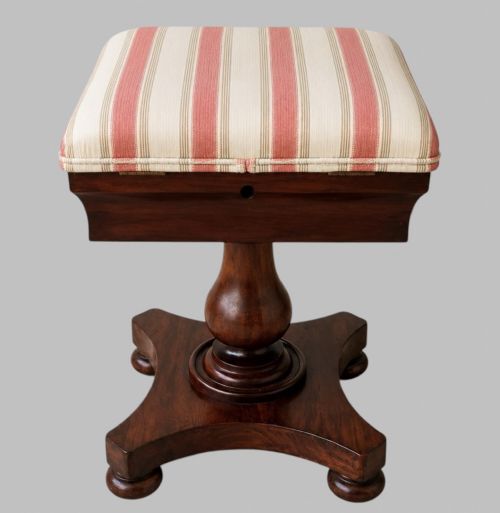


Mahogany Regency Ottoman
These mahogany regency ottoman pieces are timber seats and footstools designed for comfort, bringing period craftsmanship into a room.
Mahogany Regency Ottoman
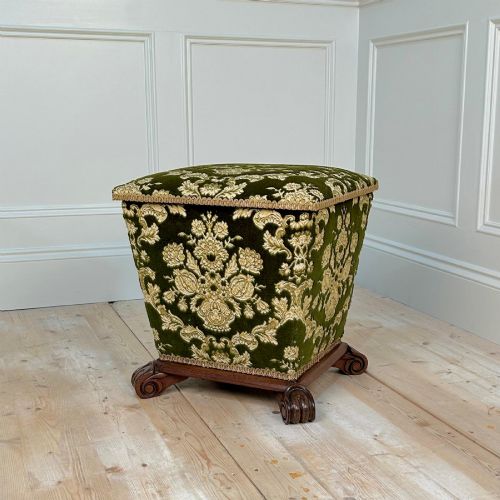
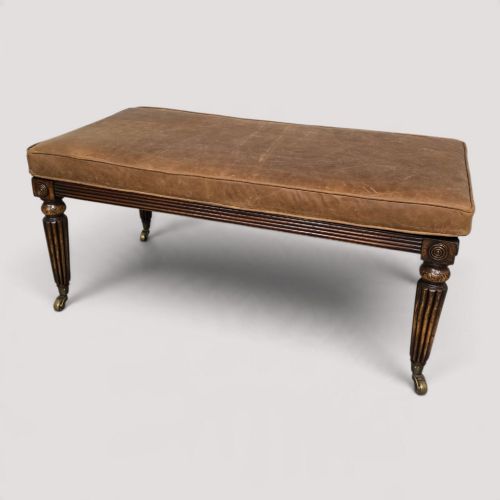
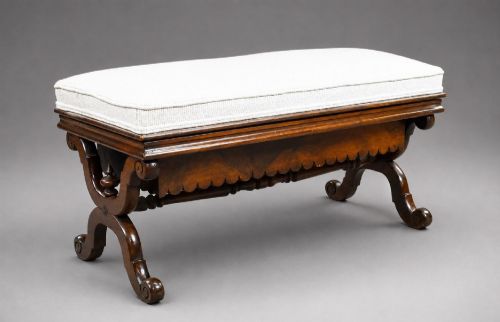
When you search for a mahogany regency ottoman, you encounter a variety of forms including footstools, benches, and work boxes spanning the Regency and 19th Century periods. These seating items range from simple square frames to elaborate window seats and sarcophagus designs.
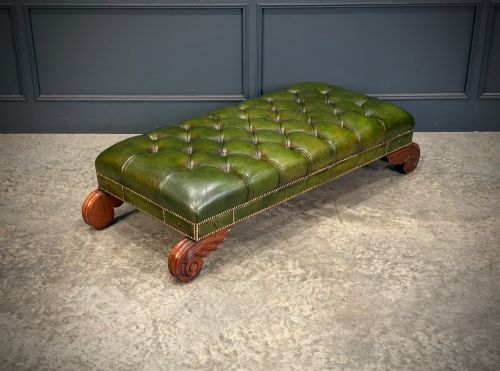
The pieces appearing on this page reflect styles such as William IV, Grand Regency, and 19th Century Irish variants. You will frequently find them paired with upholstery materials like leather, velvet, and chenille.
Makers and designers of the period utilised distinct structural supports, including cabriole legs, fluted legs, sabre legs, and X frames. Certain examples incorporate functional elements such as sewing boxes or storage interiors.
What varies in quality
Quality in a mahogany regency ottoman rests upon the crispness of the timber carving and the integrity of the frame construction. Pieces featuring specific design elements like lions paw feet or X frames demonstrate higher craftsmanship.
The choice and execution of the upholstery, from plain leather to buttoned velvet or chenille, influence the overall character of the piece. The selection of solid mahogany rather than secondary timbers marks the upper tier of production.
Mahogany Regency Ottoman Retail Price Guide 2026
Typical asking prices for mahogany regency ottoman among the pieces listed under this phrase on Sellingantiques today, from the lower quarter to the upper quarter. They describe what is for sale here now, not the wider market.
Listings feature mahogany timber combined with brass, leather, velvet, and ormolu across the Regency and 19th Century periods.
The Mahogany Regency Ottoman Glossary
- Mahogany
- A dense tropical hardwood prized for its rich reddish-brown colour and durability in furniture construction. It accepts fine carving and polishing exceptionally well.
- Ottoman
- A low upholstered seat or footstool, sometimes equipped with a hinged lid for interior storage. In period pieces, these often double as work boxes.
- Sabre leg
- A concave-curved furniture leg that tapers towards the foot, reminiscent of a cavalry sword. This form appears frequently on seating from the Regency period.
- Ormolu
- Gilded bronze or brass applied as decorative mounts on furniture. It provides a bright metallic contrast against dark mahogany surfaces.
- X framed
- A cross-shaped structural support beneath a seat, giving an architectural profile. This form dates back centuries and reappears in refined Regency designs.
Mahogany Regency Ottoman: Frequently Asked Questions
What is a mahogany regency ottoman used for?
These pieces serve primarily as footstools, low seating benches, or window seats within a room. Some variations include integrated work boxes for storing sewing supplies or small items.
Their compact forms allow them to sit easily in front of larger chairs or alongside tables. Certain box designs provide concealed storage while maintaining a decorative top.
What materials are used for the upholstery?
Original and replacement upholstery spans several textiles including leather, velvet, fabric, and chenille. Buttoned leather is a common finish on formal footstools.
The choice of material often dictates the formality of the piece, with silk and velvet reserved for principal rooms.
Can these stools be used as coffee tables?
While originally built for seating or resting feet, firmer square or rectangular variants adapt well to serving as low occasional tables. Their solid mahogany frames provide a stable surface.
Care should be taken to protect antique wood and upholstery finishes if utilised in this manner.