

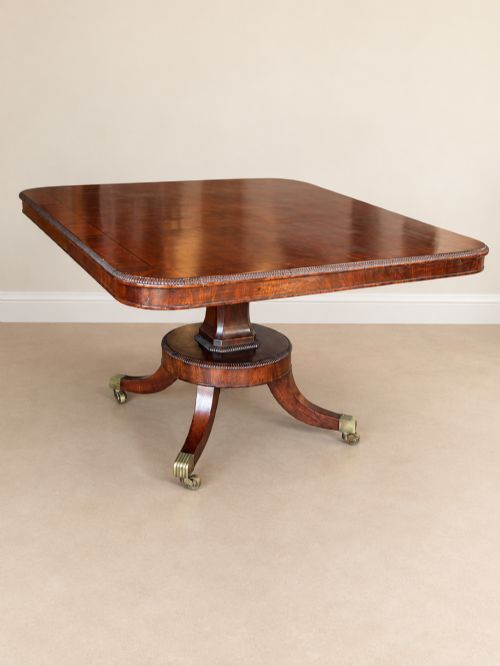
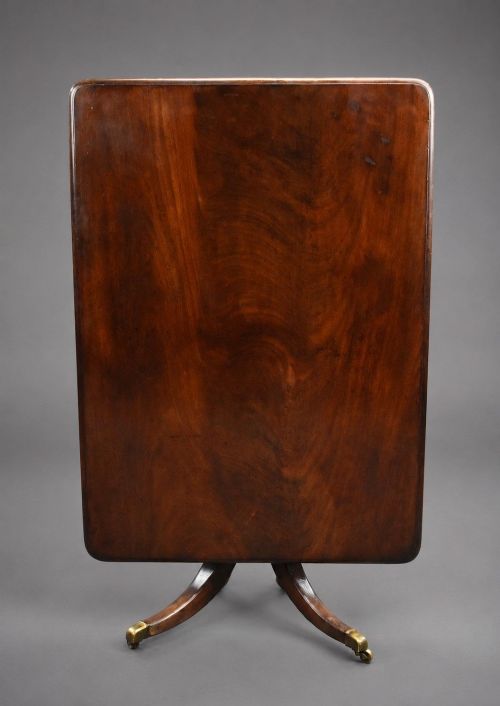

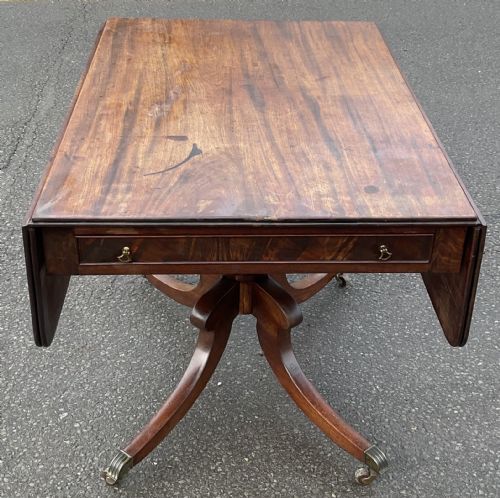


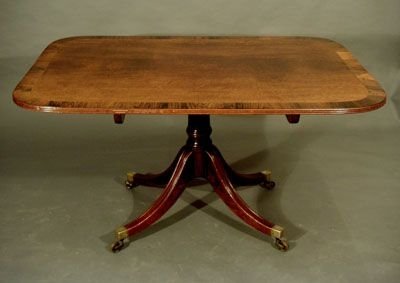
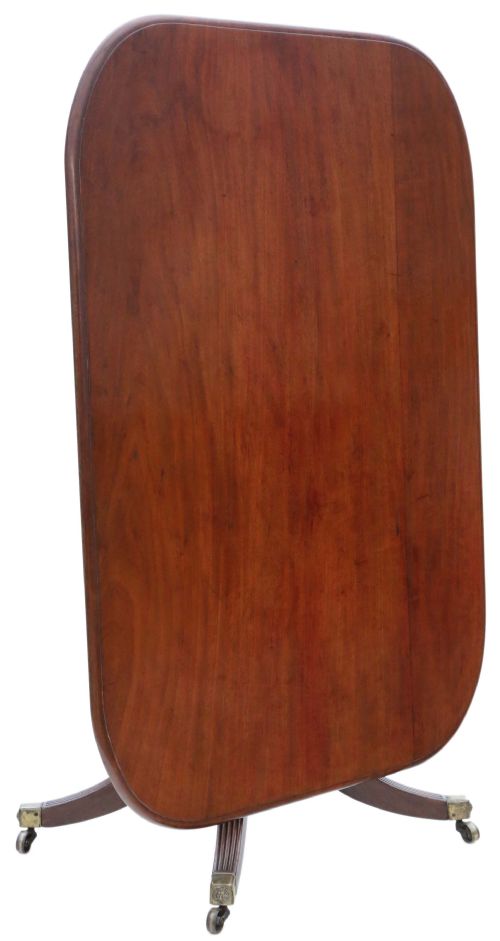


Mahogany Quadruped Dining Table
A mahogany quadruped dining table is a substantial timber piece supported by a four-legged pedestal base, offering generous legroom and classic dining presence.
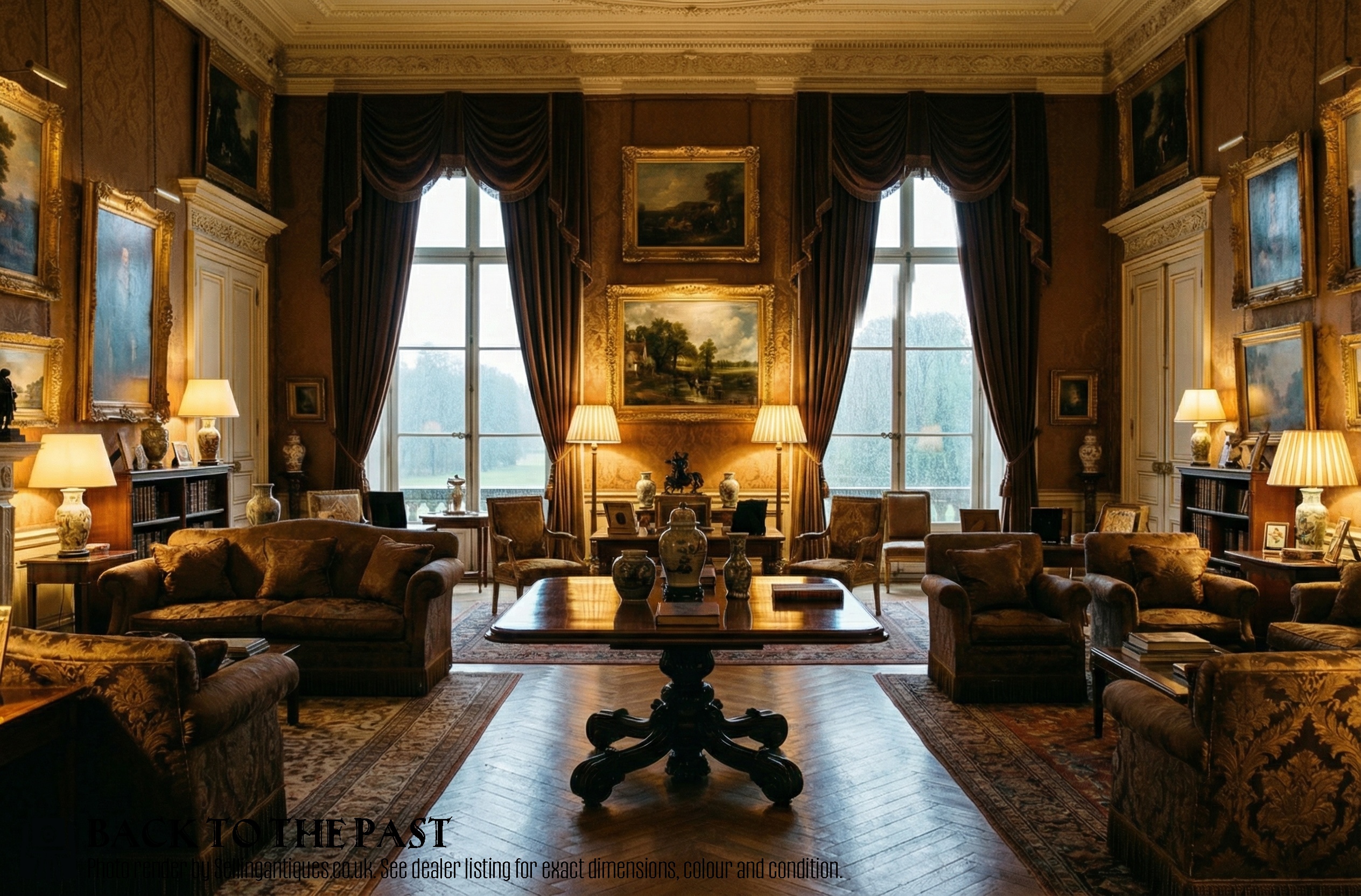
Mahogany Quadruped Dining Table
A mahogany quadruped dining table brings together timber forms designed for communal dining, centre placement, or informal breakfast use. When buyers search for a mahogany quadruped dining table, they encounter pieces originating across the Georgian, Regency, William IV, and Victorian eras.
The selections span standard dining tables alongside breakfast tables, centre tables, and loo tables. Most examples rely on pedestal supports rather than four corner legs, often featuring tilt-top mechanisms for storage.
Origins stretch from the early nineteenth century through to later revival periods, including pieces dated around eighteen hundred, eighteen-twenty, and eighteen-fifty. Workshops constructed these items using substantial timbers scaled for domestic dining rooms.
What varies in quality
Quality differences stem primarily from timber selection, where highly figured mahogany veneers and carefully matched grain patterns distinguish superior dining tables from plain stock. The choice of secondary exotic timbers for banding, such as rosewood or satinwood, adds refinement.
Construction methods and hardware integration also set pieces apart, notably the stability of the quadruped base and the precision of the tilt-top mechanism. Master cabinet makers ensured that pedestal junctions and brass castors remained robust under heavy daily use.
Mahogany Quadruped Dining Table Retail Price Guide 2026
Typical asking prices for mahogany quadruped dining table among the pieces listed under this phrase on Sellingantiques today, from the lower quarter to the upper quarter. They describe what is for sale here now, not the wider market.
Many breakfast tables spent their mornings holding porcelain tea sets and their evenings tilted flat against the drawing room wall.
James Mein·William Trotter
The Mahogany Quadruped Dining Table Glossary
- Quadruped
- A base configuration featuring four spreading legs radiating from a central pillar. This design provides robust support for large tabletops while maintaining floor clearance.
- Tilt-top
- A hinged tabletop mechanism allowing the surface to fold vertical when not in use. This clever design enabled tables to be stored flat against walls to save space.
- Cuban mahogany
- A dense, dark timber prized for its rich grain and deep colour. Makers favoured this material for high-status furniture throughout the Georgian and Regency periods.
- Loo table
- A large round or oval table designed for evening card games and social gatherings. These pieces typically feature pedestal bases and tilting mechanisms.
- Banding
- A narrow strip of contrasting wood veneer applied to table edges as a decorative border. Craftsmen used satinwood, rosewood, and lacewood for this detailed work.
Mahogany Quadruped Dining Table: Frequently Asked Questions
How do I identify a tilt-top table?
Tilt-top tables include a hinged mechanism beneath the surface that allows the top to rotate ninety degrees into a vertical position. A brass catch or wooden wedge secures the top when flat.
This functional adaptation allowed large dining surfaces to be moved aside and stored compactly against a room boundary when dining concluded.
What timber was used for these tables?
Makers relied predominantly on mahogany, including figured varieties and dense Cuban mahogany stocks known for their deep colour and substantial weight. Decorative banding often incorporated contrasting woods like satinwood or rosewood.
Subsurface framing occasionally utilised secondary structural timbers, but visible surfaces prioritized rich brown hardwoods finished to a warm lustre.
How do I care for a mahogany table?
Keep wooden tables away from direct heat sources and strong sunlight to prevent the timber from drying out or fading. Regular dusting with a soft cloth maintains the polished surface without abrasive chemical buildup.
Use protective mats under hot dishes and liquids to safeguard the antique polish and timber grain from moisture rings.