

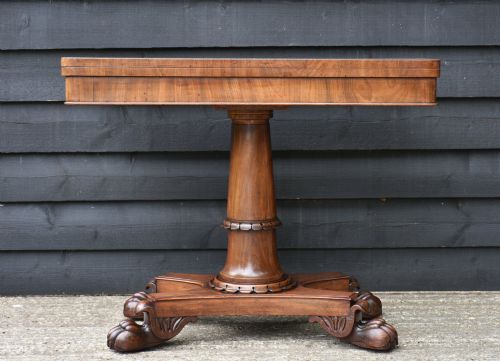
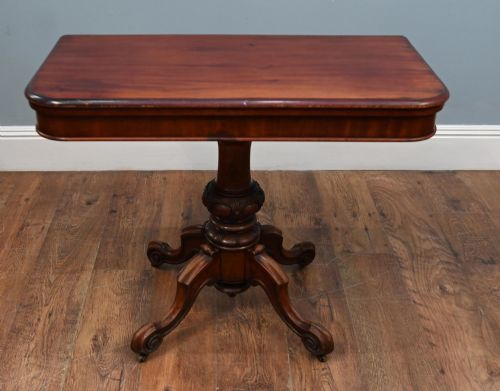
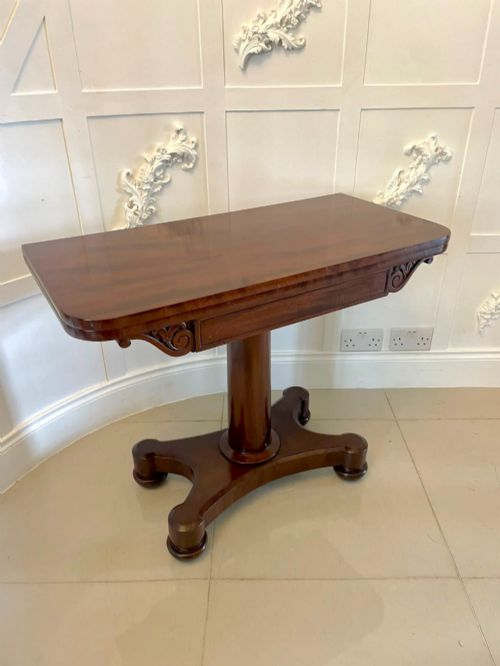
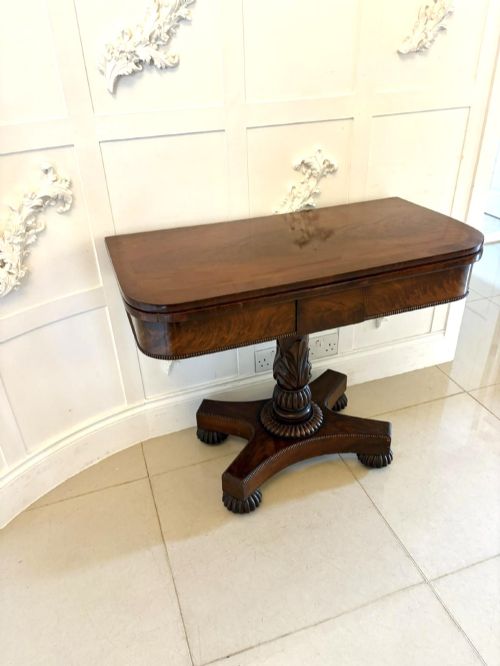
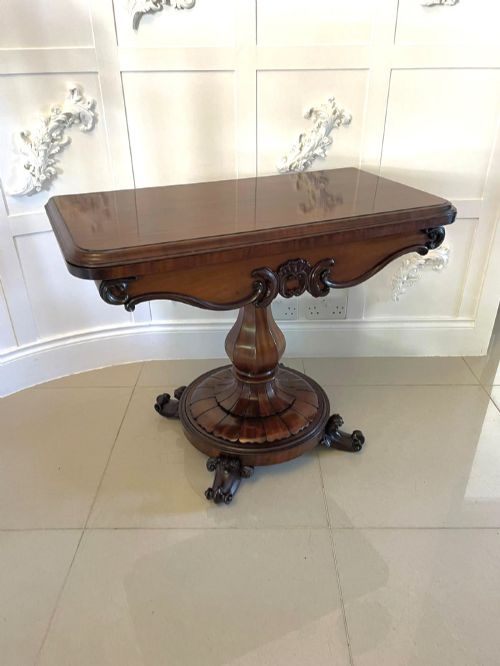
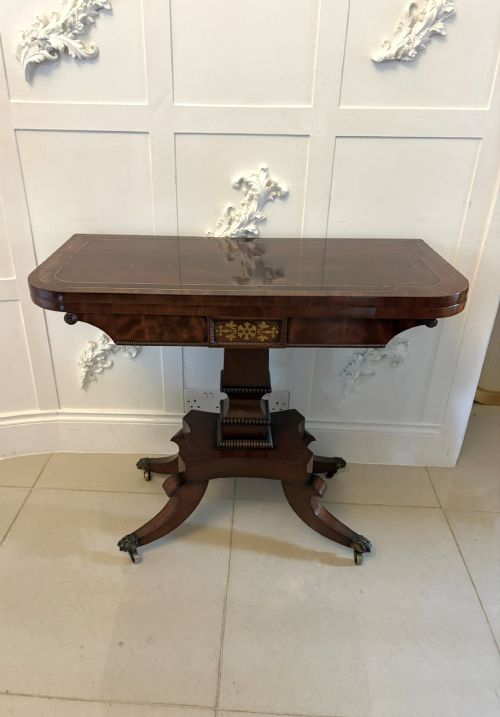
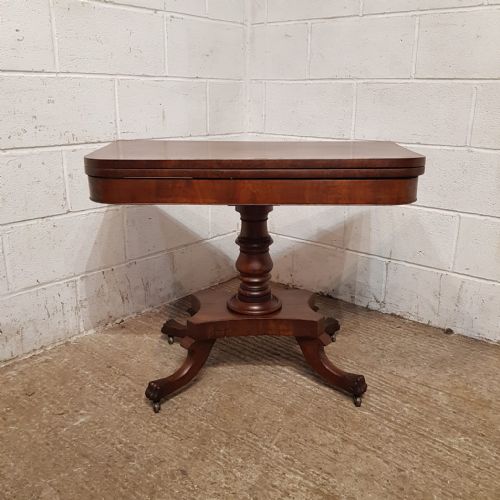
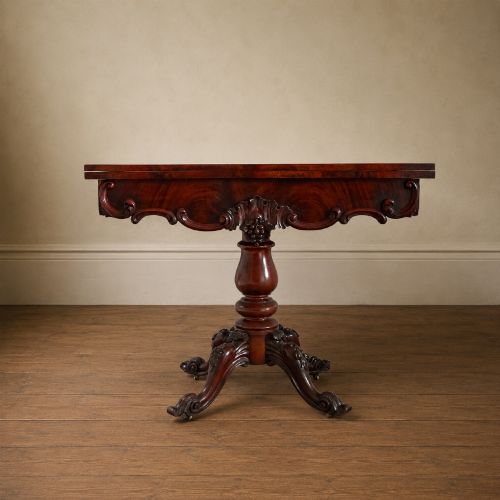

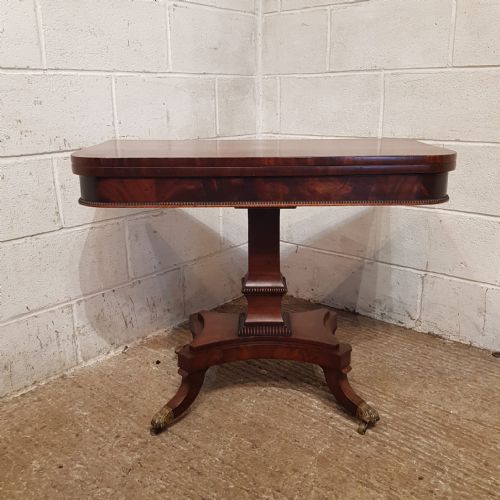
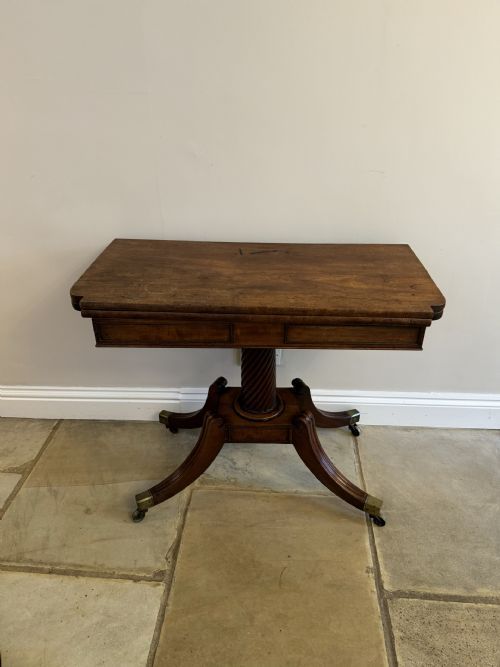
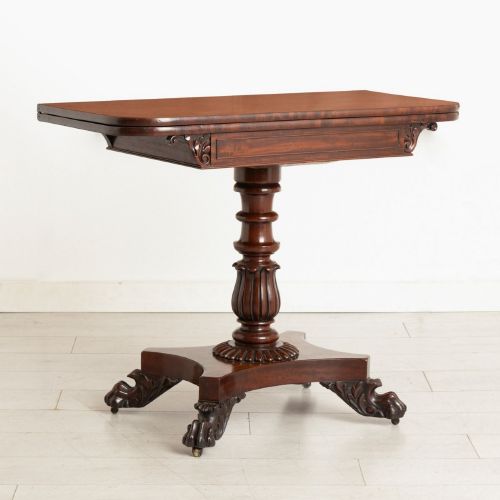
Mahogany Pedestal Games Table
A mahogany pedestal games table offers a versatile surface for cards and board play while anchoring a room with rich timber grain.
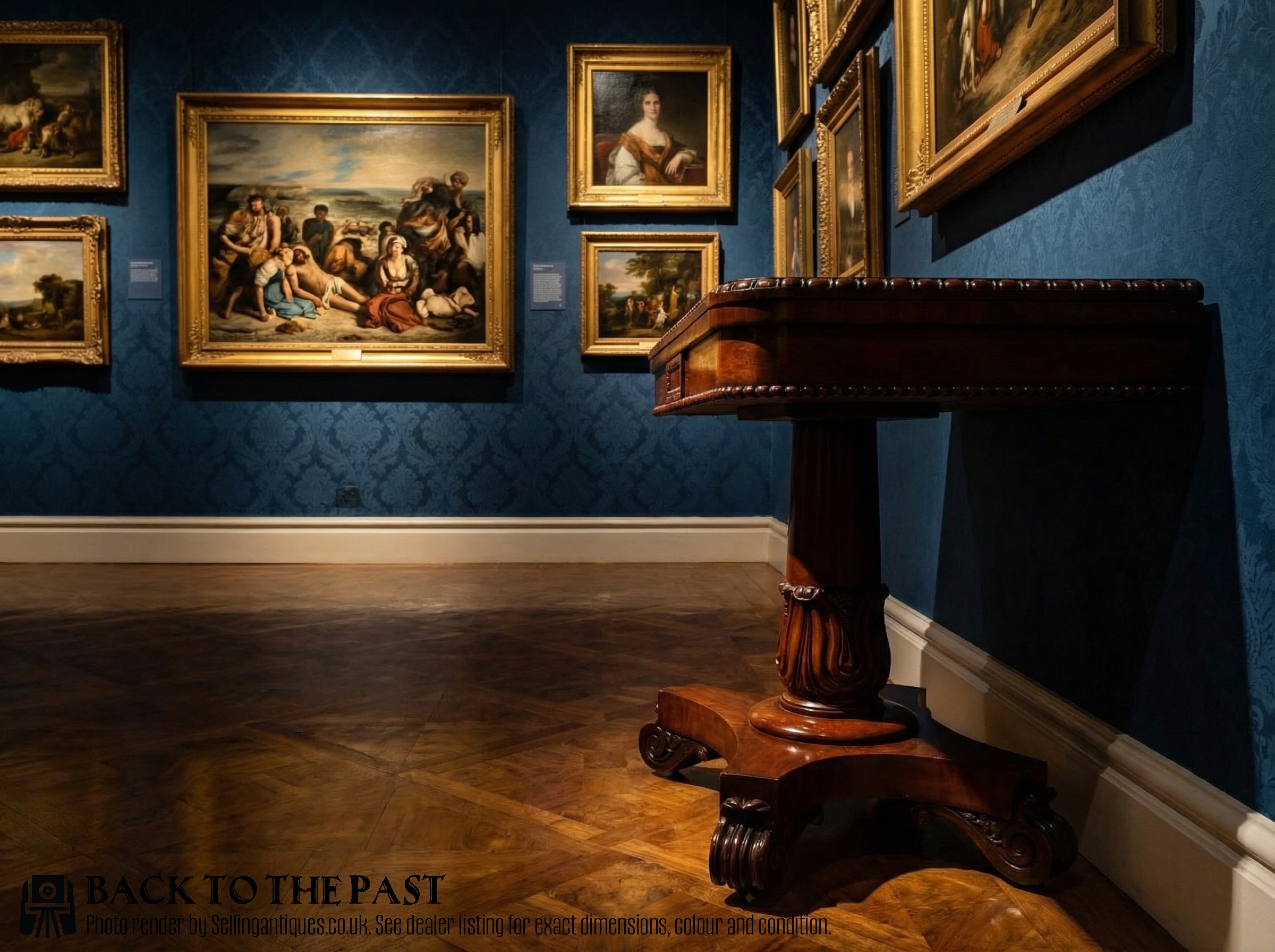
Mahogany Pedestal Games Table
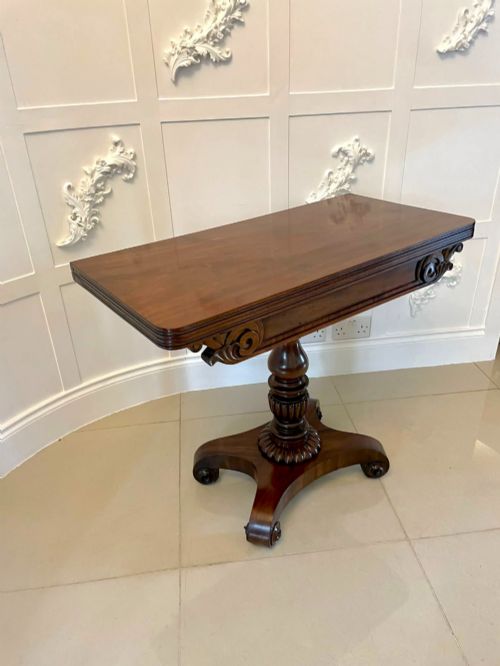
When you search for a mahogany pedestal games table, you examine multi-functional furniture designed for evening entertainment and parlour use during the Georgian, Regency, William IV, and Victorian eras. These pieces typically feature a folding, swivel, or turnover top that conceals a baize-lined playing surface or gaming wells when opened.
You are most likely to meet examples from the nineteenth century, including Regency and William IV pieces, which often stand on a central pillar supported by a platform base with carved or splayed legs. The form frequently doubles as a console, tea, or side table when closed against a wall.
How they were made
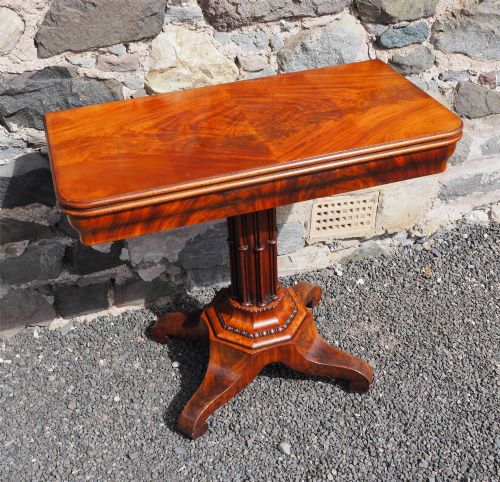
Cabinetmakers constructed these tables using solid mahogany and figured mahogany veneers, often highlighting flame mahogany grain across the fold-over tops. Secondary timbers and structural framing provided stability for the heavy swivelling mechanisms.
Decoration relied on contrasting materials such as brass inlay, ebony stringing, boxwood, rosewood, and satinwood, occasionally complemented by gilded brass mounts and fitted interior wells for chess or cards.
Mahogany Pedestal Games Table Retail Price Guide 2026
Typical asking prices for mahogany pedestal games table among the pieces listed under this phrase on Sellingantiques today, from the lower quarter to the upper quarter. They describe what is for sale here now, not the wider market.
The listings here span the Georgian, Regency, William IV, and Victorian periods, utilising mahogany, rosewood, satinwood, and brass.
What varies in quality
The distinction between standard production and the finest workshops lies in the selection of timber figures, such as heavily figured flame mahogany or satinwood, and the precision of brass inlay and stringing. Superior tables demonstrate crisp carving on the pedestal base and tight joinery in the turnover mechanism.
Proportion and stability also separate grades of manufacture, where well-balanced pillar supports and unwarped timber tops ensure smooth daily conversion from a compact console to a stable playing surface.
The Mahogany Pedestal Games Table Glossary
- Baize
- A woolen fabric used to line the playing surface of card and games tables. It provides a soft, friction-reduced texture for dealing cards.
- Turnover top
- A hinged table top that folds open to double the surface area, revealing a hidden compartment or playing well beneath.
- Pedestal base
- A central column support resting on a platform or footed base, characteristic of nineteenth-century table design.
- Stringing
- Thin lines of contrasting wood inlay used to outline geometric borders and panels on table tops and friezes.
- Console table
- A table designed to stand flat against a wall, frequently utilised as the closed format for fold-over games tables.
Mahogany Pedestal Games Table: Frequently Asked Questions
How do you open a pedestal games table?
Most examples utilise a turnover or swivel mechanism where the top rotates ninety degrees and unfolds to reveal the playing surface and interior storage wells.
Care must be taken to support the pivoting leaf evenly during the motion to protect the original hinges and central pivot pin.
What is the difference between a tea table and a games table?
While both share fold-over top constructions, tea tables generally feature plain timber interiors meant for serving beverages.
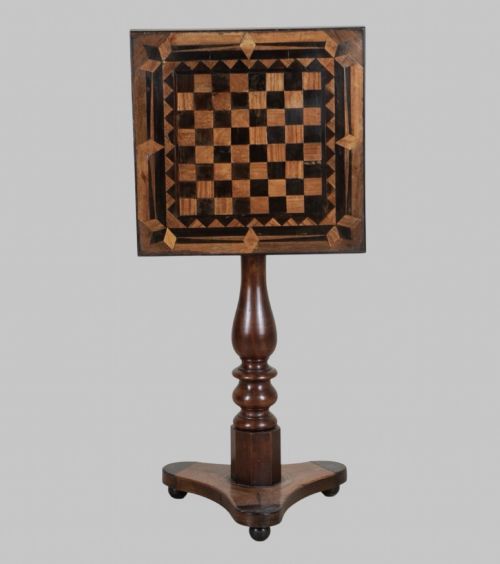
Games tables incorporate baize linings, inlaid chess boards, or specialised wells designed specifically for card play and board games.
How do I identify a Regency games table?
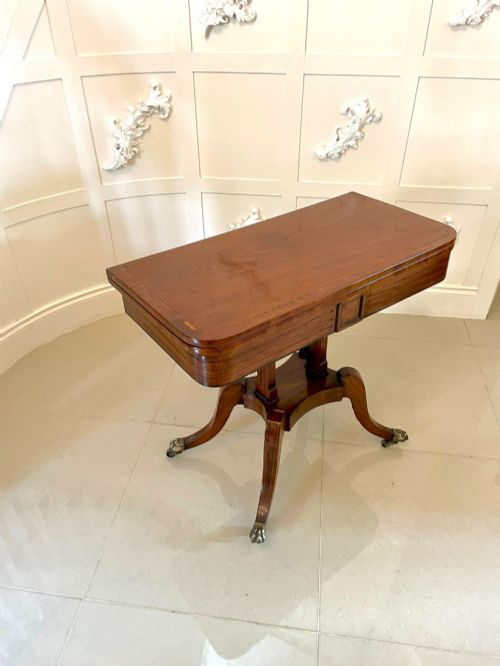
Regency pieces typically date from the early nineteenth century and display classical architectural influences, such as brass inlay, rosewood crossbanding, and robust pedestal columns.
They often combine dark mahogany bodies with bright metallic accents and sabre legs ending in brass paw castors.
Can these tables be used daily?
These pieces were built for practical domestic use as functional furniture and handle normal daily activities well when treated with care.
Sudden changes in room humidity and excessive weight on the unfolded leaves should be avoided to protect the antique veneers and hinges.