



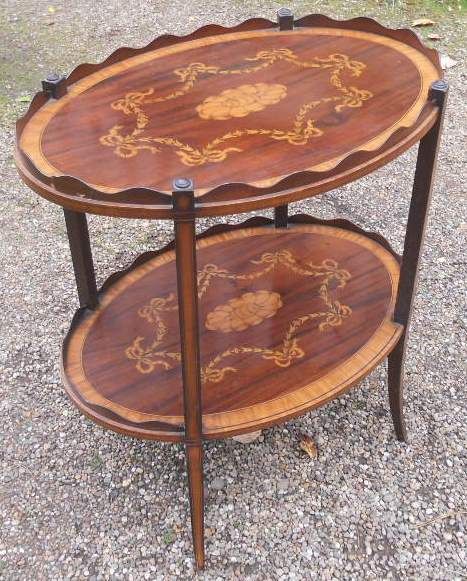
Mahogany Parlor Stand
A mahogany parlor stand brings warmth and refined utility to a room, offering a sturdy surface or neat display space rooted in Edwardian and Georgian design.
Mahogany Parlor Stand
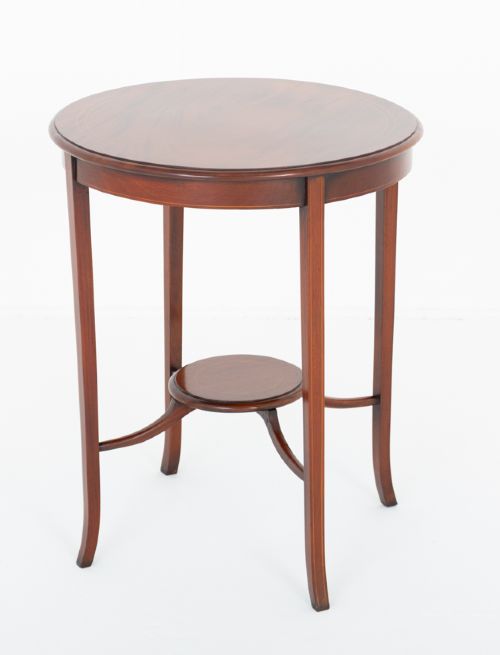
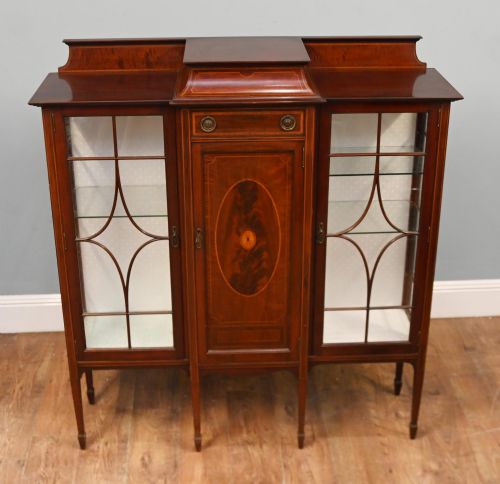
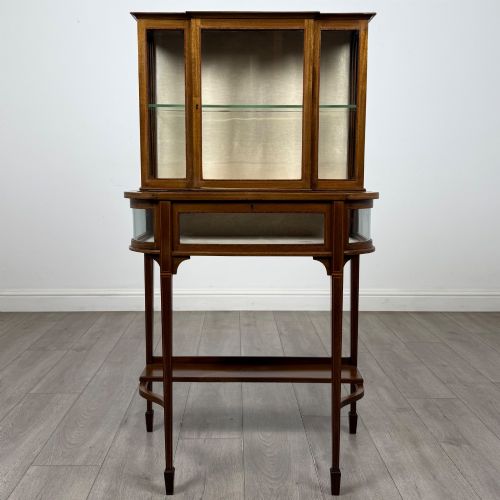
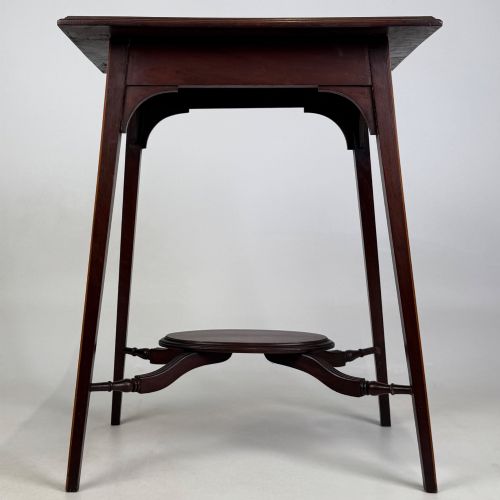
A mahogany parlor stand encompasses versatile occasional tables, side tables, and display cabinets designed for domestic use in the drawing room or parlour.
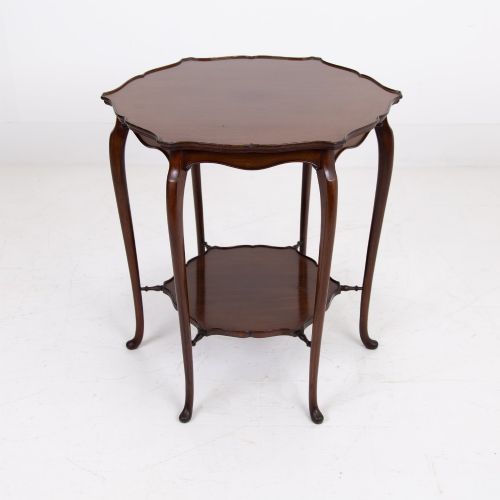
Buyers searching for a mahogany parlor stand will most frequently encounter Edwardian interpretations of earlier Sheraton and Georgian styles, often featuring multi-tiered surfaces or glazed display compartments.
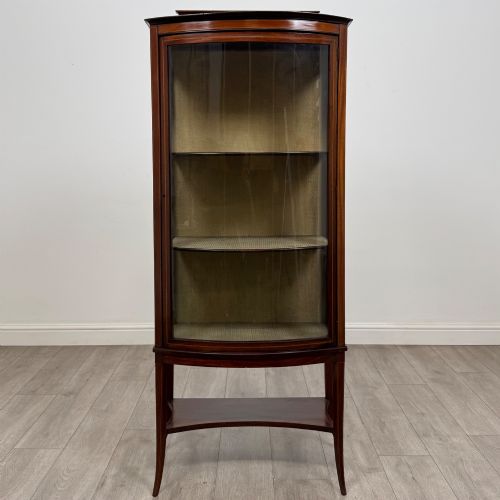
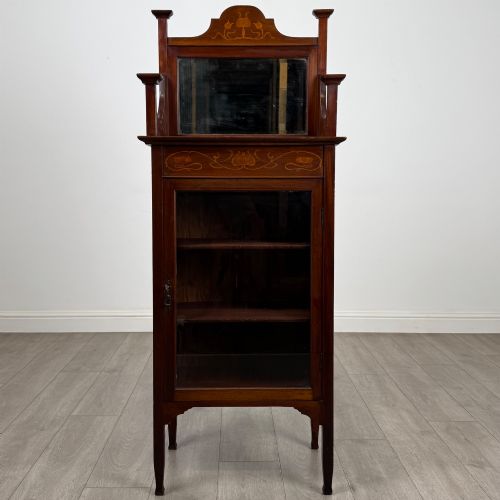
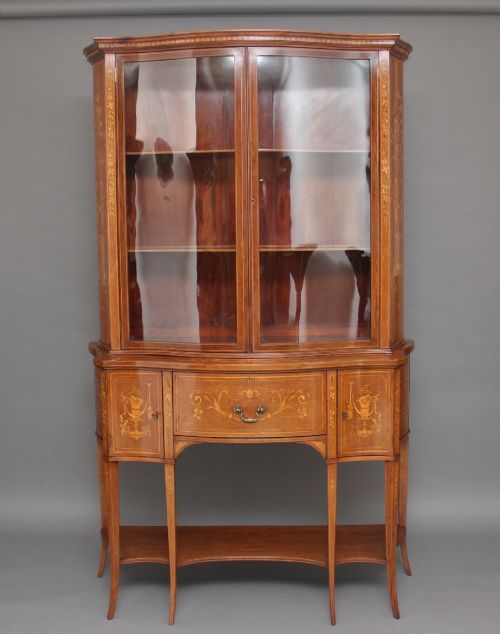
The forms range from six-sided occasional tables and two-tier tea or lamp stands to bow-front china cabinets and music cabinets equipped with lower shelves.
How they were made
The primary material is mahogany, frequently enriched with contrasting stringing and banding in satinwood and boxwood to define edges and panel borders.
Cabinetmakers utilised marquetry inlay and turned wooden legs, occasionally incorporating brass hardware, mirror backs, glass panels, and fabric linings into the display pieces.
Mahogany Parlor Stand Retail Price Guide 2026
Typical asking prices for mahogany parlor stand among the pieces listed under this phrase on Sellingantiques today, from the lower quarter to the upper quarter. They describe what is for sale here now, not the wider market.
Several pieces include dedicated music compartments, proving that Victorian and Edwardian evenings relied heavily on organised sheet music.
What varies in quality
Quality rests in the crispness of the inlay work and the selection of timber grain, where balanced figuring elevates the piece beyond standard production.
Structural refinement shows in the turning of the legs, the snug fit of doors on cabinets, and the careful integration of lower tiers or mirror backs.
Edwards and Roberts
The Mahogany Parlor Stand Glossary
- Mahogany
- A durable tropical hardwood prized for its deep reddish-brown colour and stable grain, forming the primary structure of these tables and cabinets.
- Sheraton Revival
- A late nineteenth and early twentieth-century design movement copying the lighter, neoclassical furniture forms associated with Thomas Sheraton.
- Marquetry
- Decorative veneer work arranged in pictorial or geometric patterns using various coloured woods.
- Occasional table
- A small, movable table designed for a specific, intermittent domestic purpose such as holding a lamp or book.
- Vitrine
- A glass-fronted cabinet or display case specifically built for showing porcelain, curiosities, or books.
Mahogany Parlor Stand: Frequently Asked Questions
What is a parlor stand used for?
These pieces served multiple functions in traditional reception rooms, acting as stable surfaces for lamps, reading material, or decorative ornaments.
Cabinets and vitrines within this group were specifically utilised to house and protect prized china, glassware, or sheet music.
How do I date a mahogany stand?
Dating relies on observing construction methods, timber characteristics, and stylistic markers such as inlay motifs and leg turning.
Most examples date from the Edwardian period or draw directly upon earlier Georgian and Sheraton design vocabularies.
Where should I place a parlor stand?
A side table or occasional stand fits comfortably beside seating arrangements in a living room or study to provide a convenient surface.
Display cabinets suit corners or blank wall spaces where their glass panels and mirrored backs can reflect light and showcase collections.
Are these stands made of solid wood?
Construction typically combines solid mahogany framing for legs and structural members with stable veneered panels for broader surfaces.
Inlay work utilises contrasting woods like satinwood and boxwood set directly into the primary timber.