





Mahogany Office Bookcase
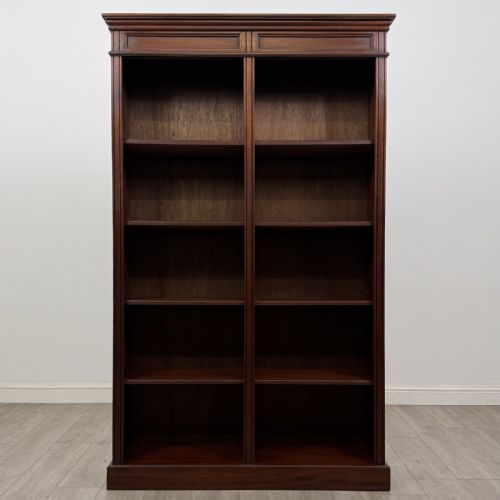
These mahogany office bookcase examples bring together practical workspace storage and rich timber, offering a handsome anchor for any room.
Mahogany Office Bookcase
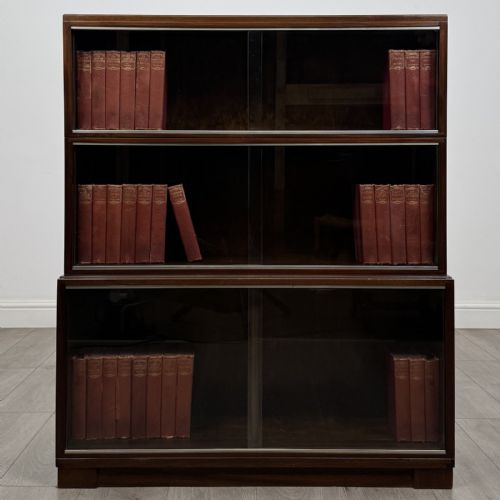
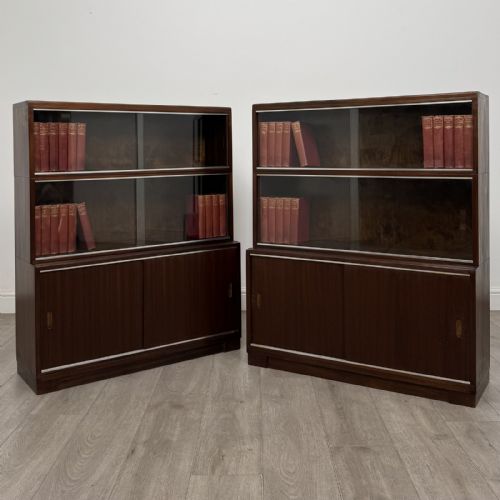
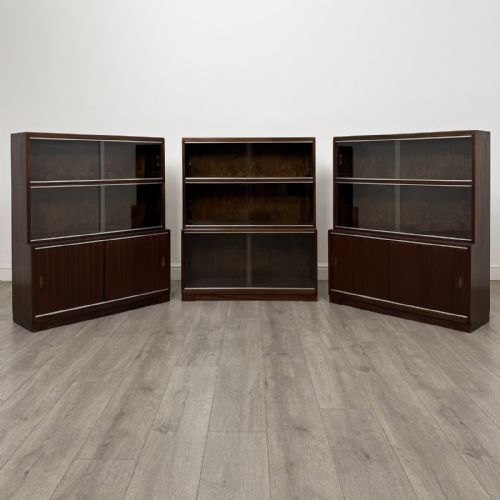
A mahogany office bookcase brings together the practical storage required for working papers and the display space needed for volumes, drawing on forms from the Georgian, Victorian, and Regency periods through to the early twentieth century. When searching for a mahogany office bookcase, a buyer encounters everything from large country house estate cabinets and bureau bookcases to sectional stacking systems and sliding glass door display cabinets.
The selection ranges from George III bureau bookcases and compact early nineteenth century fitted office cabinets to Art Deco and 1920s commercial sectional stacking designs. Alongside these stand simpler open bookcases, desk tidies, and secretaire sideboards, reflecting how workspaces evolved across different centuries.
How they were made
Makers utilised solid mahogany and mahogany veneers over secondary timbers such as oak and pine, pairing the dense brown wood with glass panels and brass hardware. Up and over doors, sliding mechanisms, and sectional stacking units required precise joinery to ensure smooth operation.
Interior fittings often incorporated leather surfaces alongside fitted drawers and pigeonholes, supporting the daily clerical tasks of Victorian and Edwardian offices.
Mahogany Office Bookcase Retail Price Guide 2026
Typical asking prices for mahogany office bookcase among the pieces listed under this phrase on Sellingantiques today, from the lower quarter to the upper quarter. They describe what is for sale here now, not the wider market.
Listings feature mahogany alongside glass, brass, oak, pine, and leather across pieces spanning the Georgian period to the 1930s.
What varies in quality
Quality rests in the choice of timber figure, the crispness of moulded details, and the integrity of mechanical elements like stacking tiers and sliding glass doors. Pieces built with solid mahogany throughout and retained original brass hardware command greater appreciation than later adaptations.
The sophistication of internal desk fittings, such as secret compartments within bureau bookcases or finely dovetailed drawers, distinguishes standard commercial furniture from finer cabinet work.
Macey·Globe Wernicke
The Mahogany Office Bookcase Glossary
- Bureau bookcase
- A combination of a sloping-front desk and a shelved upper bookcase, often featuring internal pigeonholes and small drawers.
- Sectional bookcase
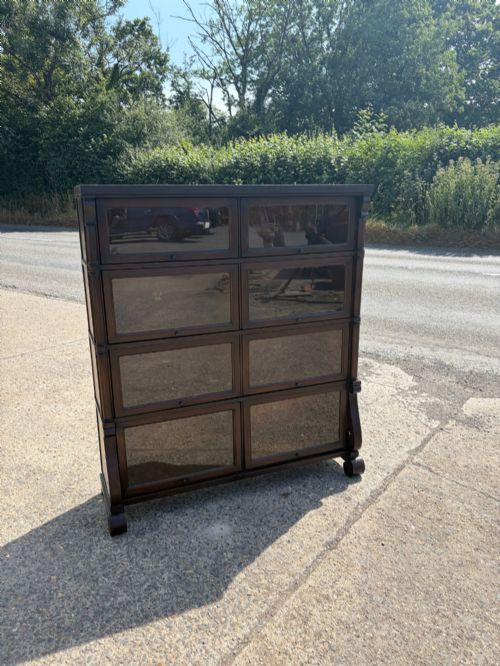
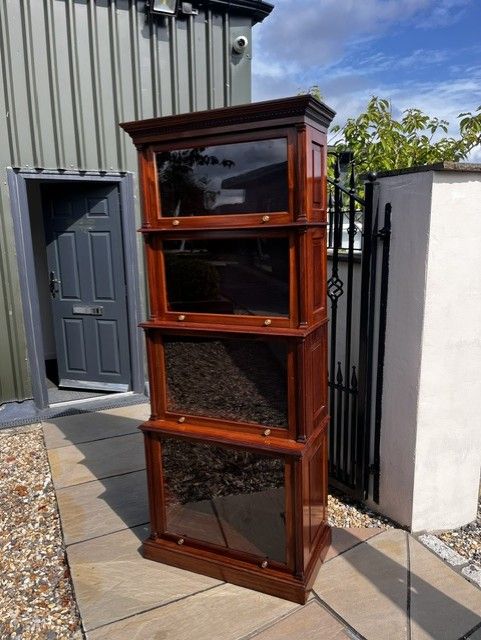
- A modular shelving unit built in horizontal tiers with glass doors that lift and slide back into the case, frequently associated with barristers.
- Secretaire sideboard
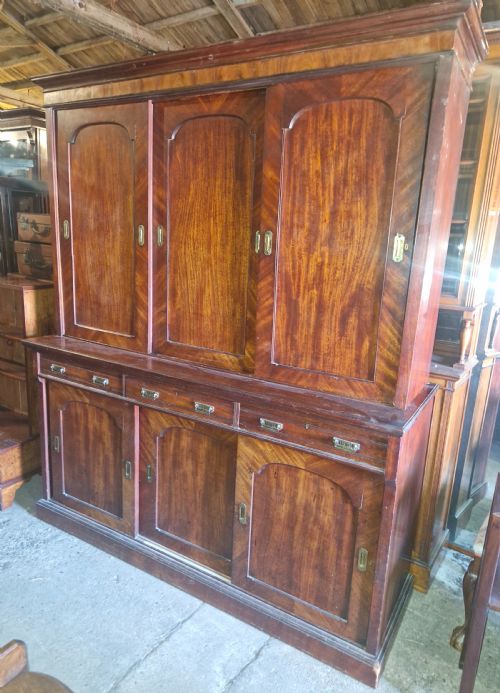
- A low storage unit incorporating a pull-down writing drawer that conceals a fitted desk interior above lower cupboards.
- Desk tidy
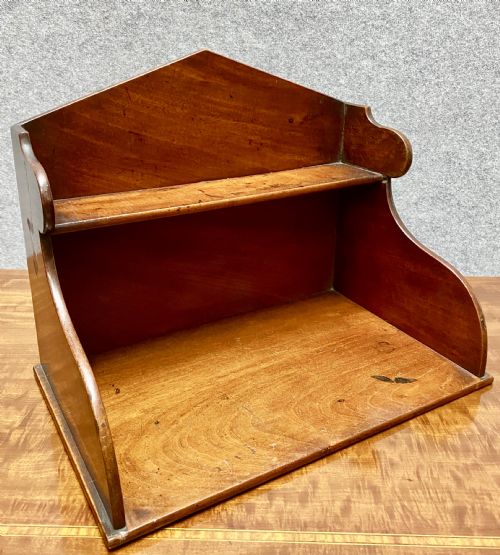
- A small tabletop bookshelf or compartmented stand designed to organise correspondence and writing materials.
Mahogany Office Bookcase: Frequently Asked Questions
What periods do these bookcases cover?
The pieces span multiple eras, including Georgian, Regency, and Victorian periods, alongside early twentieth-century examples from the 1920s and 1930s.
Designs range from formal George III bureau bookcases to mid-century modern and Art Deco open variants.
How were stacking bookcases used?
Stacking bookcases allowed offices and libraries to expand their shelving vertically by adding modular sections as needed.
The glass doors protected reference volumes from dust while providing clear visibility of titles.
Are these pieces suitable for modern workspaces?
Their compact footprints and compartmentalised interiors make them practical for storing modern books and stationery.
Bureau bookcases provide a concealed writing surface that closes away when not in use.
What materials are found in these pieces?
Primary surfaces feature mahogany, appearing as both solid timber and veneer over structural woods like oak and pine.
Hardware typically includes brass fittings, glass doors, and occasional leather inserts on writing surfaces.