



Mahogany Mirror Washstand
A mahogany mirror washstand combines timber framing, inset surfaces and adjustable glass for personal grooming across Georgian, Victorian and Edwardian interiors.
Mahogany Mirror Washstand
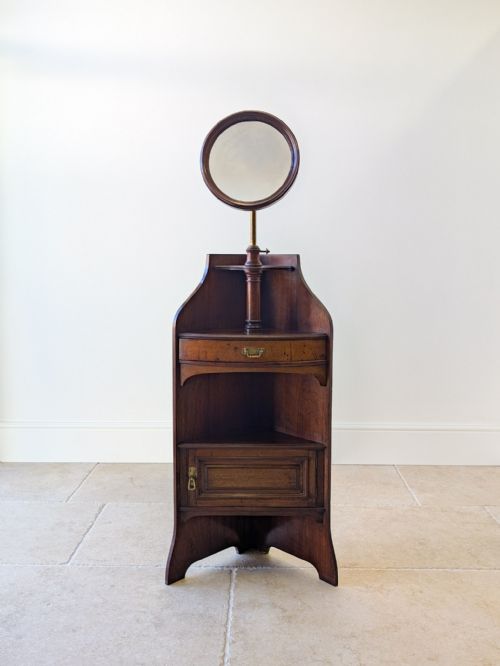
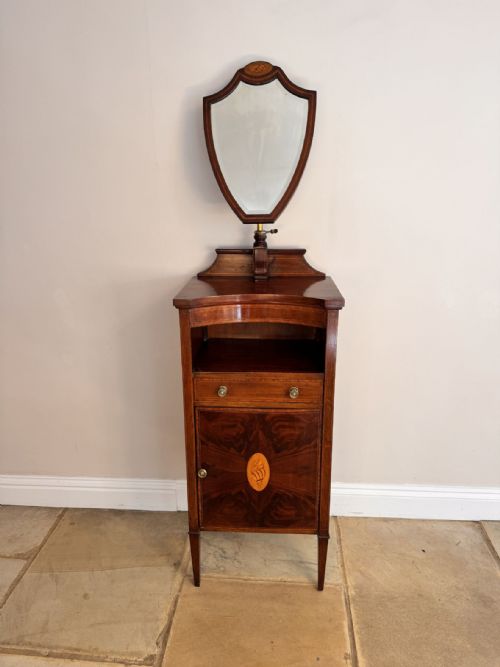
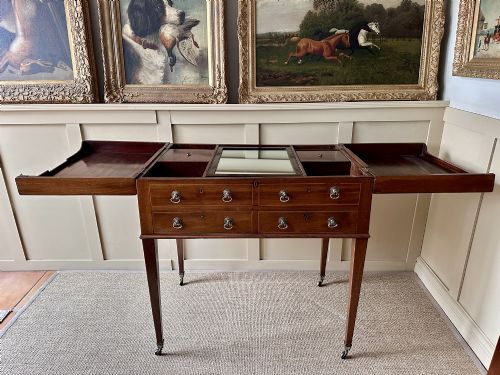
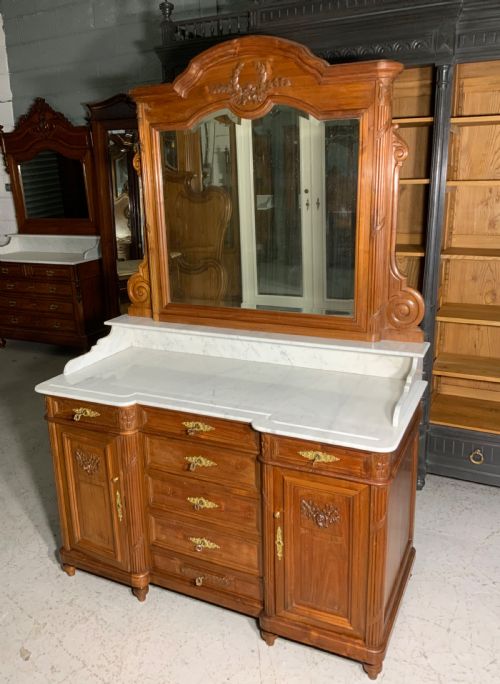
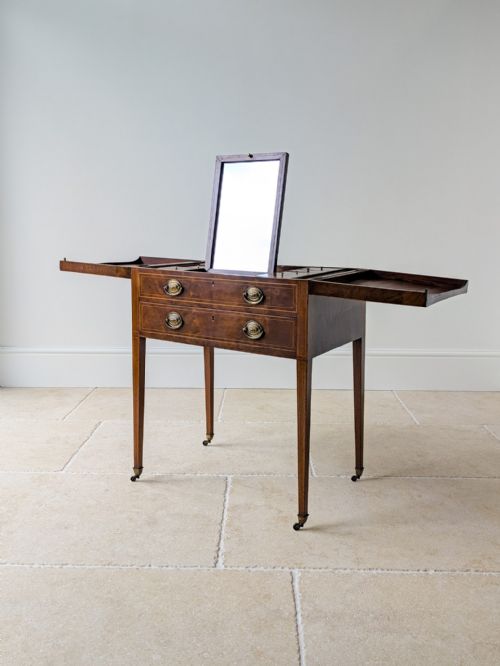
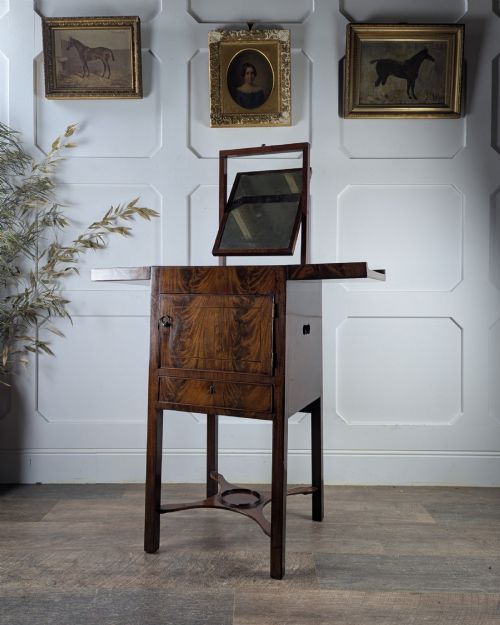
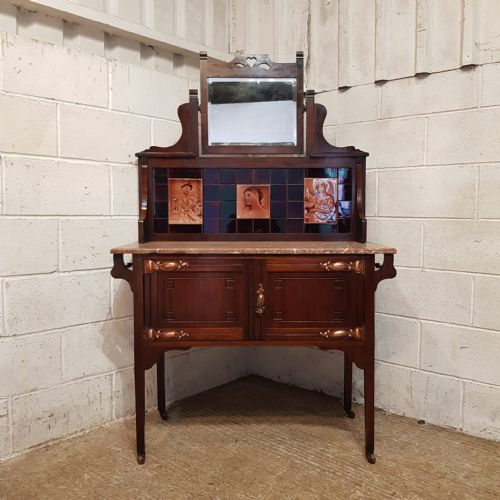
A mahogany mirror washstand represents a practical piece of bedroom furniture designed for washing and dressing, appearing across Georgian, Victorian, and Edwardian eras. These objects manifest as folding campaign pieces, marble-topped wash stands with mirror backs, and gentleman's dressing tables featuring integrated mirrors.
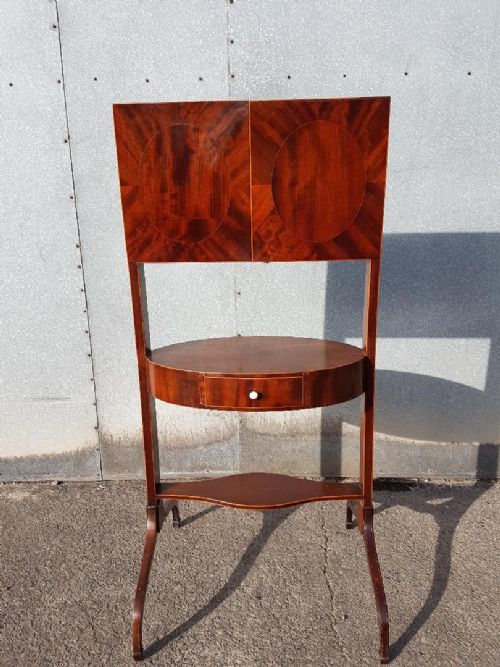
The versions most commonly met on this page span the George III period up to the early twentieth century. Examples range from compact corner units to French Rococo Revival and Art Nouveau forms, often incorporating hidden compartments or triplate glass configurations.
Materials and construction
Cabinet makers utilised solid mahogany and Cuban mahogany alongside decorative elements such as boxwood inlay and satinwood banding. Structural integrity relied on traditional joinery techniques appropriate to the period, accommodating folding mechanisms and internal storage.
Fitted surfaces frequently incorporate white marble tops and ceramic basins alongside brass hardware, copper details, and adjustable glass mirrors. These diverse materials serve both functional water resistance and refined aesthetic display.
Mahogany Mirror Washstand Retail Price Guide 2026
Typical asking prices for mahogany mirror washstand among the pieces listed under this phrase on Sellingantiques today, from the lower quarter to the upper quarter. They describe what is for sale here now, not the wider market.
Listings feature mahogany, marble, brass, ceramic, copper, and boxwood inlay across pieces dated from the Georgian era to the early twentieth century.
Craftsmanship and distinction
The distinction between standard and superior pieces rests upon the selection of timber grain, particularly the depth and figure in Cuban mahogany, and the precision of boxwood inlay. Finer examples display meticulous attention to interior fittings, such as tambour cabinets and concealed shaving compartments.
Quality also shows in the integration of the mirror mechanism and the weight of the marble slab or ceramic components. Maker stamps and documented provenance elevate certain pieces above anonymous workshop production.
J. Shoolbred·Harrods
The Mahogany Mirror Washstand Glossary
- Campaign washstand
- A portable piece designed for travel, featuring folding timber stands and collapsible elements. These items dismantle easily for transport while retaining sturdy joints.
- Triplate dressing table
- A vanity or washstand fitted with three adjustable mirror panels. This arrangement allows the user to view angles from the side during grooming.
- Tambour cabinet
- A small enclosed cupboard fronted by narrow vertical strips of wood glued to a canvas backing. The flexible door slides smoothly along a recessed track.
- Marble top
- A stone slab fitted to the upper surface of a washstand to resist water damage. White or variegated marble provides a durable, non-porous working area.
- Gentleman's dressing table
- A multi-functional cabinet designed for male grooming, housing mirrors, shaving cups, and hidden compartments. These pieces often combine washing and writing facilities.
Mahogany Mirror Washstand: Frequently Asked Questions
How do I identify a Georgian washstand?
Georgian pieces typically exhibit clean architectural lines, straight or slightly tapered legs, and subtle boxwood stringing. They often employ solid Cuban mahogany with understated brass fittings rather than heavy ornamentation.
Later Victorian and Edwardian examples introduce curved elements, marble tops, and more elaborate mirror frames. Examining the interior construction and timber grain helps confirm the earlier period.
Were mirrors original to these washstands?
Many washstands featured integrated mirrors from creation, particularly gentleman's dressing tables and campaign pieces. Some incorporated folding or sliding mechanisms to conceal the glass when not in use.
Edwardian and late Victorian iterations frequently utilised fixed mirror backs attached to marble splashbacks. Checking the bevel of the glass and the fixings reveals period authenticity.
How were folding washstands used?
Folding washstands served domestic and travel purposes where space efficiency mattered. Users opened the hinged top to reveal washbasins, soap compartments, and rising mirrors.
When closed, the piece resembled a regular side table or cabinet to keep bedrooms tidy. This dual purpose suited compact Georgian and Victorian chambers.
Where should I place a washstand today?
A washstand functions well as a hallway console, bathroom vanity surface, or bedroom dressing table. The marble tops and mahogany timber offer durable utility in modern living spaces.
Positioning the piece away from direct heat sources protects the antique wood and inlay work. The adjustable mirrors remain practical for daily use.