


Mahogany Library Globes
Mahogany library globes are substantial geographical instruments mounted in timber stands, sought after for their traditional scholarly presence in a study.
Mahogany Library Globes
Mahogany library globes sit on stands or tables, presenting detailed terrestrial and celestial maps across spheres of paper and plaster. These instruments served both practical navigational reference and scholarly display within period rooms.
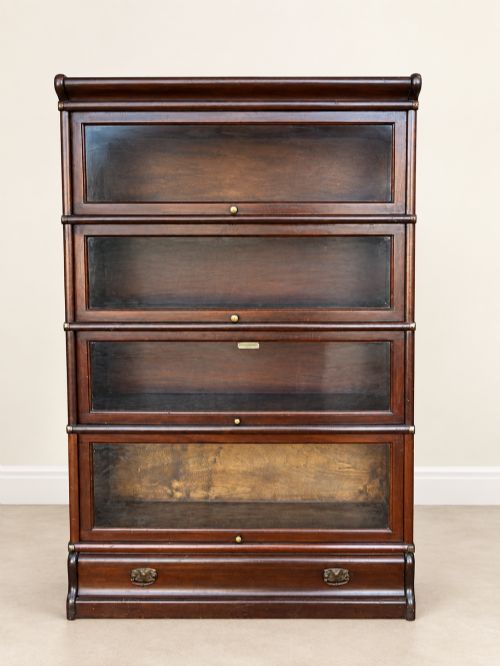
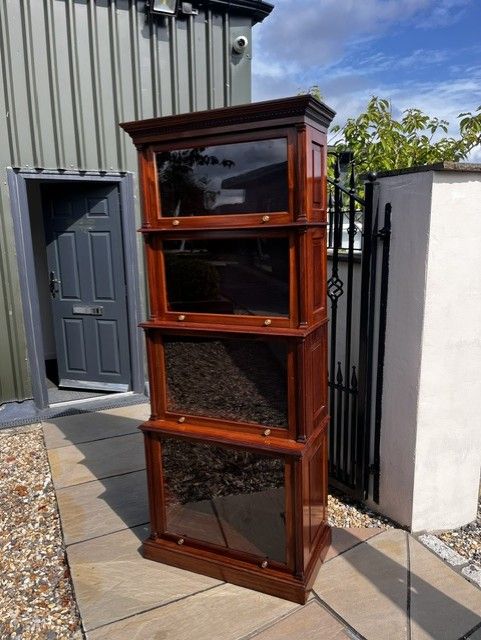
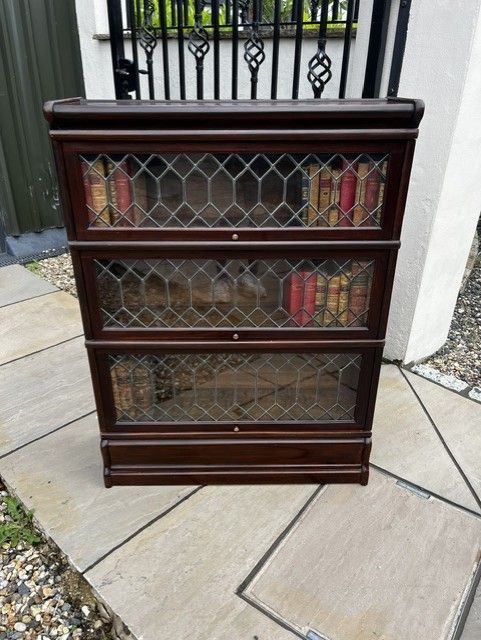
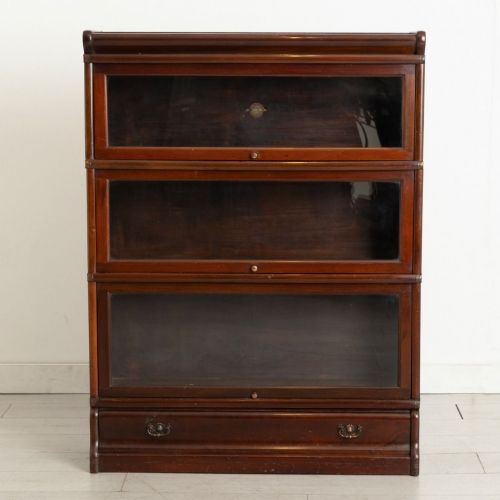
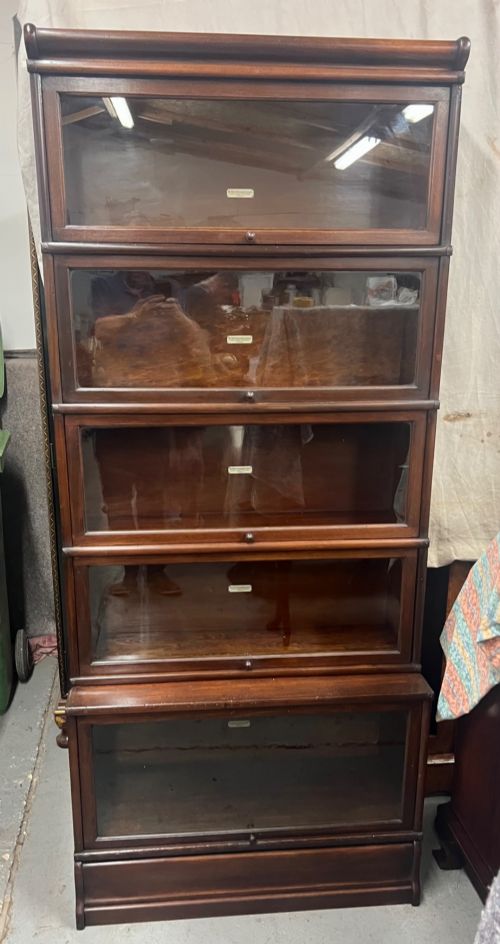
The versions met on this page range from compact table globes to impressive floor-standing examples dating from the nineteenth century. Alongside the globes themselves, the listings include related library furnishings such as sectional bookcases by makers like Globe Wernicke.
The forms span Victorian, Edwardian, and later periods, reflecting the shifting tastes of domestic libraries. Their construction combines geographical precision with traditional cabinetmaking in solid timber.
How they were made
The spheres themselves combine plaster applied over a core, covered with printed paper gores that are hand-coloured and varnished. This technique required precise alignment of the map segments to ensure geographical accuracy across the globe.
Stands and mountings utilise solid mahogany, brass, and occasional glass or lead components for stability and movement. The woodwork involves traditional joinery and turning to create robust frames capable of supporting the heavy spheres.
Object types span terrestrial and celestial globes, floor models, table globes, and sectional barrister bookcases in Edwardian, Victorian, and Art Deco styles.
What varies in quality
The clarity and detail of the cartography distinguish finer globes, particularly where map gores remain sharp and legible. Cartographer signatures and publication dates marked on the paper sections indicate the workshop standard.
Cabinetmaking distinction shows in the turning of the mahogany stands, the weight of the brass meridian rings, and the integrity of the timber framing. Better examples maintain smooth rotation mechanisms and original surface patination across the wood and paper.
G & J Cary·Malby's·Thomas Malby·Crunchley·Globe Wernicke·Heal's·AMYL
The Mahogany Library Globes Glossary
- Terrestrial globe
- A spherical map representing the earth, detailing continents, oceans, and political boundaries. These pieces often pair with celestial equivalents in library settings.
- Celestial globe
- A spherical map depicting the constellations and stars relative to the earth. They were used alongside terrestrial globes for astronomical study.
- Gores
- Tapered printed paper strips applied to the plaster sphere to form the map. Their precise alignment dictates the geographical accuracy of the instrument.
- Meridian ring
- The brass or metal ring surrounding the globe that allows it to rotate on an axis. This component often includes engraved degree markings for navigation.
- Sectional bookcase
- Modular modular shelving units with glass lift-up doors, frequently associated with library and study interiors from the period. Makers such as Globe Wernicke specialised in this form.
Mahogany Library Globes: Frequently Asked Questions
How do I read a globe map date?
Cartographers often printed revision years directly onto the paper gores near the cartouche. Comparing political boundaries shown on the sphere provides a reliable guide to the era of production.
Matching these details with the style of the mahogany stand helps confirm the overall period of the piece.
Where were library globes placed?
These instruments typically stood in studies, libraries, or parlours where scholars and gentlemen consulted them for reference. Floor-standing versions occupied corners or centre spaces near bookcases.
Smaller table globes sat directly on desks or tables alongside books and writing equipment.
How should I clean the paper sphere?
Paper globes require gentle dusting with a soft, dry cloth to prevent damage to the historic surface. Moisture and modern cleaning solutions will ruin the fragile printed gores and underlying plaster.
Keeping the piece away from direct sunlight preserves the original colours of the map.
Are pairs of globes common?
Makers often produced terrestrial and celestial globes as matching pairs to serve both geographical and astronomical studies. Surviving pairs remain desirable for their symmetry in a room.
Single globes are more frequently encountered on their own due to separation over time.