


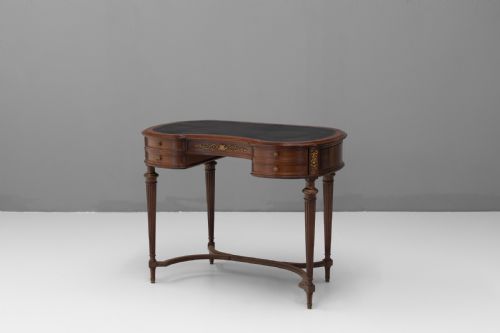


Mahogany Kidney Shaped Desk
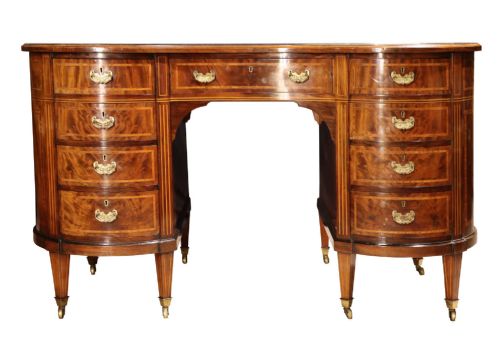
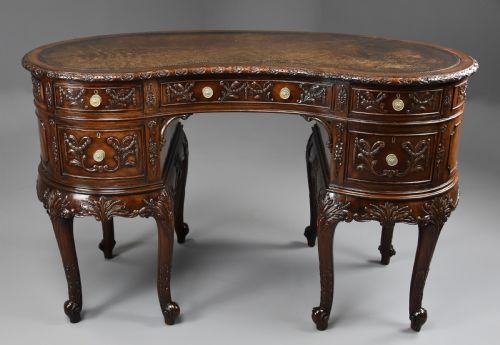
A mahogany kidney shaped desk offers a sweeping curved silhouette designed to sit comfortably in the middle of a room.
Mahogany Kidney Shaped Desk
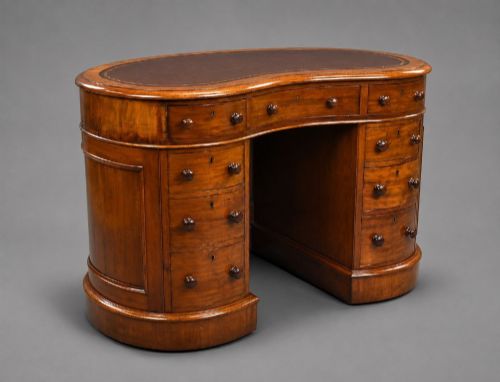
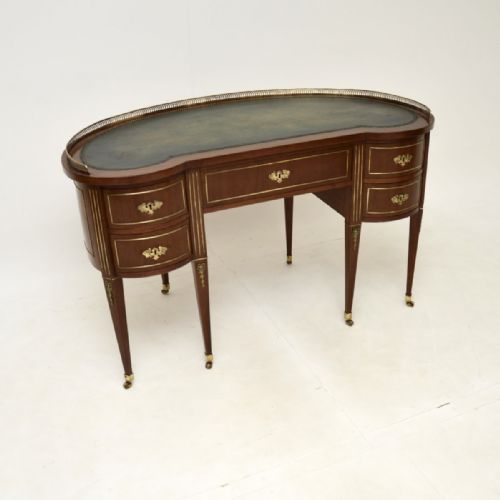
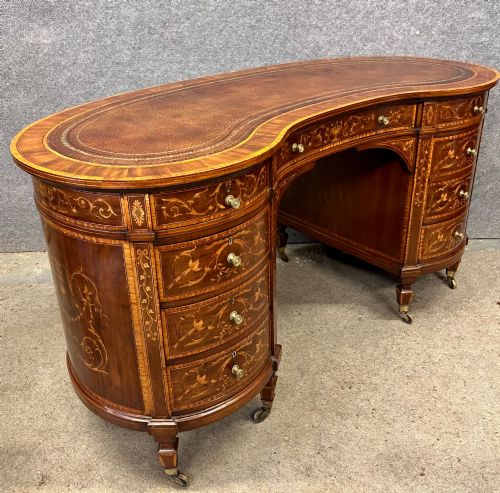
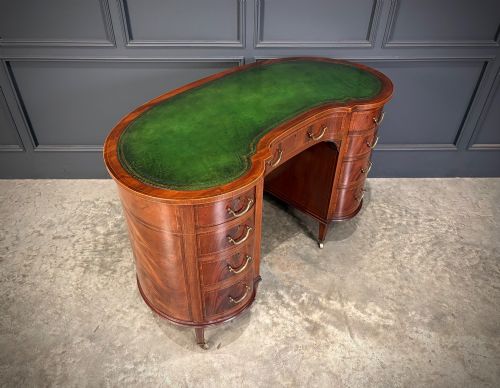
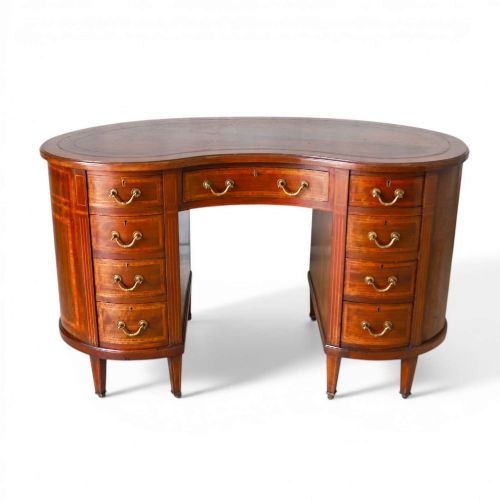
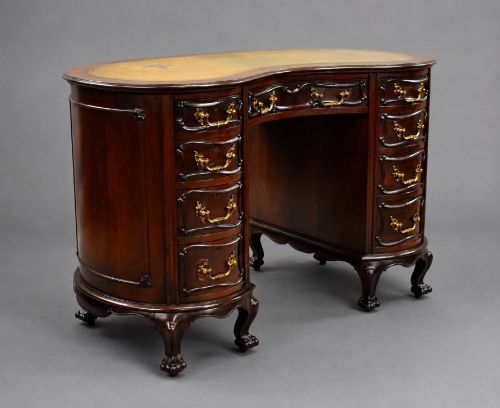
A mahogany kidney shaped desk provides a distinctive curved workspace that wraps around the user, appearing across Georgian, Victorian, and Edwardian periods. These tables function primarily as writing desks or occasional pieces, frequently detailed with leather writing surfaces.
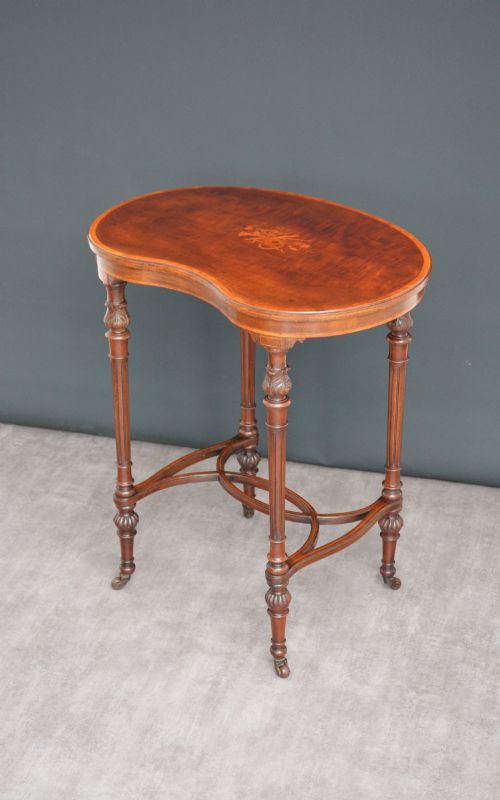
Edwardian interpretations and Sheraton Revival variations dominate the selections, often incorporating fine stringing and inlay work. Makers built these freestanding forms to be viewed from all angles, placing finished backs on display.
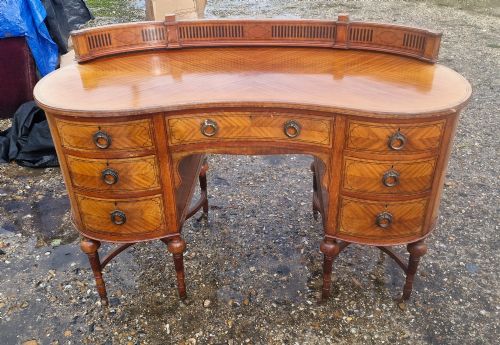
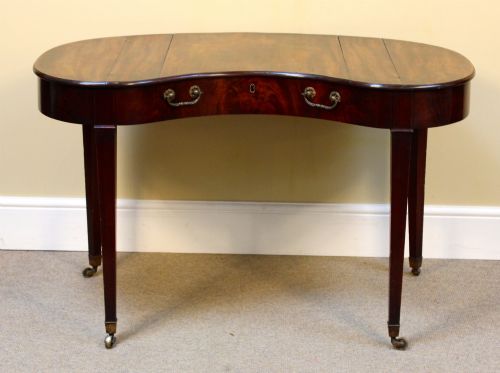
The curved outline demands precise carpentry to maintain structural integrity along the concave front and convex back. Buyers encounter both pedestal configurations with drawers and simpler side table formats lacking central pedestals.
Materials and construction methods
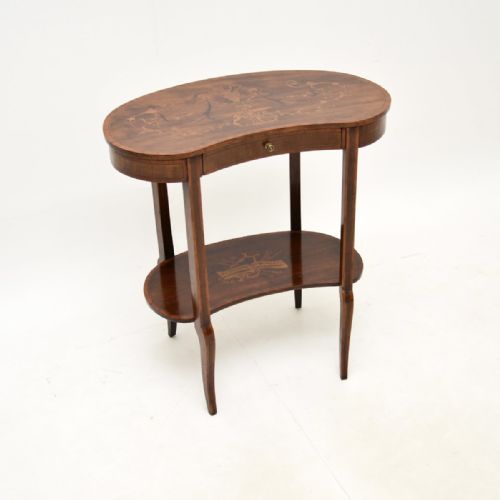
Craftsmen utilised solid mahogany and flame mahogany veneers over secondary timbers, matched with inset leather writing surfaces often bordered by gilt tooling. Contrasting woods such as satinwood, boxwood, and rosewood form intricate marquetry and geometric inlays along the top and drawer fronts.
Brass handles, escutcheons, and occasional ormolu mounts punctuate the dark timber, whilst structural stability relies on disciplined joinery suited to the curved frame. Inlaid stringing defines the serpentine edge, requiring patient hand-fitting of light timbers into darker grounds.
Mahogany Kidney Shaped Desk Retail Price Guide 2026
Typical asking prices for mahogany kidney shaped desk among the pieces listed under this phrase on Sellingantiques today, from the lower quarter to the upper quarter. They describe what is for sale here now, not the wider market.
Some Edwardian ladies' desks feature hidden stationery compartments clever enough to hide a secret letter from prying eyes.
Distinctions in grade and execution
Superior examples display balanced flame mahogany veneers carefully mirrored across the curved top, paired with crisp, deep marquetry rather than stamped ornament. The quality of the timber selection dictates the visual depth of the piece when polished.
Secondary detailing such as hand-tooled leather inserts, finely cast brass hardware, and tightly fitted drawer dovetails separate standard production from exhibition pieces. The precision of the inlay work along the tight radius of the curve reveals the maker's hand.
Wolfe & Hollander·Shapland & Petter·Edwards & Roberts
The Mahogany Kidney Shaped Desk Glossary
- Kidney shaped
- A curved horizontal surface resembling a kidney bean, narrowing slightly in the centre to create a wrap-around user space. This form gained popularity during the late eighteenth century and saw a major revival in Edwardian workshops.
- Marquetry
- Decorative patterns formed by fitting together small pieces of coloured veneer into a wood ground. Artisans used satinwood and boxwood to create floral motifs across the desktop.
- Flame mahogany
- Timber cut from the fork of the mahogany tree where the branch meets the trunk, producing a dramatic flickering grain pattern. Cabinetmakers reserved these highly figured veneers for primary display surfaces.
- Ormolu
- Gilded bronze mounts applied to furniture for decorative accent, more common in continental or revival pieces. The technique involves coating bronze in a mercury-gold amalgam and firing.
- Sheraton Revival
- A late nineteenth and early twentieth century design movement replicating the lighter neoclassical forms of George Sheraton. These pieces often feature delicate satinwood inlay and tapered legs.
Mahogany Kidney Shaped Desk: Frequently Asked Questions
Can these desks stand in the middle of a room?
Freestanding formats feature finished backs and polished mahogany all round, allowing placement away from walls.
Craftsmen designed these pieces to be viewed from any angle within a study or drawing room.
How do I identify an Edwardian piece?
Edwardian versions often display lighter mahogany tones, crisp boxwood stringing, and Sheraton Revival influence.
These twentieth-century interpretations typically present bright French polish and delicate inlaid motifs.
What were these tables originally used for?
Ladies' writing desks and occasional writing tables served correspondence and light literary tasks in private chambers.
The curved profile allowed the user to sit close to the drawers without moving the chair.
Are the leather tops original?
Many surviving examples retain their original tooled leather inserts, whilst others have received period-appropriate replacements.
Patination on the leather often indicates the age and historical use of the writing surface.