

Mahogany Inlay Dresser
A mahogany inlay dresser brings warmth to a room through deep timbers and precise contrasting lines.
Mahogany Inlay Dresser
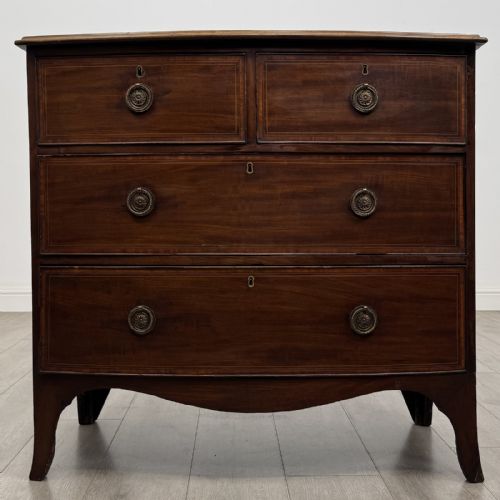
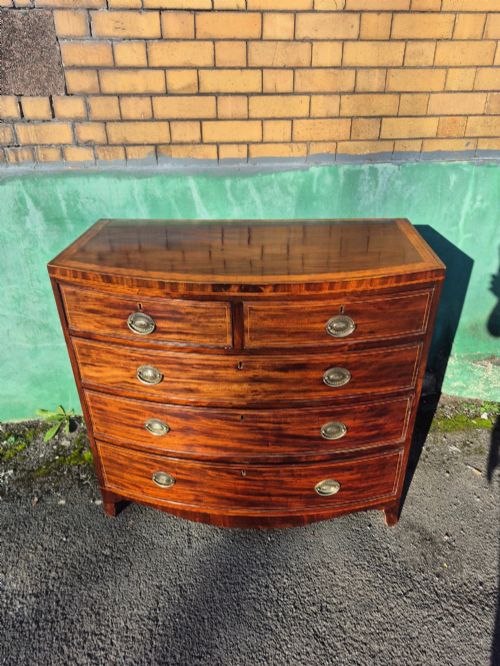
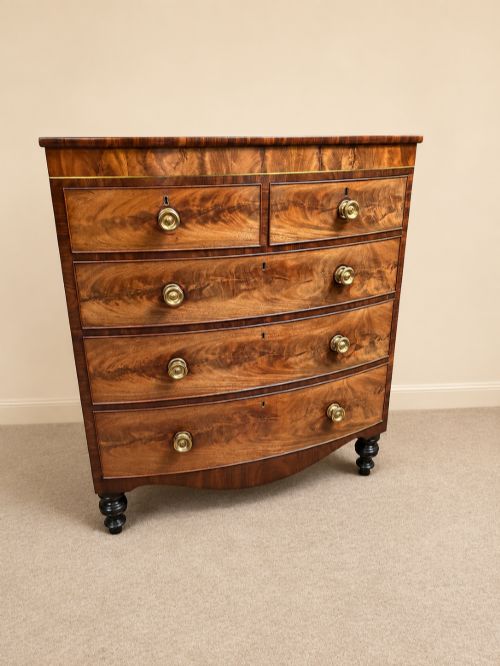
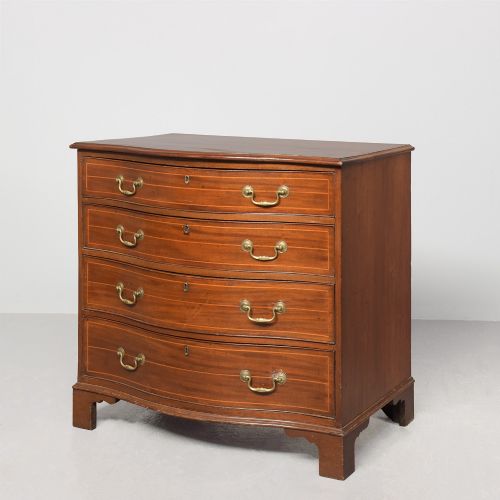
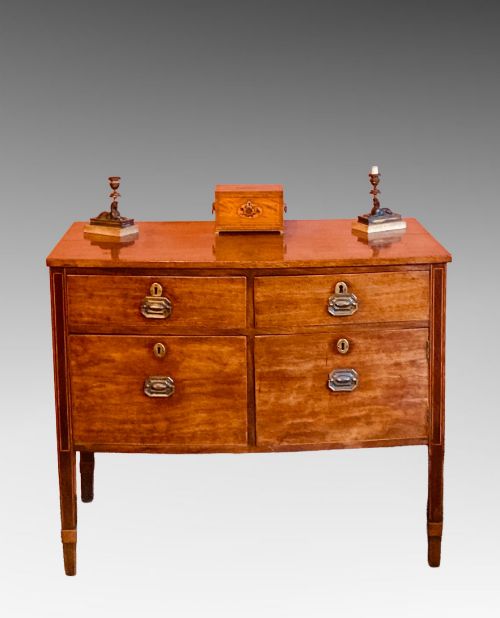
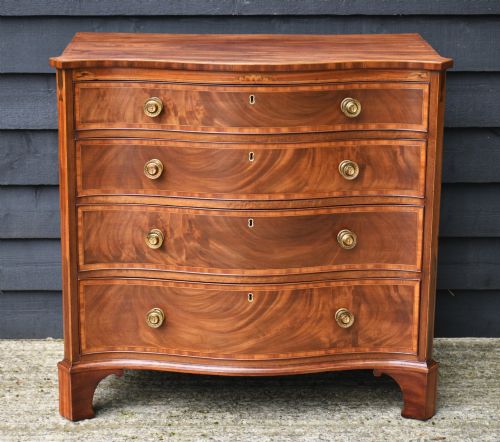
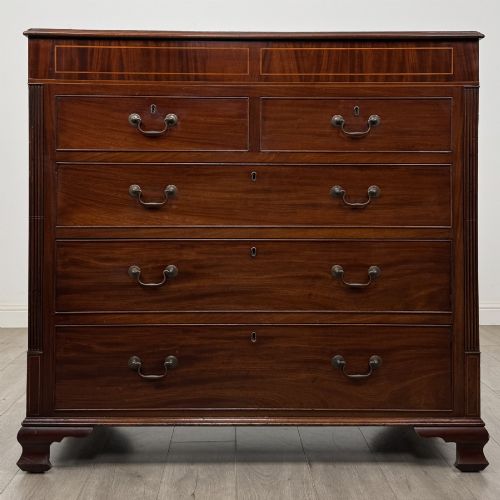
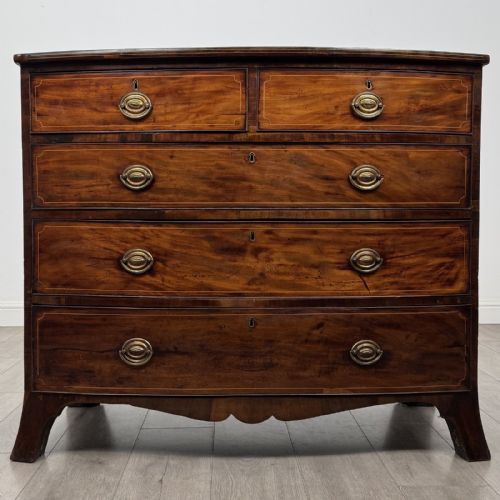
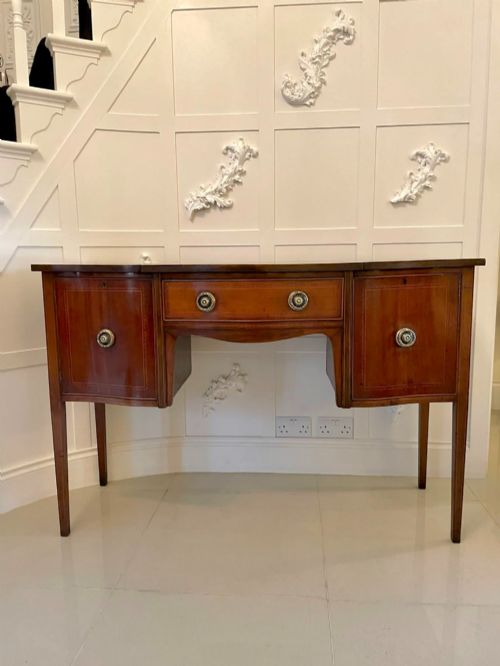
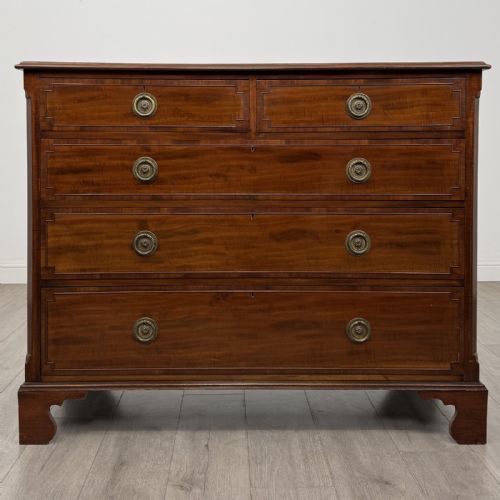
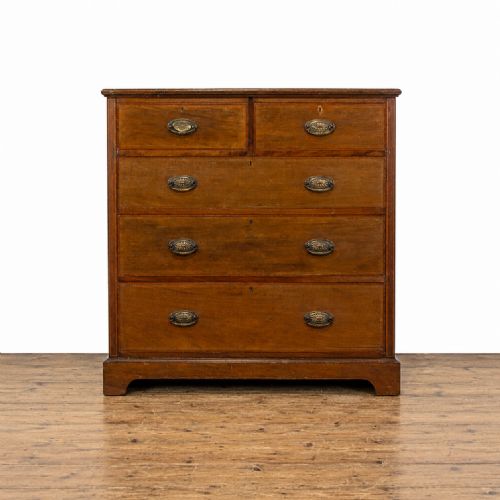
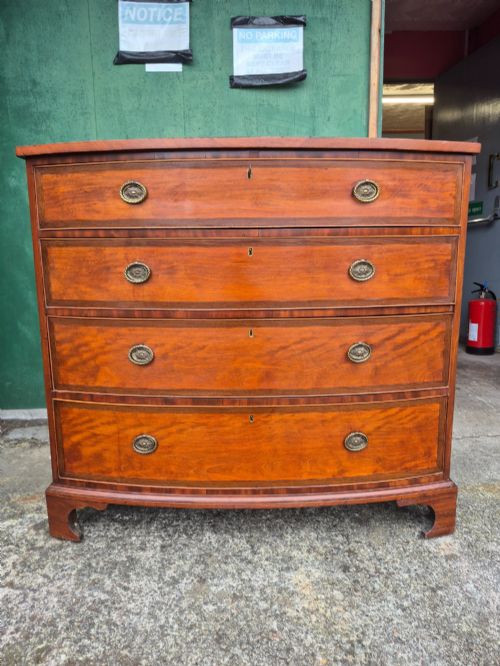
When searching for a mahogany inlay dresser, buyers encounter chests of drawers, sideboards, and servers originating from periods spanning the eighteenth century through the Edwardian era. These pieces combine utilitarian storage with decorative cabinet-making, primarily taking the form of bow-fronted or serpentine chests alongside formal sideboards.
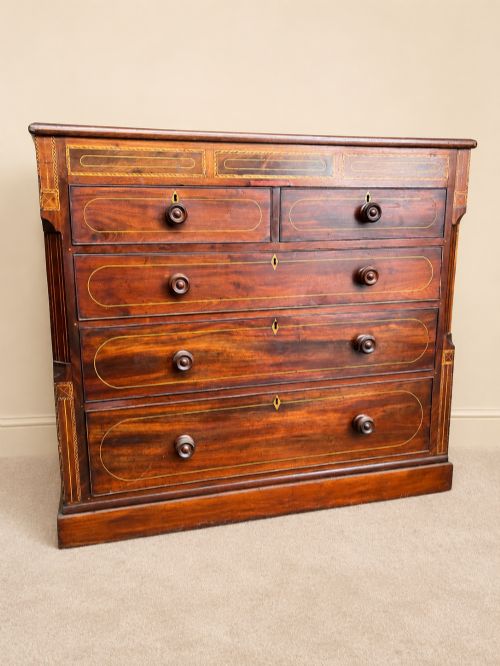
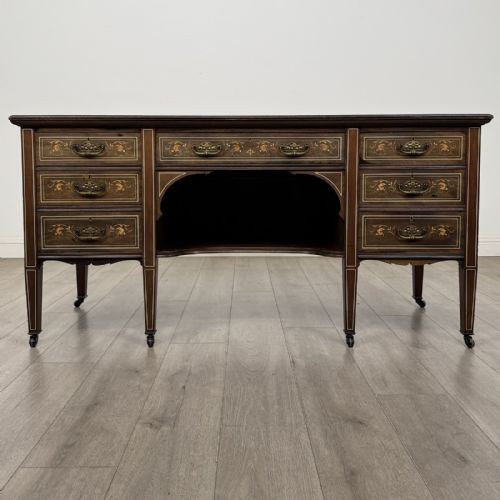
The materials recorded in these listings show a foundation of rich mahogany paired with lighter contrasting timbers. Makers utilised satinwood, boxwood, and floral marquetry to create geometric stringing, line inlay, and crossbanded borders across the drawer fronts and top surfaces.
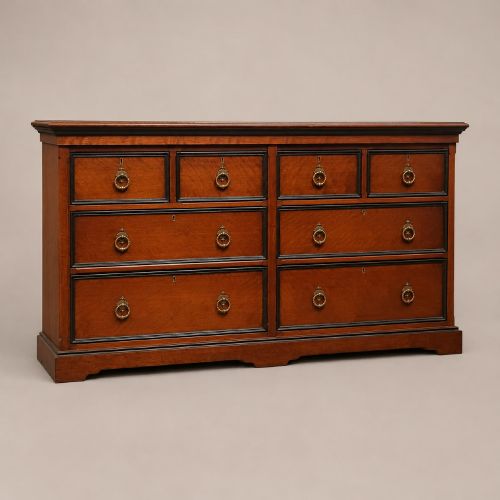
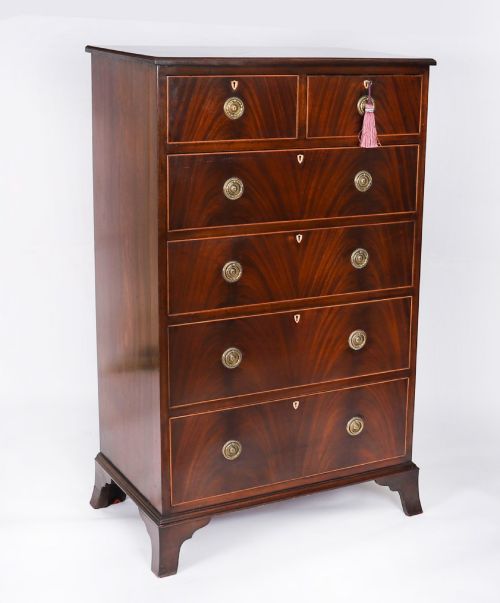
Examples on this page draw from Georgian, Regency, Victorian, and Edwardian workshops. The forms range from compact bachelor chests and tall four-height drawer units to large display cabinets and servers fitted with original brass hardware.
Assessing quality and finish
Quality rests in the precision of the inlay work and the choice of mahogany timber. Tighter grain patterns, such as fiddleback mahogany, and crisply fitted boxwood or satinwood stringing separate superior pieces from simpler utilitarian items.
Proportion and cabinet-maker skill define the upper tier of the range. Serpentine and bow-fronted carcases demand advanced joinery compared to flat fronts, while intact period brasses and well-preserved secondary timbers maintain historical integrity.
Mahogany Inlay Dresser Retail Price Guide 2026
Typical asking prices for mahogany inlay dresser among the pieces listed under this phrase on Sellingantiques today, from the lower quarter to the upper quarter. They describe what is for sale here now, not the wider market.
Listings feature mahogany combined with satinwood, boxwood, and brass across Georgian, Regency, Victorian, and Edwardian periods.
Druce & Co·Mawer & Stephenson
The Mahogany Inlay Dresser Glossary
- Bow front
- A convex, curved front profile popular on chests of drawers and sideboards during the Georgian and Regency periods. This shape softens the corners of the furniture and showcases curved mahogany veneers.
- Serpentine front
- A furniture front shaped with a central convex curve flanked by two concave curves. This intricate contour requires high carpentry skill and often signals a better grade of cabinet-making.
- Inlay
- A decorative technique where small pieces of contrasting wood, such as boxwood or satinwood, are inserted into recesses cut into the mahogany surface. It creates borders, geometric lines, and floral motifs.
- Crossbanding
- A strip of veneer applied to the border of a drawer front or table top so that the wood grain runs perpendicular to the central panel. This frames the primary timber and adds visual depth.
- Bracket foot
- A small, simple architectural foot supporting the corners of a chest of drawers or cabinet, shaped in a bracket profile. They appear frequently on Georgian and 19th-century case furniture.
Mahogany Inlay Dresser: Frequently Asked Questions
What is a mahogany inlay dresser?
A mahogany inlay dresser refers to case furniture such as chests of drawers, sideboards, and servers built from mahogany and decorated with contrasting wood inlays. These pieces combine storage functionality with decorative cabinet-making.
Listings under this heading span Georgian, Regency, Victorian, and Edwardian periods, featuring forms ranging from compact bow-front chests to grand dining room sideboards.
How do I date a mahogany chest?
Dating relies on observing construction methods, timber choice, hardware, and stylistic details. Georgian and Regency examples often feature hand-cut dovetails and subtle line inlay, while Edwardian pieces may show revival styles.
Secondary woods, foot types such as bracket or ogee feet, and the specific style of brass handles offer further clues to the decade of manufacture.
Where were these pieces used?
These items served primarily in bedrooms, dining rooms, and hallways of period homes for storing linens, clothing, and tableware. Sideboards and servers were specifically designed for dining spaces to assist with serving food.
Chests of drawers provided flexible storage in private chambers, ranging from small bachelor chests to large multi-drawer tallboys.
How do I care for inlaid mahogany?
Maintenance involves keeping the wood away from direct sunlight and sudden temperature shifts to prevent timber movement and veneer lifting. Regular dusting with a soft, dry cloth preserves the finish.
Application of appropriate furniture wax periodically helps nourish the mahogany and protect the delicate satinwood or boxwood inlay work.