


Mahogany Gueridon
A mahogany gueridon brings architectural line and French polish to a room, offering a sturdy circular surface supported by a single central pedestal.
Mahogany Gueridon
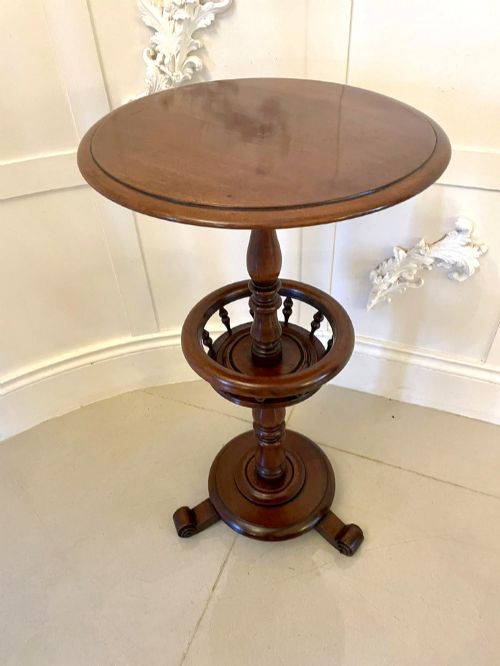
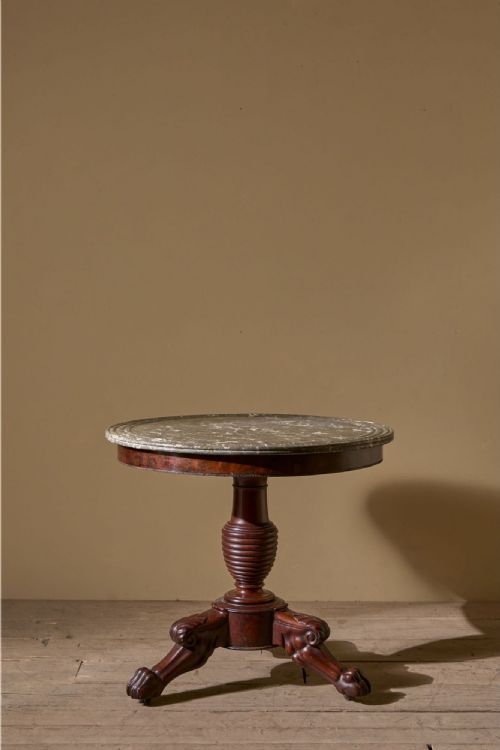
A mahogany gueridon functions primarily as a centre table or occasional table, designed to stand free in the middle of a room or beside seating. These tables emerge in various iterations across the nineteenth century, drawing heavily on French Empire, Louis XVI Revival, and Victorian aesthetic traditions.
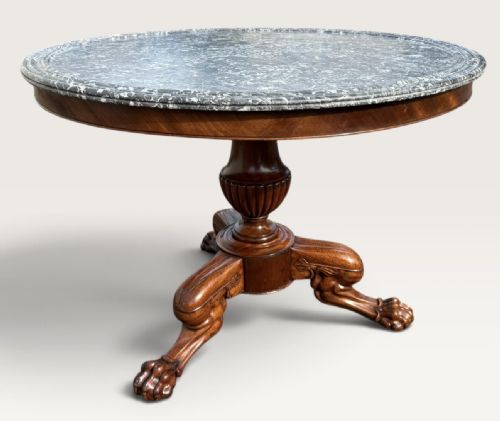
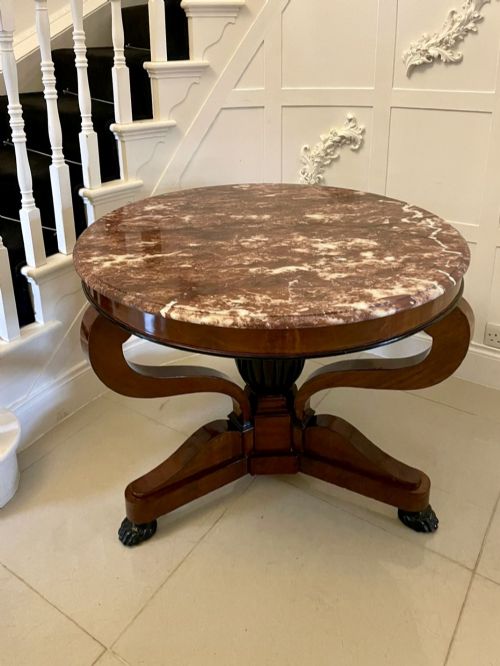
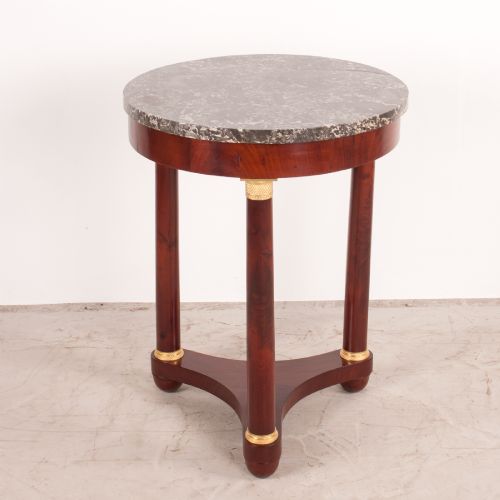
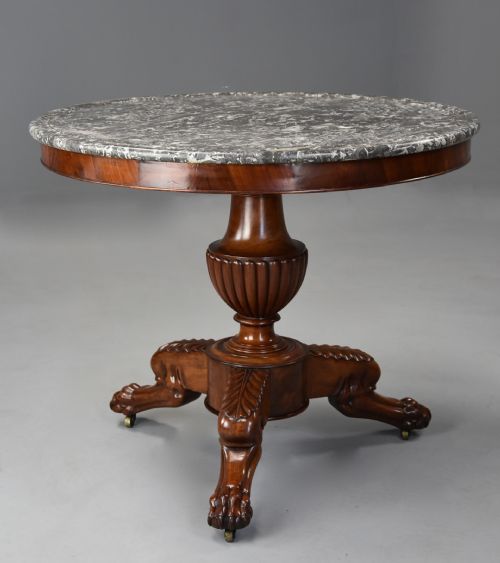
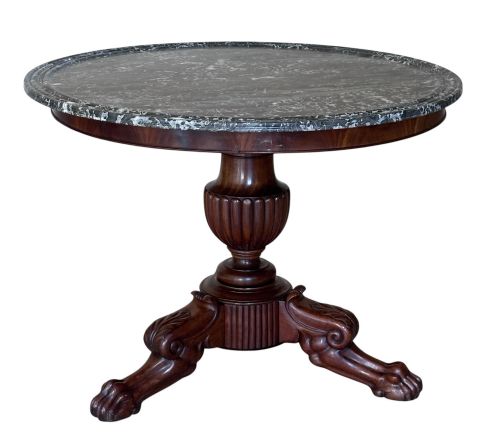
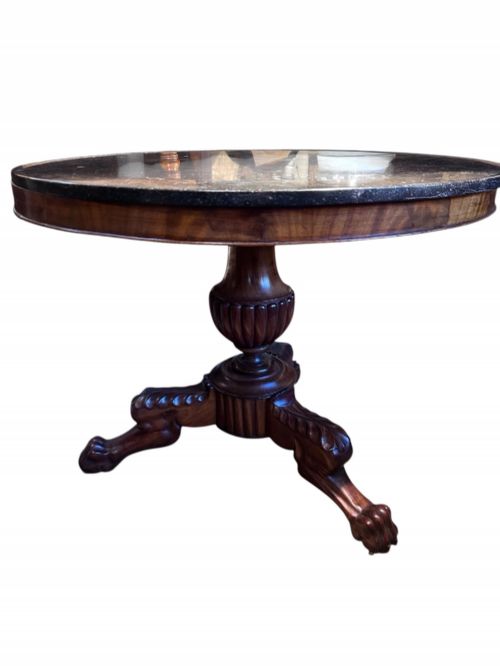
The most common version encountered on this page pairs a warm mahogany timber top with an inset round of veined marble, resting on a sturdy tripartite or column base. Alongside traditional gueridon designs, related forms such as lamp tables, side tables, and pedestals appear with similar proportions.
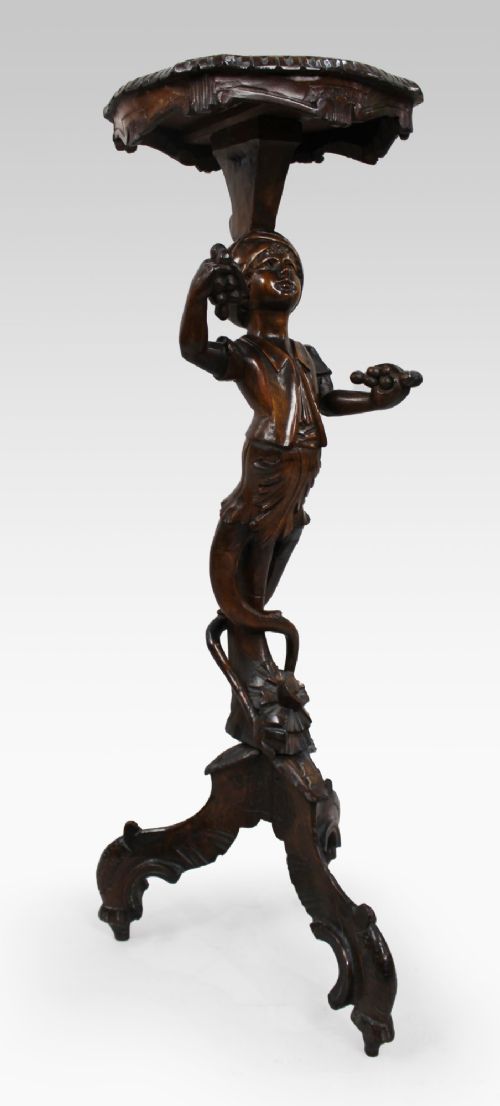
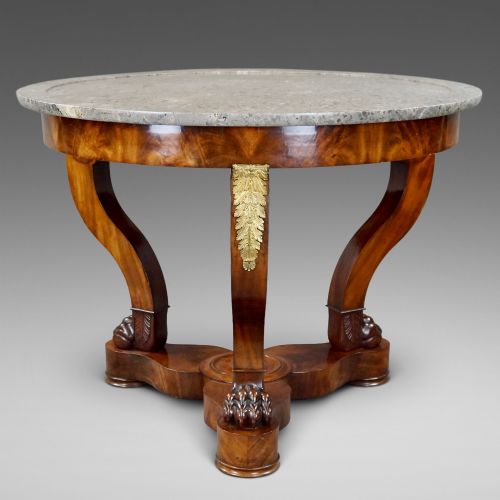
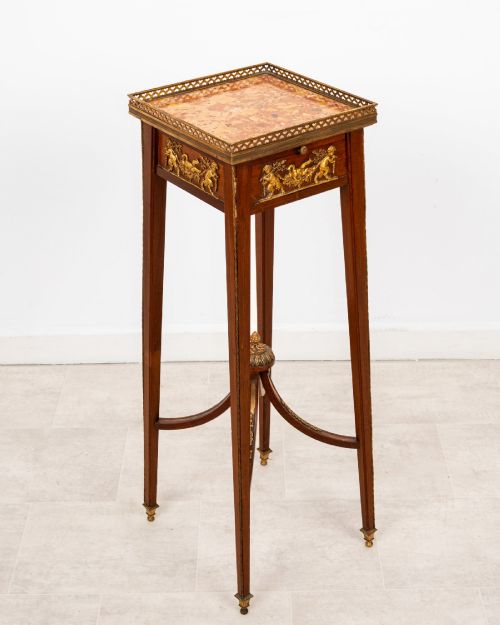
Originating largely from French workshops and English cabinet makers, these pieces span from the early nineteenth century through to the early twentieth century. Makers frequently incorporate classical motifs, including brass mounts, ormolu, and carved figural supports.
Materials and Construction
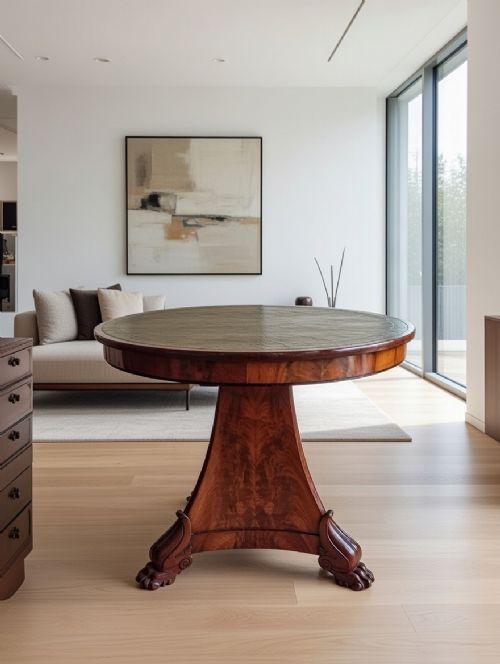
Cabinet makers construct the primary framework of a mahogany gueridon using solid mahogany and figured veneers like flame mahogany, sometimes enriched with satinwood details. The timber provides a rich, dark ground that accepts French polishing to a high gloss.
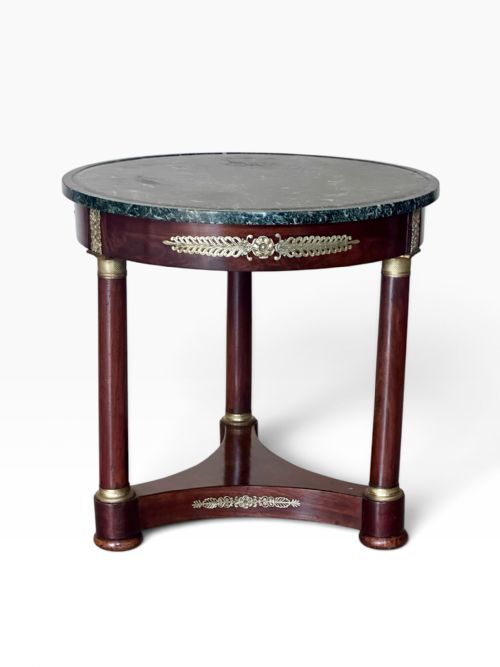
Heavy slabs of white, grey, or rouge marble form the inset tops of many examples, supported by robust wooden sub-tops to bear the weight. Workshops integrate brass, ormolu, and gilded bronze mounts around the frieze and base to accentuate the classical silhouette.
Pedestal supports often feature turned columns, swan motifs, or cast brass ram heads, secured firmly to heavy triangular or circular plinths. Structural stability is achieved through solid tenon and mortise joinery hidden beneath the veneered surfaces.
Some gueridon tables hide clever folding mechanisms, proving that nineteenth-century hosts loved multifunctional furniture as much as modern ones do.
Evaluating Execution
The distinction between standard production and superior execution lies in the selection of timber and the precision of the bronze or brass mounts. Finer examples utilise heavily figured flame mahogany and crisp, chiseled ormolu rather than simple stamped brass.
The thickness and quality of the marble top significantly affect the overall weight and authenticity of the piece, with genuine veined marble indicating higher workshop standards. Hand-carved elements, such as figural pedestals or rams heads, show depth and sharpness that distinguish master workshops from routine copyists.
Joinery execution at the junction of the central pillar and the base dictates the long-term stability of a gueridon. Superior pieces maintain rigid alignment without visible shrinkage cracks in the surrounding mahogany veneers.
François Linke·A Hugnet Paris
The Mahogany Gueridon Glossary
- Gueridon
- A small circular table supported by a single central pillar, originating in seventeenth-century France. The form evolved through the Empire and Victorian periods into a versatile household stand.
- Ormolu
- Gilded bronze mounts applied to furniture edges and bases. This decorative technique adds metallic contrast to the dark mahogany body.
- Flame mahogany
- A veneer cut from the fork of the mahogany tree where the branch meets the trunk. It creates a distinctive, flickering flame pattern across the table top.
- Frieze
- The horizontal band situated directly beneath the table top. Cabinet makers frequently decorate this area with brass inlay or bronze mounts.
- Console table
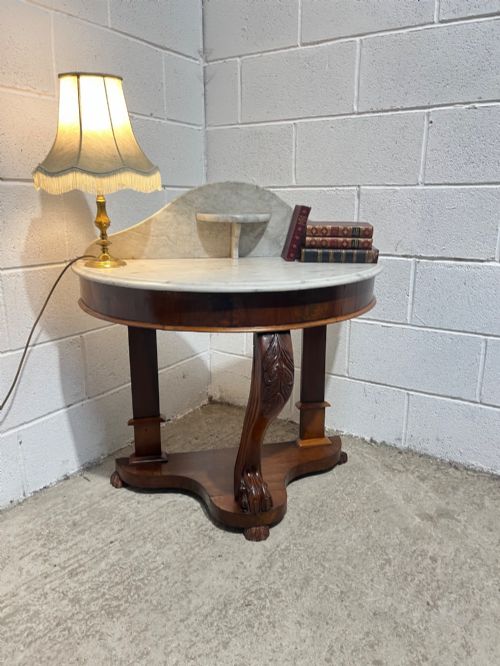
- A wall-mounted or freestanding side table designed to stand against a vertical surface. Several examples on this page share stylistic traits with contemporary gueridon tables.
Mahogany Gueridon: Frequently Asked Questions
What is a mahogany gueridon used for?
These tables serve as versatile display surfaces for lamps, bronzes, or floral arrangements in the centre of a room. Their compact footprint allows them to function efficiently as occasional or side tables.
Historically, they provided accessible surfaces for illumination and intimate gathering within Parisian salons and English drawing rooms.
How do I identify a French Empire gueridon?
French Empire examples typically feature bold mahogany veneers paired with heavy cast ormolu mounts, classical columns, and bronze paw feet. Look for architectural symmetry and motifs drawn from classical antiquity.
Many incorporate contrasting elements such as brass-mounted friezes and dark marble inserts to complete the formal aesthetic.
Are marble tops original to these tables?
Most period gueridon tables feature inset marble tops that were fitted during initial manufacture to provide a durable, heat-resistant surface. The marble is usually heavy, veined, and countersunk directly into the mahogany framing.
Inspecting the underside reveals whether the timber support matches the age and construction methods of the outer skirt.
How do I care for a polished mahogany surface?
Maintain the finish by dusting regularly with a soft, dry cloth and avoiding placement in direct sunlight. Periodic application of quality beeswax preserves the French polish without building up residue.
Keep marble inserts clean with mild, non-acidic soap to prevent staining the natural stone.