
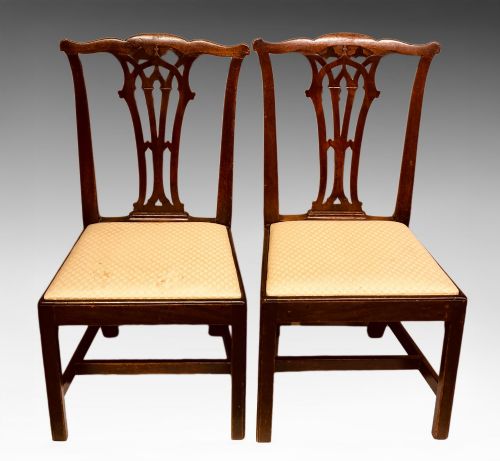
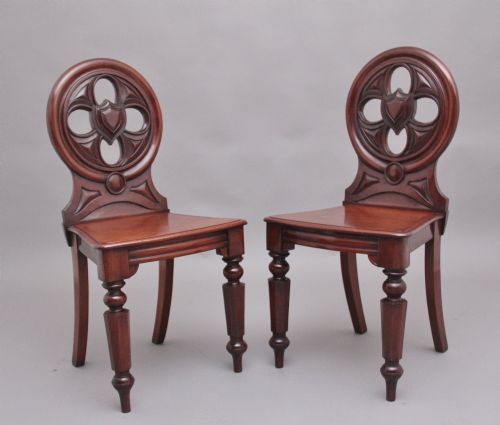


Mahogany Gothic Chair
A mahogany gothic chair brings pointed arch motifs and dark timber together, offering solid architectural presence for a traditional interior.
Mahogany Gothic Chair
A mahogany gothic chair combines the rich grain of tropical hardwood with pointed arches, tracery and ecclesiastical details drawn from medieval architecture. These seating forms span several centuries, appearing in formal dining sets, upright hall chairs and low prayer seats.
The pieces on this page are most frequently Victorian or Georgian examples, ranging from single hall chairs to large sets of dining chairs. Makers adapted medieval stone and timber motifs for domestic use, producing seating with distinct vertical lines and pierced splats.
How they were made
Cabinet makers utilised dense mahogany for its strength, allowing intricate hand carving of quatrefoils, trefoils and blind fretwork along the backrests and legs. Timber was selected for deep colour and grain consistency, then finished to a polished sheen.
Upholstered versions incorporate fabrics such as leather, velvet and traditional stuffing over webbing, secured with brass tacks. Structural joints rely on traditional mortise and tenon construction to support the heavy upright frames.
Object types include dining chairs, side chairs, hall chairs, armchairs, accent chairs, occasional chairs and swivel desk chairs.
What varies in quality
The depth and crispness of the hand carving distinguish superior examples from plain production pieces, particularly around complex tracery and cusped arches. Superior specimens retain original timber surfaces without excessive sanding or modern refinishing.
Cohesion across a set of dining chairs indicates master craftsmanship, where proportions and timber matching remain consistent. The weight and rigidity of the frame also reflect the grade of mahogany employed by the maker.
Bruce Talbert·Gillows·Richard Bridgens
The Mahogany Gothic Chair Glossary
- Tracery
- Openwork ornamentation in stone or wood, commonly forming geometric patterns in the upper section of a chair back. This architectural element defines the gothic aesthetic.
- Prie-dieu
- A low-backed devotional chair designed for kneeling and prayer, often upholstered in velvet or needlework. These items frequently date to the Victorian period.
- Splat
- The central vertical strip of wood in the back of a chair, which in these pieces is frequently pierced with pointed arch or gothic window designs.
- Blind fretwork
- Carved ornamentation applied to a flat surface to simulate carved openwork without weakening the structural timber. It appears frequently on leg and rail designs.
- Quartering
- A method of cutting and arranging veneer to create symmetrical grain patterns across large chair backs or seat panels.
Mahogany Gothic Chair: Frequently Asked Questions
How do I date a mahogany gothic chair?
Dating relies on stylistic cues and construction methods, observing whether the piece displays Georgian symmetry or heavier Victorian ornamentation. Examining the underside and joint construction provides further clues to the age.
Earlier examples from the eighteenth century typically show finer hand-carved details and lighter proportions compared to later revival pieces. Documentation or family provenance can also clarify the timeline.
Are these chairs suitable for daily dining?
Dining sets from this category are built from sturdy mahogany and generally offer robust seating for everyday use. Checking the joinery ensures the frame remains stable.
Original upholstery may require conservation, while later replacements provide durable comfort for modern meals. Proper care preserves both the timber and the antique structure.
What is the difference between a hall chair and a dining chair?
Hall chairs are typically solid timber without upholstered seats, designed for occasional use in entranceways with prominent carved backs. They often feature heraldic crests or shield motifs.
Dining chairs prioritise sit-down comfort with padded seats and supportive backs manufactured in matching sets. Their proportions suit standard dining table heights.
How should I care for antique mahogany timber?
Maintain the finish by dusting with a soft, dry cloth and avoiding placement near direct heat sources or strong sunlight. Wax can be applied sparingly to nourish the wood.
Avoid commercial liquid polishes containing silicone, which can penetrate the grain and damage the antique patina over time.