

Mahogany Framing Mirror
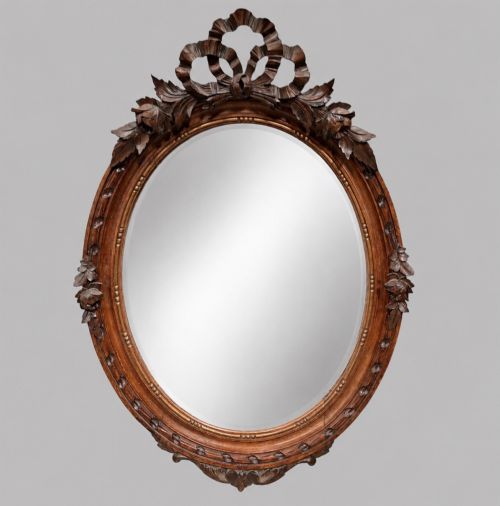
A mahogany framing mirror brings depth and warmth to a room, taking many forms from compact dressing table swings to grand overmantels.
Mahogany Framing Mirror
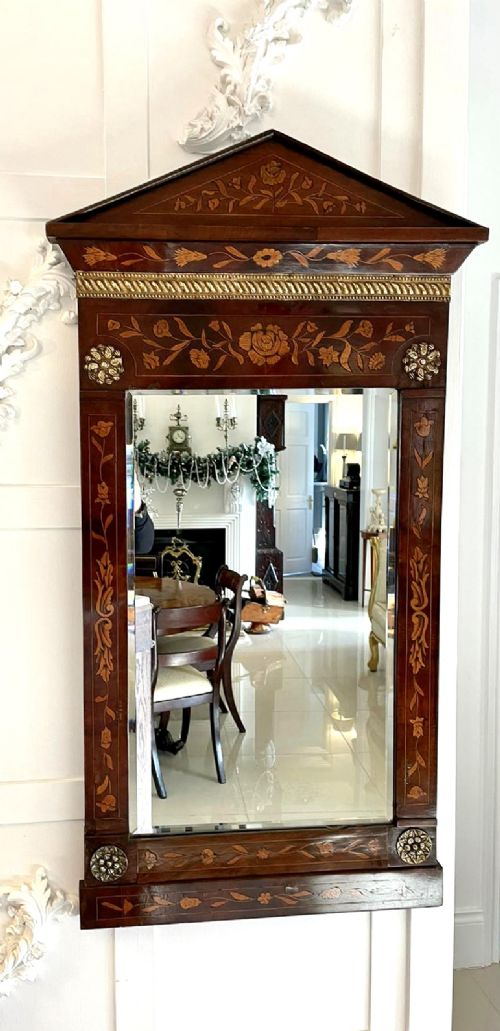
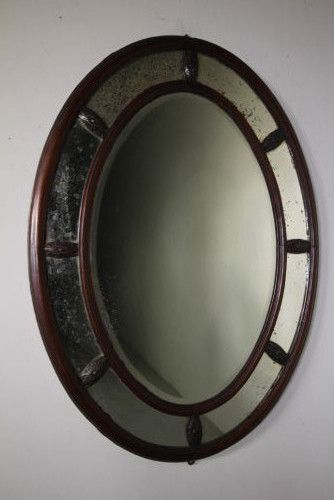
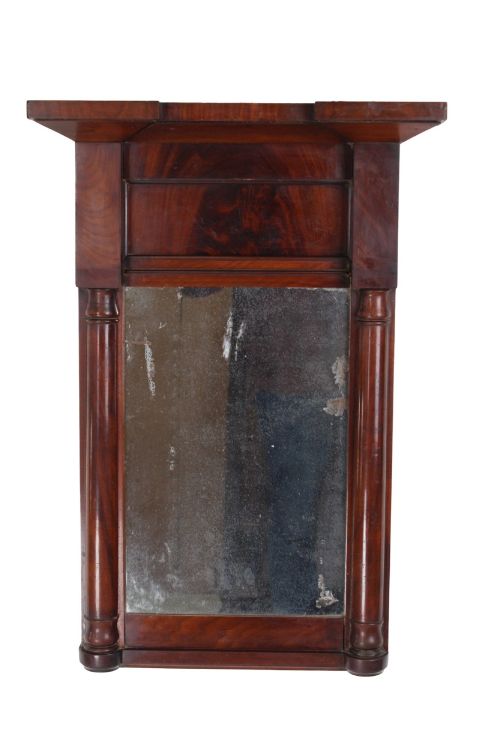
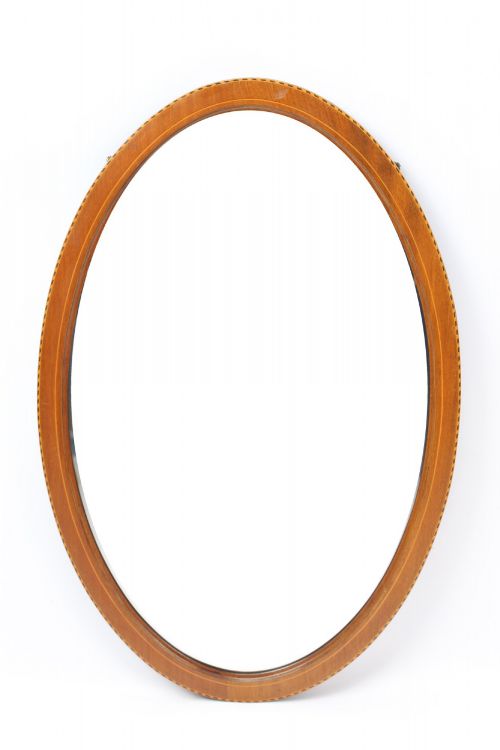
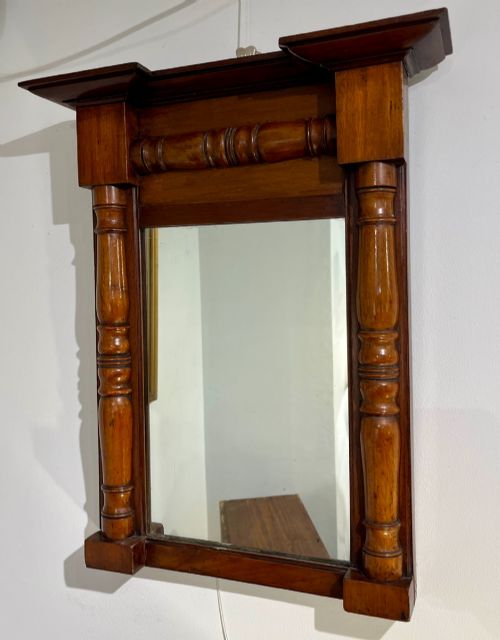
A mahogany framing mirror unites rich dark timber with reflective glass, appearing across periods from Georgian and Regency to Victorian and Edwardian. Buyers searching for a mahogany framing mirror encounter wall-hung fretwork designs, shield-shaped dressing table swings, and substantial overmantels.
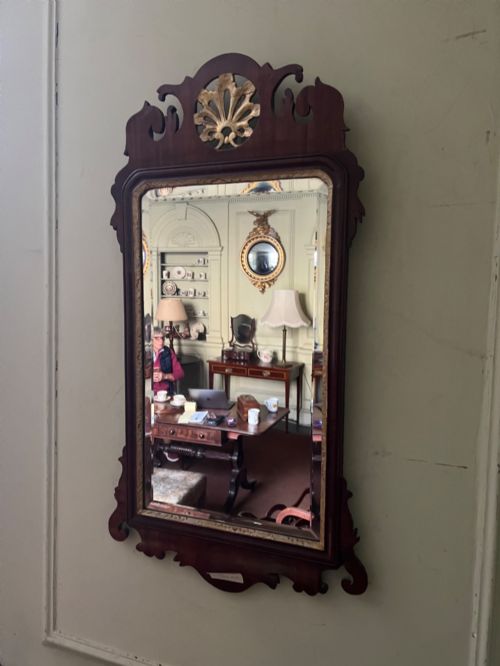
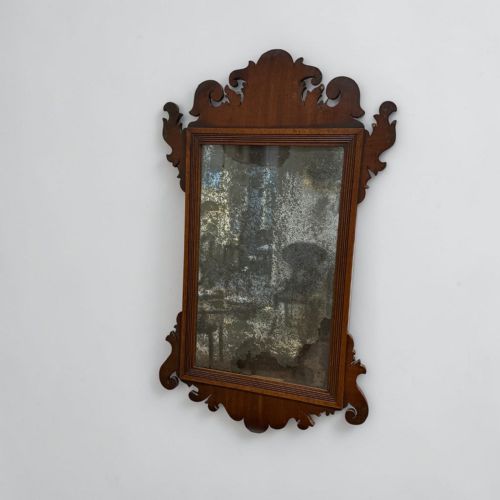
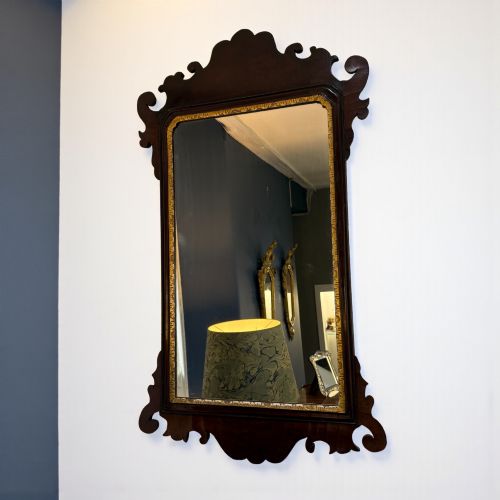
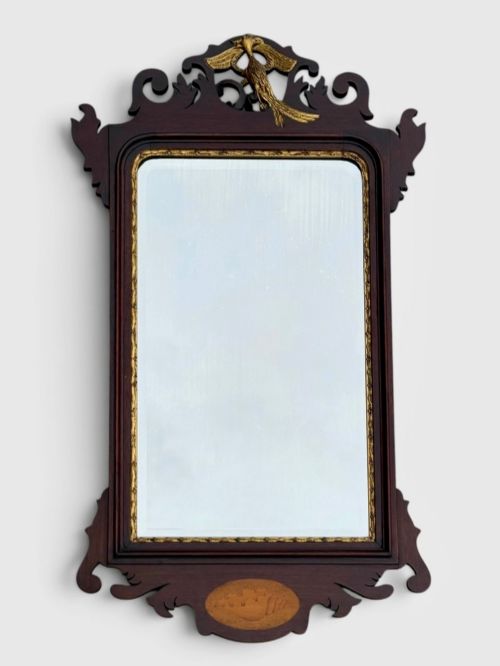
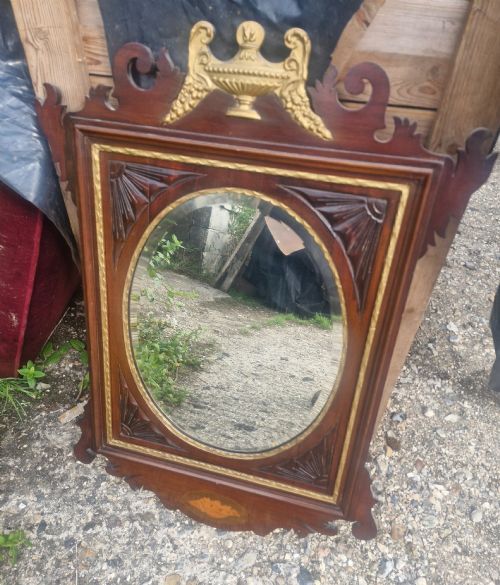
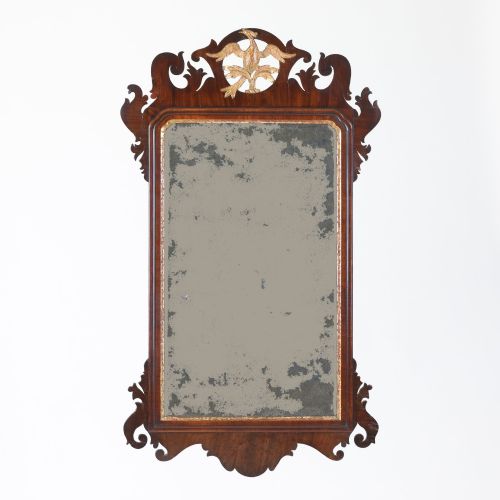
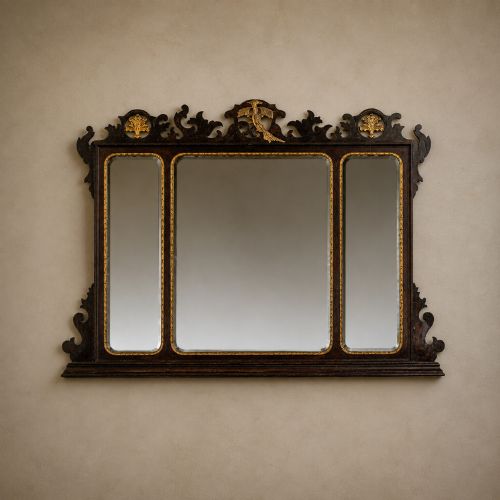
The common form on this page is the wall mirror, frequently shaped with fret-cut outlines, ho-ho bird crestings, or parcel-gilt details. Alongside these hang cheval mirrors, pier glasses, and sectional mirrors spanning the eighteenth, nineteenth, and early twentieth centuries.
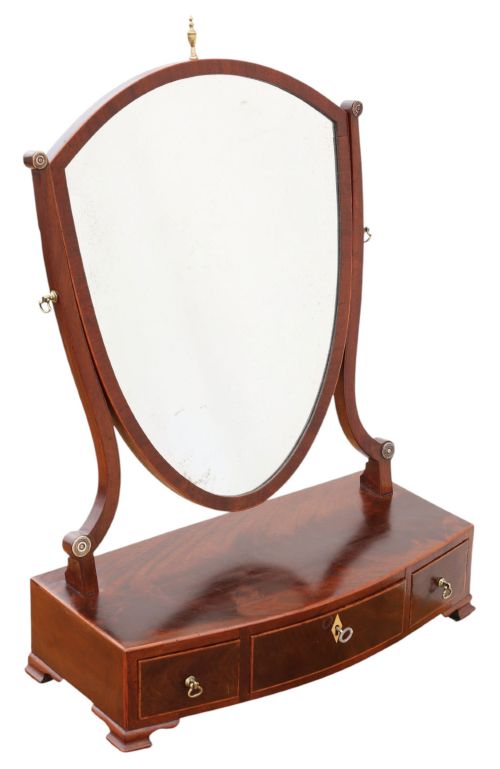
Origin and purpose dictate the scale, ranging from neat bowfront dressing table glasses fitted with small drawers to large country house and overmantel mirrors designed to bounce light across a reception room.
Materials and Construction
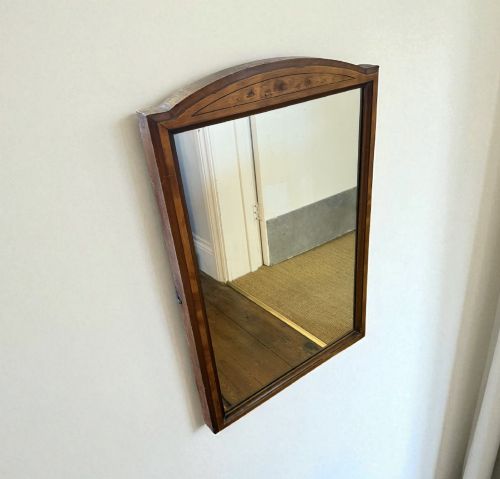
Makers built these frames using solid mahogany, Cuban mahogany, or African mahogany, frequently enhancing the timber with wood inlay, marquetry, walnut, and yew. Giltwood, gold leaf, and brass components added contrast to the deep brown grain of the wood.
Joinery combined traditional cabinetmaking methods with delicate fret-saw work, carving, and parcel-gilding. Mirror glass was set within rebated frames, sometimes backed by multi-drawer table stands or supported on heavy swivelling cheval pivots.
Mahogany Framing Mirror Retail Price Guide 2026
Typical asking prices for mahogany framing mirror among the pieces listed under this phrase on Sellingantiques today, from the lower quarter to the upper quarter. They describe what is for sale here now, not the wider market.
Listings feature mahogany framing mirrors across Georgian, Regency, Victorian, and Edwardian periods, utilising brass, giltwood, and marquetry.
Factors of Quality
The distinction between standard examples and superior pieces rests upon the crispness of the hand-carving and the depth of the mahogany grain. Pierced fretwork frames with finely articulated bird crestings and original parcel-gilding represent finer craftsmanship.
Proportion and material selection also define the range, distinguishing simple utility mirrors from substantial Cuban mahogany cheval frames and Dutch marquetry inlaid showpieces.
P & MA Nicholson·William Kent
The Mahogany Framing Mirror Glossary
- Fretwork
- Openwork ornamentation cut with a fretsaw, creating geometric or pictorial patterns along the edge of a mirror frame.
- Parcel-gilt
- Partially gilded woodwork where gold leaf highlights specific carved details against the dark mahogany surface.
- Cheval mirror
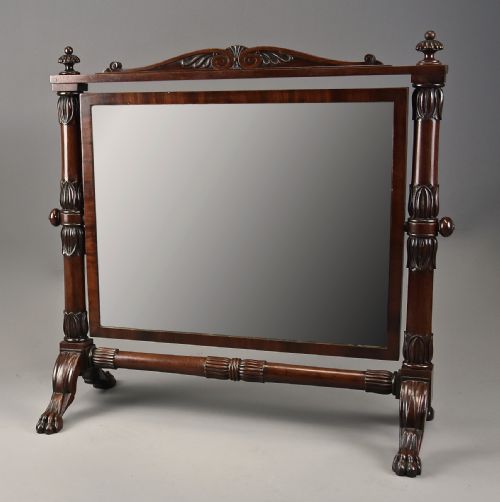
- A full-length swing mirror supported on a vertical frame with four feet, allowing the glass to tilt.
- Pier mirror
- A tall, narrow mirror designed to hang on the wall space between windows.
Mahogany Framing Mirror: Frequently Asked Questions
How do I date a mahogany mirror?
Dating relies upon structural characteristics, timber selection, and decorative styles such as Georgian fret-cutting or Edwardian inlay. Secondary woods and the character of the mirror glass provide further clues to age.
Changes in proportion and the evolution of revival styles from the nineteenth century onward help separate eighteenth-century originals from later interpretations.
Where should I hang an overmantel mirror?
An overmantel mirror belongs directly above a fireplace mantelpiece, where its width balances the hearth below. It functions to reflect ambient light and visually expand the proportions of the room.
Secure wall fixings are essential due to the combined weight of the heavy mahogany frame and thick glass.
What is a cheval mirror used for?
A cheval mirror provides a full-length reflection for dressing and grooming. The pivoting frame allows the user to adjust the angle of the glass.
These freestanding pieces suit bedrooms and dressing rooms, requiring sufficient floor space to stand clear of surrounding furniture.
How do I care for a mahogany frame?
Maintenance involves dusting the mahogany woodwork gently with a dry, soft cloth. Avoid using modern silicone sprays or harsh chemical cleaners that can damage the polish.
Keep the mirror away from direct sunlight and damp environments to protect both the timber frame and the silvering on the glass.