



Mahogany Floral Marquetry Chairs
Mahogany floral marquetry chairs combine rich timber frames with intricate contrasting wood inlays, offering both structural elegance and historical charm for the home.
Mahogany Floral Marquetry Chairs
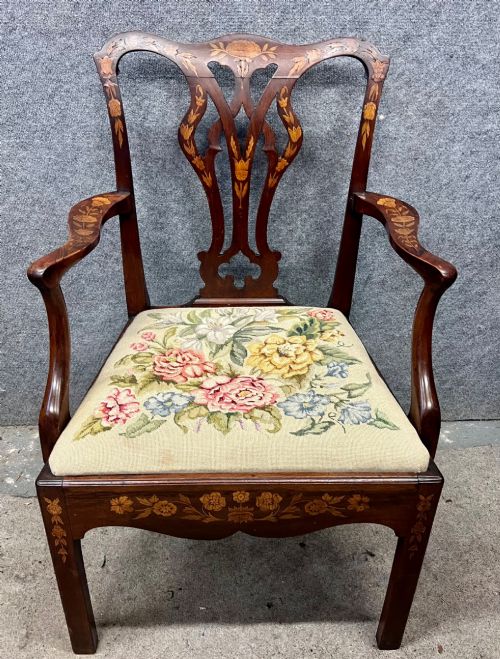
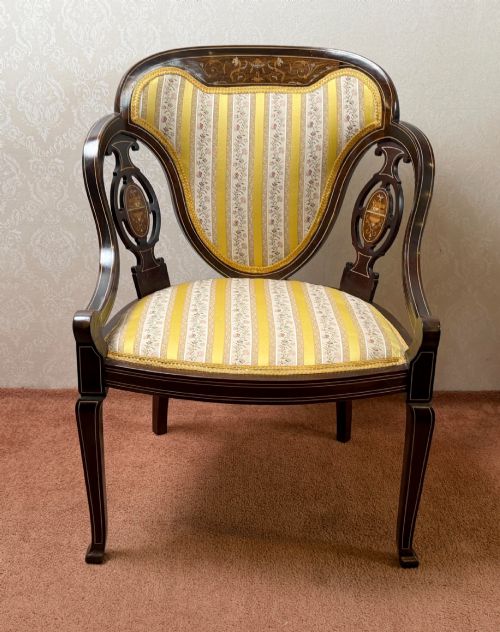
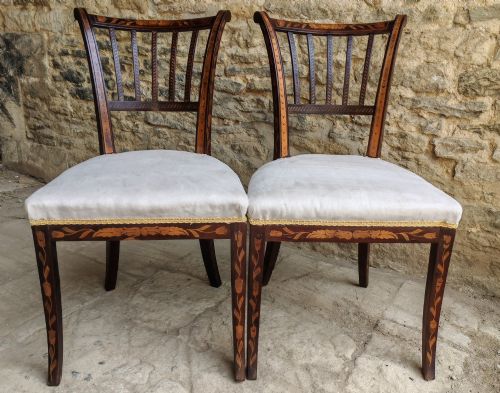
When you search for mahogany floral marquetry chairs, you encounter seating fashioned from dark timber and decorated with elaborate plant and flower designs. These items include side chairs, armchairs, desk chairs, and salon seating that span the Georgian, Victorian, and Edwardian eras. The examples met on this page range from early nineteenth-century Georgian pairs to late nineteenth-century easy chairs and Edwardian occasional pieces.
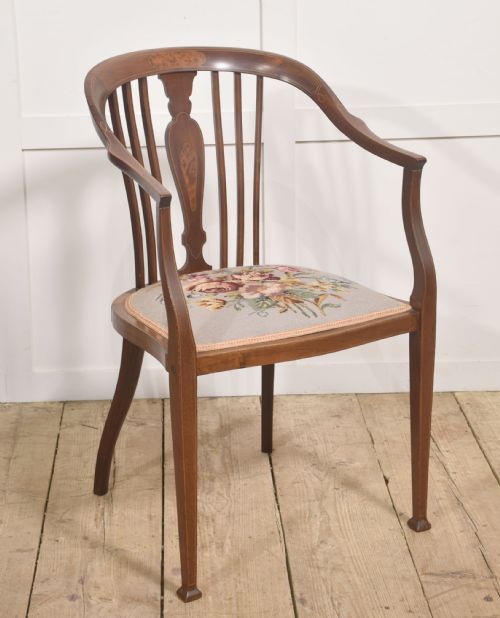
Makers utilised various stylistic influences, producing Regency, Sheraton Revival, Art Nouveau, and nineteenth-century Dutch designs. Side chairs and armchairs dominate the selection, often featuring high backs or tub forms designed for occasional use or desk work. Each period brings its own interpretation of floral inlay, translating botanical motifs into contrasting wood veneers.
How they were made
Craftsmen built the primary frames using solid mahogany, shaping structural supports into armchairs, side chairs, and tub chairs. They then applied decorative marquetry to the surfaces, utilising lighter timbers such as satinwood, boxwood, and fruitwood inlay to form floral patterns. Some pieces also incorporated bone elements alongside the wood veneers to add finer detail to the botanical motifs.
Upholstery completed many of these seats, employing fabric, needlepoint tapestry, and needlework fabric to provide comfort. The combination of dark mahogany bodies and pale inlaid botanical decoration required precise woodworking techniques, particularly when fitting contrasting veneers into curved or flat chair backs.
Mahogany Floral Marquetry Chairs Retail Price Guide 2026
Typical asking prices for mahogany floral marquetry chairs among the pieces listed under this phrase on Sellingantiques today, from the lower quarter to the upper quarter. They describe what is for sale here now, not the wider market.
Several armchairs combine botanical wood inlay with occasional bone details, proving that early craftsmen liked to slip a little wildlife into the flora.
What varies in quality
The sophistication of the marquetry work distinguishes finer examples from simpler production, particularly in the shading and botanical accuracy of the floral motifs. Pieces that incorporate multiple contrasting materials like satinwood, boxwood, bone, and fruitwood inlay demonstrate a higher level of artisan skill than those with minimal decoration. The choice of primary timber and the crispness of the carving on the mahogany frame further separate standard furniture from exceptional items.
Stylistic cohesion across different periods also influences the overall merit of a chair, from the restrained elegance of Georgian work to the flowing lines of Art Nouveau designs. The integration of period-appropriate textiles, such as needlepoint tapestry or needlework fabric, contributes to the integrity of the finished seat.
The Mahogany Floral Marquetry Chairs Glossary
- Marquetry
- Decorative veneer applied to wood furniture in detailed patterns and pictures. In these chairs, it typically forms floral and botanical motifs.
- Satinwood
- A pale, lustrous hardwood utilised for contrasting inlay work. It provides brightness against the darker mahogany background.
- Boxwood
- A dense, pale yellowish wood chosen for fine stringing and intricate inlay details. Craftsmen employed it to delineate stems and petals within the marquetry.
- Sheraton Revival
- A late nineteenth and early twentieth-century design movement inspired by eighteenth-century neoclassical furniture. Pieces from this style often feature delicate mahogany frames and symmetrical floral inlay.
- Tub chair
- An upholstered seating form characterised by a continuous curved back and arms. Examples in this category incorporate inlaid mahogany frames.
Mahogany Floral Marquetry Chairs: Frequently Asked Questions
What periods do these chairs come from?
The pieces span from the early nineteenth century through the Georgian and Victorian eras, extending into Edwardian times and the early twentieth century. This timeline covers diverse aesthetic movements including Regency, Sheraton Revival, and Art Nouveau.
Each era introduced distinct proportions and inlay techniques, allowing collectors to trace the evolution of floral marquetry across different decades of furniture design.
How were mahogany floral marquetry chairs used originally?
These items served functional and decorative roles in period interiors, functioning as side chairs for dining rooms, desk chairs for studies, and salon armchairs for receiving guests. Occasional chairs were positioned around drawing rooms to provide flexible seating.
Their decorative floral veneers ensured they added visual interest to a room even when unoccupied against a wall.
What materials are used in the inlay work?
Craftsmen decorated the solid mahogany frames using a variety of contrasting materials. Satinwood, boxwood, and fruitwood inlay provided the different tones needed to render petals, leaves, and stems.
Some specific chairs also integrated bone elements to highlight particular details within the botanical designs.
How do I identify a Sheraton Revival piece?
Sheraton Revival items draw inspiration from eighteenth-century neoclassical design principles, featuring refined proportions and symmetrical compositions. They typically display crisp mahogany frames paired with delicate satinwood and boxwood marquetry.
These chairs often date from the late nineteenth or early twentieth century rather than the original Georgian period.