



Mahogany Fainting Sofa
A mahogany fainting sofa offers a long, reclining seat designed for afternoon rest, bringing nineteenth-century elegance to a modern room.
Mahogany Fainting Sofa
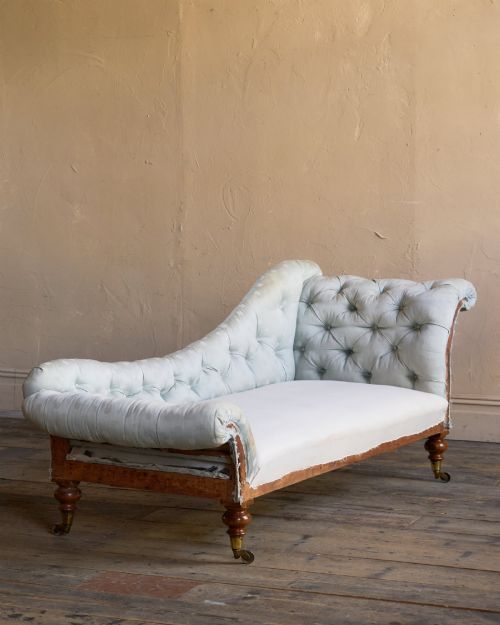
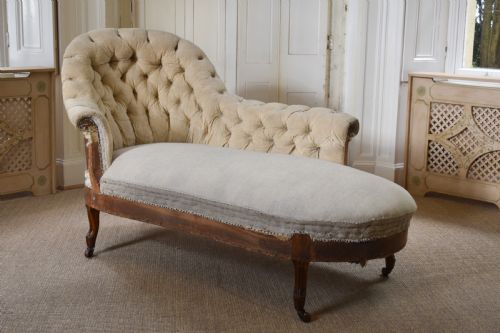
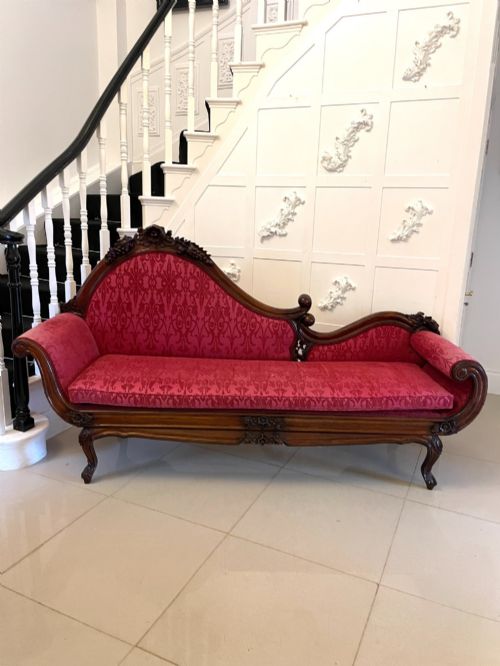
A mahogany fainting sofa is a form of daybed or chaise longue designed for reclining in nineteenth-century domestic spaces. These pieces appear across various styles, including Regency, William IV, and Victorian periods.
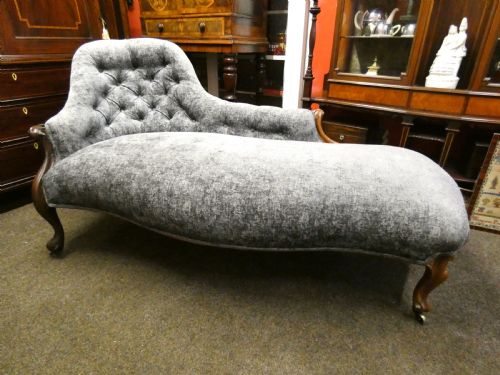
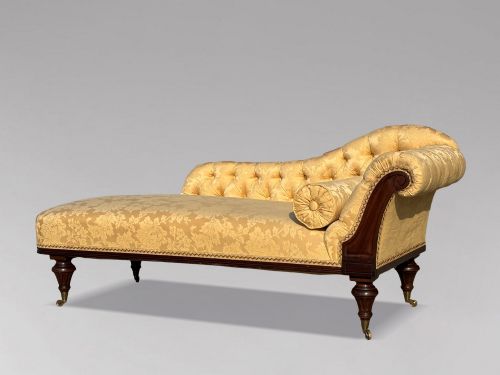
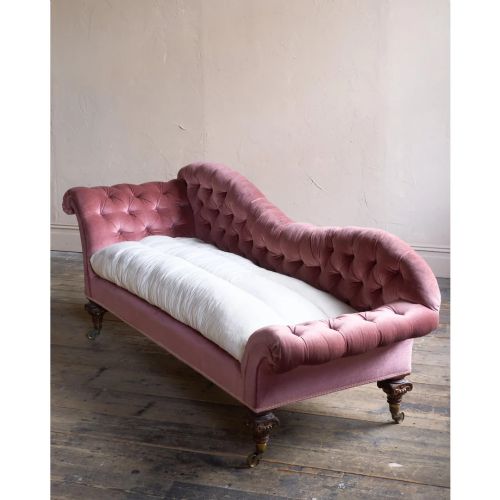
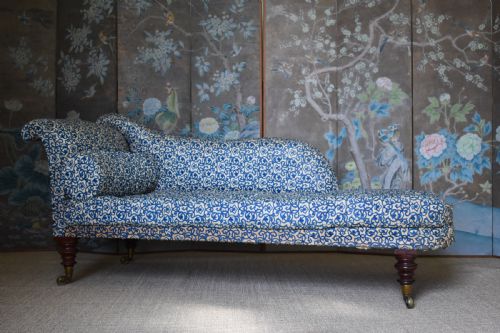
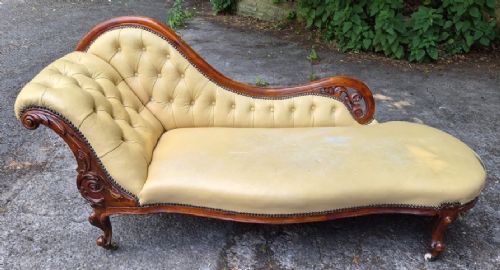
The most common version met on this page is the Victorian or nineteenth-century chaise longue with a raised scroll end and upholstered backrest. Examples range from simple country house day beds to ornate carved pieces attributed to prominent makers.
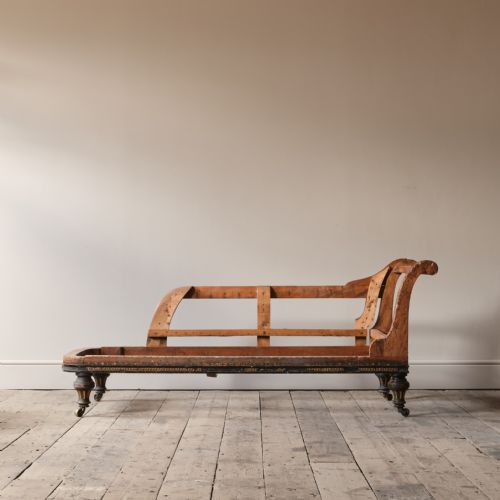
Makers and workshops of the era produced these daybeds to serve as both decorative seating and functional lounging furniture. They combine exposed wooden frames with upholstered cushions designed for sustained reclining.
How they were made
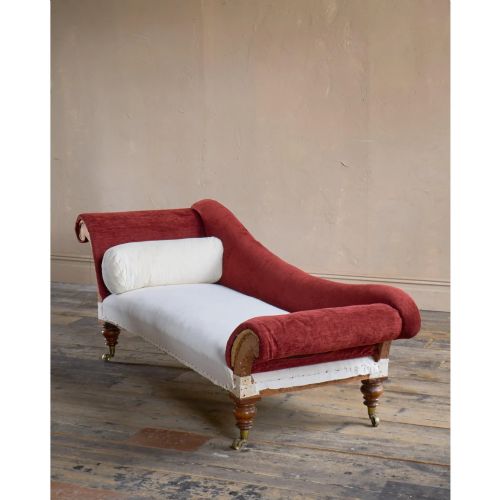
Carpenters constructed the structural frames primarily from solid mahogany and wood, often incorporating brass details or castors for mobility. Skilled cabinet makers shaped the timber into scroll arms, ionic column legs, and carved frameworks.
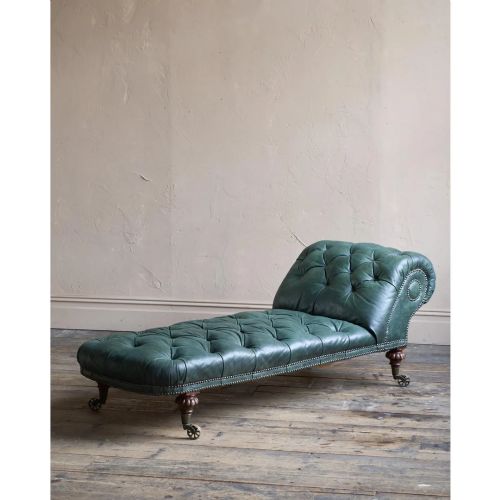
Upholsterers finished the interiors using fabric, velvet, damask, and button-back techniques. These traditional coverings were secured over padded foundations to support the long seat and raised backrest.
Mahogany Fainting Sofa Retail Price Guide 2026
Typical asking prices for mahogany fainting sofa among the pieces listed under this phrase on Sellingantiques today, from the lower quarter to the upper quarter. They describe what is for sale here now, not the wider market.
Materials recorded across the inventory include solid mahogany, brass castors, and various damask and velvet fabrics.
What varies in quality
Quality reveals itself in the crispness of the timber carving and the architectural balance of the frame. Pieces produced by notable cabinet makers display superior joinery and more refined proportions in the scroll ends and legs.
The standard of upholstery and the selection of textile coverings, such as damask or leather, influence the overall presentation. Finer examples retain carefully executed button-back work and robust structural integrity within the mahogany frame.
Holland and Sons·Howard and Sons·Jas Shoolbred·Miles and Edwards·Hampton and Sons
The Mahogany Fainting Sofa Glossary
- Chaise longue
- A long seated piece of furniture for reclining, literally translating from French as long chair. These items combine the functions of a chair and a day bed.
- Récamier
- A type of daybed with two raised ends, named after the French society figure Madame Récamier. This form appears in nineteenth-century Regency pieces.
- Scroll arm
- A curved, volute-shaped armrest terminating in a spiral design. This feature defines the profile of many nineteenth-century day beds.
- Button back
- An upholstery method where depressions are formed in the padding by stitches pulled tight and secured with buttons. This creates a tufted surface texture.
- Damask
- A reversible figured fabric woven on a jacquard loom with patterns formed by contrasting warps and wefts. It frequently appears as the textile covering on Victorian seating.
Mahogany Fainting Sofa: Frequently Asked Questions
How were these day beds used originally?
Nineteenth-century occupants used these day beds for daytime relaxation, reading, and resting without retiring to a bedroom. They sat in parlours, drawing rooms, and master chambers.
The furniture accommodated women wearing restrictive corsets who required a horizontal surface during the day, giving rise to the term fainting couch. They also served as stylish chaise longues for receiving visitors.
How do I tell Regency from Victorian pieces?
Regency pieces, dating from the early nineteenth century, tend to show cleaner classical lines, sometimes referencing ancient Greek or Roman forms. They often feature elements like ionic column legs and simpler woodwork.
Victorian examples from the mid to late nineteenth century frequently display heavier carving, button-backed upholstery, and more ornate scrollwork. The overall silhouette shifts from strict neoclassical geometry toward exuberant ornamental curves.
How do I live with a chaise longue today?
A chaise longue fits well in a living room, study, or large bedroom as a statement seating piece. Its elongated shape makes it suitable for placing against a wall or floating near a window.
Modern interiors use these day beds for reading or relaxing much like an armchair with an extended footrest. Their historical character pairs effectively with both traditional and contemporary room schemes.