
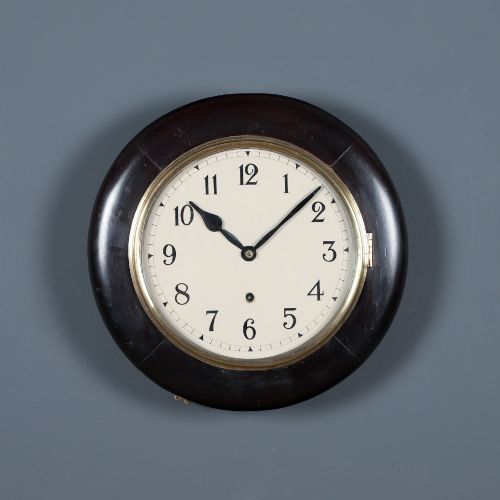
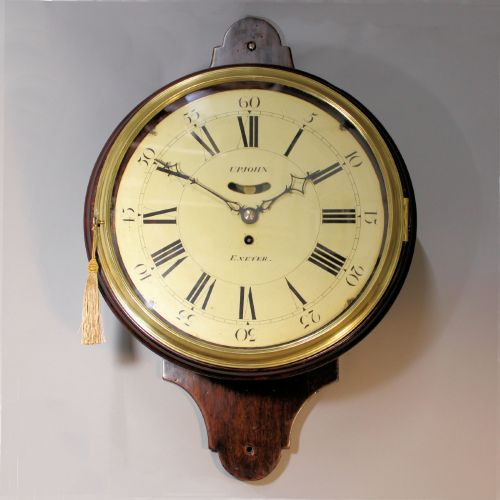
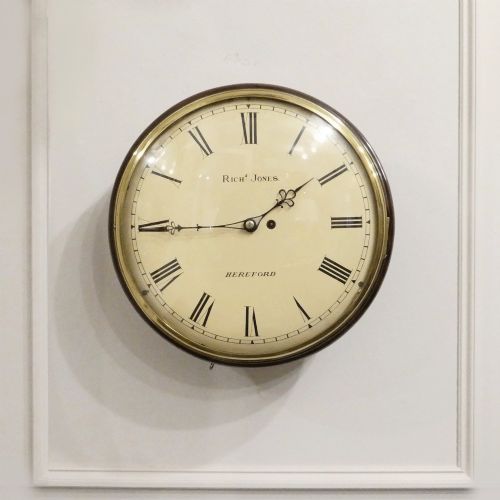
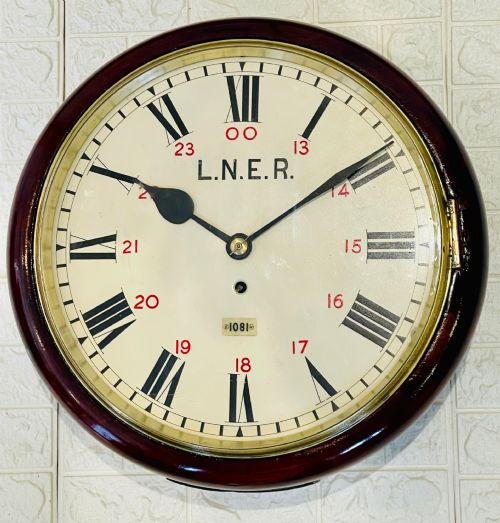
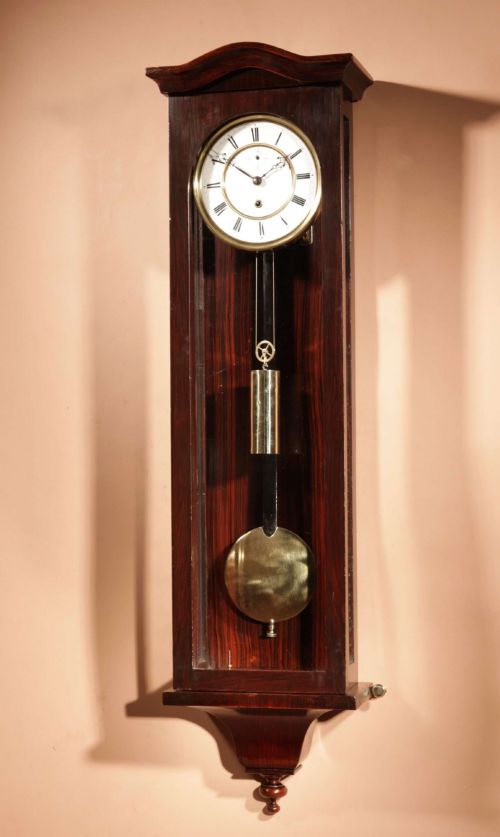
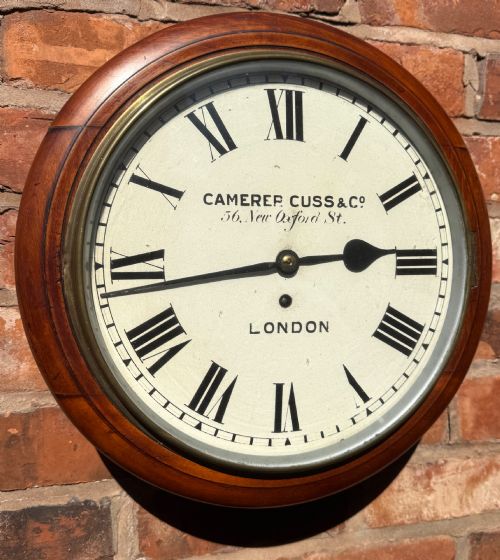

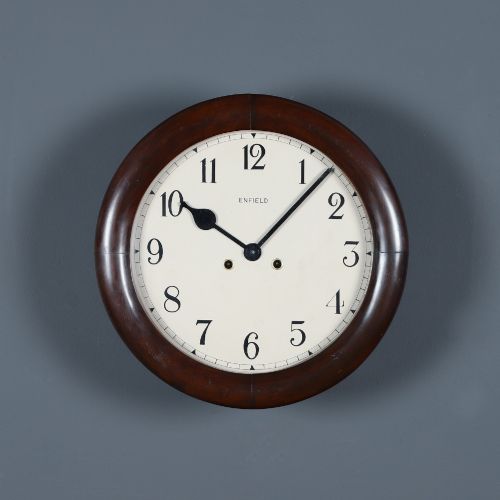
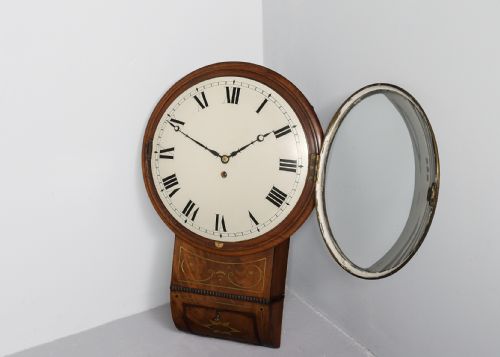
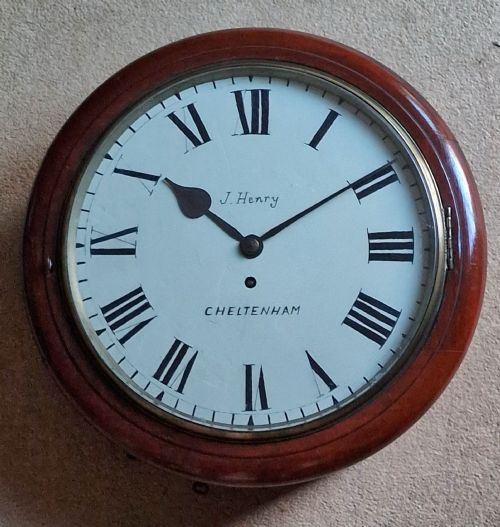
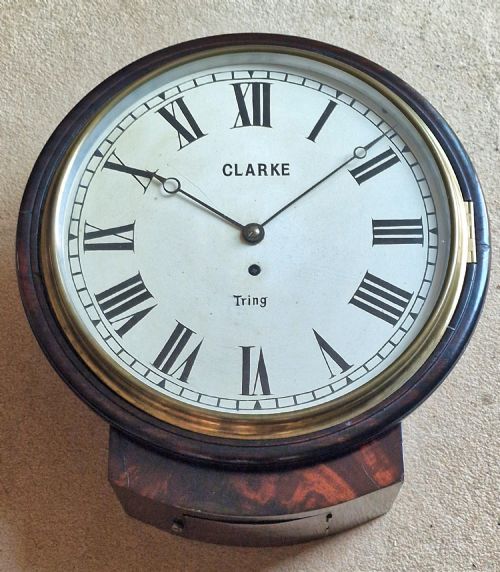
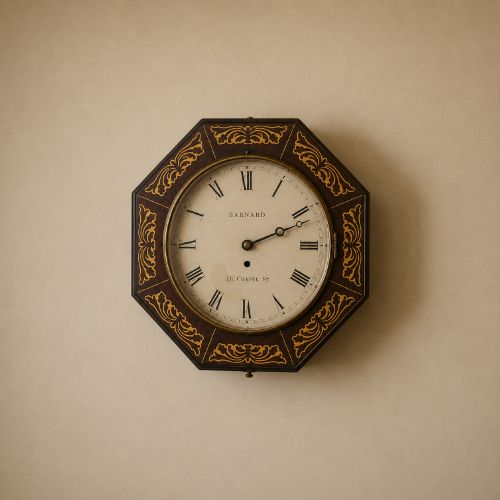
Mahogany Dial Wall Clock
A mahogany dial wall clock brings together strict timekeeping utility and cabinet-making heritage on domestic and institutional walls.
Mahogany Dial Wall Clock
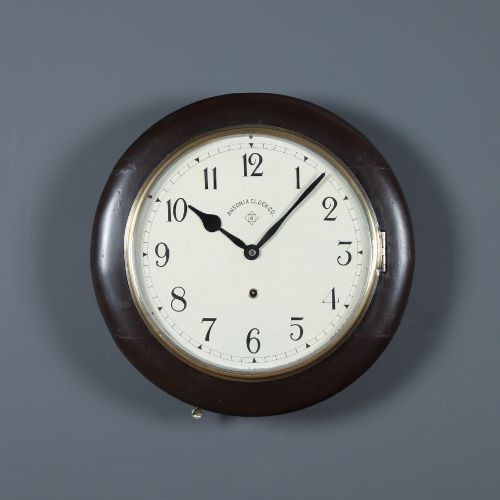
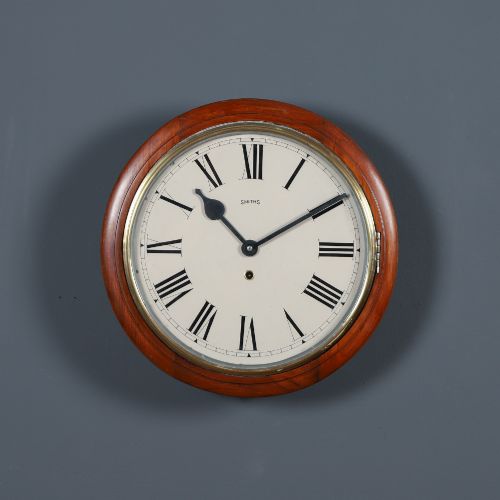
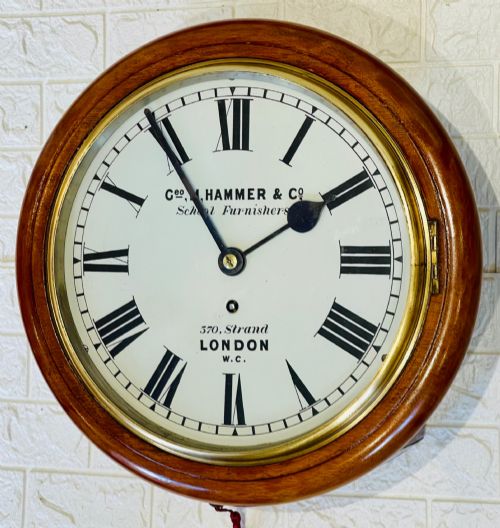
A mahogany dial wall clock is a circular-faced timekeeper designed to mount flush against a wall, frequently associated with transport networks, public buildings and domestic hallways. These items span Georgian, Regency and Victorian eras, alongside later pieces from the early twentieth century.
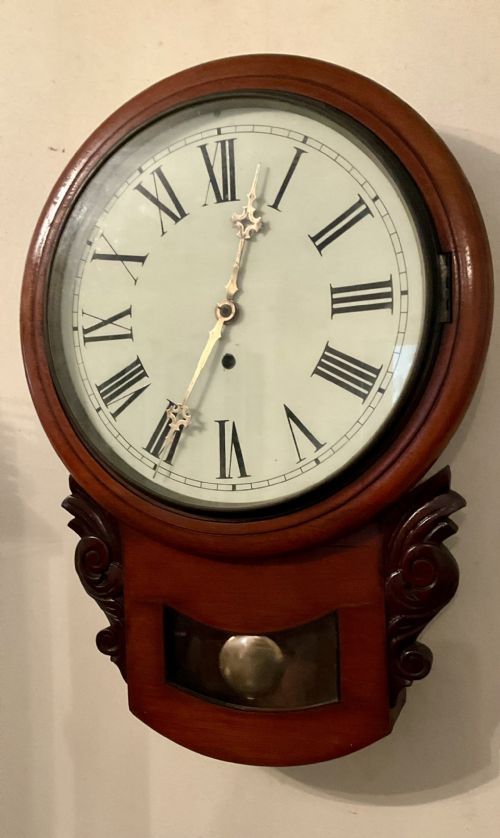
The most common formats met here are round dial wall clocks and drop-dial variants, which feature an extended lower case box to house a pendulum. Many examples carry provenance from railway companies, postal services and municipal authorities alongside civilian makers.
Originating primarily from British workshops, these clocks range from simple eight-inch dial timepieces to large, imposing station regulators. Their appeal lies in clear, legible faces paired with rich timber surrounds.
Materials and Construction
Solid mahogany forms the primary carcass and bezel for the housing, often shaped with brass inlay, carved ears or shaped base boxes. The timber was selected for stability and finished with polish to highlight the grain.
Dials are constructed from painted metal, enamel, wood or convex brass, protected by hinged glass bezels held within brass or wooden rims. Movements rely on brass gear trains, iron components and fusee or spring-driven mechanisms.
Listings feature mahogany cases alongside brass, enamel, and convex glass dials spanning the Georgian era to the 1950s.
Factors of Quality
Quality rests in the precision of the movement, the integrity of the mahogany case and the original condition of the dial. Makers who signed their work on the dial plate or movement backplate generally commanded higher regard.
Cabinetwork distinguishes standard utility pieces from finer examples, seen in crisp mouldings, matched timber veneers, and subtle brass stringing or inlay. Untouched movements with original components retain greater authenticity than heavily replaced mechanisms.
Camerer Cuss And Co·John Walker·James Tupman·John Moore And Son·Gillett And Johnston
The Mahogany Dial Wall Clock Glossary
- Fusee
- A conical pulley connected to the mainspring by a chain or cord that equalises the driving force as the spring unwinds. This mechanism improves timekeeping accuracy throughout the running period.
- Drop-dial
- A wall clock case featuring an extended lower section below the main circular dial to accommodate the swing of the pendulum. This format is frequently found on nineteenth-century English examples.
- Bezel
- The brass or wooden ring that holds the glass protecting the clock face, usually hinged to allow hand setting and winding. It often swings open from the side.
- Convex dial
- A dial face that curves outward toward the viewer rather than sitting flat. This design reduces glare from windows and gas lighting.
- Railway clock
- A robust timepiece commissioned by transport networks for station platforms and offices. These models prioritize legibility and dependable fusee movements.
Mahogany Dial Wall Clock: Frequently Asked Questions
How do fusee movements work?
A fusee movement uses a conical drum and a chain to regulate the pull of the mainspring. As the spring loses tension, the chain rides higher on the wider part of the cone to maintain steady torque.
This clever mechanical compensation ensures the clock maintains consistent timekeeping right up until the moment it requires winding again.
How do I date these clocks?
Dating relies on stylistic clues in the mahogany case, the shape of the bezel, and the materials used on the dial. Earlier Georgian and Regency models often feature wooden dials or fine brass inlay.
Maker signatures painted on the dial or engraved on the backplate provide a direct link to historical records and working dates.
Where were railway clocks used?
Railway clocks hung in booking halls, platform offices, and administrative rooms across the network to coordinate train departures. Companies like the GWR and LNER specified robust movements and clear numerals.
Their utilitarian service meant they endured heavy use in busy public environments before retiring into private collections.