




Mahogany Dessert Buffet
A mahogany dessert buffet, appearing most often as a multi-tiered dumb waiter, brings timber warmth and practical tiered serving space to a dining room.
Mahogany Dessert Buffet
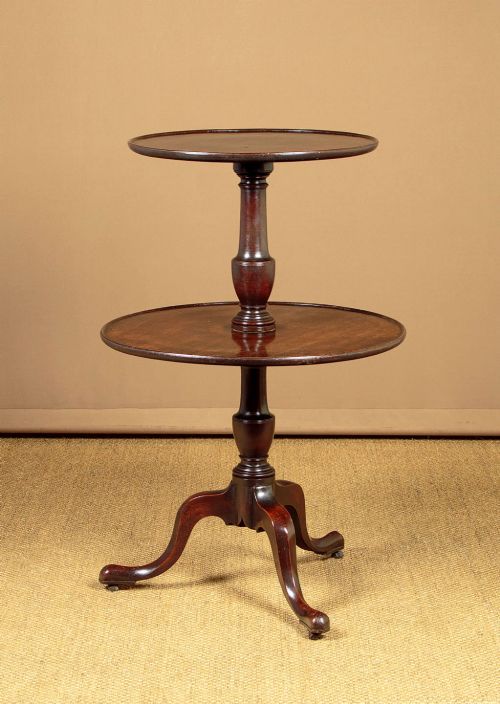
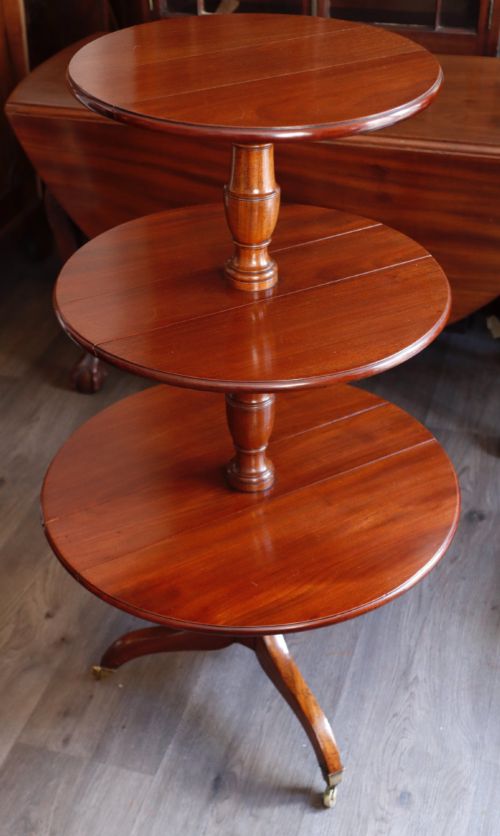
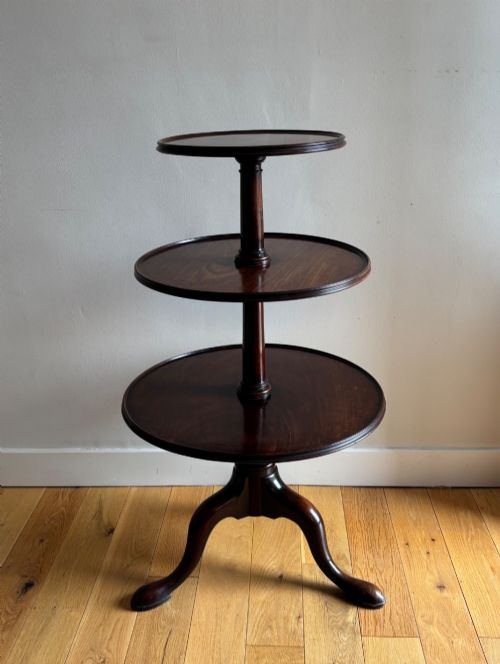
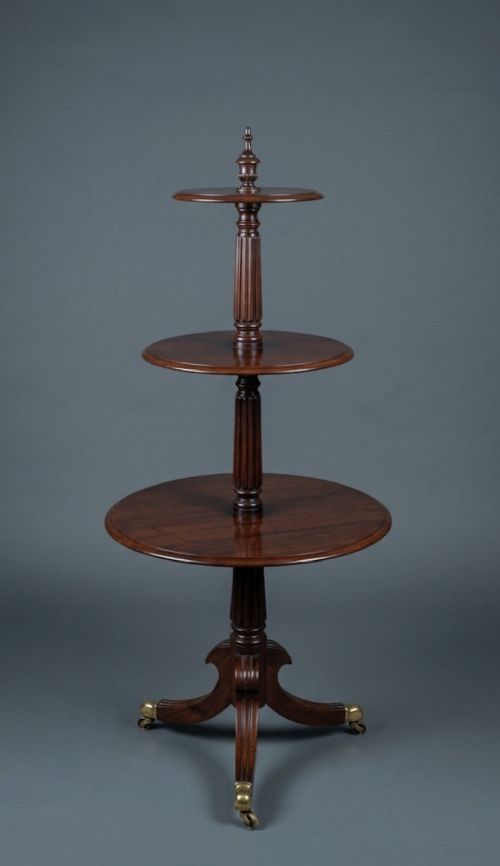
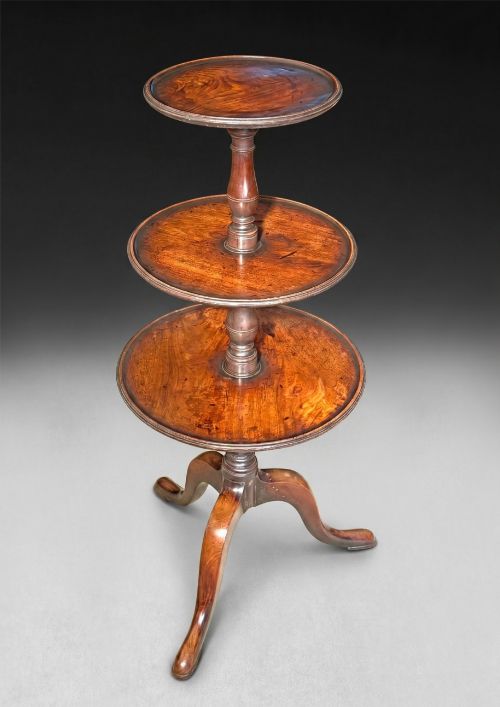
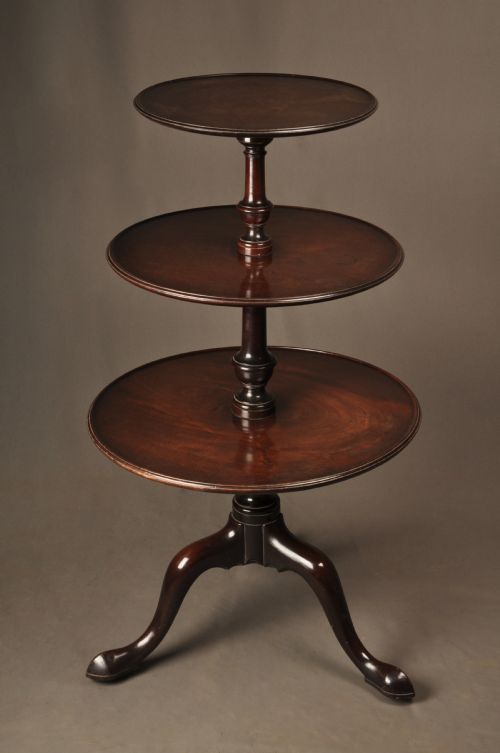
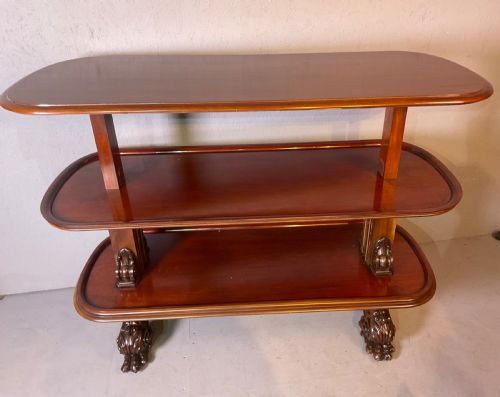
When you search for a mahogany dessert buffet, you are examining a category of serving furniture that spans the eighteenth and nineteenth centuries, including Georgian, Regency, and Victorian eras. The examples found here are predominantly multi-tiered dumb waiters and serving tables designed to hold dishes and utensils near the dining table.
The most common formats on this page are circular three-tier and two-tier revolving stands supported by central pillars and tripod legs. Makers from the George III period onwards constructed these pieces primarily for dining room utility, allowing diners to help themselves without servants present.
Origins range across English workshops, with particular pieces reflecting the cabinet-making traditions of the eighteenth century up to the later Victorian period. Forms vary from folding tiers and galleried edges to large metamorphic designs on original castors.
Materials and construction methods
Cabinet-makers relied heavily upon solid and veneered mahogany, selected for its rich grain and durability, frequently augmented by rosewood details and brass elements such as castors and turning mechanisms.
Construction techniques involve turned central pedestals supporting graduated circular or oval tiers, often utilising tripod legs terminating in brass feet or castors for mobility in the dining room.
Listings feature mahogany serving furniture spanning the eighteenth century, the Georgian period, the Regency era, and Victorian times.
Distinctions in craftsmanship
Quality in these serving pieces rests upon the selection of timber grain, the crispness of turned mouldings on the central column, and the smoothness of the revolving mechanism on tiered models.
Superior examples demonstrate proportion in the graduated tiers, stability in the tripod base, and the retention of original brass hardware and castors rather than later replacements.
Gillows·Maple & Co
The Mahogany Dessert Buffet Glossary
- Dumb waiter
- A tiered stand used for holding food and tableware during meals. These pieces typically feature multiple rotating trays stacked vertically on a single pillar.
- Tiered table
- A piece of furniture constructed with multiple levels stacked one above the other. This design maximises vertical display and serving space.
- Metamorphic
- Describing furniture designed to transform or fold into different configurations. Such pieces offer adjustable utility for dining and storage.
- Gallery
- A raised rim or miniature balustrade encircling the edge of a tray or shelf. This feature prevents items from sliding off the surface during rotation.
- Tripod base
- A three-legged support structure commonly found beneath the central column of these serving stands. It provides balanced contact on uneven dining room floors.
Mahogany Dessert Buffet: Frequently Asked Questions
What is a mahogany dessert buffet?
A mahogany dessert buffet typically refers to a tiered dumb waiter or serving table utilised during the Georgian and Victorian periods.
These pieces provide stacked surfaces for holding dishes, glassware, and desserts during meals.
How were dumb waiters used?
Dumb waiters stood beside the dining table to hold extra plates, food, and wine during dinner.
By placing these items on revolving tiers, diners could help themselves without requiring servants to remain in the room.
How do I identify a Georgian dumb waiter?
Georgian examples often feature solid mahogany construction with finely turned central pillars and tripod bases.
Look for period characteristics such as graduated circular tiers, brass castors, and eighteenth-century joinery methods.
Where should I place a tiered stand?
These pieces fit well in dining rooms or living spaces as serving surfaces or display stands for decorative objects.
Their compact circular footprint allows them to occupy corners or wall spaces while remaining accessible.