
Mahogany Desk on Legs
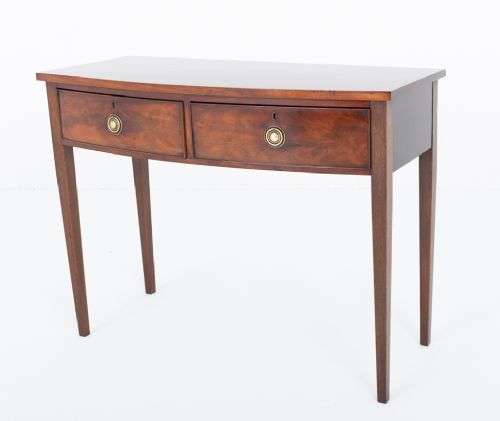
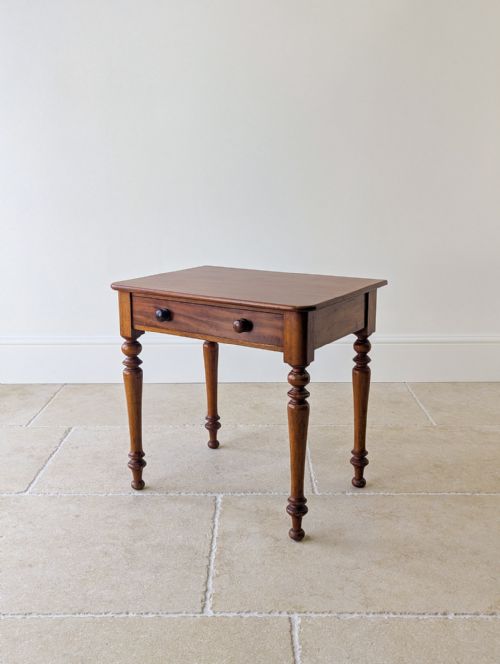
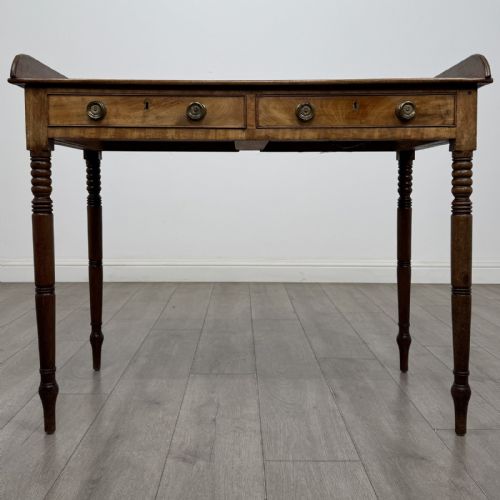
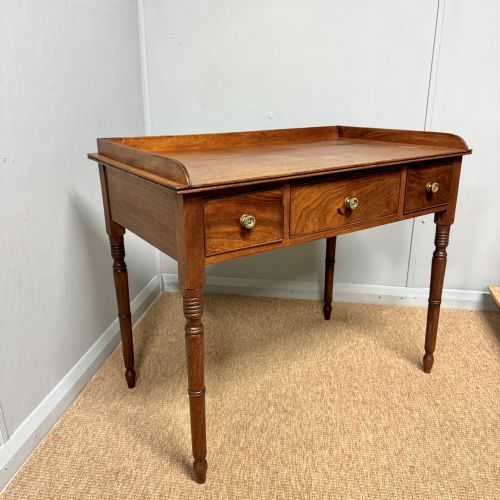
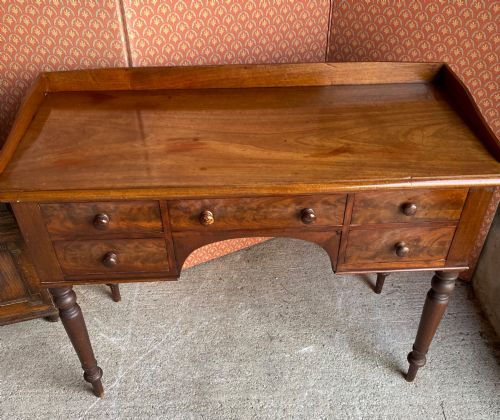
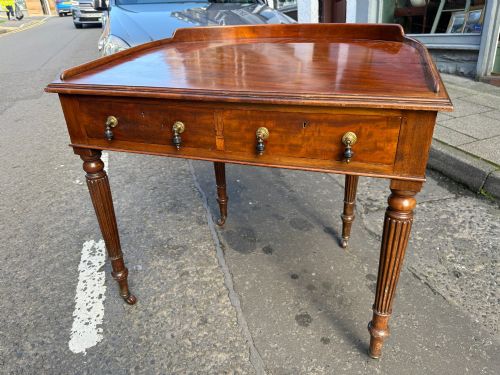
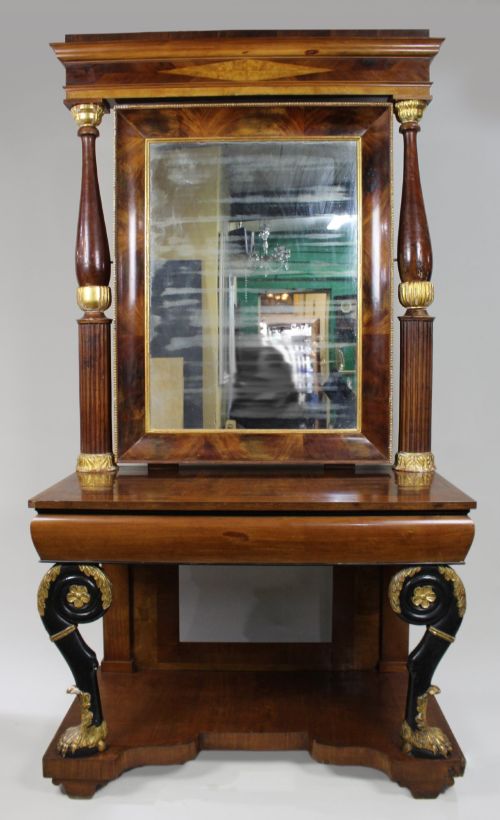
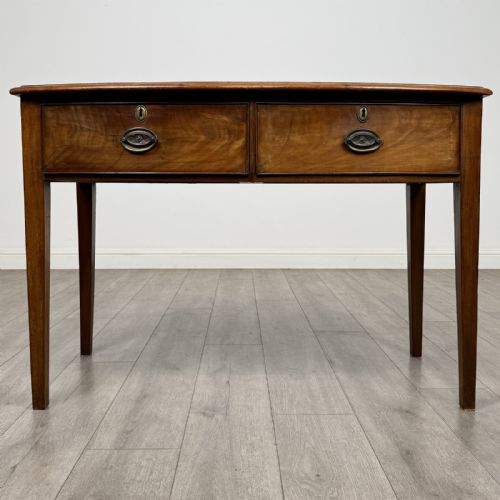
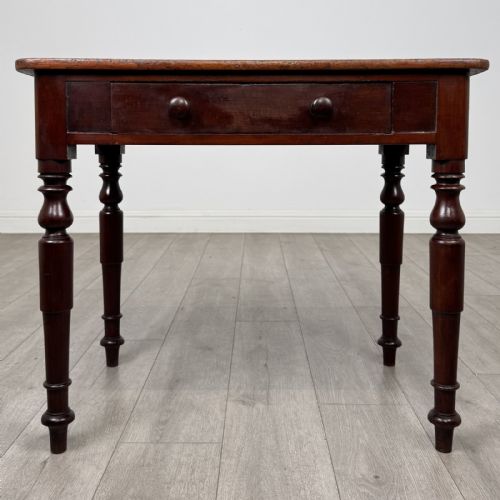
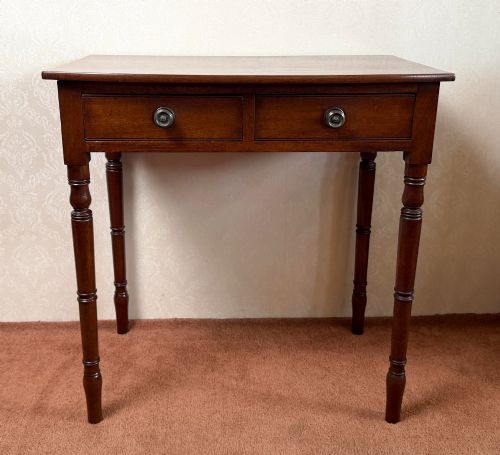
Mahogany desk on legs pieces combine timber and upright supports, offering functional writing surfaces for traditional interiors.
Materials and construction
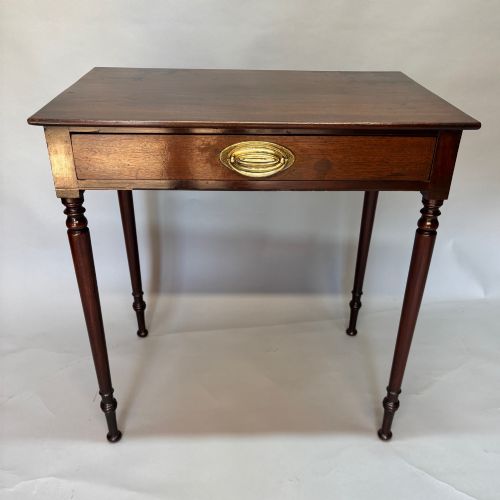
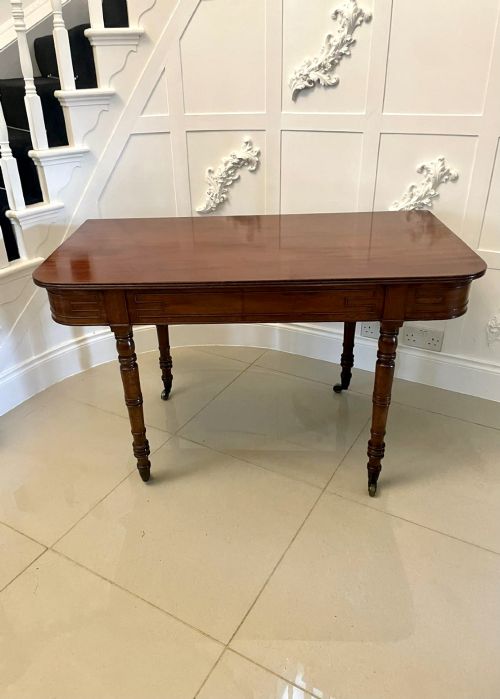
Makers utilised solid mahogany and figured veneers over secondary timbers to construct the primary framework of these desks. Brass handles, ormolu mounts, and brass casters often appear as supporting hardware on period examples.
Writing surfaces frequently incorporate leather, fabric, velvet, or textile inserts set directly into the timber top. Frames are joined using traditional methods and supported by straight, turned, or cabriole legs.
Assessing craftsmanship
Quality in these desks rests on the selection of timber, particularly the depth and movement within flame or figured mahogany veneers. Superior pieces display thoughtful grain matching across drawer fronts and top surfaces.
The refinement of structural elements, such as hand-cut drawer linings, original brass hardware, and finely carved or turned legs, distinguishes standard production from exceptional workshops.
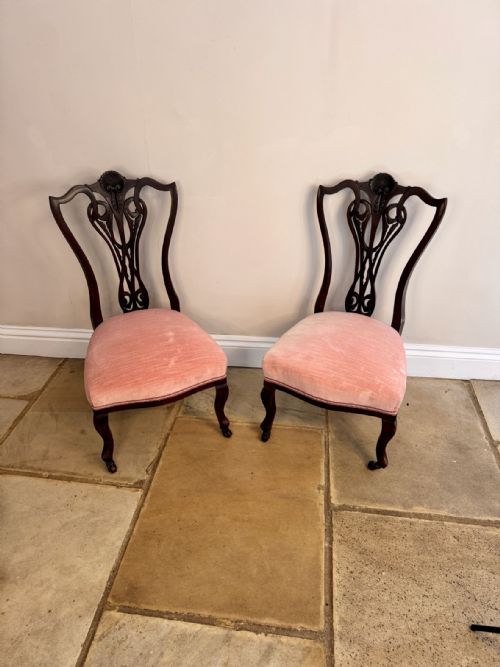
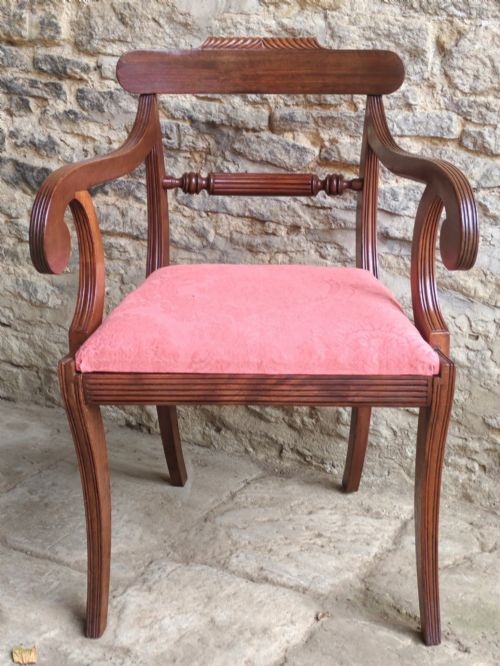
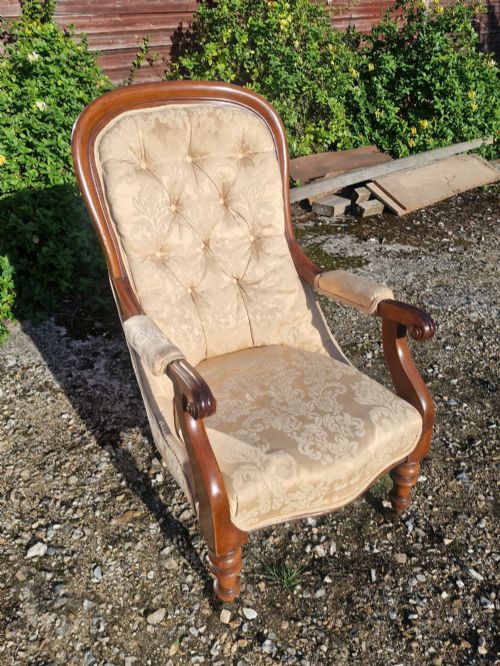
Several armchairs listed alongside these desks feature tub shapes and caned seating designed for long hours of correspondence.
Heal and Son·François Linke·Edwards and Roberts·James Mein of Kelso·Gillows
The Mahogany Desk on Legs Glossary
- Partners desk
- A large double-sided writing table designed for two people to work opposite one another, featuring drawers on both sides.
- Satinwood
- A lustrous, yellowish timber often utilised for contrasting stringing and inlay work on mahogany furniture.
- Cabriole leg
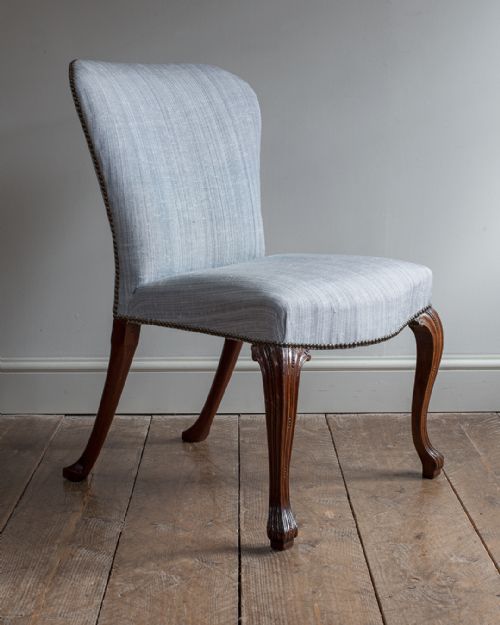
- A furniture support that curves outward and then tapers inward, finishing in a pad, claw, or scroll foot.
- Bureau plat
- A French freestanding writing table fitted with one or more drawers in the frieze.
- Ormolu
- Gilt-bronze decorative mounts applied to the exterior of fine nineteenth-century cabinet furniture.
Mahogany Desk on Legs: Frequently Asked Questions
What defines a partners desk?
A partners desk is built to accommodate two individuals working face-to-face. It typically incorporates banks of drawers on both sides of the central opening.
These large library tables were designed for offices and studies where multiple users required simultaneous workspace and storage.
How do I identify a Victorian desk?
Victorian desks generally display heavier proportions and deeper mahogany tones than their Georgian predecessors. They frequently utilise brass hardware and fitted leather writing surfaces.
Construction details from this era often include machine-sawn elements alongside hand-finished drawer dovetails.
Are leather writing inserts original?
Many desks retain their original tooled leather tops, though replacement is a common part of historical maintenance. Original leather often displays natural wear, patination, and gilt tooling.
Replacement inserts are chosen to match the period style and colour palette of the surrounding mahogany frame.
What is flame mahogany?
Flame mahogany refers to a distinctive veneer figure derived from the fork of the tree branch meeting the trunk. This pattern produces a characteristic flame-like or feather-like ripple across the timber.
Cabinetmakers arranged these veneers symmetrically on drawer fronts and tabletops to create striking visual symmetry.