

Mahogany Chippendale Seats
Mahogany chippendale seats provide sturdy timber frames and carved details that anchor a formal room.
Mahogany Chippendale Seats
When you search for mahogany chippendale seats, you find formal seating furniture constructed primarily in dark dense timber from the eighteenth century onwards. The selection spans dining chairs, library armchairs, desk chairs, and settees built for domestic drawing rooms and halls.
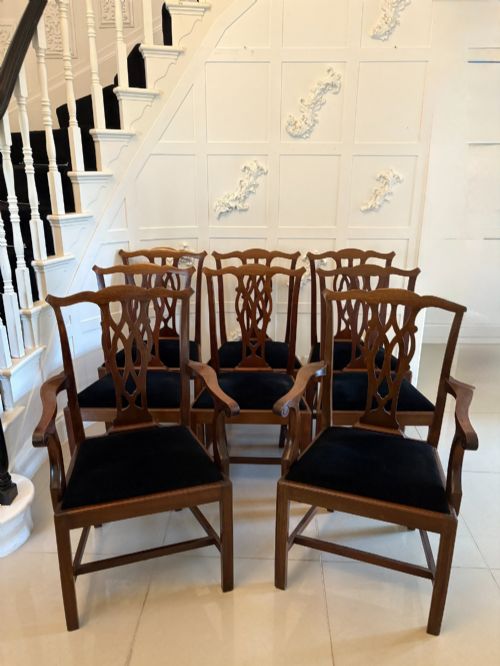
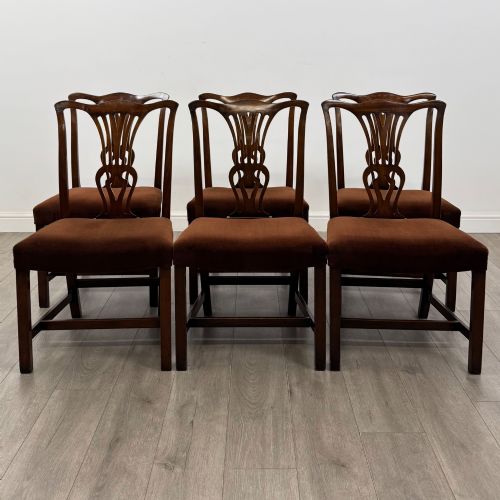
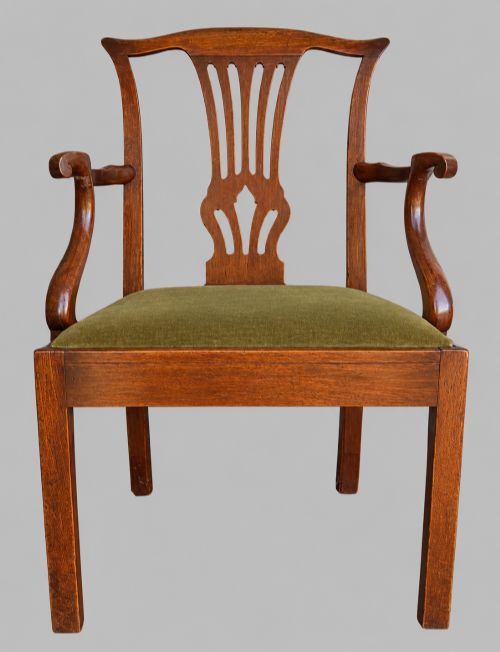
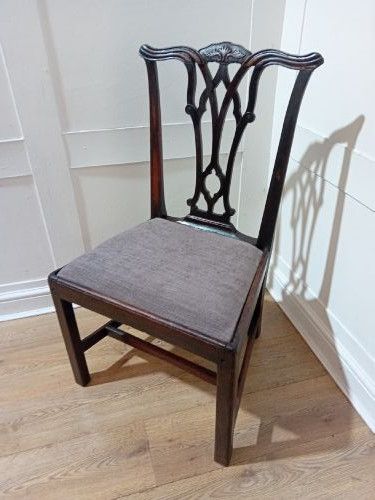
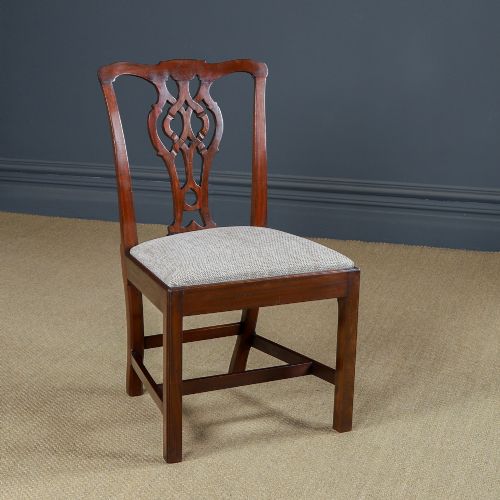
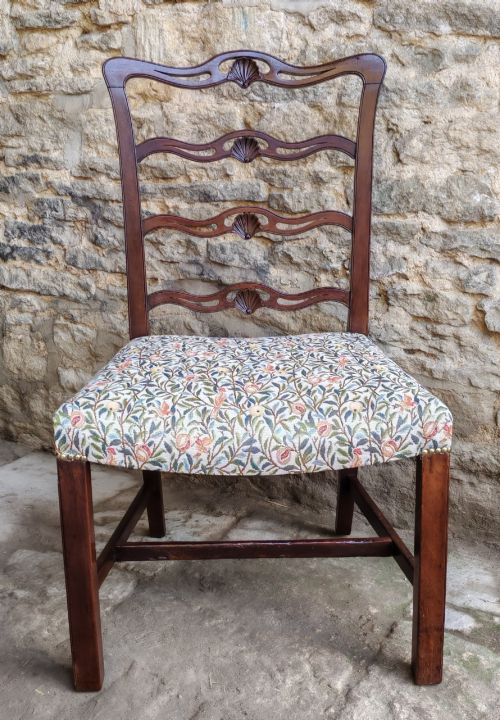
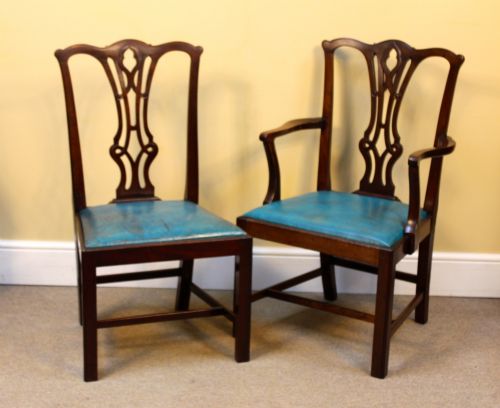
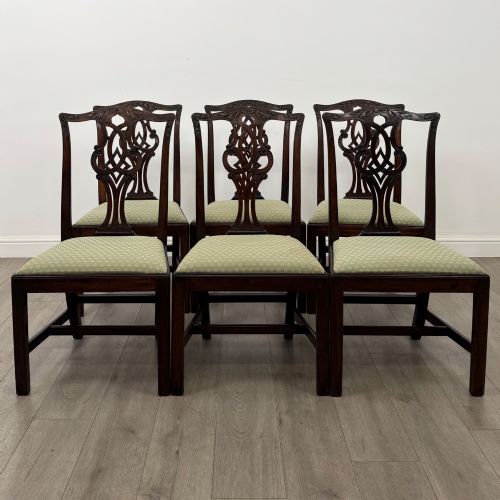
The version most commonly met on this page is the Chippendale revival dining chair or elbow chair dating from the late nineteenth or early twentieth century. These later interpretations often replicate the pierced splats and carved motifs of earlier Georgian forms.
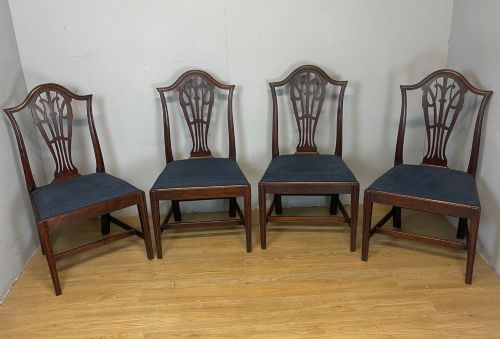
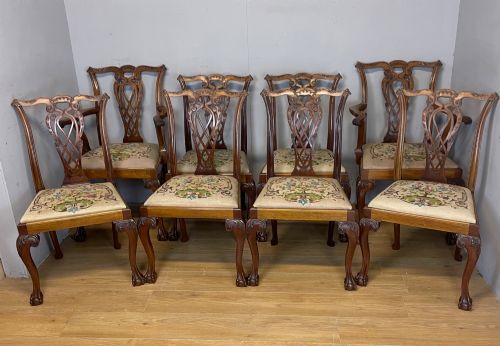
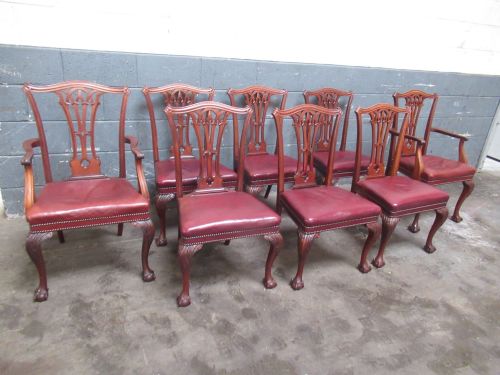
Original eighteenth-century pieces appear alongside Victorian and Edwardian revivals, showing how cabinetmakers revisited these standard timber designs across successive generations. Buyers encounter single items, pairs, and larger matching sets designed around dining tables.
How they were made
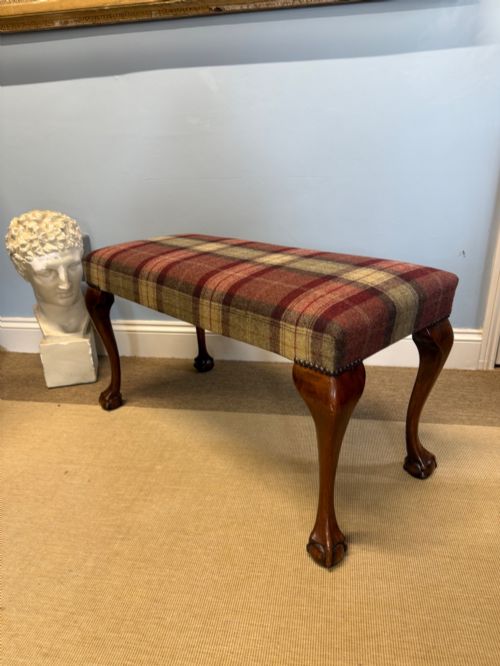
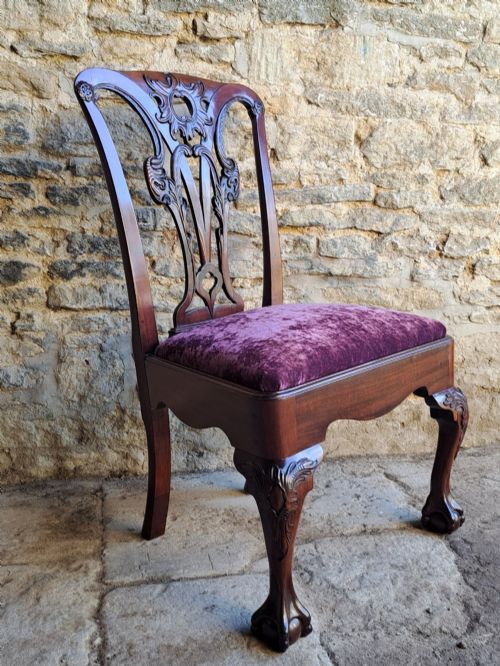
Constructed predominantly from solid mahogany, these seats rely on dense timber frameworks joined with traditional mortise and tenon joints to support everyday weight. Carvers shaped the wood directly for decorative splats, arm terminals, and leg details including ball and claw feet.
Upholstered elements use textiles such as leather, fabric, velvet, tapestry, and damask fixed over webbing and stuffing. Brass tacks frequently secure the edges of the hide or woven covers to the wooden seat frames.
Several armchairs are ready to host your afternoon daydreams, provided you can evict the family cat first.
What varies in quality
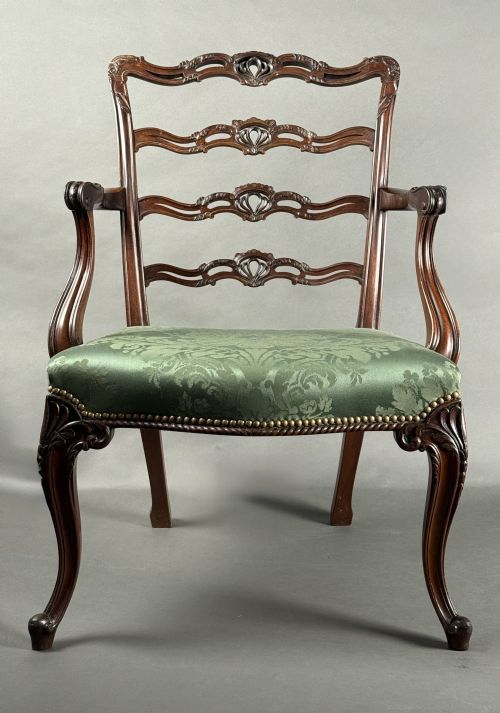
The depth and crispness of the timber carving separate standard production from superior examples. Finely executed ribbon backs and pierced splats reflect greater manual labour by the cabinetmaker.
The choice and preservation of the original or period upholstery materials also influence the character of each piece. Intricate needlepoint and hand-dyed English hide indicate higher initial commissioning costs than simpler textile coverings.
Warings·Howard and Sons
The Mahogany Chippendale Seats Glossary
- Splat
- The vertical wooden strip down the centre of a chair back. In these designs, it is frequently pierced and carved into intricate interlaced patterns.
- Gainsborough chair
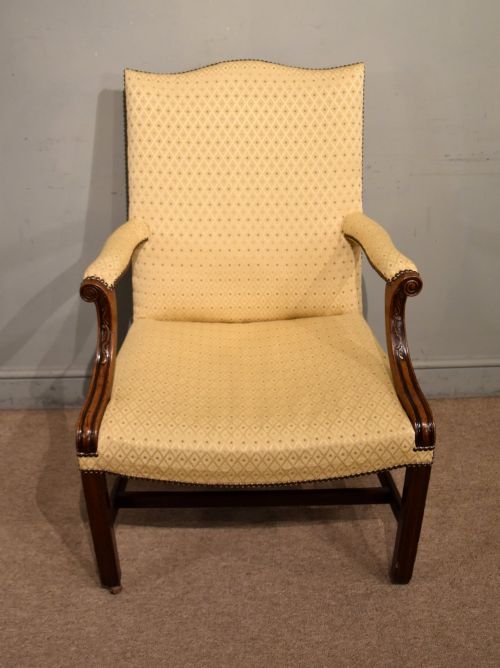
- A wide, open-armed easy chair with a padded back and seat, standing on short legs. They frequently appear in libraries and writing rooms.
- Elbow chair
- An armchair designed with low wooden arms intended to support the elbows. They match dining chair sets to serve as host seating at table ends.
- Ladderback
- A chair back featuring horizontal wooden slats arranged in tiers above the seat. Revival versions adapt this format with mahogany frames.
- Chippendale style
- A design vocabulary derived from eighteenth-century pattern books. It incorporates carved ribbon motifs, scrolling foliage, and French or Chinese influences.
Mahogany Chippendale Seats: Frequently Asked Questions
How do I identify a true 18th-century piece?
Original eighteenth-century pieces display signs of hand tool work, timber shrinkage, and structural wear consistent with age. Grain patterns and patination on the mahogany reveal long exposure to wax polish and handling.
Revival pieces from the Victorian and Edwardian eras often use machine-cut components and standardised dimensions. Examining the underside and joint construction clarifies the manufacturing period.
What is a Gainsborough chair used for?
Gainsborough chairs serve as comfortable seating for writing desks, reading areas, and formal drawing rooms. Their wide proportions accommodate heavier garments and long periods of sitting.
These armchairs combine timber frames with upholstered padding on the seat, armrests, and backrest. They function as standalone accent seats rather than dining chairs.
How should I care for leather seats?
Leather upholstery requires regular dusting and occasional treatment with suitable conservation balms to prevent the hide from drying out. Keeping seats away from direct heat sources protects the natural material from cracking.
Careful cleaning maintains the hand-dyed finish found on many traditional library and desk chairs. Excessive moisture should be avoided during cleaning routines.
Can I mix these chairs with modern tables?
Mahogany dining chairs pair effectively with contemporary wooden tables through contrasting styles and shared timber tones. The dark finish of the mahogany grounds a dining space against simpler modern lines.
Scale and height remain the primary considerations when matching antique seating to modern furniture. Checking seat heights ensures comfortable clearance beneath table aprons.