






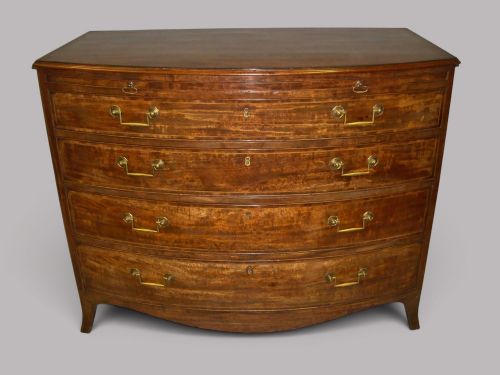

Mahogany Bowfront Bureau
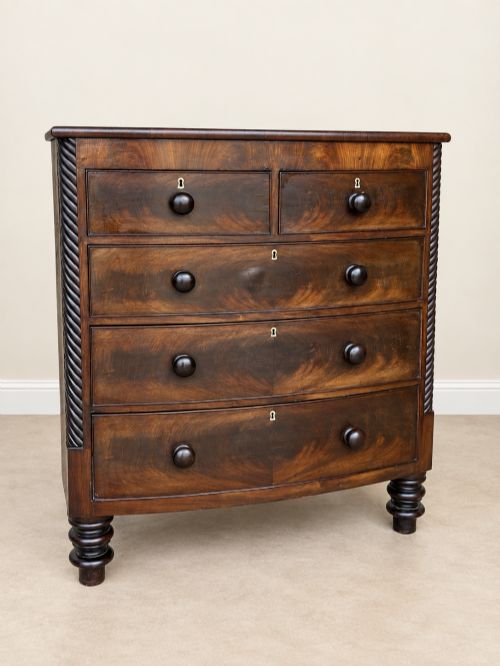
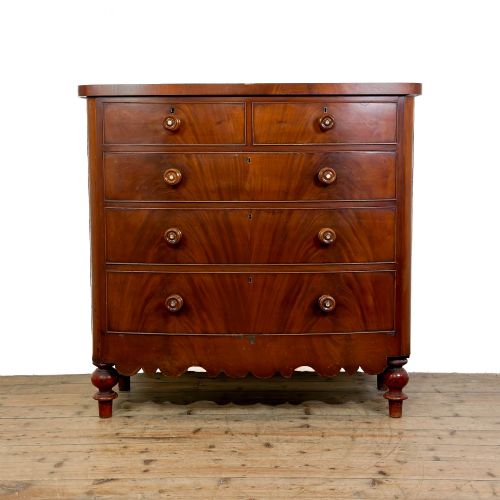
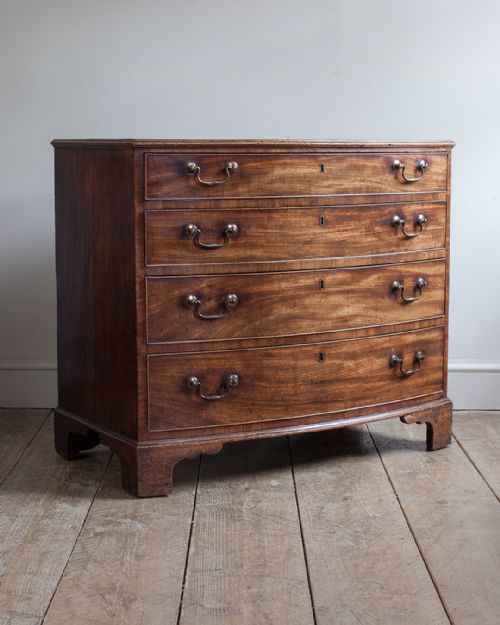
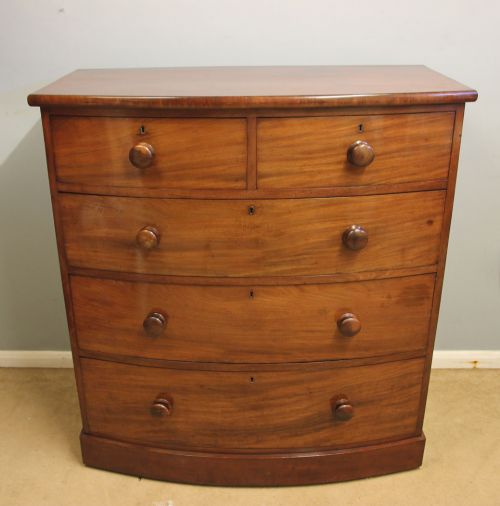
A mahogany bowfront bureau offers curved fronts and rich timbers, bringing elegance and practical storage to any room.
Mahogany Bowfront Bureau
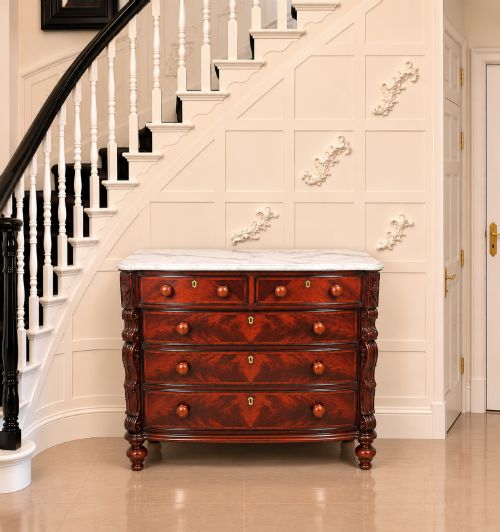
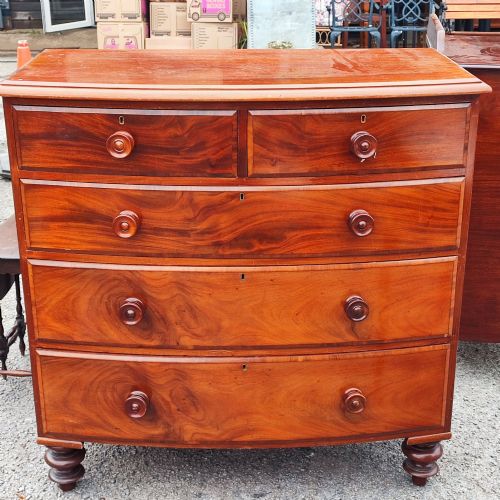
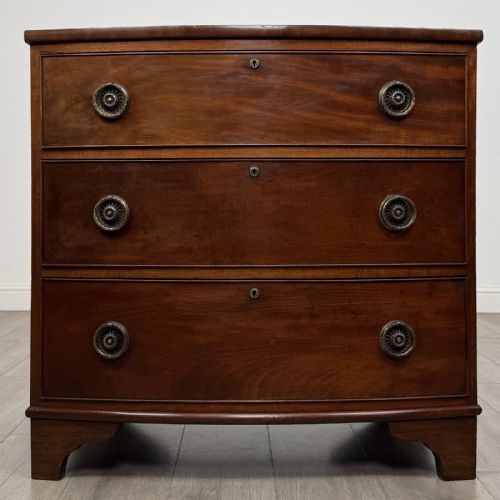
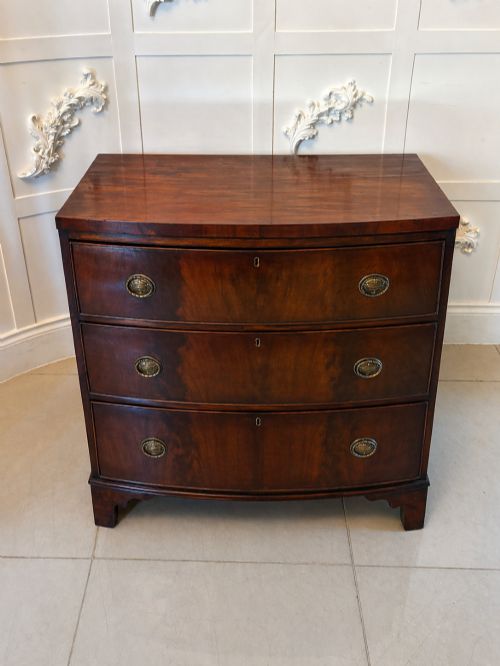
When you search for a mahogany bowfront bureau, you are looking at substantial pieces of furniture defined by their curved front profiles and warm timber surfaces. The items on this page span Georgian, Regency, and Victorian periods, alongside specific years such as 1800 and 1850.
Most examples appear as chests of drawers featuring the signature curved bowfront, with some incorporating writing slides or commode functions. Styles range from George III and George IV through to William IV and Federal designs.
Originating predominantly from British and American workshops, these pieces utilise dense hardwoods and secondary timbers like oak and pine. Buyers encounter diverse proportions, from small compact chests to large proportions built for grand rooms.
How they were made
Cabinet makers built these pieces using solid mahogany and flame mahogany veneers applied over stable secondary woods such as oak and pine. The curved bowfronts required precise woodworking to shape solid timber or bend veneer gracefully around the frame.
Details include brass handles fixed to drawer fronts, alongside occasional decorative touches of bone and mother of pearl. Structural integrity relies on traditional joinery methods within the carcase and internal drawer construction.
Mahogany Bowfront Bureau Retail Price Guide 2026
Typical asking prices for mahogany bowfront bureau among the pieces listed under this phrase on Sellingantiques today, from the lower quarter to the upper quarter. They describe what is for sale here now, not the wider market.
One unexpected chest includes mother of pearl details alongside traditional brass handles.
What varies in quality
The choice of timber creates a distinct visual hierarchy, where highly figured flame mahogany veneer or burr oak contrasts with plainer mahogany boards. Selection of secondary woods and the precision of the curved drawer fronts also indicate the standard of craftsmanship.
Hardware choices contribute to the overall character, with original brass handles holding more appeal than later replacements. The handling of proportions, from small delicate formats to large pieces, determines the balance and presence of the furniture.
The Mahogany Bowfront Bureau Glossary
- Bowfront
- A convex curved front facade characteristic of these chests of drawers and commodes. This shape softens the rectangular outline of traditional furniture.
- Flame mahogany
- A veneer cut from timber where the branch meets the trunk, producing a rippling flame pattern. Cabinet makers reserved this for primary display surfaces.
- Writing slide
- A pull-out shelf integrated above the top drawer for correspondence. This feature turns a standard chest into a functional writing surface.
- Secondary wood
- Timber used for internal components like drawer linings and carcase backs, such as oak or pine. Makers selected these for stability rather than appearance.
Mahogany Bowfront Bureau: Frequently Asked Questions
What is a bow front chest?
A bow front chest is a storage unit featuring a convex curved front that projects outward. This design softens the corners and adds visual depth to the room.
Such pieces typically contain multiple drawers stacked vertically, serving as functional storage in bedrooms and hallways.
How do I date these chests?
Dating relies on observing construction methods, timber choices, and stylistic details associated with periods like Georgian or Regency. Hardware styles and secondary woods also offer clues to the decade of manufacture.
Comparing proportions and edge mouldings helps separate eighteenth-century examples from later nineteenth-century interpretations.
Where should I place one?
These chests suit living rooms, dining rooms, or bedrooms where their curved profile breaks the monotony of flat walls. Their surface provides a practical platform for lamps or decorative objects.
Ensure adequate clearance in hallways or tight spaces to accommodate the projecting curved front safely.
What is flame mahogany?
Flame mahogany is a highly decorative veneer harvested from the junction where branches join the main tree trunk. The grain creates a distinctive undulating pattern resembling tongues of fire.
Cabinet makers prized this wood for drawer fronts, displaying it prominently to catch the light.