
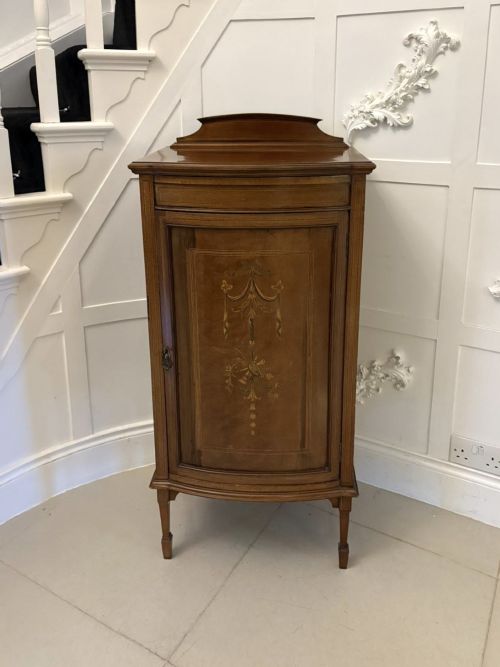
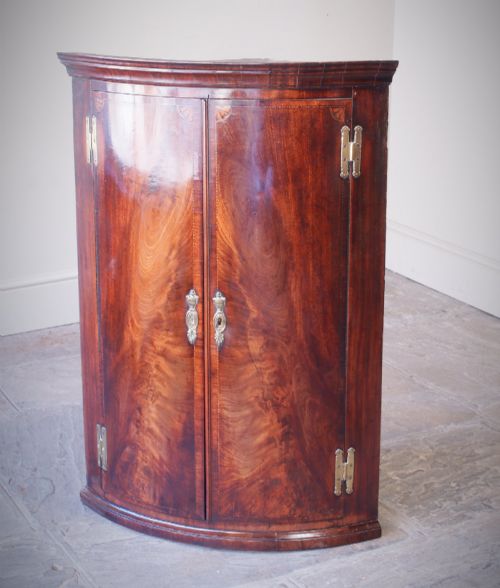
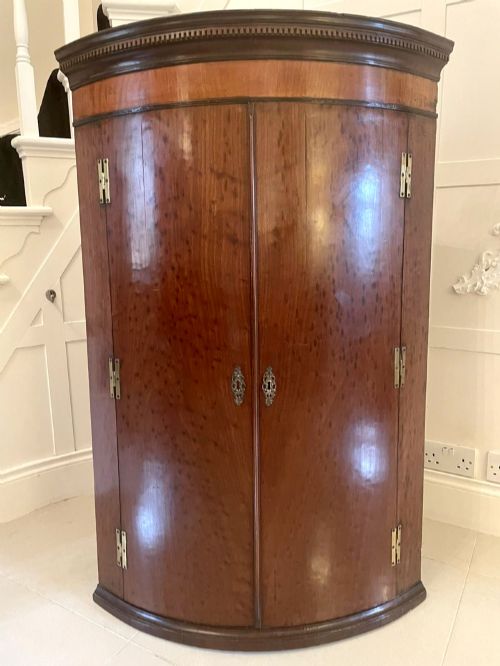
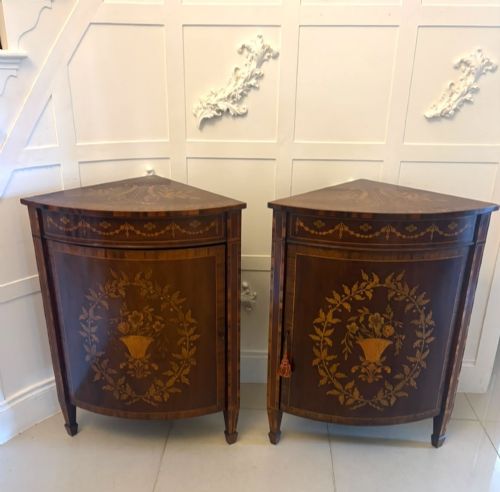
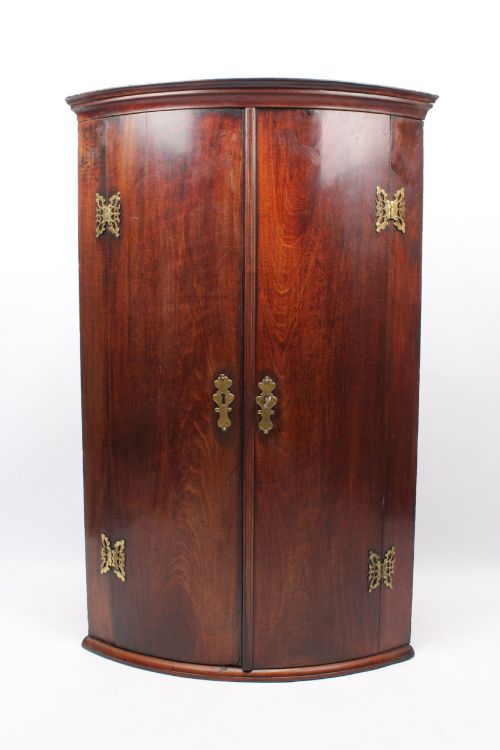
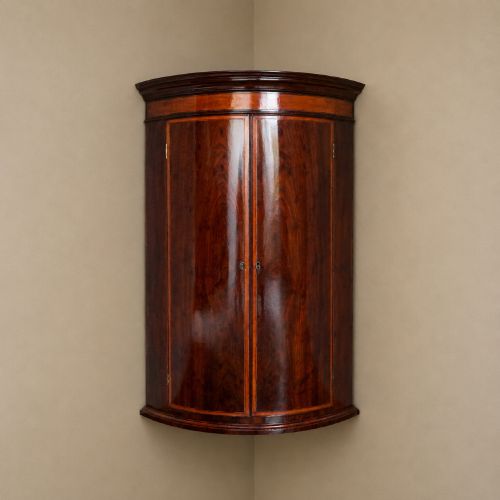
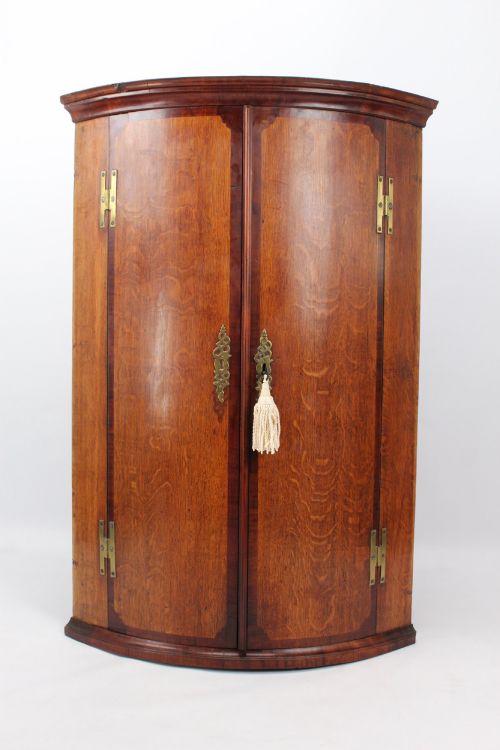
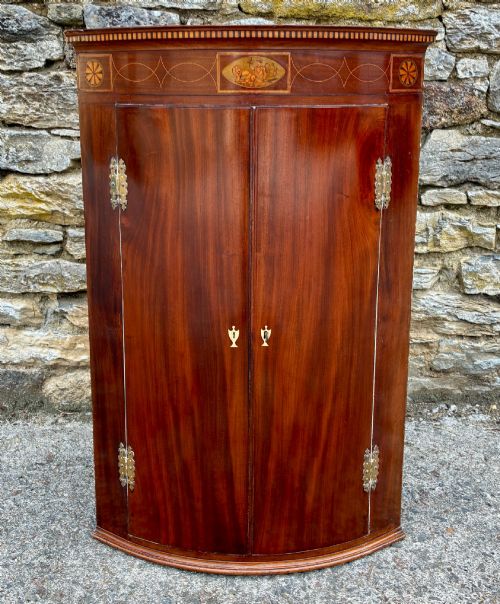

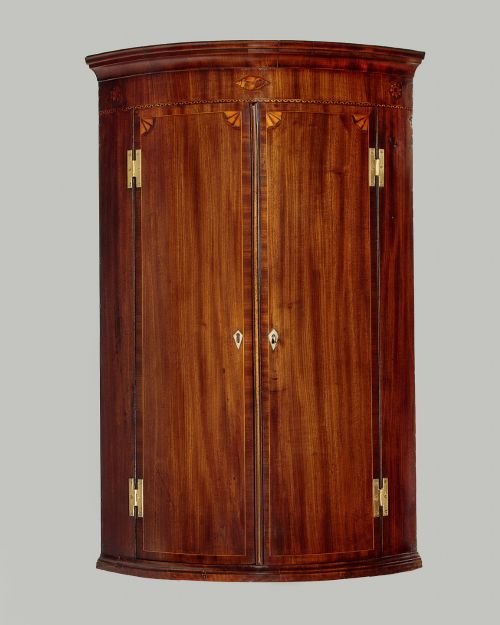
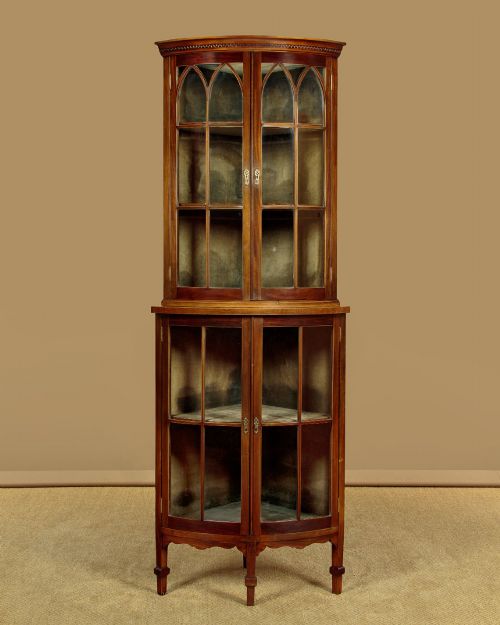
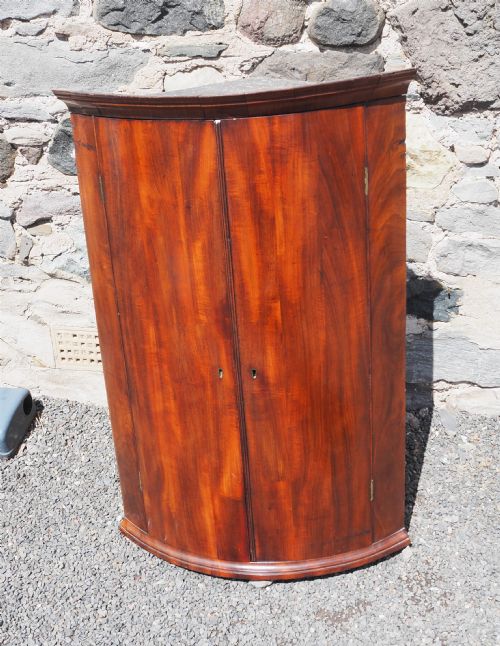


Mahogany Bow Front Corner Cupboard
These mahogany bow front corner cupboards turn awkward angles into usable display space with curved doors and rich timber grain.
Mahogany Bow Front Corner Cupboard
A mahogany bow front corner cupboard fits neatly into room junctions, turning blank angles into functional storage. The curved front softens the rigid geometry of standard furniture while making the most of tight corners.
Most examples originate from the Georgian and George III periods, though Edwardian and later interpretations appear alongside oak and mahogany hybrids. Hanging and freestanding configurations both serve to display and conceal household items.
The form ranges from simple wall cupboards to taller display cabinets featuring glazed doors and elaborate satinwood stringing. These pieces solve space limitations while bringing traditional woodwork into domestic interiors.
Materials and construction methods
Makers built these cabinets primarily from solid mahogany and oak, often selecting figured timber like plum pudding and flame mahogany for the primary visible surfaces. Secondary woods provide structural stability inside the carcase.
Detailed decoration relies on contrasting veneers, incorporating boxwood and satinwood inlay to create geometric borders and decorative medallions along the curved door panels and cornices. Brass hardware such as H-hinges and escutcheons secure the doors and complete the construction.
plum pudding mahogany grain patterns resemble small festive bakes hidden inside the timber.
Distinctions in quality and finish
The selection of timber grain largely defines the visual standard, with heavily figured flame and plum pudding mahogany sitting at the upper end of the craft. Plain timber finishes or heavier secondary woods indicate simpler utility pieces.
Precision in the curved door joinery and the subtlety of boxwood and satinwood inlay separate standard workshop production from finer cabinet work. Original brass fittings and intact glazing further distinguish the preserved examples.
The Mahogany Bow Front Corner Cupboard Glossary
- Bow front
- A convex curved cabinet face that projects outward from the corners. This shape softens the profile of wall furniture and requires specialist joinery.
- Plum pudding mahogany
- A highly figured timber showing mottled markings resembling traditional Christmas pudding. This dense grain results from branch junctions or specific tree growth patterns.
- Flame mahogany
- A veneer pattern resembling flickering flames created by slicing through burls or fork joints in the timber. It provides strong visual movement on primary surfaces.
- Satinwood inlay
- Contrasting pale yellow wood inserted into recesses on the mahogany surface to form decorative lines and motifs. It creates sharp visual borders.
- H-hinge
- A traditional hardware joint shaped like the letter H used to mount cabinet doors flush with the frame. These hinges sit visibly on the exterior face.
Mahogany Bow Front Corner Cupboard: Frequently Asked Questions
How do I hang a wall cupboard?
Wall mounted cabinets require sturdy fixings secured directly into masonry or internal timber studs to support the weight of the timber and stored items. Many pieces include internal brackets or robust strap hinges designed for secure attachment.
Professional installation is recommended due to the combination of heavy mahogany construction and awkward corner positioning. Ensuring proper alignment keeps the curved doors swinging smoothly.
What is the difference between hanging and freestanding?
Hanging cupboards mount directly to the wall at eye level or above floor standing furniture, saving valuable room footprint. Freestanding models rest on the floor, often incorporating multiple tiers or a base section for added storage.
Both forms utilise the curved front profile to fit standard ninety degree room junctions. The choice depends on available wall space and floor capacity.
How do I date an 18th century piece?
Dating relies on examining construction methods, timber choices, and secondary woods such as oak or pine used inside the carcase. Georgian and George III examples often feature hand cut dovetails and specific brass hardware styles.
Inlay types also offer clues, with delicate boxwood and satinwood patterns appearing frequently on late eighteenth century and Regency pieces. Later Edwardian revivals often show machine cut components and different interior linings.
Can these fit modern room layouts?
These cabinets utilise neglected wall junctions, making them practical for modern living rooms, hallways, and dining spaces where floor area is limited. The compact footprint stores tableware or books without crowding the room.
Their traditional timber tones blend easily with contemporary or mixed antique interior styles. The curved front prevents sharp corners from jutting into walking paths.