




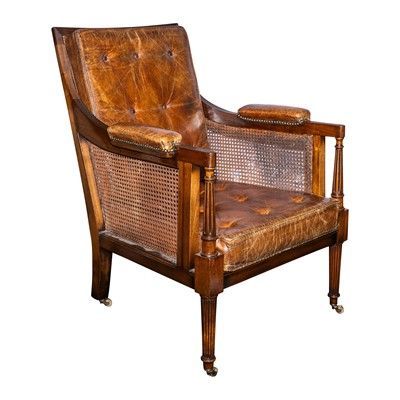
Mahogany Bergere
A mahogany bergere brings deep timber frames and woven cane panels together to create an inviting seat for a library or drawing room.
Mahogany Bergere
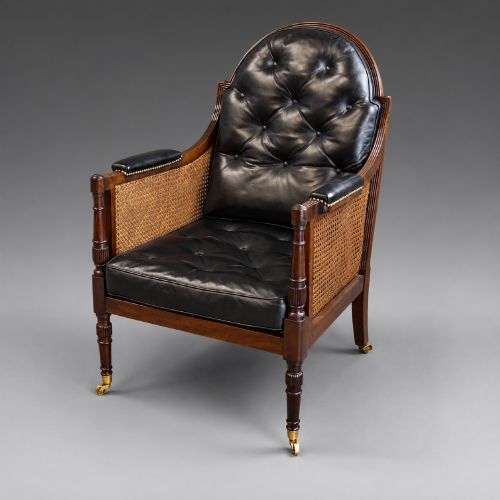
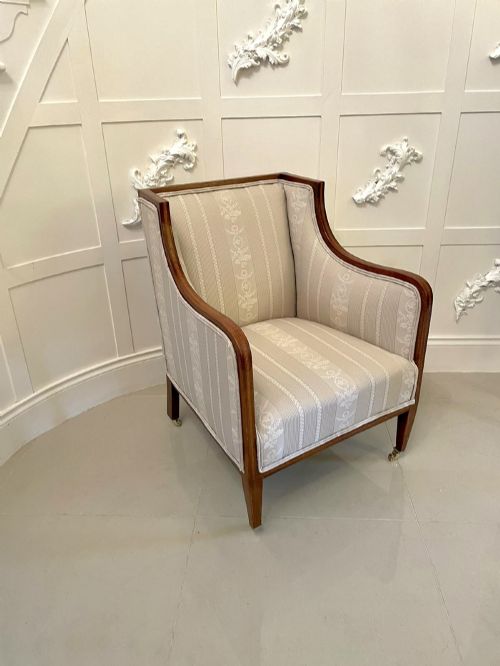
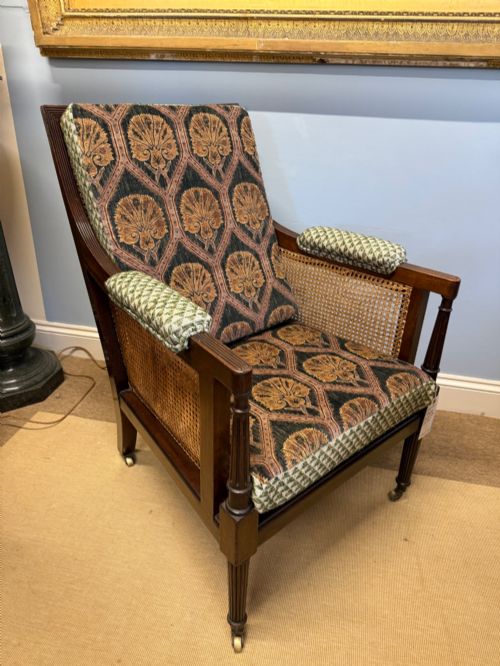
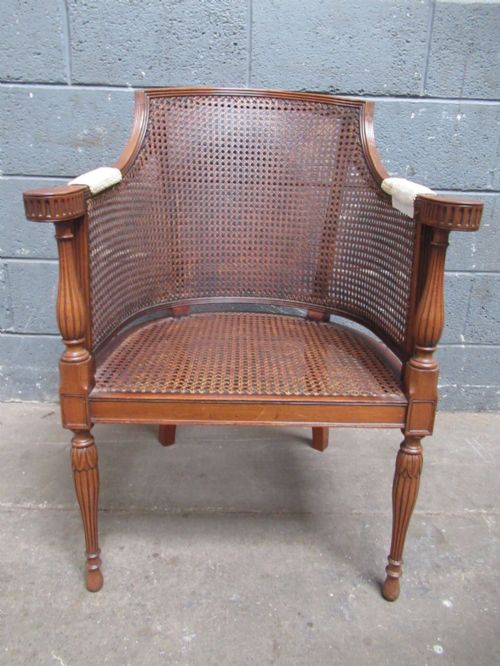
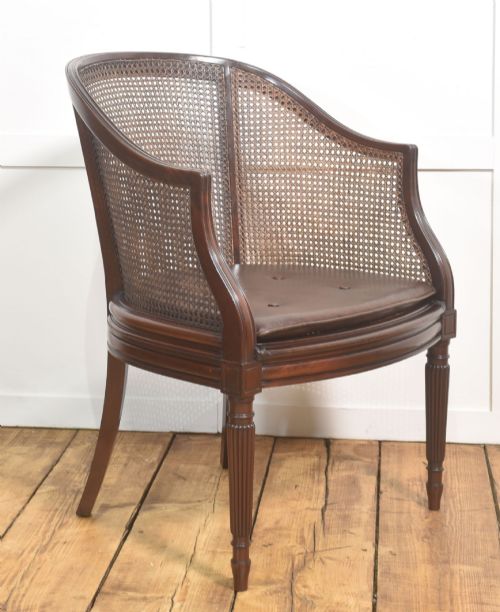
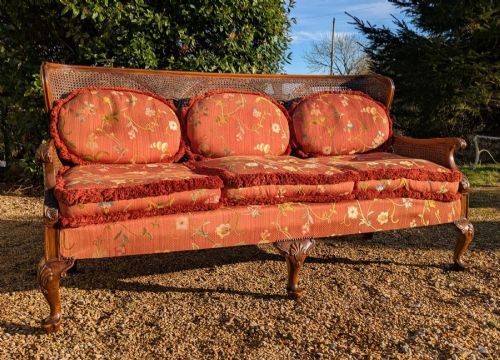
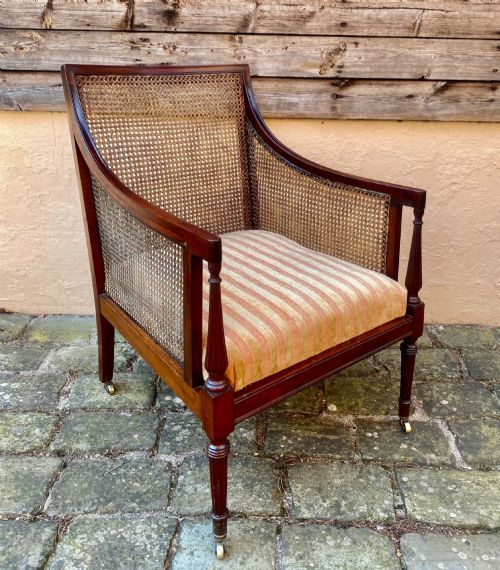
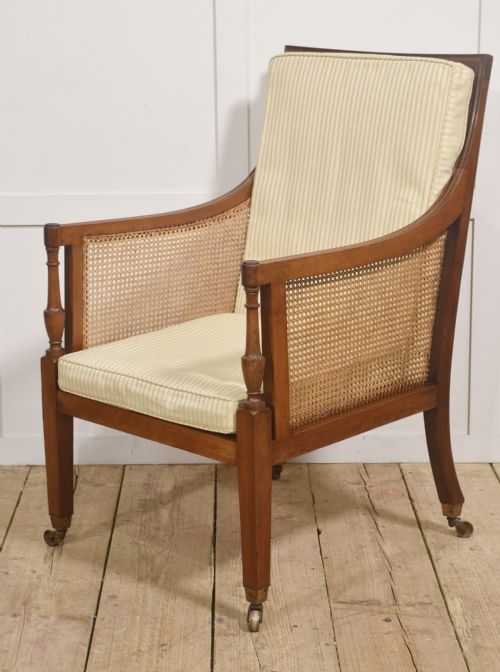
A mahogany bergere is an enclosed upholstered armchair characterised by wooden framing and woven caned panels on the back and sides. These seats appear across the nineteenth century and into the Edwardian era, taking forms such as library armchairs, tub chairs, and sofas. The listings show examples ranging from early nineteenth century Regency pieces to later Edwardian and 1930s interpretations.
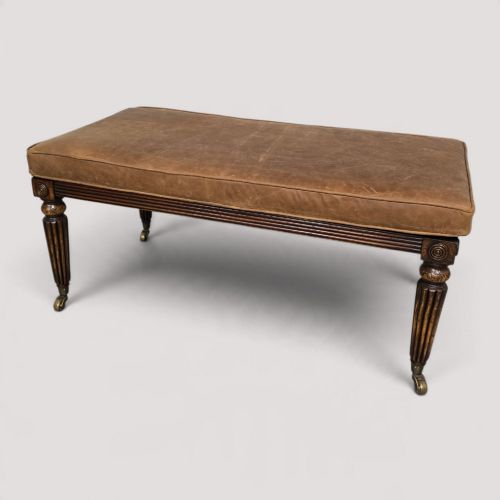
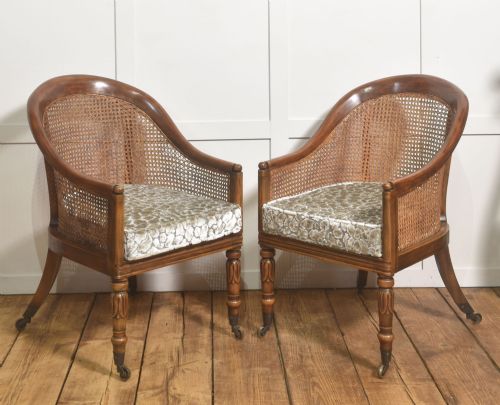
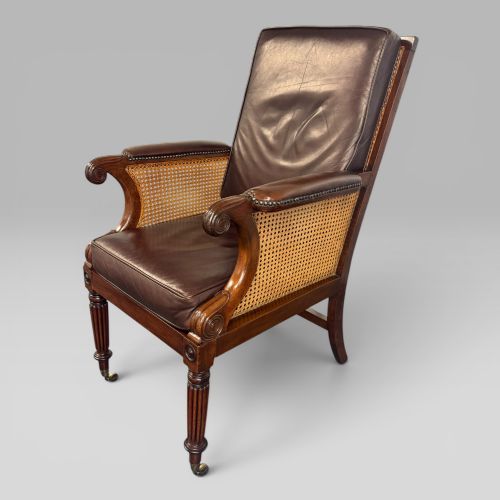
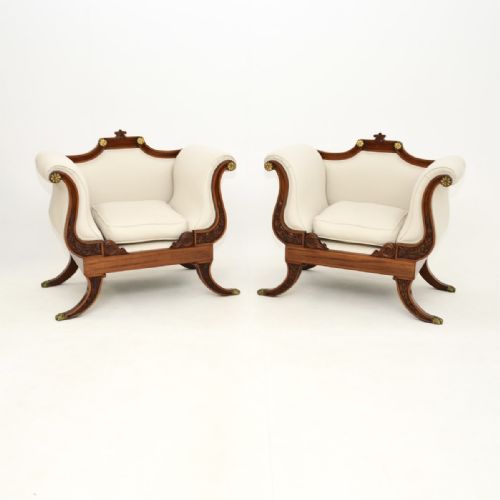
The most common version met on this page is the nineteenth century library armchair, often featuring substantial mahogany frames and curved or tub-shaped backs. Alongside standard armchairs, the evidence includes pairs of chairs, sofas, footstools, and child-sized seating such as high chairs and small armchairs. These seating options reflect both formal library settings and domestic drawing rooms.
How they were made
Makers constructed the primary frames using solid mahogany, sometimes incorporating carved details, brass mounts, or inlaid timber decoration. The characteristic caned panels - often split cane or rattan cane - were hand-woven directly into the frame to create a taut, supportive mesh for the back and sides. Many examples are finished with loose cushions upholstered in leather, velvet, fabric, or textile.
Structural integrity relied on traditional joinery within the mahogany frame to support the weight and tension of the woven cane. Where upholstery was added, feather cushions or horsehair stuffing provided additional comfort inside the wooden chassis. The combination of dense timber and flexible cane required precise carpentry to ensure the curved tub shapes and library chair profiles remained stable over generations.
Mahogany Bergere Retail Price Guide 2026
Typical asking prices for mahogany bergere among the pieces listed under this phrase on Sellingantiques today, from the lower quarter to the upper quarter. They describe what is for sale here now, not the wider market.
Listings feature mahogany bergere seating spanning the nineteenth century, Regency period, Edwardian era, and the 1920s and 1930s.
What varies in quality
The distinction between ordinary and superior pieces rests on the weight and figure of the mahogany timber and the crispness of any carved ornament. Finer examples display dense grain, subtle inlay, or sophisticated architectural lines that reflect high workshop standards. Lesser pieces often use simpler timber framing with minimal shaping and plain structural joinery.
Quality also depends on the precision of the caning work and the proportion of the frame. Tightly woven cane panels set evenly into recessed channels demonstrate superior craftsmanship compared to uneven or hastily repaired webbing. Furthermore, the overall harmony of the proportions - whether in a small child's chair or a large library bergere - determines the visual success of the piece.
Gillows
The Mahogany Bergere Glossary
- Bergere
- An enclosed upholstered armchair with wooden sides and back panels, typically filled with cane work. This French seating form became popular in British interiors from the Georgian period onward.
- Caning
- A method of weaving rattan or split cane to create a porous, resilient panel for chair backs and sides. It requires considerable skill to maintain uniform tension across a curved wooden frame.
- Tub chair
- An armchair with a continuous curved back and arms forming a rounded enclosure. This shape wraps around the sitter for added comfort and support.
- Library chair
- A heavy, sturdy armchair designed for reading rooms, often featuring wide wooden arms and deep seating. These chairs frequently incorporate leather upholstery and robust mahogany frames.
- Regency
- A style period spanning the early nineteenth century defined by neoclassical lines, classical revival motifs, and elegant proportions. Furniture from this era often utilises dark mahogany and restrained ornamentation.
Mahogany Bergere: Frequently Asked Questions
What is a mahogany bergere?
A mahogany bergere is a traditional armchair featuring an exposed wooden frame made from mahogany and woven cane panels forming the back and sides. These chairs often include loose squab cushions upholstered in leather or fabric.
Originally designed for reading and leisure in nineteenth century libraries and drawing rooms, they combine the structural warmth of timber with the light, flexible support of cane work.
How do I date a mahogany bergere?
Dating relies on examining the stylistic cues of the mahogany frame, such as the neoclassical lines of a Regency piece or the lighter proportions of an Edwardian revival model. Cabinetmaking techniques and the type of cane used also help indicate the era of manufacture.
Earlier nineteenth century examples typically display heavier timber construction and hand-turned or carved details, whereas twentieth century versions often show lighter framing and different finishing methods.
Were these chairs used in libraries?
Many bergere armchairs were specifically built as library seating, offering a deep, supportive seat for extended periods of reading. Their enclosed sides and sturdy mahogany frames suited the formal academic atmosphere of nineteenth century libraries.
Library versions frequently paired the caned back with leather upholstered cushions, combining durable surfaces with comfortable seating.
How should I care for the cane panels?
Caned panels require a stable indoor environment with moderate humidity to prevent the natural rattan material from drying out and becoming brittle. Regular dusting with a soft brush keeps the weave clean without damaging the fibres.
Avoiding direct sunlight and excessive heat sources preserves the strength and flexibility of the historical cane work over time.