




Mahogany Bergere Tub Chair
A mahogany bergere tub chair brings deep timber and woven cane together in a rounded seat designed for long hours of reading or conversation.
Mahogany Bergere Tub Chair
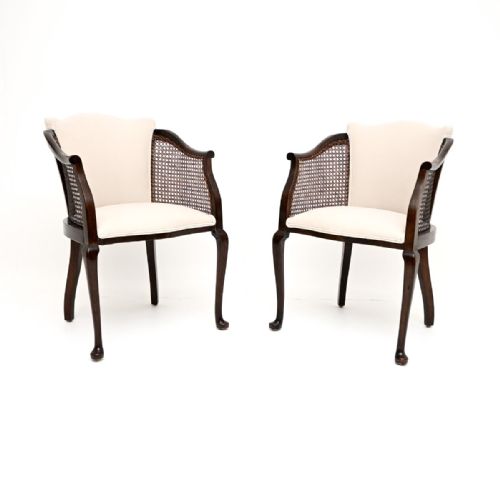
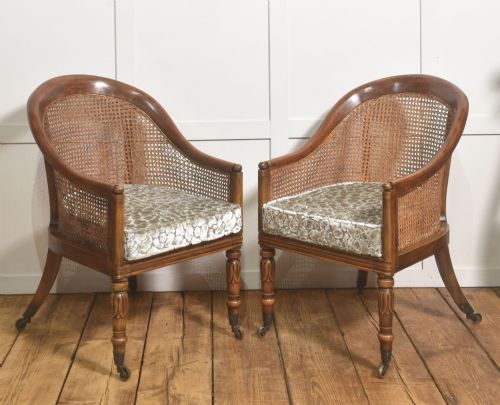
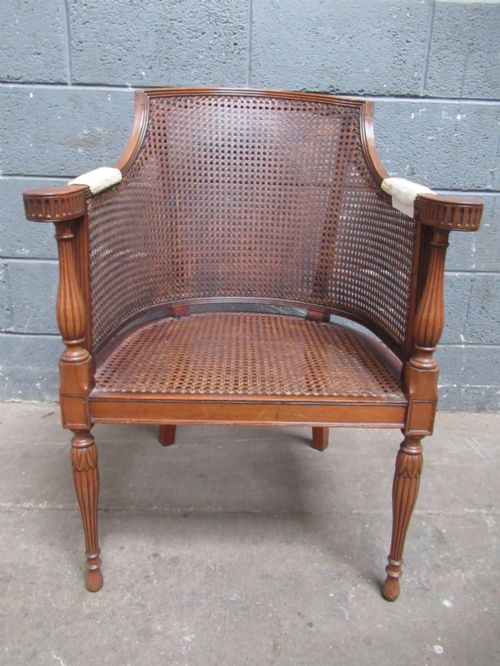
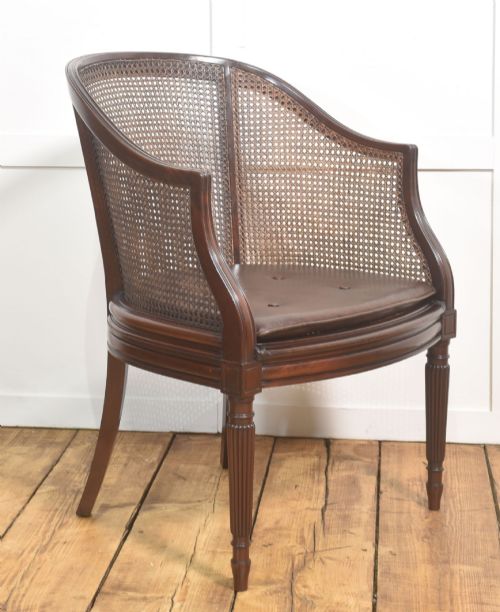
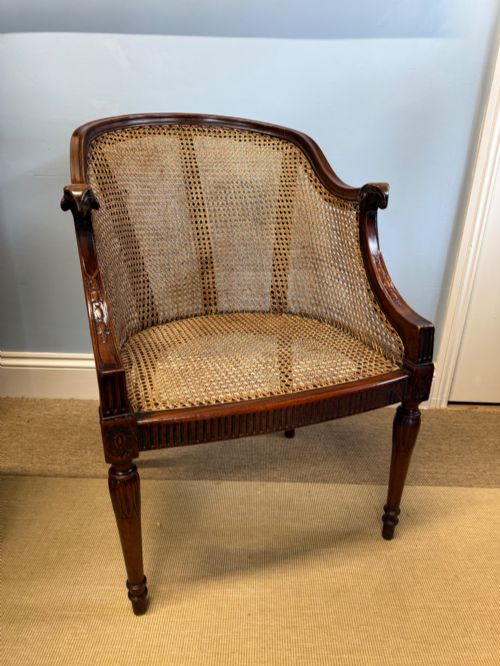
A mahogany bergere tub chair combines the curved, enclosed back of a tub seat with the woven cane panels characteristic of a traditional French bergere. These armchairs appear in various period forms, from Regency and William IV pieces to Edwardian interpretations and later twentieth-century seating suites.
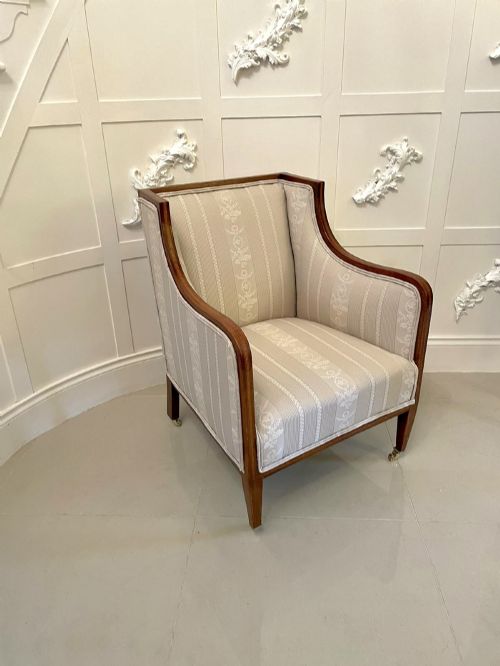
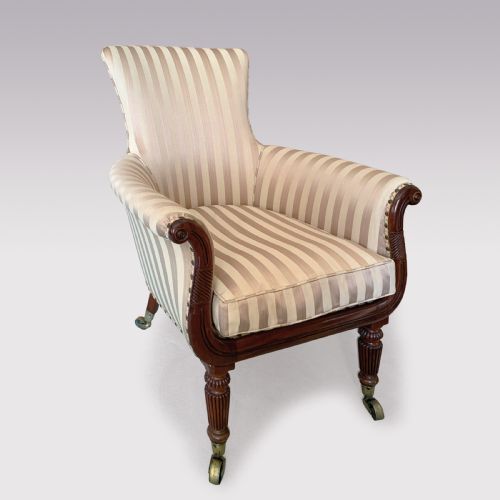
The version most commonly met on this page is the Edwardian or Regency style mahogany armchair featuring caned sides and back, often accompanied by loose squab cushions in fabric or leather. Buyers also encounter child size models, library armchairs, and matching pairs designed for formal reception rooms.
Origin and stylistic influence vary across the selection, encompassing English Regency designs, French Louis XVI styles, and Swedish Neoclassical interpretations. Each piece retains the characteristic enclosed tub silhouette while displaying the distinct cabinetmaking traits of its specific decade.
How they were made
Cabinetmakers constructed the frames using solid mahogany and hardwood, sometimes incorporating decorative inlay or carved details such as lyre fronts. The curved tub shape required precise steam bending or sectional joining of the timber to achieve the continuous circular rail.
Caning, also referred to as rattan cane, was hand-woven through drilled holes along the frame channels to form tight supportive panels for the back and sides. Upholstered elements relied on traditional stuffing methods, using textile, leather, and fabric secured with brass tacks over supportive webbing.
Mahogany Bergere Tub Chair Retail Price Guide 2026
Typical asking prices for mahogany bergere tub chair among the pieces listed under this phrase on Sellingantiques today, from the lower quarter to the upper quarter. They describe what is for sale here now, not the wider market.
Listings feature mahogany, hardwood, and brass alongside woven cane, leather, and textile upholstery across multiple nineteenth and twentieth century periods.
What varies in quality
The refinement of the timber and the crispness of the joinery set finer examples apart from simpler workshop production. Superior pieces display carefully selected mahogany grain, seamless curved joints, and hand-carved decorative motifs rather than applied ornamentation.
The integrity of the woven cane work indicates the standard of craftsmanship. Tighter, evenly tensioned cane panels integrated cleanly into the wooden frame reflect higher skill than replacement webbing or loose weaving.
Gillows
The Mahogany Bergere Tub Chair Glossary
- Bergere
- An enclosed upholstered armchair with wooden framing, originating in France. These seats typically feature upholstered armrests and cane panels.
- Tub chair
- A seating form characterised by a low, curved backrest that wraps continuously around to form the arms. This shape provides enclosed comfort.
- Caning
- A method of weaving rattan strips through holes in wooden chair frames to create breathable, flexible panels. It requires considerable manual dexterity.
- Squab cushion
- A loose, removable cushion placed on the seat base for comfort. They are traditionally filled with natural materials and covered in leather or fabric.
- Neoclassical
- A style drawing inspiration from classical antiquity, featuring restrained ornamentation and symmetrical proportions. It influences several pieces in this selection.
Mahogany Bergere Tub Chair: Frequently Asked Questions
How do I care for the cane?
Keep cane panels clean by gently dusting them with a soft brush and preventing them from drying out completely. Avoid placing these chairs in direct sunlight or directly beside heat sources, which makes the natural rattan brittle over time.
Occasional light conditioning can help maintain flexibility in older cane work. Support the seat with appropriate cushions rather than kneeling or placing heavy concentrated weight directly onto the woven panels.
Where should I place this chair?
A tub armchair suits reading corners, studies, and drawing rooms where its rounded profile can be viewed from multiple angles. Pairs look balanced flanking a fireplace or positioned near a window.
Consider the clearance needed for the curved back and arms within your room layout. These chairs work well as occasional seating rather than primary dining furniture.
How do I identify a Regency period piece?
Regency seating often displays classical restraint, dark dense mahogany timbers, and specific carved motifs like reeding or lyre fronts. Proportion and construction methods align with early nineteenth-century cabinetmaking standards.
Compare the joinery details and overall weight with pieces from later decades such as the Edwardian era. Regency examples carry the distinct structural characteristics of British furniture from that specific timeframe.