
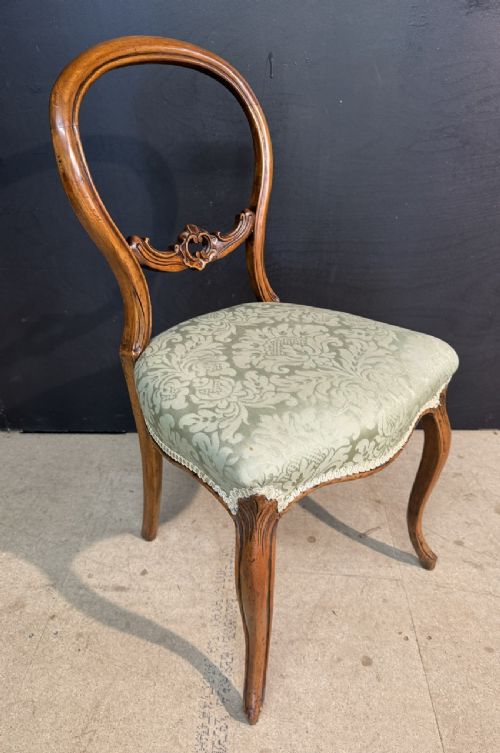


Mahogany Bedroom Vanity Chair
A mahogany bedroom vanity chair brings the warmth of figured timber and period upholstery to a dressing room or dressing table.
Mahogany Bedroom Vanity Chair
A mahogany bedroom vanity chair is a compact seat designed for the dressing room, often found in forms such as nursing chairs, slipper chairs, music chairs, side chairs, and dressing stools. These pieces date principally from the Victorian era and the nineteenth century, extending into early twentieth-century interpretations in the Queen Anne style.
The selection on this page centres on sturdy mahogany frames paired with upholstered seats, textile coverings, and occasional details like brass or ceramic fittings. Buyers frequently encounter low-slung nursing chairs and turned slipper chairs designed for intimate domestic spaces.
Originating to serve functional dressing and grooming routines in nineteenth-century bedrooms, these chairs combine domestic utility with decorative woodwork. The form adapts across various seating types, from corner stools to dressing table armchairs.
How they were made
Cabinet makers constructed the foundational framework using solid mahogany, shaping elements through turning or carving, such as the cabriole legs seen on dressing stools and desk chairs. Timber frames were frequently assembled to support multi-legged structures or turned supports.
Upholstery formed an essential part of the construction, utilising fabrics, textiles, tapestry, and damask secured over padded seat foundations. Metal and ceramic components, including brass or ceramic castors or feet, were sometimes integrated into the design.
Listings on this page span the Victorian period, nineteenth-century production dates, and early twentieth-century Queen Anne style interpretations.
What varies in quality
The character of the textile covering, whether damask, tapestry, or standard fabric, contributes to the overall finish of the piece. Superior execution is evident where the woodwork remains sturdy and the upholstered seat retains its intended profile.
The Mahogany Bedroom Vanity Chair Glossary
- Cabriole leg
- A furniture leg that curves outward and then tapers inward, mimicking an animal's limb. This form appears on nineteenth-century desk chairs and dressing stools.
- Nursing chair
- A low-seated chair traditionally used for feeding infants or general dressing tasks in the bedroom. These pieces often feature upholstered seats and low profiles.
- Slipper chair
- An upholstered bedroom chair with short legs designed to sit low to the ground. They were historically used while putting on shoes or slippers.
- Damask
- A reversible figured fabric woven on a jacquard loom, frequently utilised for period upholstery. It adds a textured decorative surface to nineteenth-century seating.
- Music chair
- An adjustable or specialised seat designed for playing keyboard instruments in a parlour or bedroom. These examples often date to the later Victorian decades.
Mahogany Bedroom Vanity Chair: Frequently Asked Questions
What is a mahogany bedroom vanity chair?
A mahogany bedroom vanity chair is a compact nineteenth-century seat designed for use at a dressing table or in a bedroom. These pieces include side chairs, nursing chairs, and dressing stools.
They combine a solid mahogany wooden frame with upholstered textile seats, serving both practical seating and decorative interior functions.
How were these chairs used originally?
These seats were utilised in nineteenth-century bedrooms and dressing rooms for daily grooming, dressing, or musical practice. Lower variants allowed individuals to sit comfortably while putting on footwear.
Their compact scale ensured they fit easily beneath dressing tables or beside washstands without crowding the chamber.
How do I date a Victorian mahogany chair?
Dating relies on examining the timber characteristics, construction methods, and stylistic cues present in the frame. Nineteenth-century pieces frequently display distinct turning techniques and upholstery styles.
Reference points include mid-Victorian production dates around eighteen-fifties to eighteen-seventies, alongside later revival pieces.
Where should I place one at home?
These chairs suit modern dressing rooms, bedrooms, or entrance hallways as accent seating. Their modest proportions make them versatile for small spaces.
They pair effectively with antique dressing tables, writing desks, or as standalone decorative elements.