




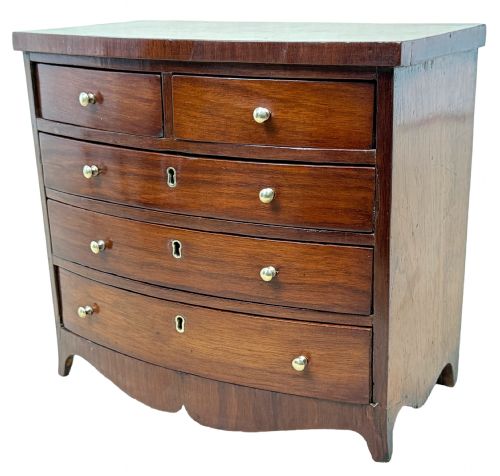
Mahogany Apprentice Cabinet
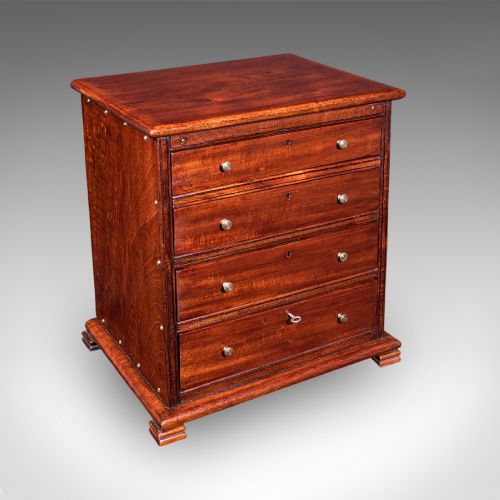
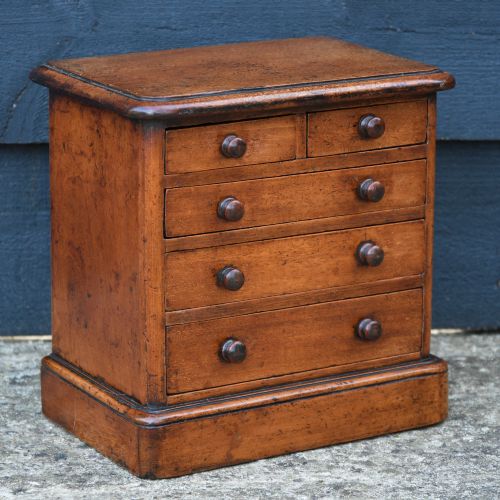
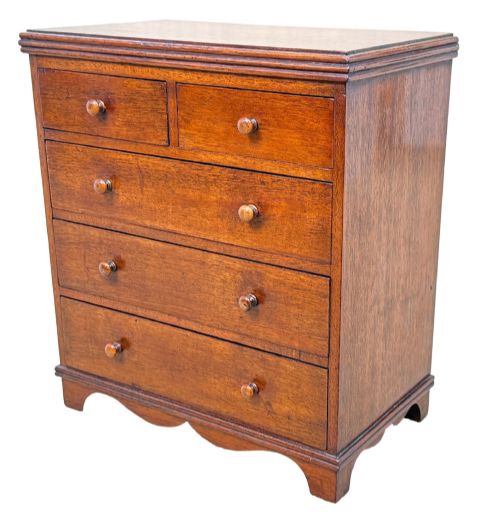
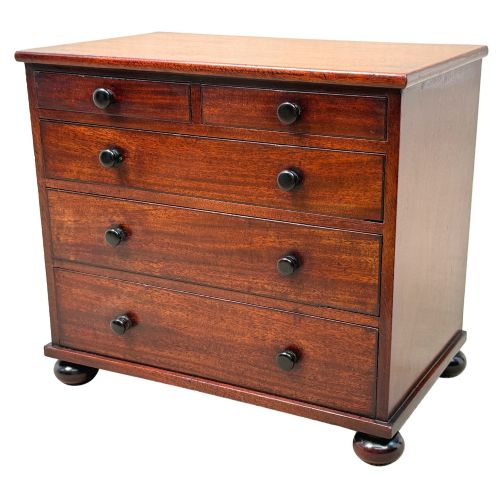
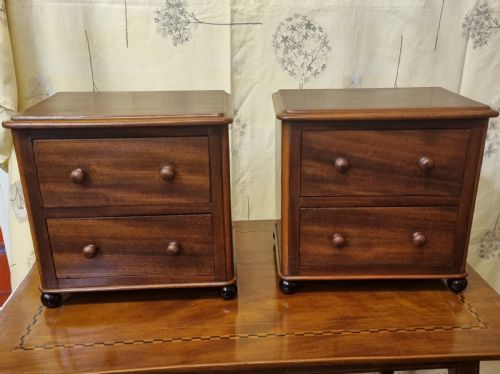
These small furnishings known as a mahogany apprentice cabinet offer precise scaling of full-size furniture.
Mahogany Apprentice Cabinet
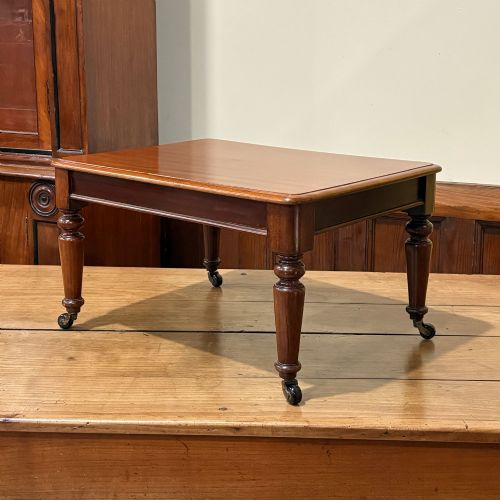
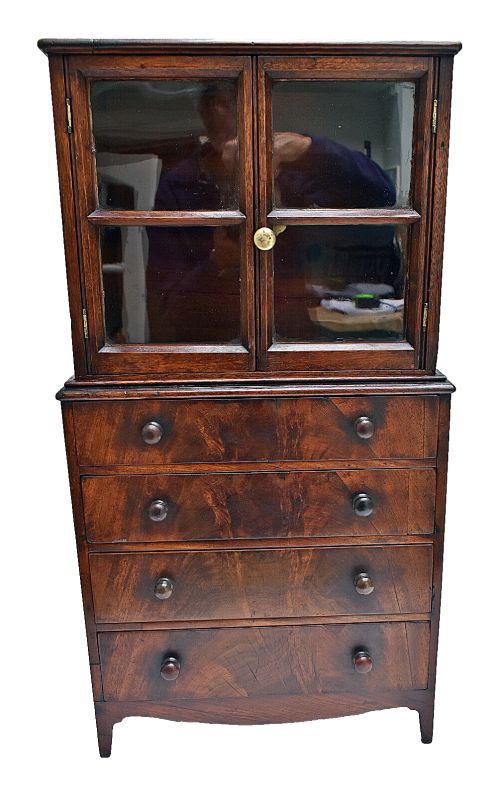
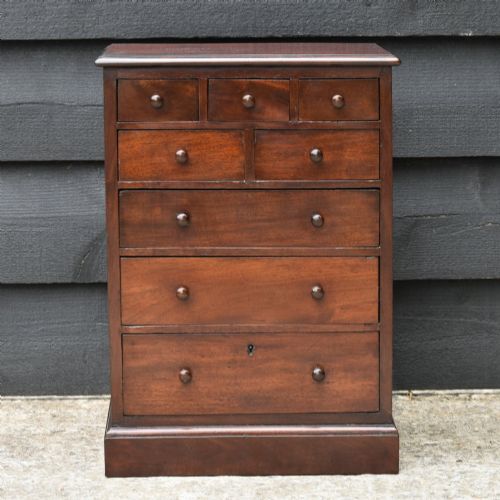
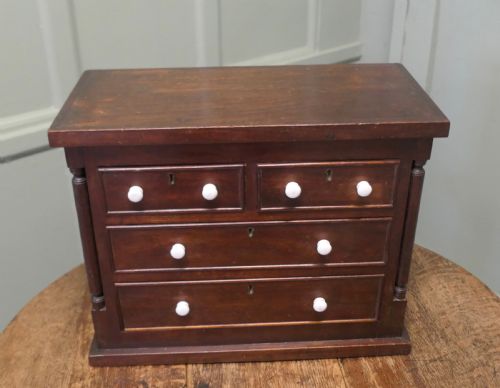
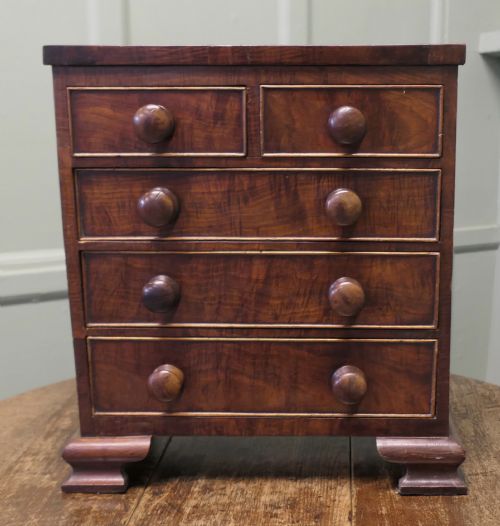
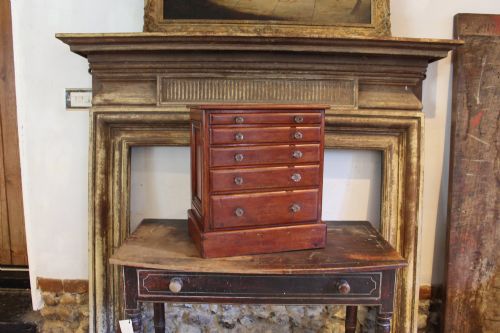
A mahogany apprentice cabinet presents domestic forms in miniature proportions, spanning styles from Georgian to Victorian. The selection focuses heavily on miniature chests of drawers, alongside display cabinets, table cabinets, and bureau bookcases.
Makers produced these smaller pieces across the eighteenth and nineteenth centuries, utilising woods like mahogany supplemented by oak and pine. Examples appear with brass handles, glass fronts, and inlaid details reflecting regional work from Scottish pieces to English designs.
Materials and construction
Makers constructed these miniature items using solid mahogany boards, often pairing them with secondary timbers like oak and pine for drawer linings and internal framing. Exterior surfaces frequently received a French polished finish to enhance the timber's grain and natural colour.
Detailing relied on miniature brass drop handles, bone key escutcheons, and occasional inlay work in satinwood or mother of pearl. Glass panels featured in the doors of smaller display cabinets and bookcase sections.
Mahogany Apprentice Cabinet Retail Price Guide 2026
Typical asking prices for mahogany apprentice cabinet among the pieces listed under this phrase on Sellingantiques today, from the lower quarter to the upper quarter. They describe what is for sale here now, not the wider market.
Some miniature chests feature secret compartments hidden behind working drawers, scaling down full-sized security tricks.
Judging quality in miniature pieces
Quality rests upon the fidelity of proportion and the precision of the joinery relative to full-scale furniture. Finer examples display meticulous attention to drawer linings, dovetail joints, and the selection of figured mahogany timber.
The sophistication of secondary materials and hardware alters the character of a piece. Finer versions incorporate matched brass hardware, delicate inlay work, and superior surface patina developed over centuries of handling.
The Mahogany Apprentice Cabinet Glossary
- Apprentice piece
- A demonstration piece created to show mastery of cabinet-making skills. These items frequently display the same intricate joinery found in full-size furniture.
- Miniature furniture
- Small-scale domestic furnishings built for display, sales samples, or children. They replicate standard forms like chests of drawers and wardrobes.
- French polished
- A wooden finishing technique that applies shellac dissolved in alcohol using a rubber pad. This method produces a high-gloss surface that highlights the mahogany grain.
- Bowfront
- A curved cabinet front that swells outward in the centre. This shape requires advanced woodworking skill to achieve in miniature proportions.
- Wellington chest
- A tall, narrow chest of drawers secured by a hinged vertical locking side bar. These appear in miniature formats alongside standard chests.
Mahogany Apprentice Cabinet: Frequently Asked Questions
What is a mahogany apprentice cabinet?
A mahogany apprentice cabinet is a scaled-down version of a full-size storage or display unit. These items were built as demonstration pieces by craftsmen or utilised as salesmen's samples.
They replicate standard domestic forms including chests of drawers, display cabinets, and bureau bookcases in miniature dimensions.
How were these miniature cabinets used?
Craftsmen built these items to demonstrate technical proficiency to guild masters. They served as portable examples of a maker's skill when visiting prospective clients.
Over time, collectors and households used them on tabletops and desks to store small valuables, documents, and collections.
How do I date a Victorian piece?
Dating relies on stylistic markers, timber characteristics, and construction methods recorded across the nineteenth century. Victorian pieces often incorporate darker mahogany tones and specific brass hardware.
Cabinet makers during this era also experimented with bowfront designs, Wellington mechanisms, and inlaid accents.
How should I clean my cabinet?
Maintenance requires gentle dusting with a dry, soft cloth to protect the polished mahogany surface. Avoid chemical sprays and excessive moisture which can damage the timber.
Periodically applying appropriate wax preserves the historic patina and prevents the wood from drying out.