





Mahogany Apothecary Chest
A mahogany apothecary chest is a disciplined timber box built to hold medicines, featuring snug internal compartments and occasionally original glass bottles.
Mahogany Apothecary Chest
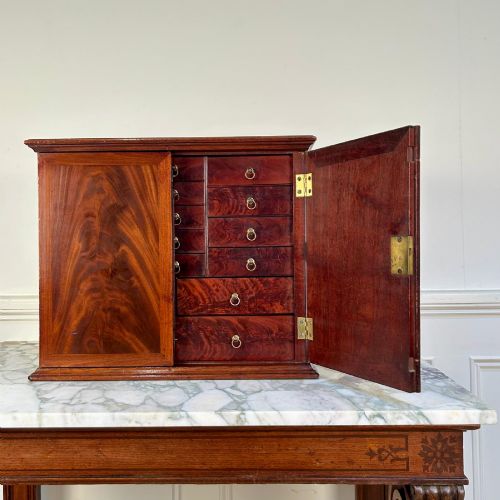
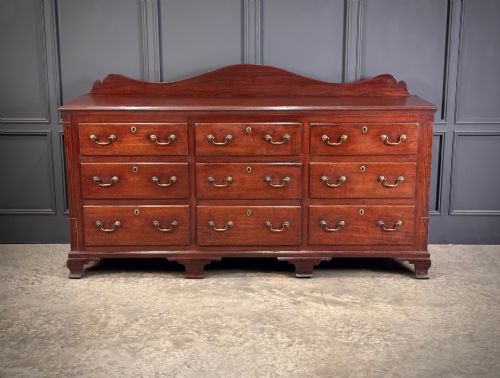
A mahogany apothecary chest serves as a compact storage unit for medical provisions, spanning domestic travelling cases and large multi-drawer shop fittings. When exploring this selection, buyers frequently encounter Georgian and Victorian examples alongside multi-drawer banks and specialised specimen cabinets.
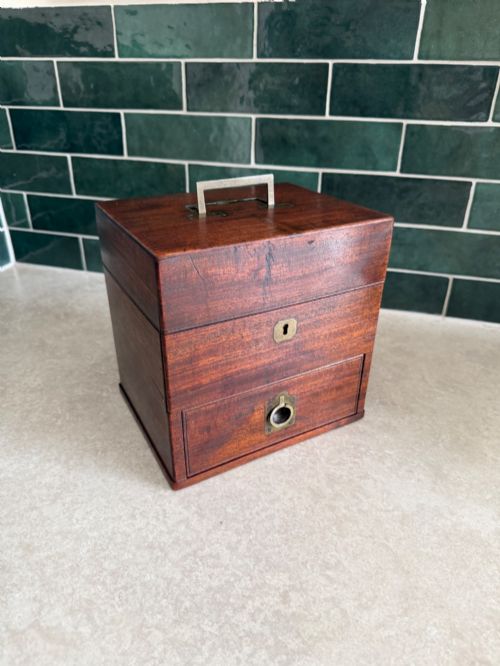
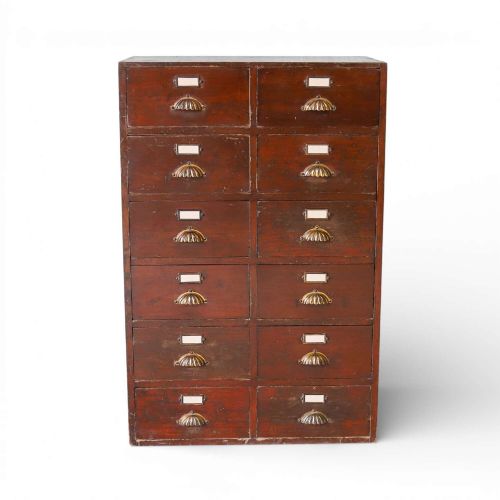
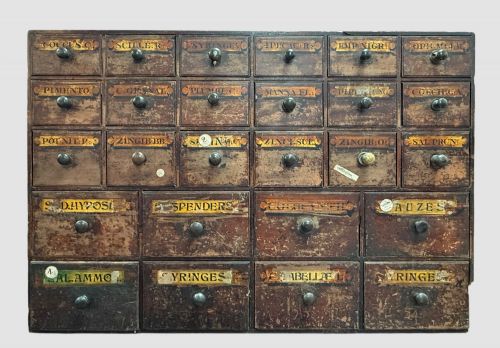
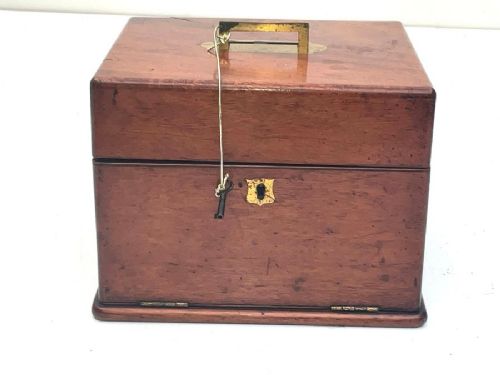
These pieces range from portable campaign boxes equipped with glass bottles to substantial chemist shop fittings with numerous small drawers. The form prioritises orderly storage, utilising fitted interiors to secure fragile glass containers during transit or daily use in a pharmacy.
Materials and construction
Makers built these chests primarily using solid mahogany, often complemented by secondary softwoods like pine for internal partitions and drawer linings. Brass fixtures, including flush carrying handles and secure locks, reinforced the corners of portable travelling cases against the rigours of transit.
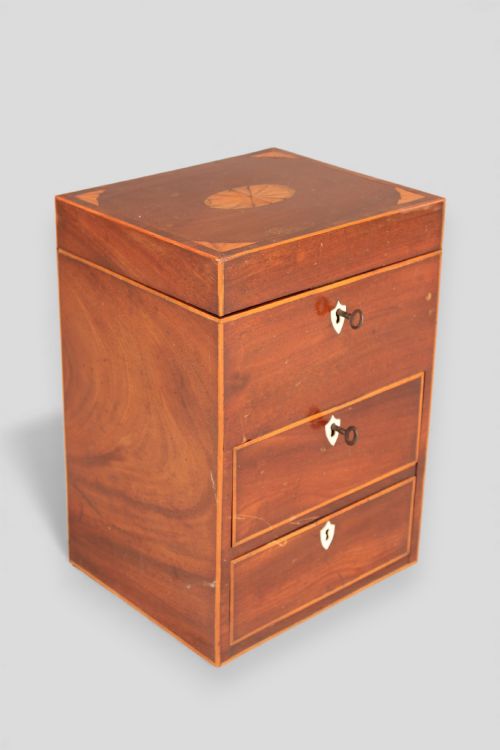
Internal layouts relied on precise carpentry to accommodate delicate glass bottles, bone measuring spoons, and paper labels. Selected pieces incorporated glass fronts, velvet linings, and subtle bone or wood inlay to distinguish the outer cabinetry.
Mahogany Apothecary Chest Retail Price Guide 2026
Typical asking prices for mahogany apothecary chest among the pieces listed under this phrase on Sellingantiques today, from the lower quarter to the upper quarter. They describe what is for sale here now, not the wider market.
Several medical chests retain tiny bone measuring spoons tucked into hidden compartments, ready for compounding forgotten remedies.
Distinctions in quality
Quality rests heavily upon the completeness of the original internal contents, such as labeled glass bottles, stoppers, and measuring equipment. Cabinets retaining their fitted arrangements and original brass hardware command distinct appreciation compared to altered or stripped carcases.
The refinement of the cabinetry itself, visible in tight drawer joints, finely figured timber selection, and intact structural backing, separates standard utility storage from superior cabinetmaking.
The Mahogany Apothecary Chest Glossary
- Campaign chest
- A portable cabinet constructed in sections with recessed brass fittings designed for travel. These units split apart to ease movement on military or maritime journeys.
- Chemists drawers
- Multi-tiered banks of small drawers used in pharmacies to sort powders, roots, and dried herbs. They often feature paper label holders and shell pulls.
- Specimen cabinet
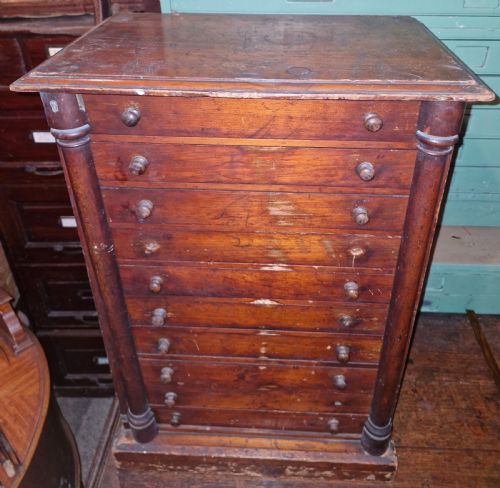
- A specialised multi-drawer chest intended for organising natural history collections, such as microscope slides or insects. They mirror the compartmentalized design of medical boxes.
- Fitted interior
- An internal arrangement of wooden partitions built specifically to hold glass bottles and instruments securely. It prevents shifting during movement.
Mahogany Apothecary Chest: Frequently Asked Questions
What were apothecary chests used for?
These chests served as portable pharmacies for doctors, military officers, and households needing immediate access to medicines. They kept fragile glass bottles and ingredients organised during travel or daily practice.
Larger versions functioned as fixed shop fittings in chemist premises, holding bulk supplies in rows of small drawers.
How do I identify a Georgian chest?
Georgian examples typically exhibit rich mahogany timber, brass carrying handles, and secret compartments concealed behind dummy drawers. They date from the eighteenth and early nineteenth centuries.
Look for hand-cut dovetail joints and early paper labels detailing apothecary instructions inside the lid.
Are original bottles usually included?
Some chests retain their complete sets of original glass bottles, stoppers, and scales, while others arrive empty or partially filled. Surviving contents often feature original paper labels naming historical remedies.
Chests with complete original fittings are less common than those adapted over time.
How should I care for the wood?
Keep mahogany furniture away from direct sunlight and dramatic temperature shifts to prevent the timber from splitting. Dust regularly with a dry cloth and apply a minimal amount of wax polish only when the surface appears dry.
Ensure brass hardware is kept clean without using harsh chemical cleaners that might damage the surrounding wood.