





Mahogany and Silver Plate
Mahogany and silver plate brings together timber and metal in serving trays, wine coasters and carvery trolleys designed for the table and sideboard.
Mahogany and Silver Plate
When you search for mahogany and silver plate, you encounter functional dining room pieces that pair deep brown timber with bright plated metal mounts, handles and galleries. The selection spans utilitarian serving items and decorative furniture pieces designed for formal entertaining.
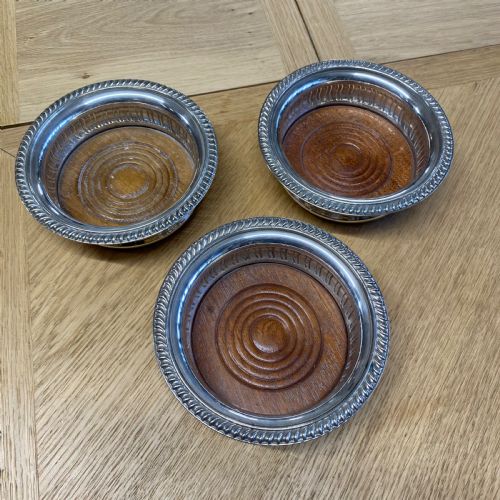
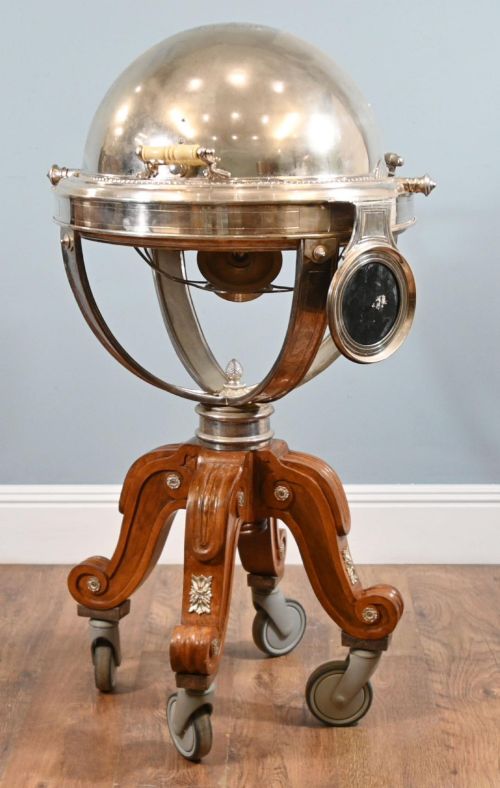
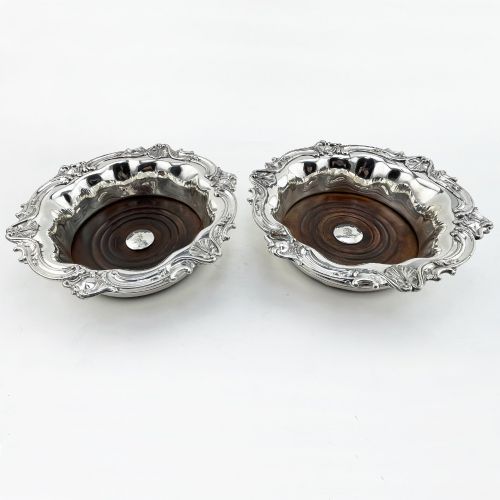
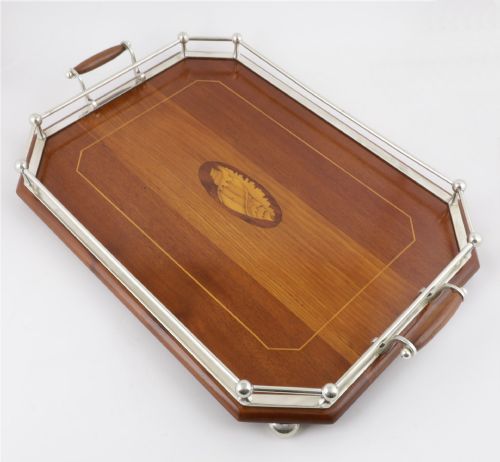
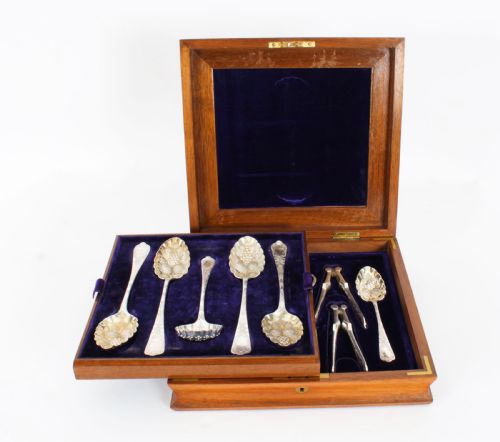
Wine coasters form the largest share of what turns up here, alongside serving trays, gallery trays and larger butler's trays. You also find specialised carvery trolleys, floor-lamp torcheres, cutlery canteens and silver chests.
The objects cross several periods, running from Georgian pieces and the Regency era through Victorian designs into Edwardian, George V and 1930s revivals. Stylistic influences draw heavily on Chippendale and Sheraton traditions, alongside occasional Jugendstil metalwork.
Materials and construction
Makers built the foundational structures from solid mahogany or incorporated mahogany veneers over secondary timbers, occasionally utilising satinwood for contrasting stringing or shell inlay. Wood surfaces received polished finishes that accentuated the grain and rich reddish-brown colour of the timber.
Silver plate and Old Sheffield plate provide the metallic contrast, appearing as pierced galleries, drop handles, mounts, shields and fitted collars on wooden coasters. Supporting elements introduce brass, copper, steel, felt linings and figural statuary cast in metal alloys.
Mahogany and Silver Plate Retail Price Guide 2026
Typical asking prices for mahogany and silver plate among the pieces listed under this phrase on Sellingantiques today, from the lower quarter to the upper quarter. They describe what is for sale here now, not the wider market.
Materials appearing across the inventory include mahogany, silver plate, Old Sheffield plate, brass, copper, steel, felt and satinwood.
Distinctions in quality
The finest pieces display crisp casting and heavier gauge silver plating that resists thinning over the underlying base metal, whereas lesser items show worn plate revealing copper or brass beneath. In woodwork, superior examples feature tight, figured grain, precise dovetailing and well-preserved inlay rather than plain timber with heavy surface scuffs.
Proportion and decorative restraint separate standard production items from exceptional workshop output. High-end trays and coasters incorporate robust gallery construction, substantial turned wooden bases and intact maker marks, maintaining structural integrity across both the timber frame and the plated mounts.
WMF·Elkington and Co·Hukin and Heath
The Mahogany and Silver Plate Glossary
- Old Sheffield Plate
- A metallic composite formed by fusing a thin sheet of silver to a thicker copper ingot before rolling them into sheets. This early plating method often shows thin lines of copper along the cut edges.
- Gallery Tray
- A serving tray fitted with a raised pierced or solid metal border around the perimeter. The gallery keeps glasses and decanters secure during transport.
- Wine Coaster
- A small circular dish with a raised rim, typically fitted with a turned wooden base and a felt underside. They were slid across the dining table after the meal to hold wine bottles.
- Torchere
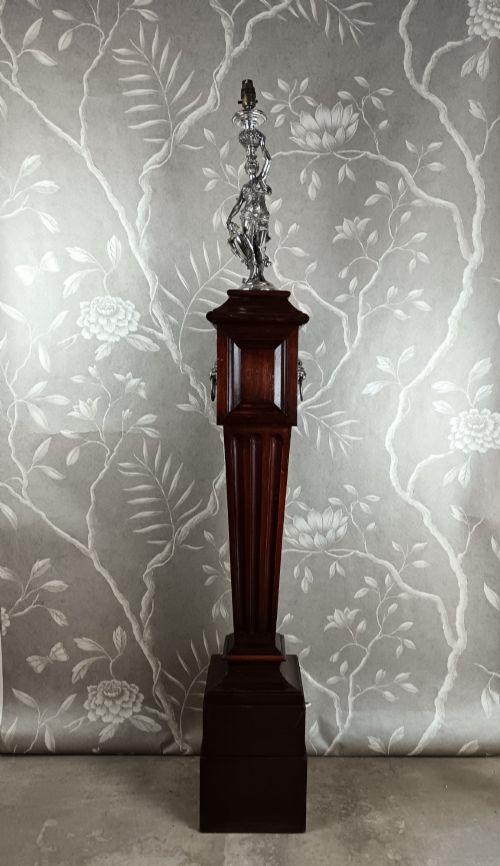
- A tall stand or floor lamp designed to hold a light source or figure. Examples in this category combine wooden pedestals with metal figural statues.
- Stringing
- A narrow inlay of contrasting wood veneer set flush into the surface of the mahogany. It creates decorative linear borders on trays and furniture panels.
Mahogany and Silver Plate: Frequently Asked Questions
What are old sheffield plate coasters?
Old Sheffield plate coasters are circular serving pieces made by fusing silver onto copper before shaping. They feature turned wooden bases and low rims designed to protect the dining table.
These pieces date to the Georgian and early Victorian periods. Collectors prize them for the subtle warmth of the dual-metal construction.
How were mahogany butler trays used?
Mahogany butler trays served to carry food, drinks and tableware between the kitchen and the dining room. The raised sides often included cutout handgrips for secure lifting.
Once brought into the room, the tray rested on a folding wooden stand to function as a temporary side table. Many survive as standalone table units today.
How do you date a silver plated tray?
Dating relies on the style of the mounts, the manufacturing technique and any stamped workshop marks. Georgian and early nineteenth-century pieces often use Old Sheffield plate with visible copper edges.
Later Victorian and Edwardian examples utilise electroplating and incorporate revival decorative motifs like Chippendale borders. Maker marks help narrow the production decade.
How do you care for mahogany and silver plate?
Care requires keeping wooden surfaces away from direct heat and moisture to protect the polished finish. Periodic waxing maintains the deep reddish colour of the mahogany.
Silver-plated sections need gentle cleaning with a soft cloth to avoid wearing through the thin metal layer. Avoid abrasive polishes that can scratch both the plate and the timber.