

Mahogany and Satinwood Vitrine
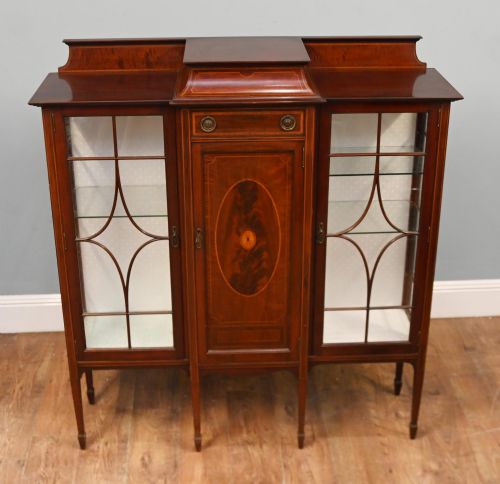
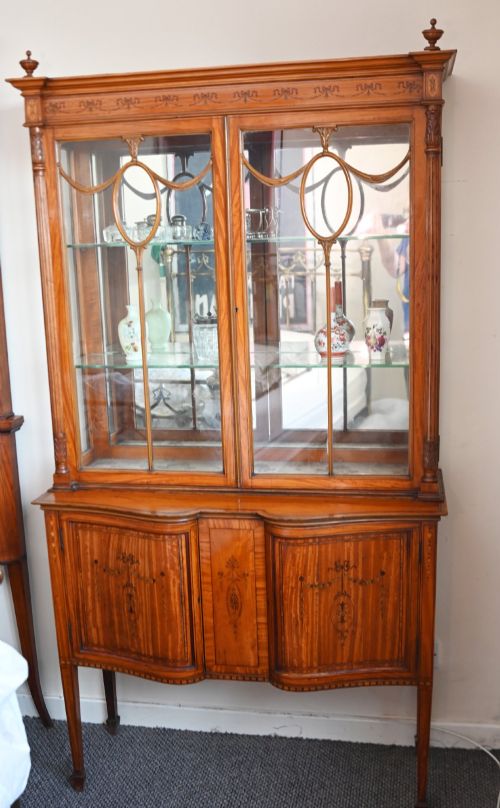
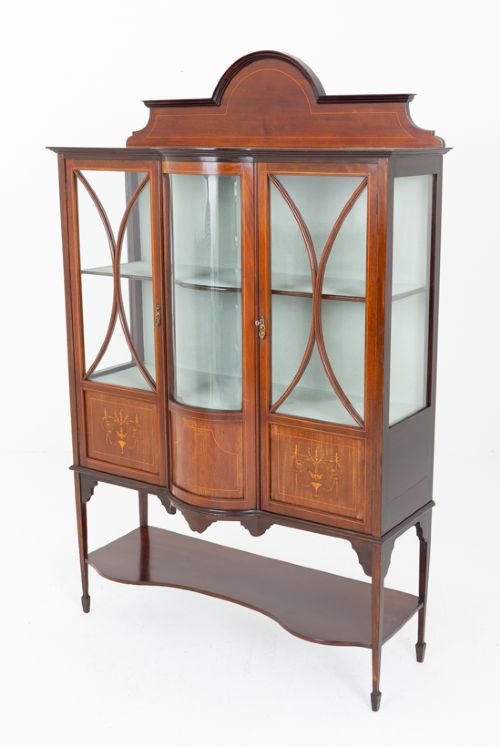
A mahogany and satinwood vitrine brings refined glazed display to a drawing room through Sheraton Revival design and detailed woodwork.
Mahogany and Satinwood Vitrine
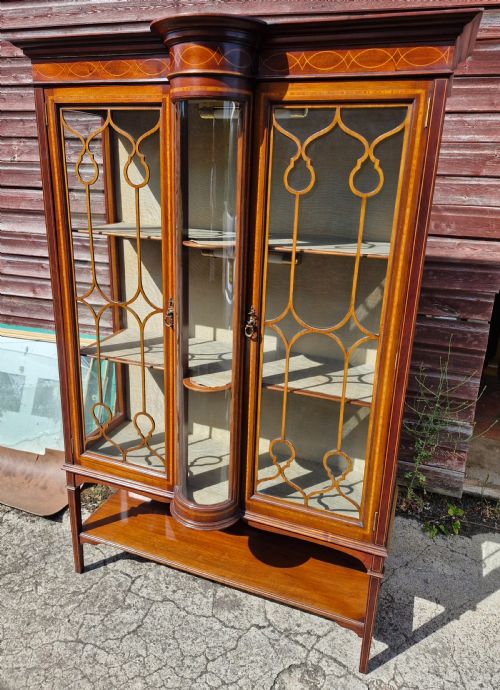
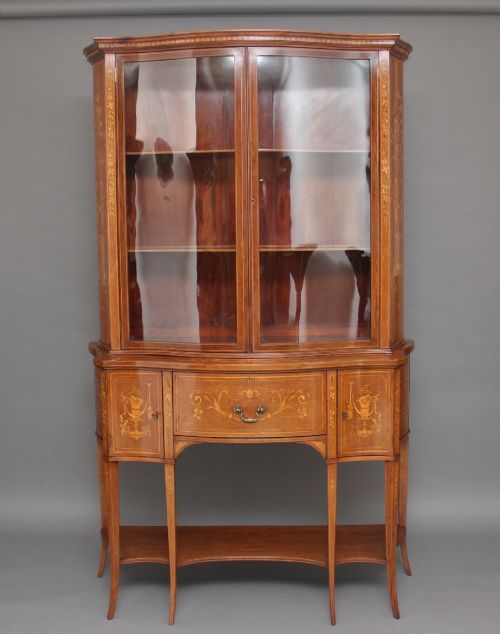
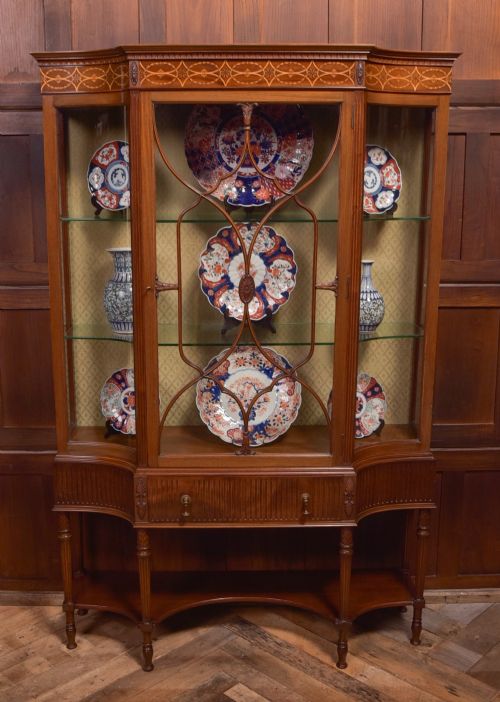
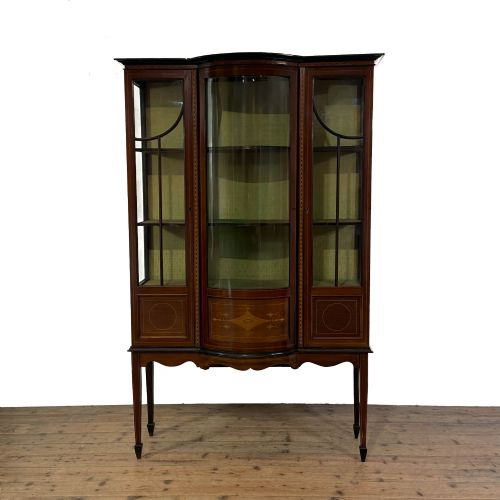
A mahogany and satinwood vitrine combines timber frameworks with glazed panels to present decorative objects within drawing rooms. These pieces emerge predominantly from the Edwardian era and the late nineteenth century, spanning periods such as eighteen eighty to nineteen ten.
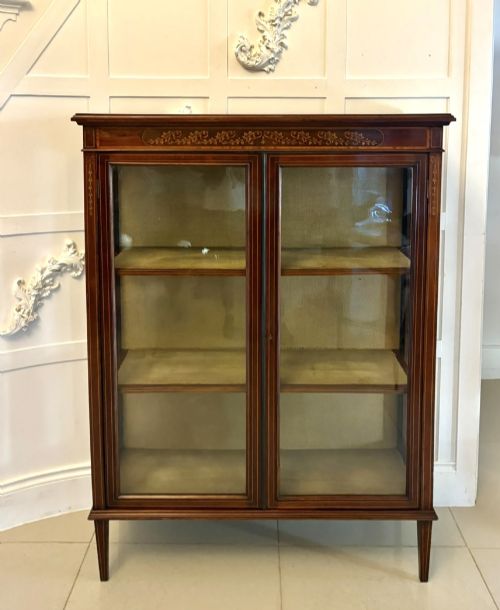
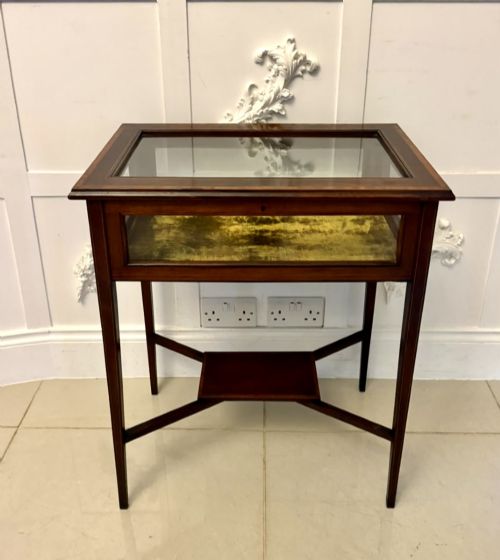
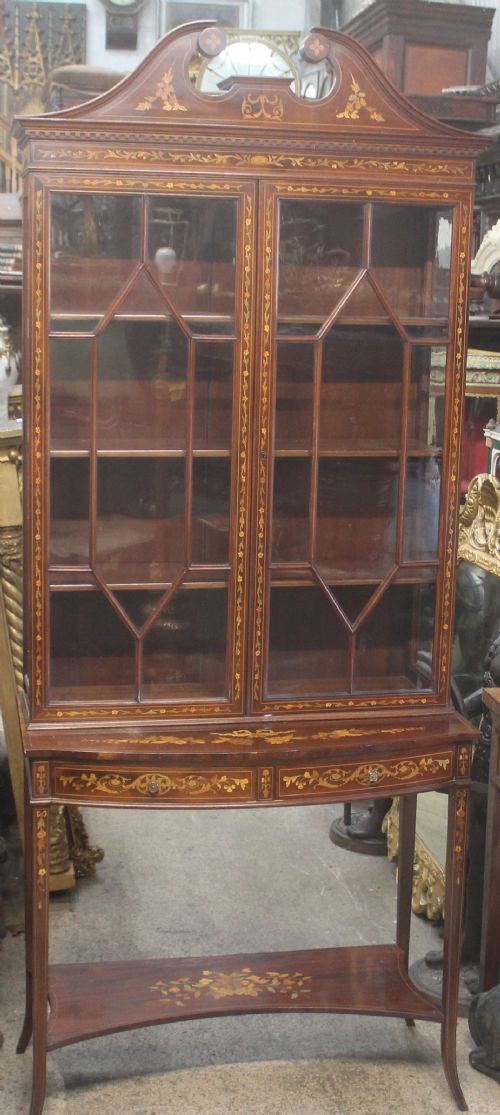
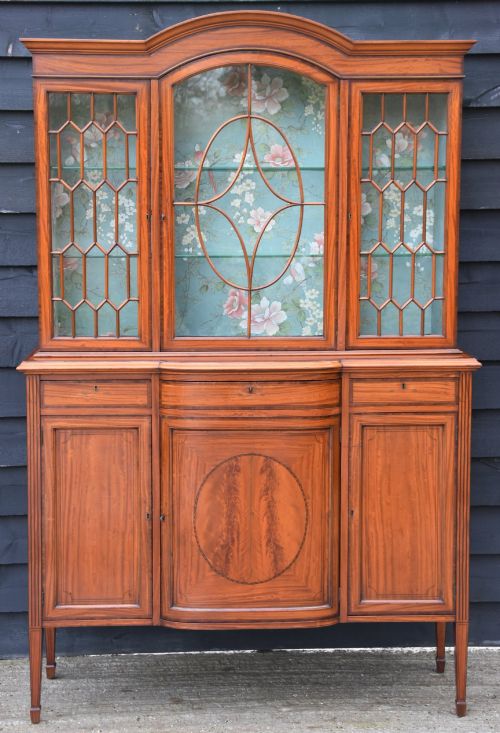
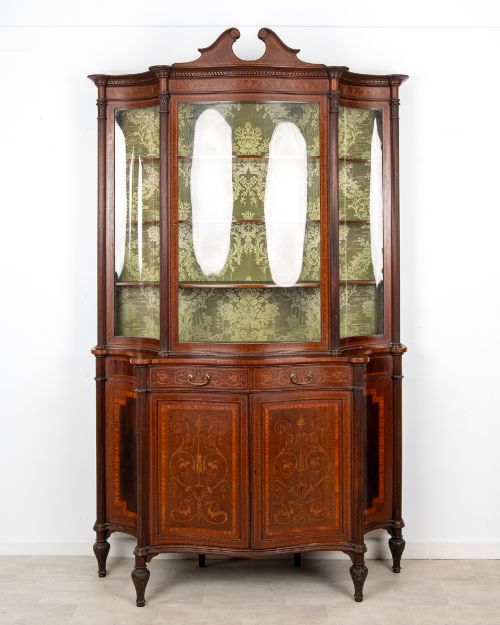
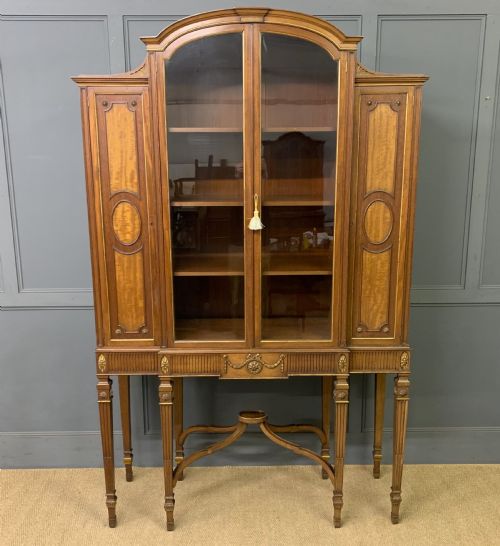
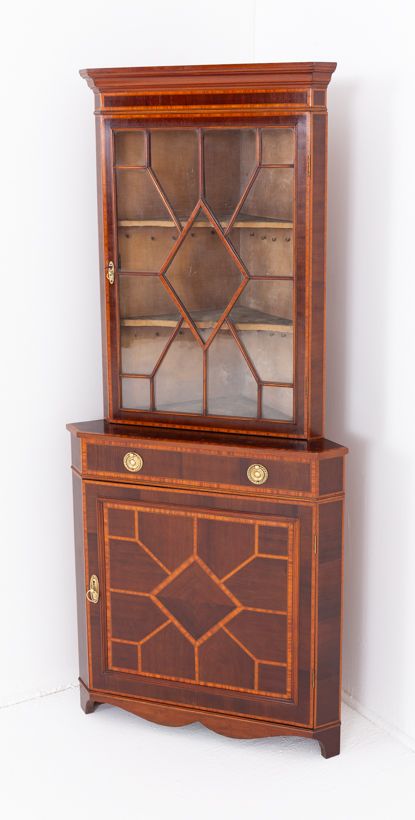
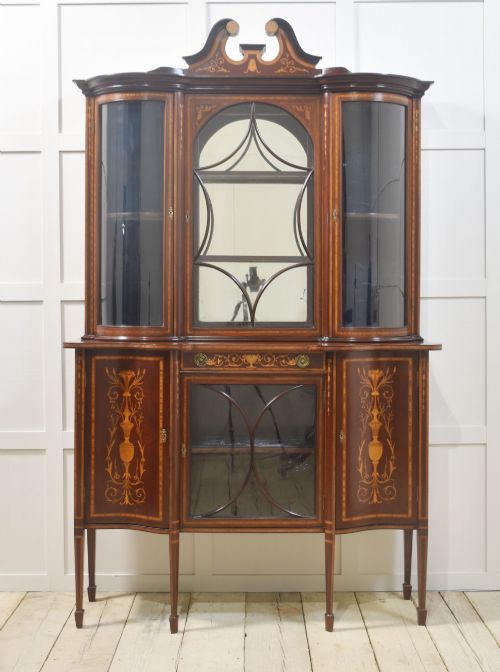
The most common formats on this page are upright display cabinets and bijouterie tables featuring glass panels. Makers of these pieces draw upon Sheraton Revival, Adam Revival, and Neoclassical styles to shape freestanding cabinets, corner units, and breakfront bookcases.
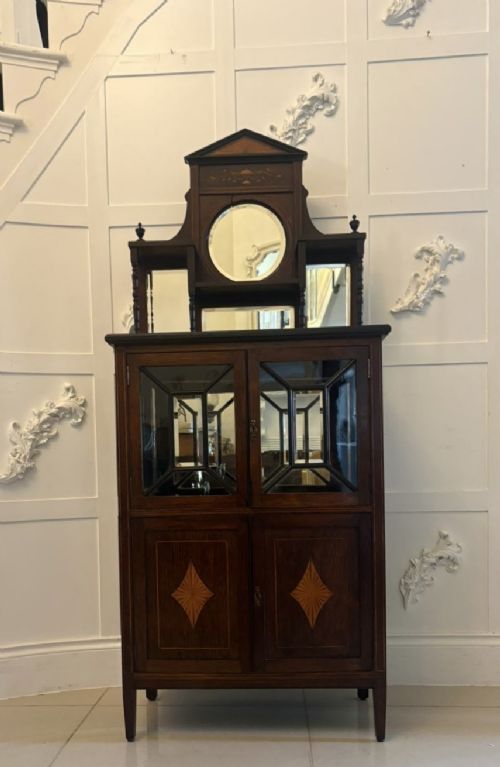
Makers construct certain pieces as kidney-shaped bijouterie tables or pedestal vitrines designed specifically for tabletop viewing. Others take the form of large breakfront cabinets with mirror backs intended to anchor a room wall.
Materials and Construction
Craftsmen build the primary structures using mahogany, often incorporating satinwood inlay, crossbanding, and fruitwood details. Artisans apply intricate marquetry and hand-painted motifs to enrich the timber surfaces in the Sheraton Revival taste.
Glazing forms the central visual element, enclosing the display space with fitted glass panels held by timber framing. Workshops incorporate brass hardware, fabric linings, and mirror backs to complete the interior presentation of the cabinet.
Mahogany and Satinwood Vitrine Retail Price Guide 2026
Typical asking prices for mahogany and satinwood vitrine among the pieces listed under this phrase on Sellingantiques today, from the lower quarter to the upper quarter. They describe what is for sale here now, not the wider market.
Cabinet styles span Sheraton Revival, Neoclassical Revival, and French Empire designs.
Standards of Execution
The distinction between standard production and superior craftsmanship rests in the precision of the inlay and the selection of timber veneers. Workshops known for high output utilise well-figured mahogany paired with crisp satinwood and fruitwood marquetry rather than simpler painted decoration.
Structural harmony also separates the work of established firms from anonymous cabinetmakers. Balanced proportions, neatly fitted doors, and integrated architectural elements such as breakfront cornices define the upper tier of these glazed cabinets.
Waring and Gillow·Maple and Co·Jewell of Holborn·Edwards and Roberts
The Mahogany and Satinwood Vitrine Glossary
- Vitrine
- A glass-fronted cabinet designed for displaying fine objects and porcelain. These pieces protect contents while offering all-round visibility.
- Satinwood
- A lustrous timber used for contrasting inlay and decorative banding. Artisans employ this bright wood to create geometric patterns against darker mahogany.
- Marquetry
- The art of applying decorative veneer pieces to form pictorial or geometric designs. Craftsmen use varied woods to create intricate floral motifs on cabinet doors.
- Bijouterie
- Small decorative items or jewellery housed within glass-topped display tables. These specialised cabinets feature shallow glazed compartments raised on slender legs.
- Breakfront
- A cabinet design where the central section projects forward from the flanking wings. This architectural arrangement creates depth and visual balance on large furniture.
Mahogany and Satinwood Vitrine: Frequently Asked Questions
Where should I place a vitrine?
Drawing rooms and reception spaces suit these glazed cabinets best, where natural light enhances the polished timber and glass panels. Corner cabinets fit neatly into unused angles of a room.
Position the cabinet away from direct sunlight to protect interior fabrics and delicate wood veneers from fading over time.
How do I clean the glass?
Wipe the glazed panels gently using a soft cloth and a mild glass cleaning solution applied sparingly. Prevent liquid from seeping into the surrounding mahogany framing or inlay.
Dust the timber surfaces regularly with a dry cloth to maintain the natural sheen of the polished wood.
What items belong inside a vitrine?
Porcelain figures, small silver pieces, and collector items find a secure home behind the glass doors. Bijouterie tables specifically showcase medals, watches, and small ornaments under glass.
Arrange objects with adequate spacing to allow light from the glass panels to illuminate each piece.
How do I identify a Sheraton Revival piece?
Look for neoclassical motifs, tapering legs, and delicate satinwood inlay set against a mahogany background. These cabinets reflect the eighteenth-century designs popularized during the Edwardian period.
Painted floral swags and classical urns frequently appear on pieces executed in this revival style.