





Madonna Religious Medal
A madonna religious medal is a devotional pendant, and you will find French examples here crafted in gold with enamel and mother of pearl.
Madonna Religious Medal
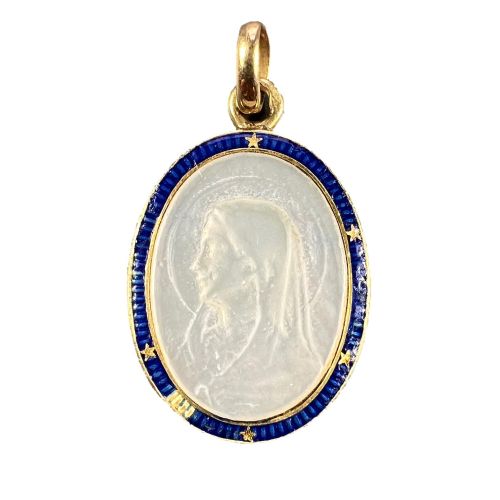
A madonna religious medal takes the form of a pendant or charm intended for personal devotion, frequently depicting the Virgin Mary or the Madonna and Child. These pieces originate primarily from French makers working between the late nineteenth century and the mid twentieth century.
The selections available here emphasise French devotional items configured as pendants, medals, or charms. Most examples date from the period spanning 1890 to 1950, reflecting established European religious iconography in wearable jewellery forms.
Buyers encountering this category will notice distinct stylistic influences, particularly French Art Nouveau and ecclesiastical designs. The common format is a small gold disc or oval plaque designed to suspend from a chain.
Materials and Techniques
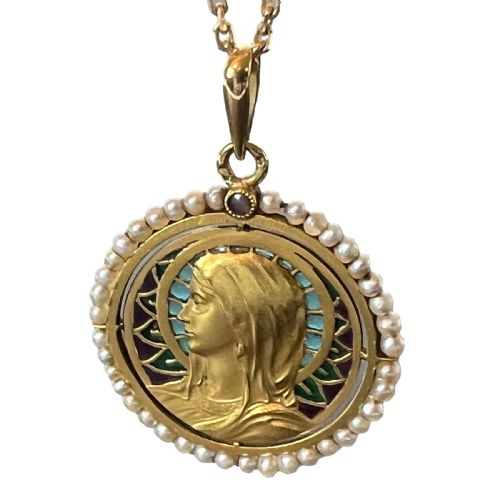
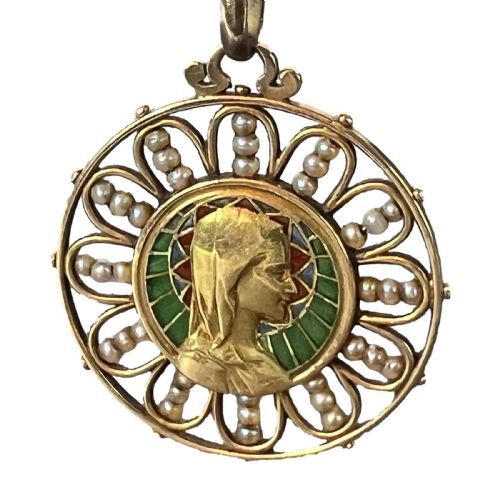
The primary structural metal across these pieces is yellow gold, alongside occasional uses of white gold, rose gold, and general eighteen-carat gold standards. Artisans paired these metal mounts with organic elements including mother of pearl and seed pearls.
Enamel work forms a significant part of the manufacturing process, notably translucent plique-a-jour enamel that allows light to pass through the coloured glass panels. Medals also utilise pierced metalwork, engraved details, and applied relief figures of the Virgin Mary or Sacred Heart.
Madonna Religious Medal Retail Price Guide 2026
Typical asking prices for madonna religious medal among the pieces listed under this phrase on Sellingantiques today, from the lower quarter to the upper quarter. They describe what is for sale here now, not the wider market.
Listings in this category span the decades from 1890 to 1950, with a heavy concentration of pieces originating around 1910.
Assessing Quality and Execution
The distinction between standard items and superior examples lies in the finesse of the metalwork and the complexity of the enamel. Pieces featuring intricate plique-a-jour or delicate seed pearl settings demonstrate a higher level of artisan skill.
Signed works attributed to specific master medallists and workshops command attention for their sharper sculptural relief and balanced composition. The integration of materials, such as mother of pearl backing paired with fine gold framing, determines the overall refinement of the pendant.
Emile Monier·Emile Dropsy·Augis Grun
The Madonna Religious Medal Glossary
- Plique-a-jour
- An enamelling technique where enamel is applied in cells without a backing, creating a stained-glass effect that lets light shine through the transparent colours.
- Madonna and Child
- A traditional artistic representation of the Virgin Mary holding the infant Jesus, frequently depicted on devotional medals and pendants.
- Sacred Heart
- A Christian symbol representing the physical heart of Jesus Christ as a representation of divine love, often shown with flames or thorns on religious medals.
- Seed Pearl
- A very small natural or cultured pearl, typically drilled and used in clusters or borders to embellish antique jewellery and pendants.
- Medallion
- A large metal coin-like plaque or pendant bearing a portrait or religious scene, designed to be worn around the neck or attached to a charm bracelet.
Madonna Religious Medal: Frequently Asked Questions
What is a madonna religious medal?
A madonna religious medal is a small devotional pendant worn as jewellery, depicting the Virgin Mary or the Madonna and Child.
These pieces were traditionally worn for protection or spiritual devotion, commonly fashioned from gold with decorative enamel or pearl elements.
How do you wear a pendant medal?
Pendant medals are typically suspended from a fine gold chain to be worn around the neck as a necklace.
Smaller versions also function well as charms when attached to a traditional charm bracelet.
How are different periods identified?
Periods are determined through stylistic indicators such as Art Nouveau curves, manufacturing techniques, and maker signatures.
French pieces from the late nineteenth and early twentieth centuries often bear distinct assay marks and stylistic traits unique to those decades.