
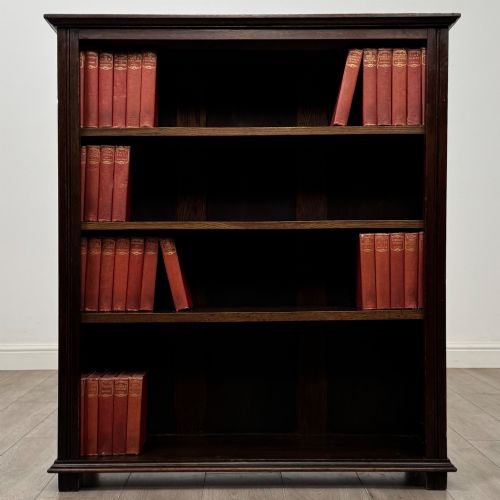
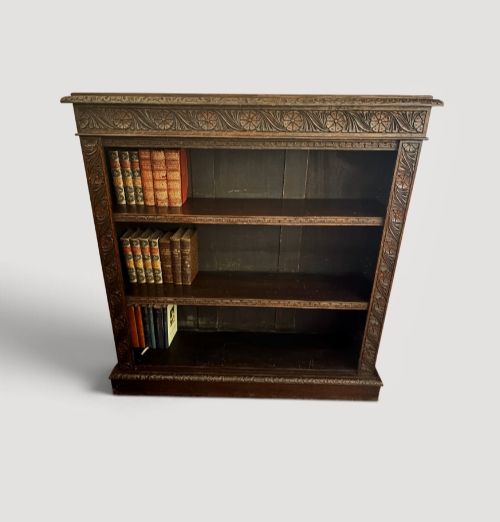
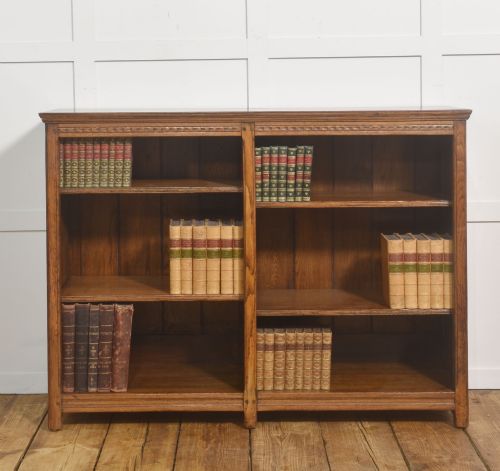
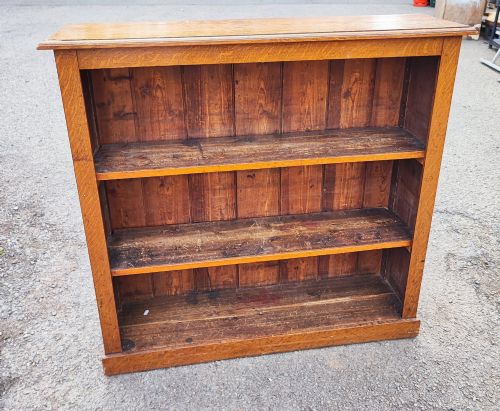
Low Wooden Shelving Unit
A low wooden shelving unit organises your books while keeping the room feeling open and bright.
Low Wooden Shelving Unit
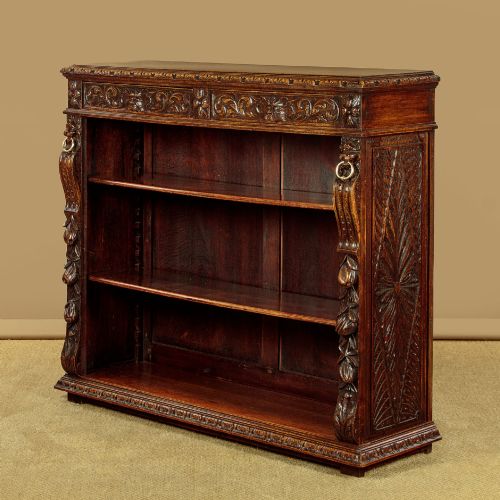
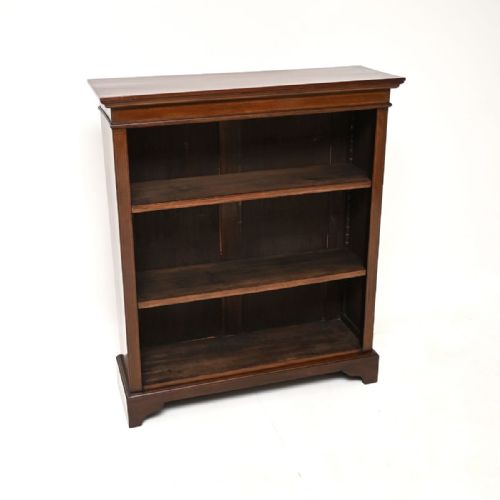
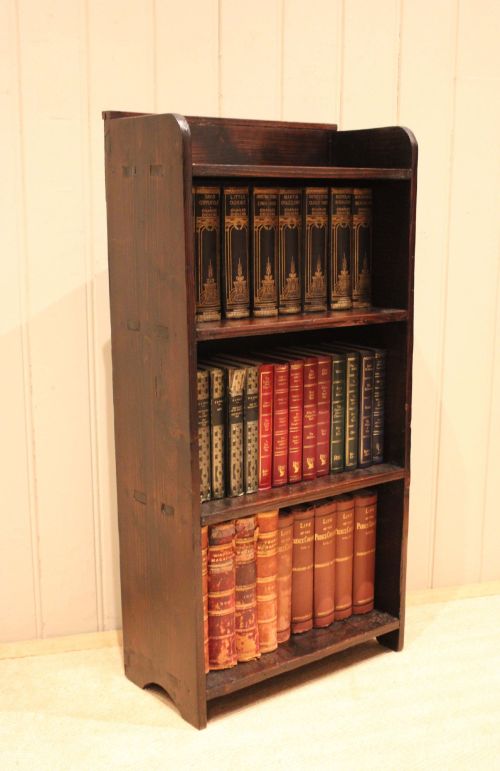
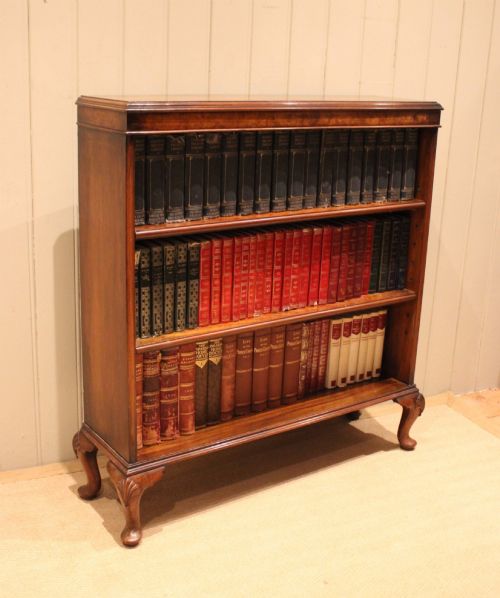
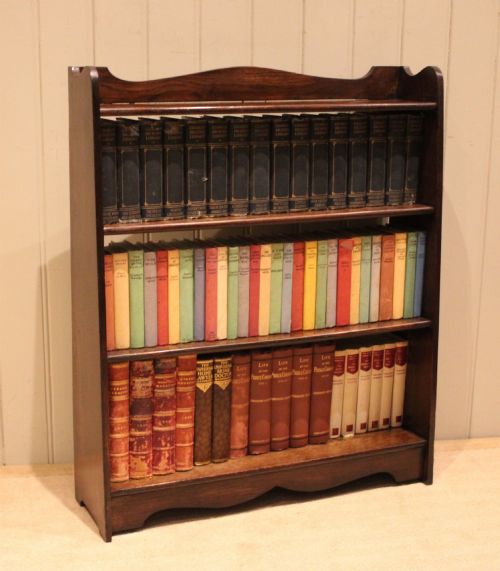
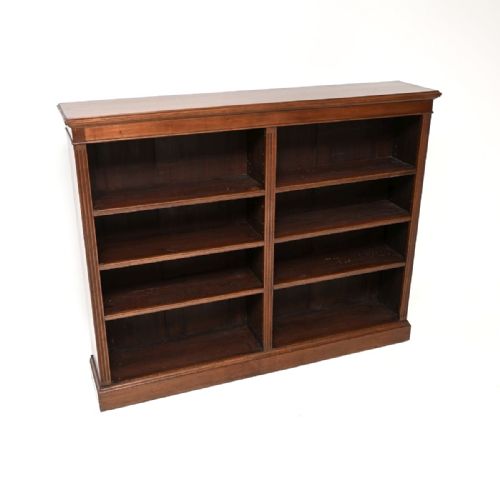
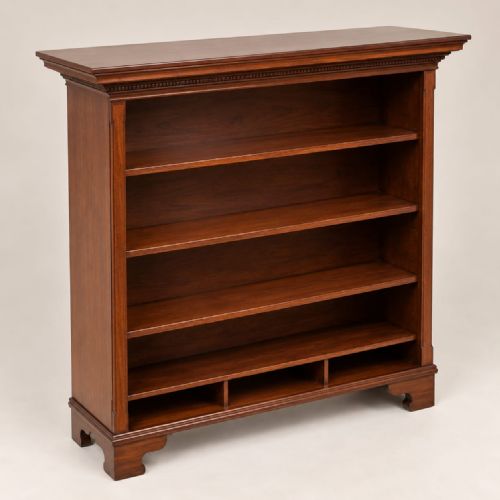
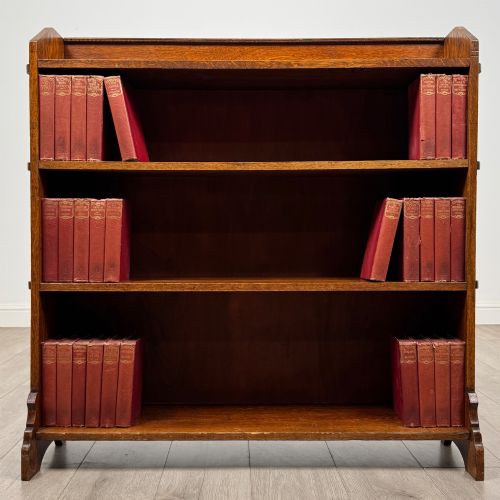
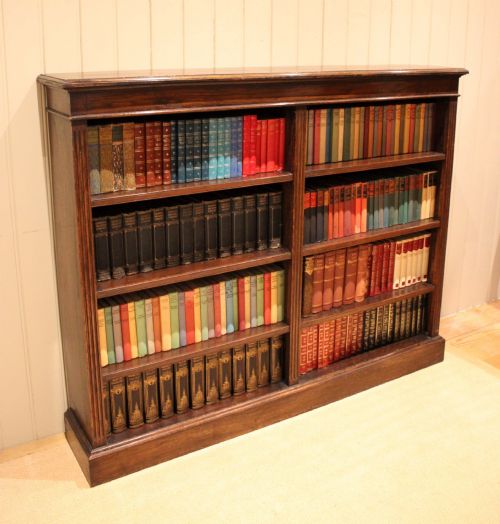
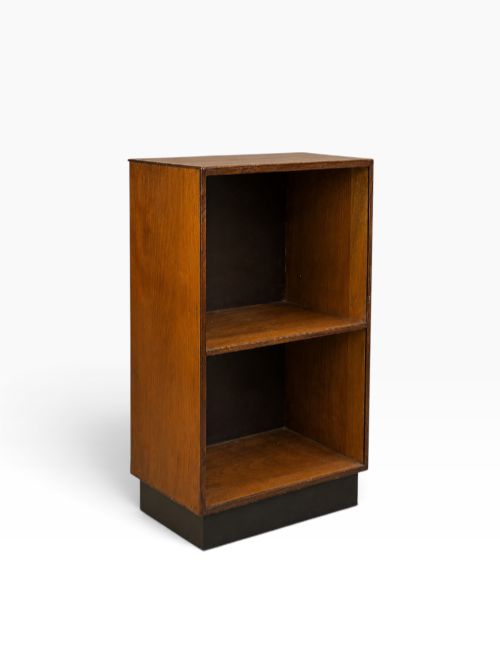
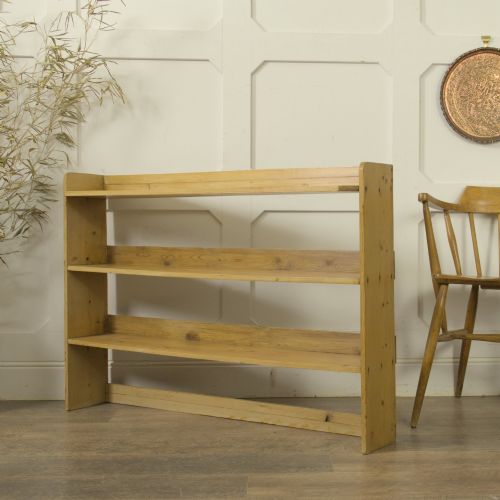
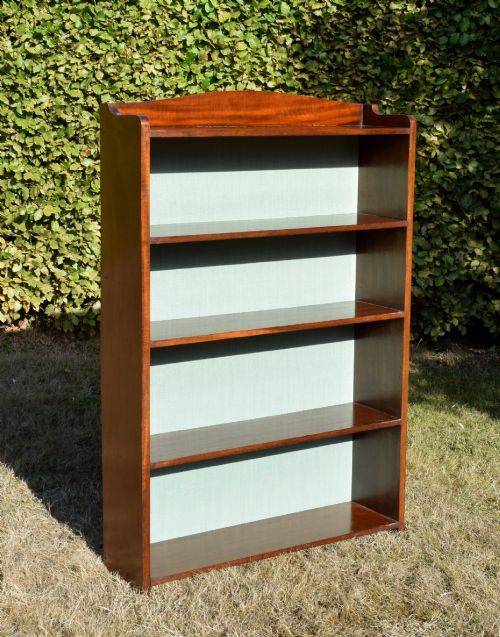
When you search for a low wooden shelving unit, you find open bookcases, low display cabinets, and compact bookshelves built from the nineteenth century into the twentieth century. These pieces offer accessible storage for daily reading and display without dominating the wall space of a room.
How they were made
Carpenters constructed these low shelving units primarily using solid timber such as oak, mahogany, walnut, and pine, occasionally applying walnut veneer or ash for specific decorative effects. Brass fittings appear on adjustable shelf supports and cabinet hardware, while carved details adorn the frames of Victorian and Edwardian examples.
Makers utilised traditional joinery methods to build sturdy carcases capable of holding heavy volumes without sagging over time. Wax and polished finishes were applied to protect the wood grain while highlighting the natural colour and figure of the timber.
Design styles represented include rustic country, Arts and Crafts, Regency, and Queen Anne revival alongside standard Victorian and Edwardian forms.
What varies in quality
The distinction between standard pieces and the finest examples rests on the choice of timber and the sophistication of the joinery. Superior units display carefully selected wood grains, well-fitted adjustable shelving mechanisms, and thoughtful proportions that reflect specific stylistic movements such as Arts and Crafts or Art Deco.
Construction details like rebated backs, solid timber drawer linings where applicable, and clean carving define the better items on the market. Simpler pine bookshelves and utilitarian shoe racks serve straightforward storage needs, whereas refined mahogany and walnut library pieces demonstrate superior cabinet-making skills.
Maurice Adams
The Low Wooden Shelving Unit Glossary
- Open bookcase
- A piece of furniture designed for storing books without glass or solid doors enclosing the front. This format allows immediate access to the contents.
- Adjustable shelves
- Shelves that can be moved to different heights within the bookcase using slots, pegs, or brass tracks. This system accommodates books of varying sizes.
- Breakfront
- A piece of furniture where the central section projects forward from the flanking wings. It creates visual depth in larger library furniture.
- Veneer
- A thin layer of choice wood applied to a base timber surface to provide a decorative figured pattern. Walnut veneer appears frequently on select period cabinets.
- Inlaid
- Woodwork decorated by embedding contrasting materials flush into the surface. Edwardian makers often utilised this technique for subtle linear borders.
Low Wooden Shelving Unit: Frequently Asked Questions
What is a low wooden shelving unit used for?
These units provide accessible storage for books, magazines, and decorative objects while maintaining a low profile that preserves wall space and light in a room. They suit studies, living rooms, and hallways where taller bookcases would feel too heavy.
Because the top surface sits at a convenient height, many people also use it to display lamps, plants, or framed photographs alongside an active reading collection.
How do I style a low wooden shelving unit?
Arrange books both vertically and horizontally to break up straight lines and create visual interest across the shelves. Leave small pockets of empty space around objects so the piece does not appear overcrowded.
Pair the warm tones of the wood with ceramics or framed prints placed on top of the unit to integrate it naturally into your room scheme.
How can I tell a Victorian bookcase from an Edwardian one?
Victorian bookcases often feature darker timbers like mahogany and walnut, frequently accompanied by carved details or deep wax finishes. They tend to have a heavier, more substantial presence in the room.
Edwardian pieces generally lean towards lighter golden oak, sometimes incorporating simple inlaid banding or clean, straightforward lines influenced by the Arts and Crafts movement.