

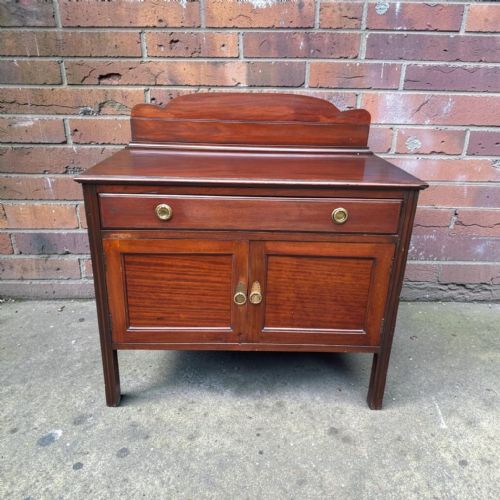
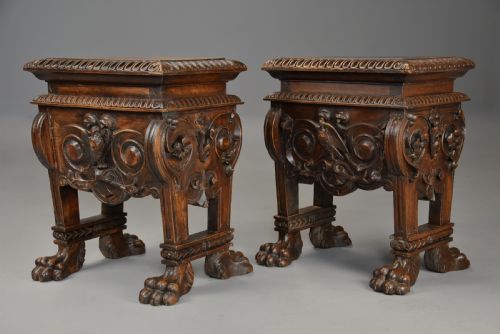


Low Wooden Pedestal
A low wooden pedestal supports diverse forms from tables to cabinets, offering practical surface space and period character.
Low Wooden Pedestal
The low wooden pedestal encompasses various forms including coffee tables, wine tables, stools, and side cabinets derived from larger pieces or built low for domestic utility. Examples span the Georgian, Regency, and Victorian eras, demonstrating how makers adapted traditional pedestal supports to lower heights.
Buyers encounter items such as a Georgian mahogany dish top pedestal coffee table, a lowered walnut wine or occasional table, and a Victorian walnut coffee table featuring marquetry inlay and a hand-carved base. These pieces bring functional surfaces and distinct period craftsmanship into modern rooms.
Origins in the evidence stretch from the mid-eighteenth century through the nineteenth century, including specific dates such as eighteen-hundred and eighteen-eighty. The selection merges utilitarian furniture forms with classical pedestal architecture adapted for lower profiles.
How they were made
Construction relies heavily on dense timbers like mahogany, walnut, and flame mahogany, often enhanced by satinwood, burr walnut, and fruitwood inlay. Cabinetmakers utilised these woods for both structural stability and decorative grain patterns across table tops and cabinet surfaces.
Brass details appear alongside carved wooden bases, while marquetry inlay and hand-carved elements demonstrate traditional joinery and surface ornamentation techniques. Italian carved walnut stools in the sixteenth century style illustrate the application of Renaissance revival carving methods during the eighteenth century.
Low Wooden Pedestal Retail Price Guide 2026
Typical asking prices for low wooden pedestal among the pieces listed under this phrase on Sellingantiques today, from the lower quarter to the upper quarter. They describe what is for sale here now, not the wider market.
Listings feature items from the eighteenth and nineteenth centuries, spanning Georgian, Regency, and Victorian styles in mahogany, walnut, and satinwood.
What varies in quality
Quality rests upon the selection of timber figures, such as flame mahogany or burr walnut, and the crispness of hand-carved details on the base. Pieces featuring intricate marquetry inlay or specialised woods like goncalo Alves distinguish themselves from plainer utilitarian examples.
The integrity of the pedestal support and the balance of the lowered form dictate the overall success of the piece. Superior examples maintain proportion between the central support and the top, whether holding a dish top or a large oval surface.
Lamb of Manchester
The Low Wooden Pedestal Glossary
- Pedestal
- A structural support or column beneath a table top or cabinet body. It elevates the primary surface while anchoring the piece centrally.
- Marquetry
- Decorative patterns formed by fitting together thin veneers of wood and other materials onto a structural base. This technique creates elaborate pictorial or geometric designs on table tops.
- Dish top
- A table top with a raised, concave rim carved directly from the solid timber. It prevents items from sliding off the surface.
- Goncalo Alves
- A dense exotic hardwood with striking contrasting grain patterns utilised in Regency cabinetmaking. It provides a distinctive natural decoration without reliance on applied veneers.
Low Wooden Pedestal: Frequently Asked Questions
What is a low wooden pedestal?
A low wooden pedestal refers to furniture items supported by a central column or base built to a reduced height, encompassing coffee tables, occasional tables, and cabinets.
These pieces draw on Georgian, Regency, and Victorian design traditions, utilising woods like mahogany and walnut.
How were these pieces used?
Historically, these items served varied domestic functions from holding drinks and wine to displaying decorative objects in reception rooms.
Lowered occasional tables and coffee tables provided accessible surface space adjacent to seating during the nineteenth century.
How do I live with one?
Integrating a low wooden pedestal into a modern interior involves placing it centrally as a coffee table or using a cabinet for low-profile storage.
Their robust timber construction and period details suit both traditional and contemporary room schemes.
How do I tell periods apart?
Distinguishing periods relies on observing material choices and decorative motifs, such as Georgian dish tops versus Victorian marquetry inlay.
Eighty-eighty and earlier nineteenth-century pieces display shifts in carving styles and veneer preferences characteristic of their decade.