
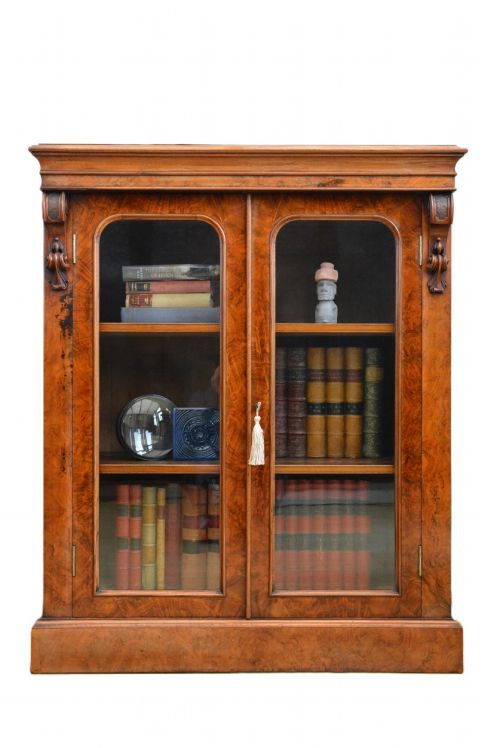

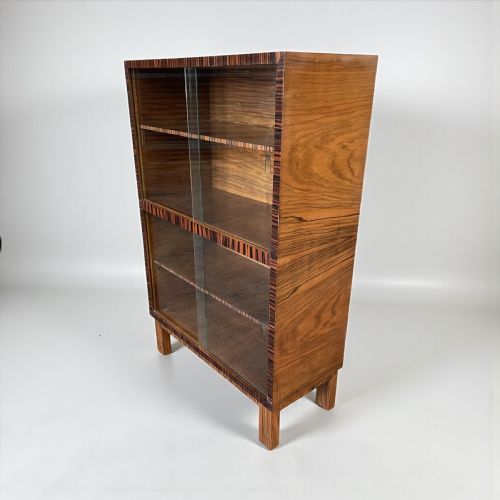


Low Walnut Book Cabinet
A low walnut book cabinet is a compact timber repository for volumes, offering surface display alongside accessible shelving.
Low Walnut Book Cabinet
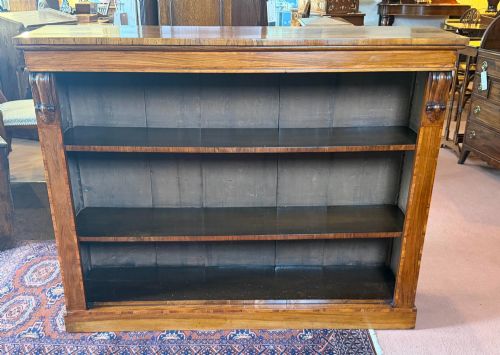
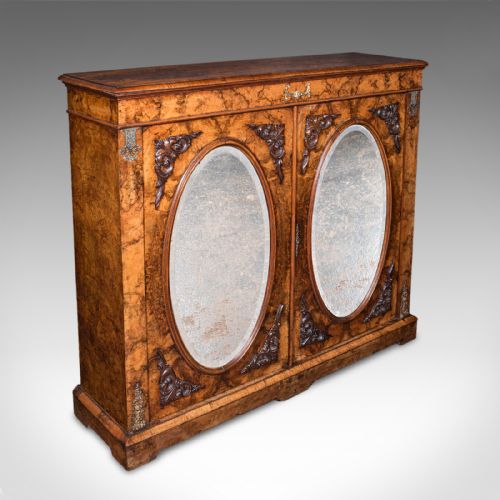
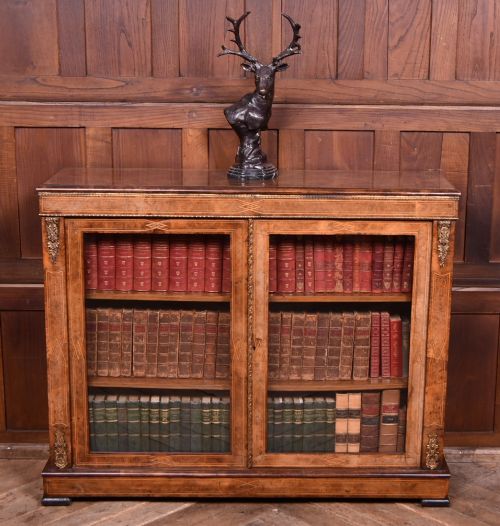
A low walnut book cabinet combines modest height with generous timber grain, appearing most frequently in Victorian and Edwardian iterations across these records. Buyers searching for a low walnut book cabinet encounter open shelving, glazed doors, and mirror fronts designed to house libraries without dominating domestic rooms.
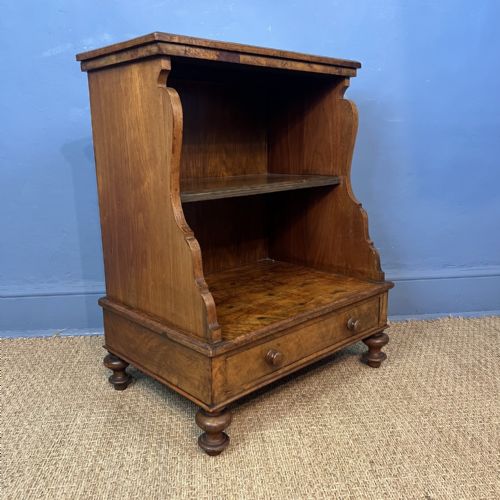
Forms range from break-fronted open bookcases with drawers to pairs of Victorian cabinets and compact bedside variations. These pieces originate across the nineteenth and early twentieth centuries, spanning Regency, William IV, Queen Anne Revival, and Art Deco styles.
What varies in quality
The selection of timber grain defines the visual merit of each piece, with burr walnut and figured walnut displaying complex, swirling patterns superior to plain timber surfaces. Finer examples incorporate restrained gilt metal mounts, ormolu, and intricate brass hardware rather than utilitarian fastenings.
Structural refinement shows in break-front proportions, well-fitted glazed or mirror doors, and neatly integrated drawers that operate smoothly within the cabinet frame.
Some nineteenth-century makers doubled their utility by crafting low bookcases that doubled as bedside cabinets.
Gillows of Lancaster
The Low Walnut Book Cabinet Glossary
- Burr walnut
- A highly figured wood veneer taken from the growth excrescences on walnut trees, prized for its swirling patterns. It forms the primary decorative surface on finer nineteenth-century cabinets.
- Break-front
- A cabinet facade where the central section projects forward from the flanking wings. This architectural arrangement creates depth and shadow on larger library pieces.
- Ormolu
- Gilt bronze ornamentation applied to furniture mounts and details. It provides metallic contrast against the dark brown tones of walnut timber.
- Figured walnut
- Timber exhibiting distinctive grain patterns caused by local growth variations or branching. Cabinet makers arrange these grains symmetrically across doors and drawer fronts.
Low Walnut Book Cabinet: Frequently Asked Questions
Where should I place a low walnut book cabinet?
These cabinets suit living rooms, studies, and bedrooms where full-height shelving would overwhelm the wall space. Their low profile leaves the wall above free for art or mirrors.
Position them away from direct sunlight and heat sources to protect the polished walnut surfaces and delicate veneers from drying out.
Are the shelves adjustable?
Many examples include adjustable shelving systems supported by wooden pegs or metal racks. This allows you to alter shelf heights for varying book sizes.
Earlier open configurations sometimes feature fixed shelves integrated directly into the structural uprights during initial construction.
How do I distinguish Victorian from Edwardian pieces?
Victorian examples often display heavier proportions, richer burr walnut veneers, and elaborate brass or gilt mounts. They lean towards formal revival styles including Queen Anne and William IV.
Edwardian cabinets generally present lighter frames, simpler stringing inlay, and restrained classical influences suited to airier early twentieth-century interiors.
How should I clean walnut furniture?
Dust regularly with a soft, dry cloth following the direction of the timber grain. Avoid silicone-based polishes that build up sticky residues over time.
Apply a microcrystalline wax occasionally to nourish the timber and protect the polished finish from moisture and handling.