
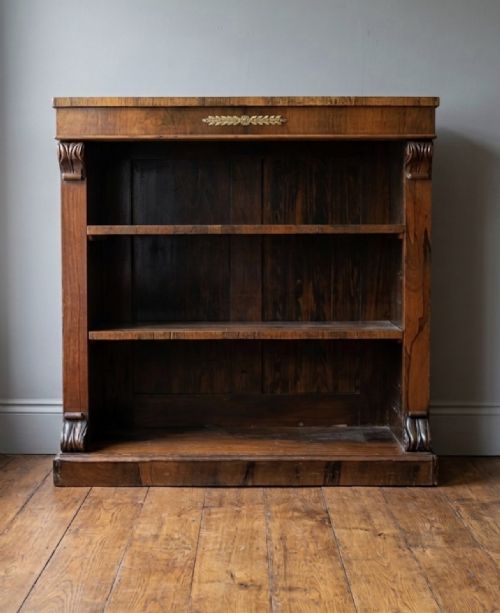


Low Rosewood Display Shelves
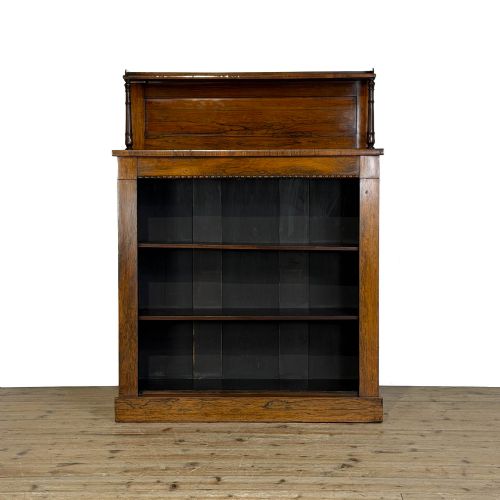
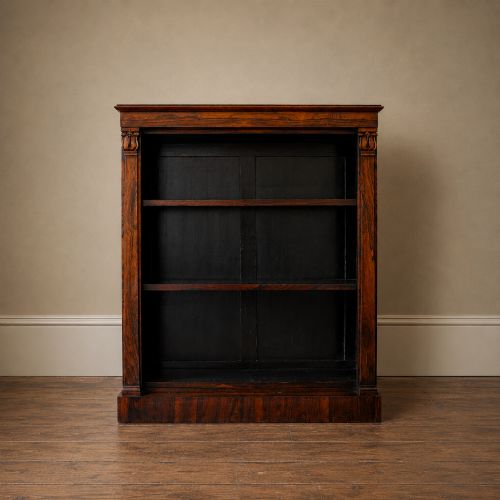
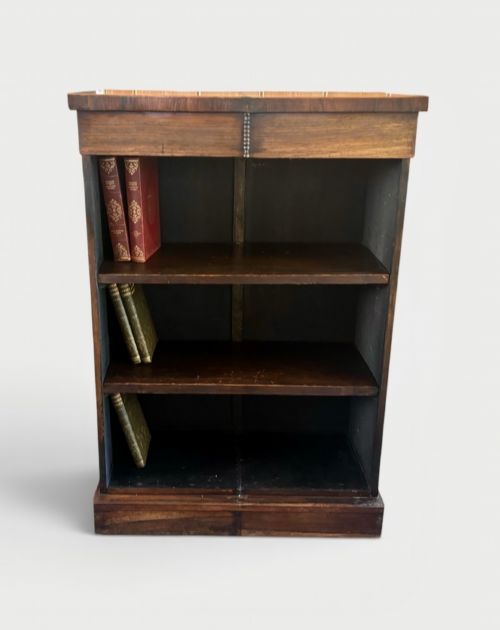
Low rosewood display shelves are open timber bookcases and chiffoniers built for books and ornaments during the Regency and Victorian periods.
Low Rosewood Display Shelves
Low rosewood display shelves take the form of open bookcases, low bookcases, and chiffoniers originating across the nineteenth century, including the Regency, William IV, and Victorian eras. These low pieces are designed to hold books and display objects within reach while keeping sightlines clear in a room.
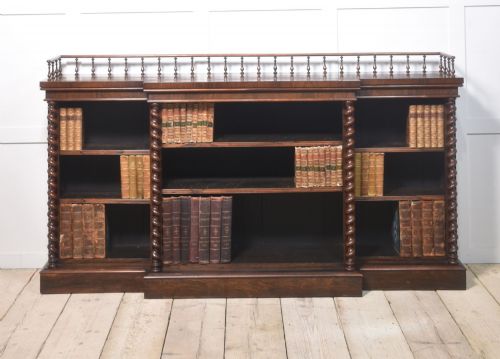
The versions most commonly met on this page are open bookcases with adjustable shelves, alongside occasional waterfall bookcases and mirrored chiffoniers. They range from small proportions to large and breakfront formats, often standing low enough to function beneath wall art or windows.
Materials and construction
Makers built these pieces using solid rosewood and pine or softwood carcases finished with rosewood veneer and palisander. Selected examples introduce secondary timbers such as oak alongside decorative elements like brass inlay.
Surface details incorporate patinated marble tops, mirror glass, and simulated paint finishes on early nineteenth-century work. Shelving systems rely on adjustable wooden supports housed within open compartments.
The listings show pieces spanning the Regency, William IV, and Victorian periods, constructed from rosewood, rosewood veneer, pine, oak, and goncalo Alves.
Defining quality
Quality rests upon the selection of timber veneers and the crispness of brass inlay or architectural mouldings. Pieces featuring breakfront carcases, waterfall tiers, or integrated marble tops demonstrate higher ambition in design.
The refinement of adjustable shelving mechanisms and the treatment of secondary woods indicate the level of workshop care. Subtle variations in proportions and timber figuring separate standard utility furniture from finer cabinet work.
The Low Rosewood Display Shelves Glossary
- Breakfront
- A cabinet form where the central section projects forward from the flanking wings. This architectural arrangement creates depth and shadow across the front elevation.
- Chiffonier
- A low cabinet equipped with shelving or enclosed storage, developed during the nineteenth century. It frequently incorporates a mirrored back or display surface.
- Waterfall bookcase
- A tiered set of open shelves where each successive shelf steps back from the one below. The sides often follow this descending stepped profile.
- Palisander
- A dense tropical timber often grouped with rosewood due to its rich grain and deep colouration. It appears frequently on mid-nineteenth-century cabinet work.
- Goncalo Alves
- A dense exotic hardwood prized for its striking contrasting grain patterns. Nineteenth-century cabinet makers utilised it for high-status bespoke furniture.
Low Rosewood Display Shelves: Frequently Asked Questions
What is the difference between a chiffonier and an open bookcase?
An open bookcase provides stepped or straight rows of exposed shelving primarily intended for books and display. A chiffonier typically includes enclosed lower cupboards alongside surface display space or mirror glass.
Both forms belong to the nineteenth-century low furniture tradition but serve distinct storage functions within a domestic interior.
How do I adjust the shelves?
Many nineteenth-century open bookcases utilise traditional wooden bearer systems or brass slotted strips set into the interior sides. You lift the shelf slightly to clear the supporting pins or brackets and reposition it at the desired height.
Care should be taken with veneered interiors to avoid scoring the timber when moving shelves.
How do I care for rosewood veneer?
Rosewood surfaces require stable indoor humidity away from direct sunlight and heat sources to prevent timber movement and veneer lifting. Dusting with a dry, soft cloth maintains the polished finish without moisture damage.
Occasional application of appropriate wax preserves the depth of the grain and protects the nineteenth-century polish.