


Low Pine Chest Drawers
Low pine chest drawers are utilitarian storage pieces offering rustic warmth and compact proportions that suit modern bedrooms.
Low Pine Chest Drawers
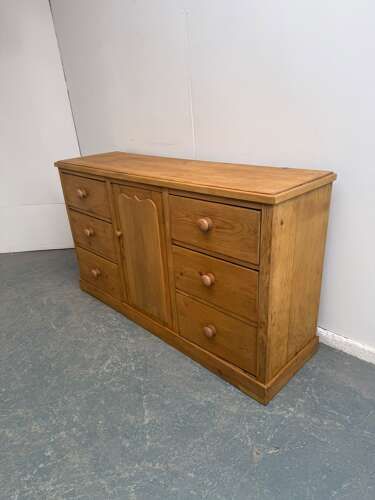
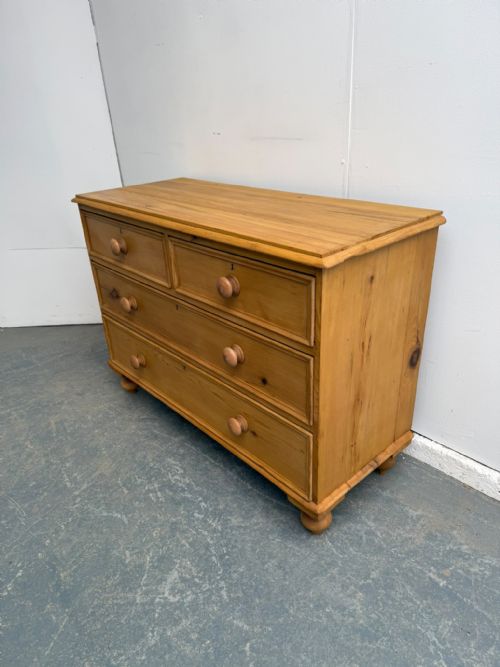
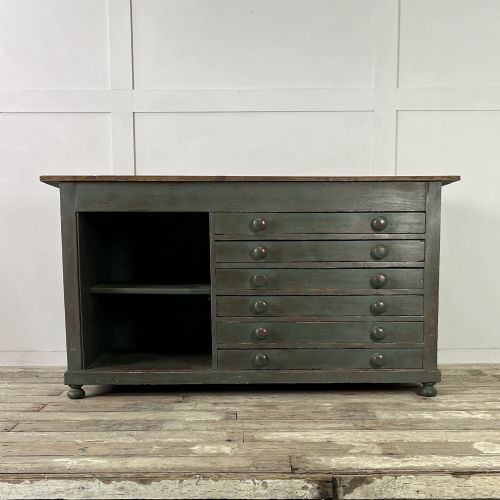
Low pine chest drawers comprise sturdy wooden storage units primarily originating from the Victorian and Edwardian eras, alongside earlier Georgian examples. These items span various configurations, including shallow five-drawer formats, wide three-drawer setups, and specialised drapers' or artists' chests.
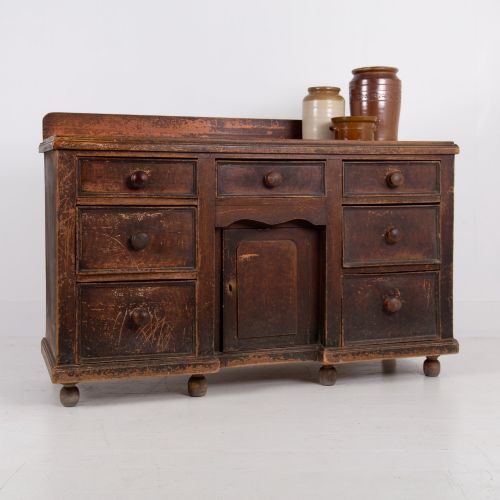
Buyers seeking low pine chest drawers encounter pieces finished in wax, original paint, or dark treatments like black paint. Forms range from rustic country variations to columned designs and industrial commercial pieces.
The selection includes low wide proportions that fit beneath windows or within cottage chambers. Construction relies heavily on solid pine timber complemented by brass or iron hardware.
How they were made
Makers constructed these chests predominantly from solid pine timber, utilising wood for both structural carcases and drawer linings. Joinery techniques ensured durable storage units capable of withstanding daily domestic or commercial use.
Surface finishes include traditional wax applications that highlight the natural grain of the wood alongside original paint treatments in varied colours. Hardware components incorporate brass and iron for drawer pulls and handles.
Object forms span standard chests of drawers, kitchen dresser bases, chiffoniers, and drapers chests.
What varies in quality
Quality diverges between straightforward utilitarian pieces and finer cabinetmaking works, such as those attributed to Gillows. The presence of original paint finishes versus later stripping and waxing alters the historical character of a piece.
Proportions and hardware integrity distinguish standard country workshop outputs from more considered Victorian or Georgian designs. Structural timber thickness and the retention of original brass or iron fittings define the upper tier of surviving examples.
Gillows
The Low Pine Chest Drawers Glossary
- Pine
- A softwood timber commonly utilised in British and European cabinetmaking for its workability and distinct grain pattern. It forms the primary material base for the vast majority of these chests.
- Waxed finish
- A traditional surface treatment applied to timber to nourish the wood and impart a soft sheen. This method preserves the natural tone of the pine.
- Drapers chest
- A wide, shallow form of multi-drawer storage originally designed for textile merchants to sort and display fabrics. These pieces offer exceptional horizontal surface area.
- Columned chest
- A design featuring turned or applied pillars flanking the drawer tiers, adding architectural presence to Victorian furniture. This decorative detail elevates the formal appearance of the piece.
- Dresser base
- The lower section of a kitchen dresser featuring cupboards or drawers without the upper plate rack. These sturdy items function effectively as low sideboards.
Low Pine Chest Drawers: Frequently Asked Questions
How do I style a low pine chest drawers?
These low units sit comfortably beneath windows or along bedroom walls where height is restricted. Their warm wooden tones blend with both contemporary neutral rooms and traditional rustic interiors.
Surface space on top accommodates lamps, mirrors, or small decorative objects without overwhelming a room. Pairing them with other wooden furniture creates a cohesive scheme.
Were these chests painted originally?
Many period examples received layers of paint for practical protection or decorative effect in domestic and commercial settings. Original paint surfaces survive on some items, showing authentic wear over time.
Other pieces were left bare or waxed to showcase the natural grain of the timber. Stripped examples reflect later restoration preferences rather than original factory finishes.
What is the difference between Victorian and Georgian pine chests?
Georgian examples generally display earlier construction methods and proportions associated with the eighteenth century. These pieces often feature refined detailing and specific cabinetmaker attributions.
Victorian variations tend towards sturdier proportions, sometimes incorporating columns, varied drawer counts, or utility designs. Both periods utilise solid pine construction but differ in aesthetic refinement.
Are these chests suitable for modern bedroom storage?
The shallow and wide dimensions of these chests make them practical for clothing storage in rooms with limited floor space. Deep drawers accommodate bulkier items while maintaining a low profile.
Solid wood construction ensures durability that surpasses modern flat-pack alternatives. Their compact height also provides useful surface shelving.