
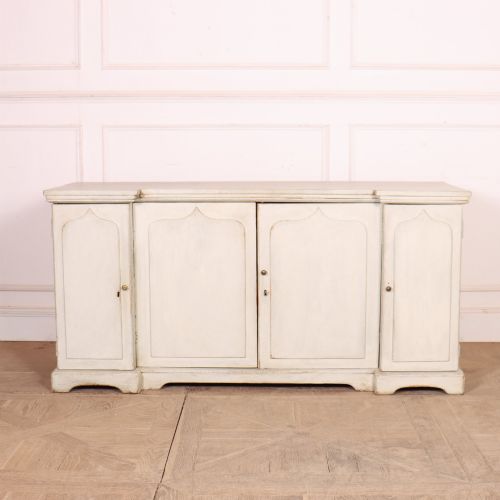
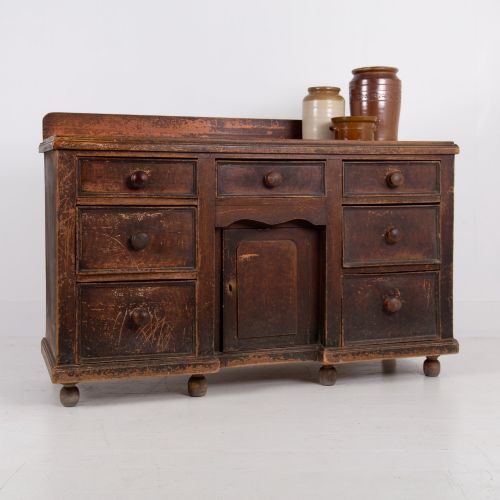
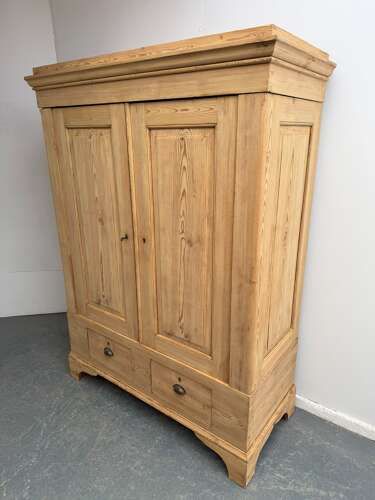
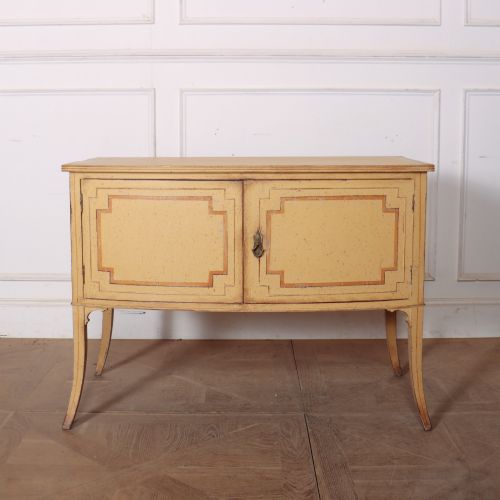
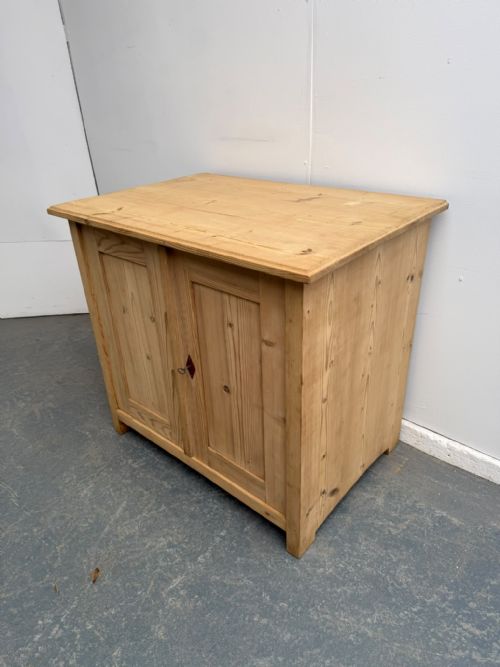
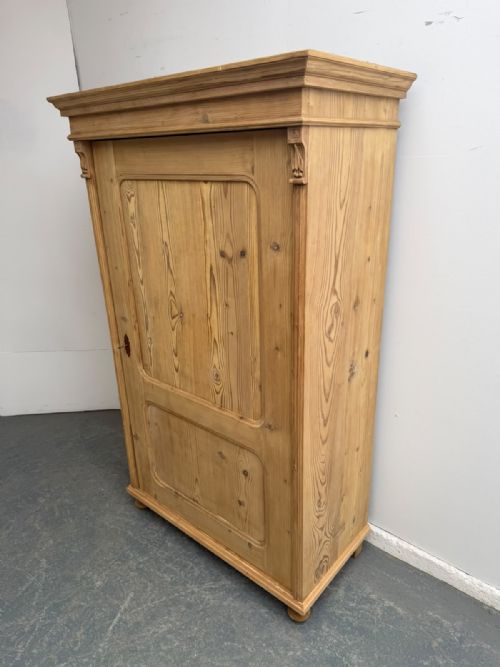
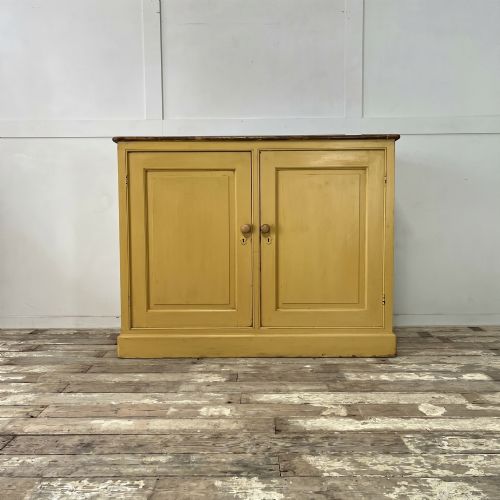
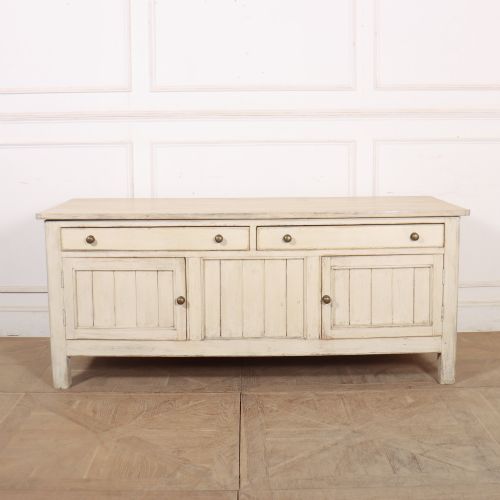
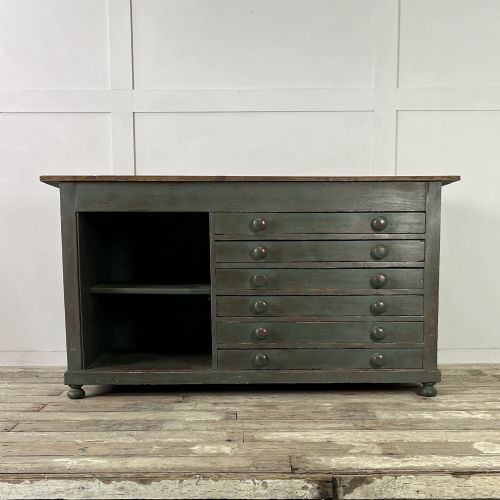


Low Painted Storage Cabinet
These low painted storage cabinet examples span Georgian to 20th century periods in pine, wood and painted timber.
Low Painted Storage Cabinet
A low painted storage cabinet brings functional domestic furniture into the room with painted surfaces developed across the Victorian and Georgian eras. Buyers searching for a low painted storage cabinet typically encounter pine cupboards, dresser bases and side cabinets spanning the 19th century and early 20th century.
The forms range from kitchen dresser bases and school cupboards to drapers chests and side cabinets built in English country and industrial styles. Many pieces show original paint or retain surfaces intended for further painting and waxing by the owner.
How they were made
Makers constructed these cabinets primarily using solid pine and timber, fitted with brass and iron hardware such as hinges, handles and latches. Surfaces received layers of paint, sometimes original, or were prepared as plain wood ready for waxing.
Joinery and construction methods reflect utilitarian and country workshop traditions, producing robust breakfront bookcases, wardrobes and multi-drawer chests designed for daily utility in schools, kitchens and shops.
Current listings span the Georgian, Victorian and early 20th century periods, constructed predominantly in pine and painted timber.
What varies in quality
Quality in these cabinets rests upon the integrity of the original timber frame and the survival of authentic painted finishes. Pieces that retain their original 19th-century paint surfaces carry greater character than later or stripped examples.
Proportion and scale also separate standard utility items from finer workshop pieces, particularly in breakfront formats, drapers chests and school cupboards where balanced proportions enhance the utility.
The Low Painted Storage Cabinet Glossary
- Breakfront
- A cabinet design where the central section projects forward from the flanking outer sections. This arrangement adds depth and visual rhythm to side cabinets and bookcases.
- Dresser base
- The lower portion of a kitchen or dining room dresser, typically featuring cupboards and drawers beneath a solid top. These serve as low sideboards or storage cabinets.
- Drapers chest
- A wide chest of drawers originally utilised in retail drapery shops for storing textiles and ribbons. They feature numerous shallow or wide drawers set within a low timber frame.
- Pine
- A softwood timber widely employed in British and European country furniture for its workability and strength. It forms the primary body of Victorian and Georgian painted storage pieces.
- Original paint
- The initial surface coating applied to a piece of furniture during its period of manufacture. Surviving original paint provides historical evidence of colour and finish.
Low Painted Storage Cabinet: Frequently Asked Questions
Where were these cabinets used?
These low storage pieces served in various domestic and commercial settings, including kitchens, schoolrooms and retail shops. Dresser bases and cupboards held provisions, while drapers chests organised dry goods and textiles.
Many examples originated in English country houses and utilitarian workshops where robust pine construction suited daily work. Their low proportions allowed them to sit beneath windows or along hallways without obstructing light.
How do I date a painted cabinet?
Dating relies on construction techniques, timber selection and the character of any surface paint layers. Pieces from the Georgian era show specific joinery details, whereas Victorian and 19th-century examples often utilise heavy pine boards and utilitarian hardware.
Examining the drawer construction, backboards and interior surfaces reveals the period of manufacture. Paint analysis can further distinguish original 19th-century finishes from later decorative overpainting.
Can I paint or wax these cabinets?
Many listings specify that pieces are ready to wax or paint, allowing buyers to adapt the finish to their interior. Traditional pine surfaces accept wax finishes that nourish the timber and deepen the tone of the wood.
Applying new paint or wax over older pine requires minimal preparation if the surface is clean. Owners frequently customise unpainted or stripped pine to match contemporary colour schemes while preserving the antique frame.