


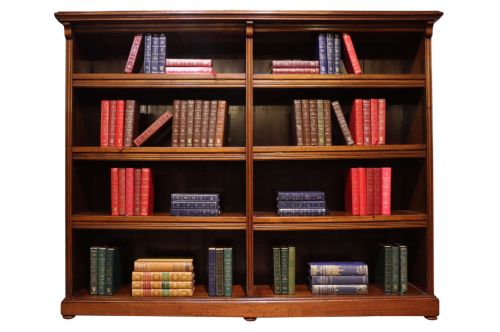

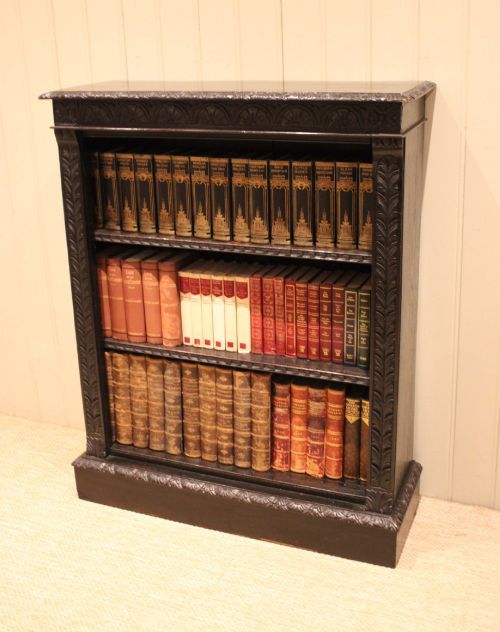
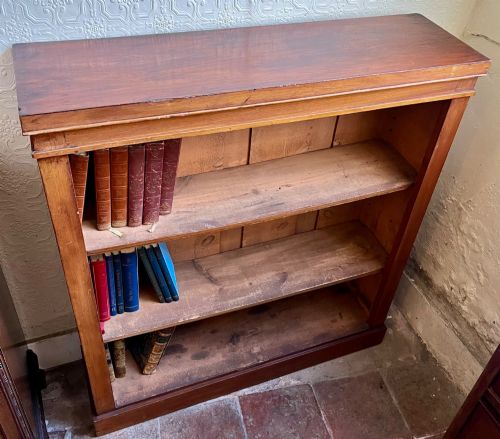
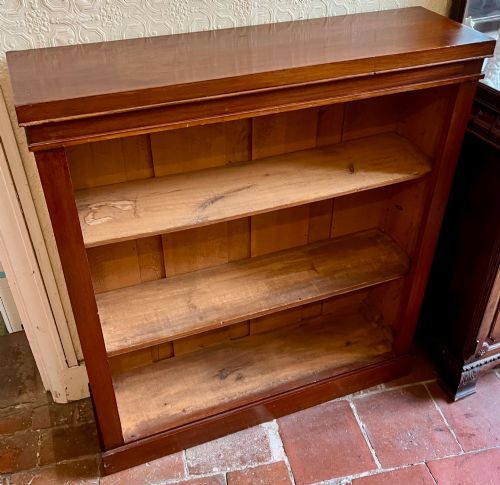
Low Open Bookshelves
Low open bookshelves offer accessible storage and display for collections of volumes, combining practical utility with period character.
Low Open Bookshelves
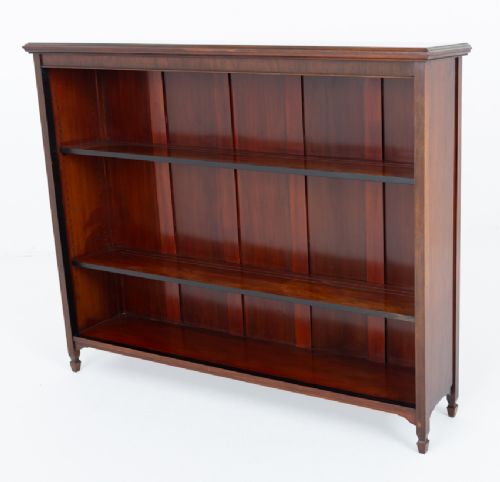
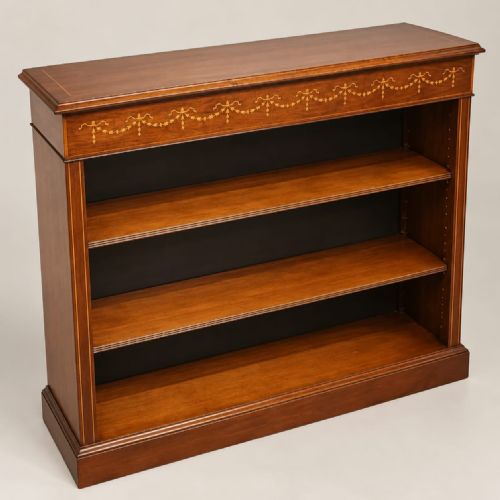
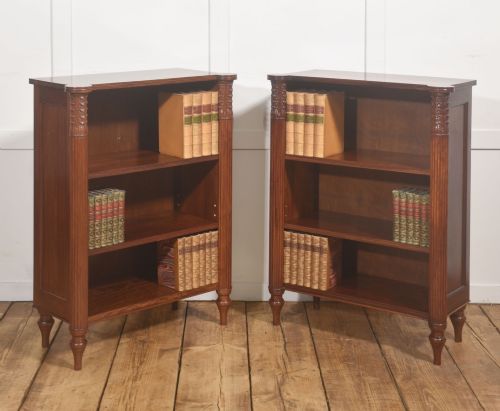
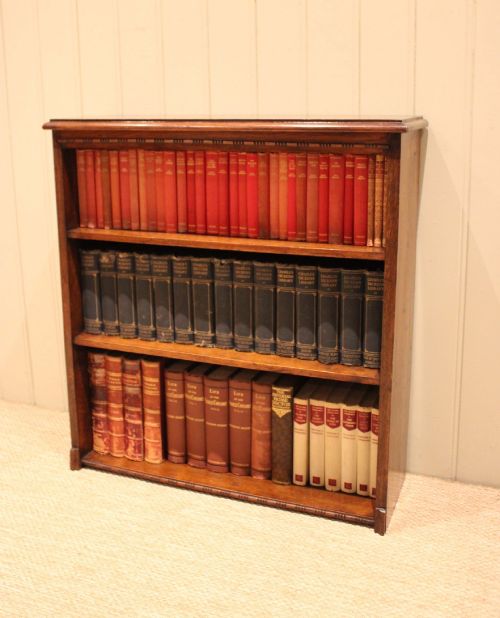
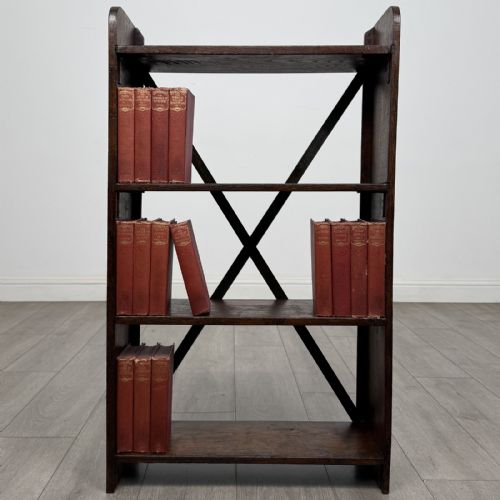
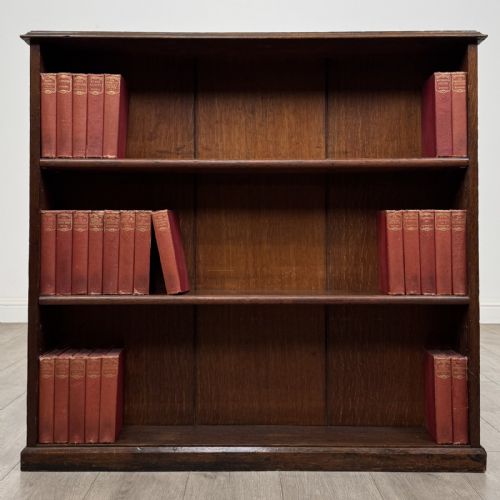
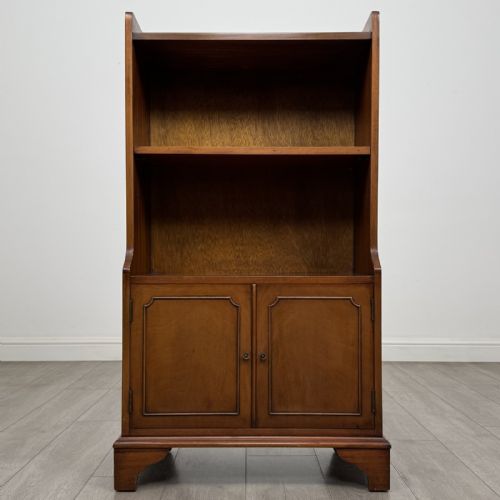
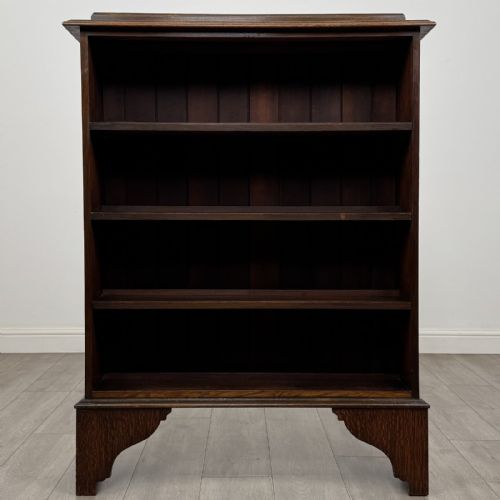
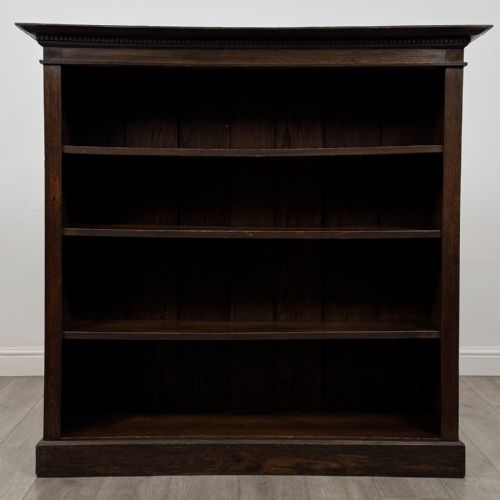
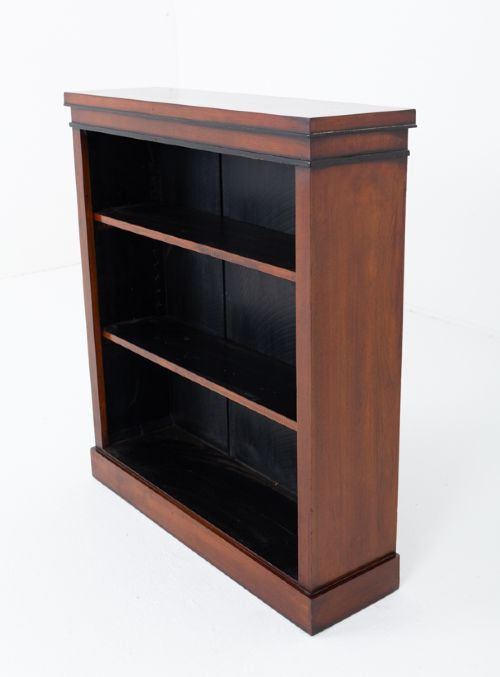
Low open bookshelves provide accessible tier storage for volumes without the visual barrier of doors, appearing primarily in Victorian and Edwardian iterations across this selection. These pieces frequently feature adjustable shelving and raised galleries, adapting easily to domestic room layouts.
Makers constructed these bookcases using durable timbers such as oak, mahogany, and walnut, often shaping them in revival or Arts and Crafts styles. Buyers encounter compact small formats alongside larger library proportions designed to fit beneath windows or along living room walls.
The layout of these open bookcases allows for immediate visibility of book spines and displayed objects. Their low stature preserves wall space above for artwork or mirrors while keeping heavy volumes within comfortable reach.
Quality and craftsmanship
The standard of a low open bookshelf rests upon the selection of timber grain and the precision of its architectural mouldings, such as dentil cornices or carved galleries. Finer examples display harmonious proportions and careful timber matching across visible panels and shelves.
Structural refinement distinguishes superior pieces, notably in the smooth operation of adjustable shelving mechanisms and the rigidity of back panels. Lower quality pieces rely on simpler joints and unfigured secondary woods, lacking the crispness of carved details found on better workshops.
Low Open Bookshelves Retail Price Guide 2026
Typical asking prices for low open bookshelves among the pieces listed under this phrase on Sellingantiques today, from the lower quarter to the upper quarter. They describe what is for sale here now, not the wider market.
Materials documented across the available inventory include burr walnut, rosewood, brass, and painted metal accents.
The Low Open Bookshelves Glossary
- Raised gallery
- A low decorative railing or rim fitted to the top surface of a piece to prevent items from sliding off. This feature often appears on Edwardian and Victorian examples.
- Adjustable shelves
- Shelves resting on movable supports that allow the user to alter vertical spacing between tiers. This system accommodates books of varying heights.
- Dentil cornice
- An ornamental horizontal projection near the top edge composed of small rectangular blocks resembling teeth. It adds classical architectural detail to the upper frame.
- Burr walnut
- Timber harvested from walnut tree growths that produces intricate, swirling grain patterns. Cabinet makers utilised this veneer on prominent exterior surfaces for visual impact.
- Cross back
- Structural iron or metal bracing arranged in an X shape across the open rear of a bookcase. It provides lateral stability without enclosing the storage space.
Low Open Bookshelves: Frequently Asked Questions
What rooms suit low open bookshelves?
These low pieces fit comfortably beneath windows or along living room walls where tall cabinetry would block light or overwhelm the floor space. Their shallow depth preserves room movement while keeping everyday reading material close at hand.
They also serve well in studies, bedrooms, and hallways for displaying books and decorative objects. Because the shelving remains open, items are instantly visible and accessible from a seated position.
How do I adjust the shelves?
Most period examples utilise traditional wooden track systems, metal shelf pins, or adjustable slots cut into the interior sides. You simply lift the shelf slightly to dislodge it from the supports and relocate the pins to a different height.
This flexibility allows you to house both large art folios and standard novels within the same cabinet frame. Ensure the shelf rests evenly on all four supports to maintain stability under heavy book loads.
Are these bookcases suitable for heavy books?
Solid hardwood carcasses made from oak or mahogany provide strong support for dense rows of volumes. Thick timber shelves resist sagging over time, particularly when reinforced by sturdy upright partitions.
When loading a bookcase, place heavier reference books on the lower tiers to maintain a stable centre of gravity. Adjustable oak and mahogany shelves handle substantial weight far better than thin softwood alternatives.
How do I distinguish Victorian from Edwardian pieces?
Victorian examples generally feature heavier proportions, darker finishes, and deeper carving influenced by Gothic or traditional revival styles. Walnut and dark oak predominate in mid to late nineteenth-century pieces.
Edwardian bookcases tend to display lighter oak construction, simpler linear forms, and occasional inlaid woodwork or raised galleries. They reflect a shift towards brighter, more compact domestic furniture designs.