

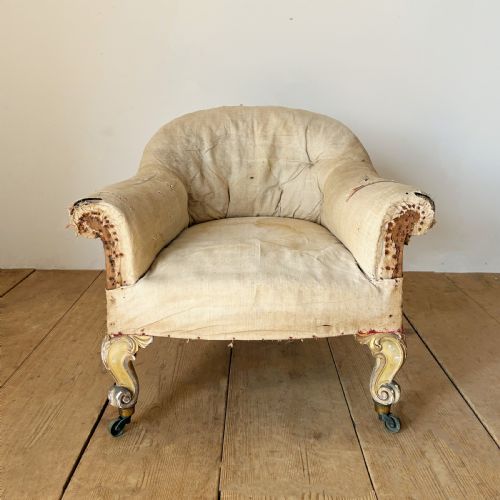


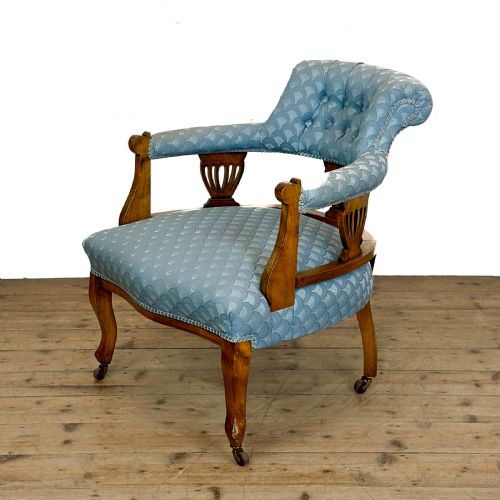


Low Occasional Chair
A low occasional chair sits comfortably in smaller rooms and dressing spaces, offering a compact, relaxed seat that brings period character without overwhelming the floor plan.
Low Occasional Chair
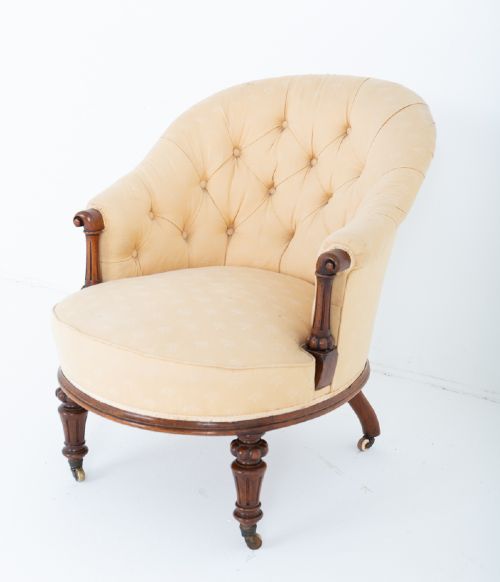
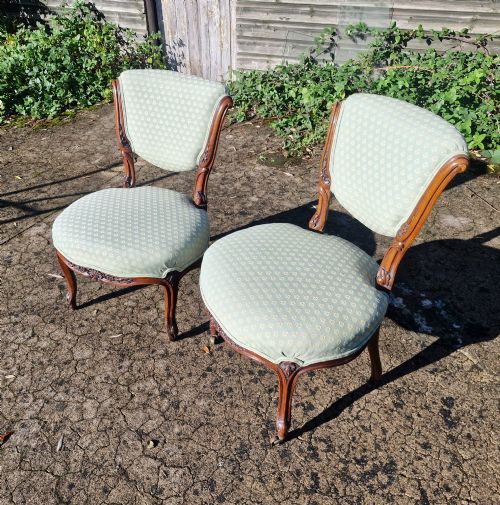
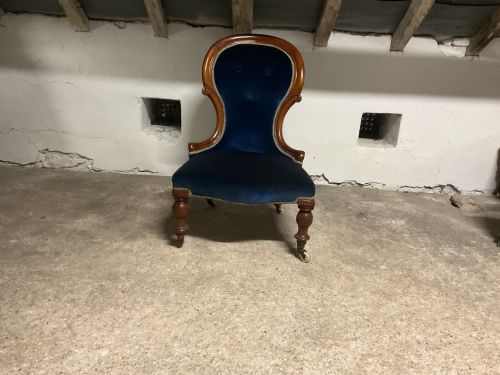
A low occasional chair encompasses a variety of compact seating forms designed for bedrooms, dressing rooms and salons, including nursing chairs, slipper chairs and gossip chairs. When searching for a low occasional chair, buyers frequently encounter Victorian and Edwardian examples shaped with lower seats intended for comfortable dressing or tending to fires.
The selection ranges from mid-nineteenth century walnut frames to inlaid mahogany Edwardian pieces and sturdy oak constructions. These versatile seats appear in diverse regional and decorative manifestations, spanning Scottish vernacular pieces, Arts and Crafts designs, and Anglo-Indian hardwoods.
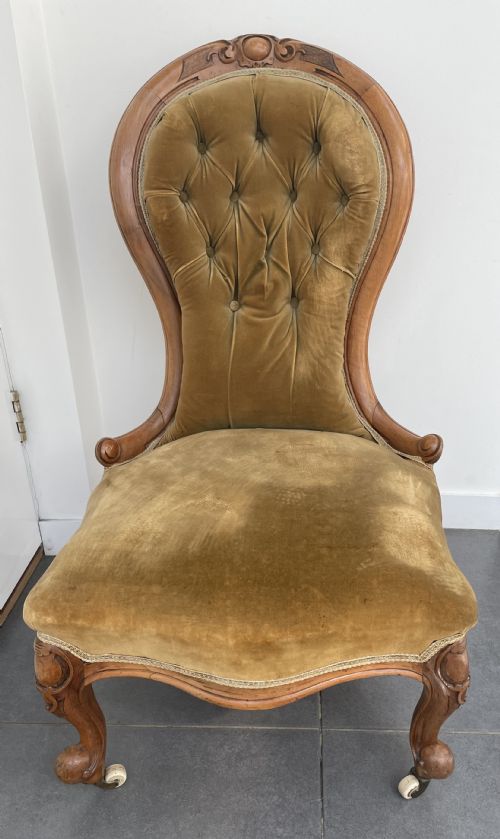
Lower profiles and upholstered seats define the group, often featuring button backs, exposed wooden frames, and original fabrics or later velvet upholstery. They serve as functional accent pieces that fit readily into alcoves or beside bedroom dressing tables.
Materials and construction methods
Frames are principally constructed from hardwoods such as mahogany, walnut and oak, occasionally finished with ebonised surfaces or decorative gilding. Cabinetmakers shaped these timbers into curved backs, cabriole or turned legs, and occasionally incorporated brass details or subtle wood inlay.
Upholstery forms a core part of the construction, utilising sprung or stuffed interiors beneath fabrics like cotton, patterned tapestry and vibrant velvet. Many pieces retain button-backed padding or rely on exposed wooden frameworks that display the grain of the walnut or mahogany.
Low Occasional Chair Retail Price Guide 2026
Typical asking prices for low occasional chair among the pieces listed under this phrase on Sellingantiques today, from the lower quarter to the upper quarter. They describe what is for sale here now, not the wider market.
Listings feature walnut, mahogany, and oak frames across Victorian and Edwardian periods, alongside diverse upholstery choices like velvet and patterned tapestry.
Distinguishing quality in period seating
Quality rests in the integrity of the timber frame, the crispness of any carved detailing or inlay, and the structural stability of the joints. Finer examples display carefully selected wood grains, well-executed turnings and harmonious proportions that retain their original strength.
The standard of upholstery and the survival of original textiles or traditional stuffing methods also mark out the better pieces. Chairs that preserve their maker's structural framing without excessive timber replacement or clumsy past repairs stand higher in merit.
The Low Occasional Chair Glossary
- Nursing chair
- A low-seated chair traditionally used in bedrooms for nursing infants or for general dressing. These pieces usually feature a compact footprint and supportive padded back.
- Slipper chair
- An upholstered chair with very short legs designed to sit low to the ground. They originated in dressing rooms to assist with putting on shoes and slippers.
- Gossip chair
- An asymmetric or facing seat form intended for casual conversation. Examples often feature integrated small tables or distinctive paired seating arrangements.
- Button back
- An upholstery technique where buttons are pulled deep into the padding to create a diamond pattern. This method secures the internal stuffing while adding tailored visual texture.
- Salon chair
- A light, decorative occasional chair made for entertaining guests in a reception room. They prioritize elegant frames and refined upholstery over heavy comfort.
Low Occasional Chair: Frequently Asked Questions
Where should I place a low occasional chair?
These compact seats fit naturally into bedrooms, dressing rooms, and corners of living spaces where larger armchairs would crowd the layout. Their low height makes them useful as accent pieces near windows or beside dressing tables.
Because they occupy minimal floor space, they also work well in narrow hallways or landings, adding a decorative period touch without blocking pathways.
How do I distinguish between Victorian and Edwardian examples?
Victorian chairs often feature heavier walnut or mahogany frames, darker finishes, and deep button-backed upholstery. Carvings tend to be robust and ornate, reflecting mid to late nineteenth-century tastes.
Edwardian pieces generally present lighter mahogany frames, sometimes decorated with delicate wood inlay or satinwood stringing. The overall aesthetic leans toward airier proportions and brighter decorative schemes.
Can I use these chairs for everyday seating?
Most of these chairs were built for specific domestic tasks rather than lounging for hours. Their shorter seats and upright backs suit reading, conversation, or occasional resting.
If the internal webbing and padding remain firm, they handle daily use well, though fragile antique frames benefit from mindful placement away from heavy traffic.
What is a gossip chair?
A gossip chair is an unusual form designed for relaxed conversation, sometimes featuring an integrated shelf or an adjoining seat configuration. They emerged in various vernacular styles around the turn of the twentieth century.
Their distinctive silhouettes make them engaging focal points in a room, offering both a usable seat and a conversation piece for collectors.