
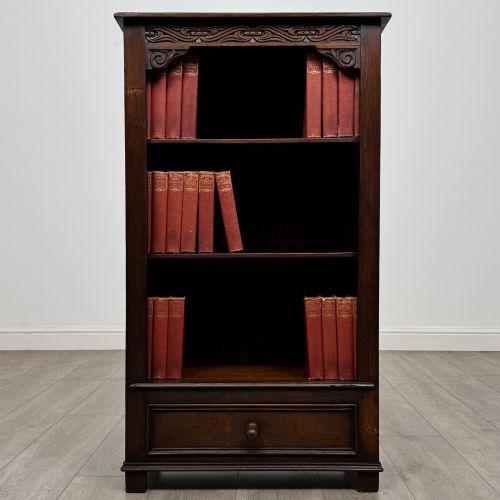


Low Oak Storage Unit
A low oak storage unit brings practical utility to a room without crowding the walls, offering solid construction in durable timber.
Low Oak Storage Unit
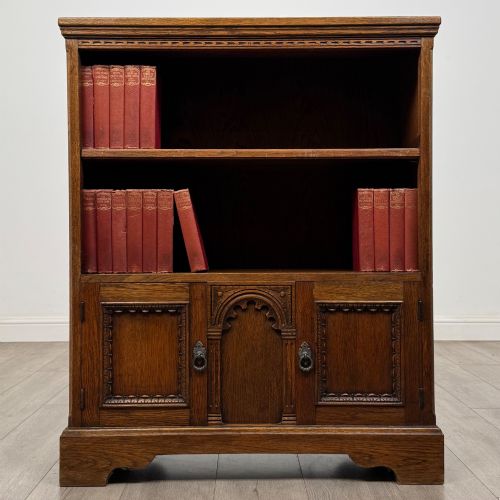
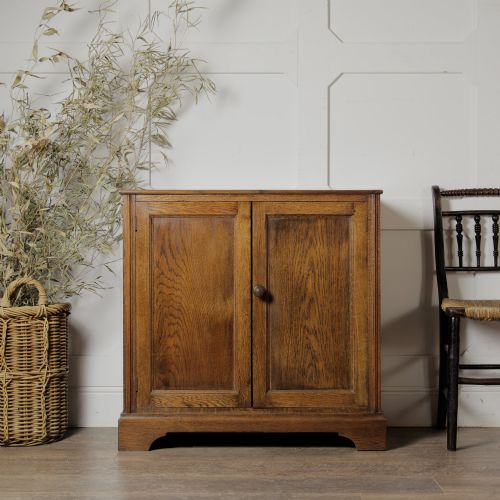
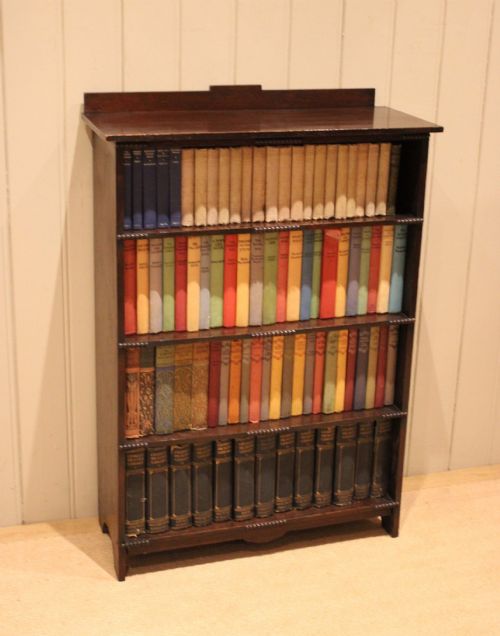
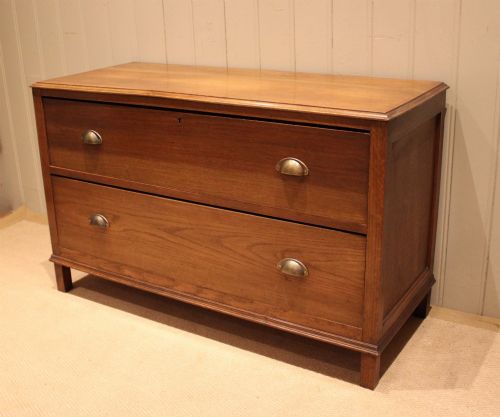
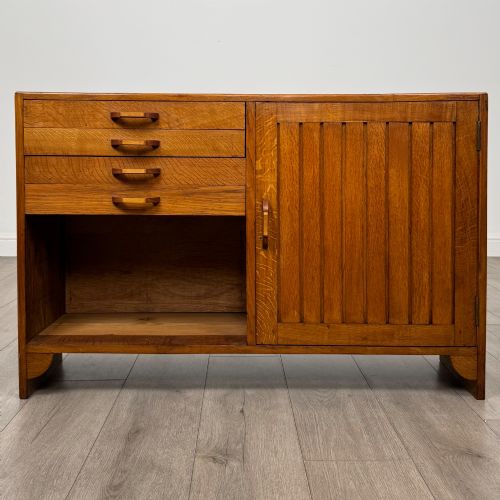
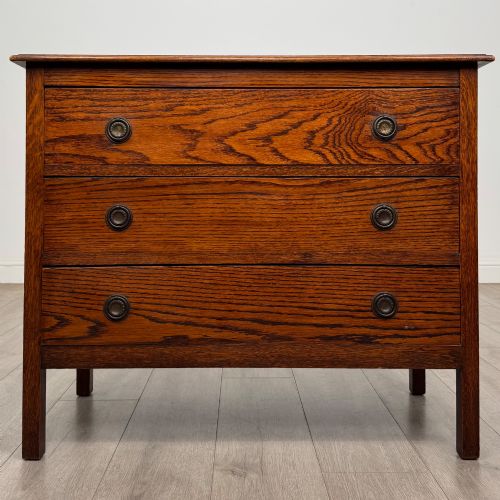
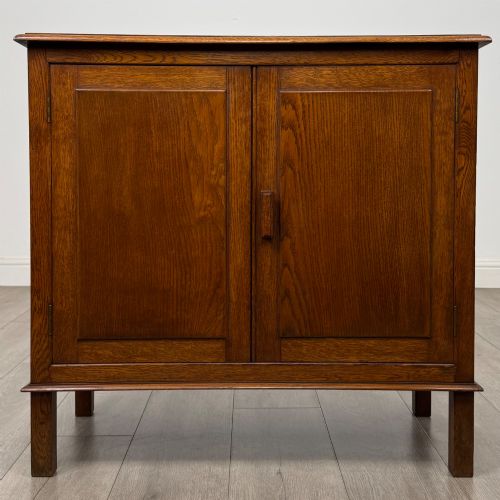
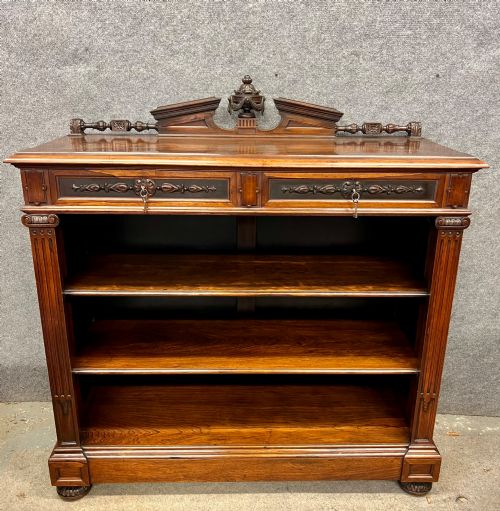
When you search for a low oak storage unit, you encounter pieces spanning the Edwardian period, the 1920s, the 1930s, and the 19th century. These items take several functional forms, primarily small open bookcases, chests of drawers, cupboards and cabinets, and small sideboards.
The most common examples on this page date from the Edwardian era and the 1920s, constructed in oak or dark oak. Styles range from English Country and Edwardian to Jacobean Revival, Tudor Revival, and Art Deco, reflecting diverse domestic needs across multiple decades.
How they were made
Makers utilised solid oak, golden oak, and dark oak timber to build these low units, occasionally combining wood with brass and metal hardware. Construction relied on durable woodworking techniques suited to heavy domestic use.
Surface details include beaded edges on bookcases and fitted interiors within cupboards, demonstrating straightforward cabinet-making methods applied to practical household furniture.
Even a modest oak bookcase can carry the phantom weight of a century's worth of forgotten novels.
What varies in quality
The standard of timber selection and finish distinguishes one piece from another, with particular attention paid to the grain and colour of the oak. Solid construction throughout separates superior examples from those with lesser secondary woods.
The integration of period hardware, such as brass fittings, and the crispness of revival stylistic details like Tudor or Jacobean carving influence the overall character and integrity of the item.
The Low Oak Storage Unit Glossary
- Oak
- A hard, durable timber native to temperate regions, widely used for domestic furniture due to its strength and distinct grain pattern. It forms the primary material for the pieces listed here.
- Edwardian
- A stylistic period spanning the reign of King Edward VII, characterised by lighter proportions and revivals of earlier furniture styles. Pieces from this era often feature simpler lines than their Victorian predecessors.
- Jacobean Revival
- A style popular in the 19th and early 20th centuries that imitates the heavier, carved oak furniture of the 17th century. It frequently appears on storage units and cupboards from the 1920s and 1930s.
- Beaded edge
- A narrow, rounded moulding applied to the edge of a shelf or panel to soften the corner and add decorative detail. This feature appears on specific bookcases within the collection.
Low Oak Storage Unit: Frequently Asked Questions
What periods do these low oak units come from?
The pieces span the 19th century, the Edwardian era, the 1910s, the 1920s, and the 1930s. Styles range from plain English Country forms to decorative Tudor and Jacobean revivals.
This broad chronological spread means you will find both simple utilitarian items and more ornate revival pieces built in solid oak.
How were these storage units used originally?
They served multiple domestic purposes, acting as small bookcases for personal libraries, chests of drawers for clothing, and low cupboards or sideboards for dining rooms and parlours. Their low profile allowed them to sit beneath windows or against walls without blocking light.
Their compact size made them adaptable for storing household goods in varied rooms throughout the house.
Are these units made of solid oak?
The listings feature solid oak, light oak, golden oak, and dark oak construction, sometimes accented with brass and metal hardware. The timber provides the structural integrity and durability expected of traditional storage furniture.
Different treatments and finishes, from natural golden tones to dark stains, define the appearance of each piece.
How do I identify a Tudor Revival piece?
Tudor Revival items, often made around 1930, borrow decorative vocabulary from 16th-century English architecture and furniture. They utilise solid oak and incorporate stylistic elements associated with the Elizabethan era.
These pieces combine older aesthetic traditions with the proportions required for twentieth-century homes.