






Low Oak Occasional Table
A low oak occasional table brings grounded proportion and honest timber grain to a room, offering a versatile surface for daily use.
Low Oak Occasional Table
A low oak occasional table spans centuries of domestic utility, appearing in forms from 18th century lowboys to 1930s coffee tables.
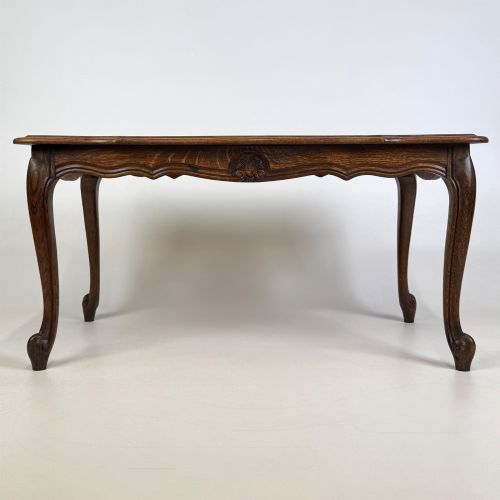
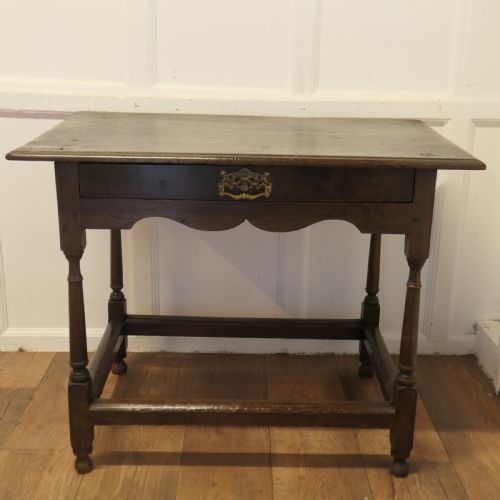
The pieces grouped under low oak occasional table include side tables, lowboys with drawers, and gateleg variants designed for flexible placement.
Origins stretch across English, Welsh, Scottish, and French provincial workshops, alongside later Art Deco interpretations.
How they were made
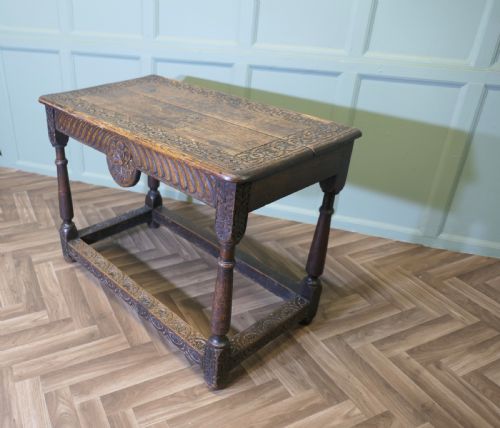
Construction relies primarily on solid oak, frequently paired with secondary timbers like elm, ash, or lacewood, and sometimes finished with oak veneer.
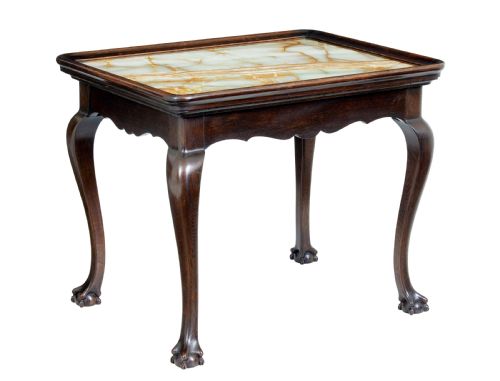
Surface details incorporate turned legs, carved panel motifs, brass drawer pulls, and inset materials such as onyx, rattan, or cane.
Materials recorded across the inventory include solid oak, oak veneer, elm, ash, brass, marble, onyx, rattan, and cane.
What varies in quality
Quality rests in the integrity of the timber selection, such as figured oak grain or cross-banded details, paired with the structural honesty of the joinery.
Proportion dictates the character of each piece, distinguishing purposeful low forms from altered heights.
Heal s·Gillows
The Low Oak Occasional Table Glossary
- Lowboy
- A small table with one or more drawers, typically standing on four legs and originating in the 18th century as a dressing or writing table.
- Gateleg table
- A table with hinged drop leaves supported by swing-out legs that pivot outward to hold the leaves.
- Jacobean Revival
- A later style imitating 17th-century English furniture, characterised by heavy turnings and carved ornamentation.
- Cross-banded
- A border technique where veneer strips are laid perpendicular to the grain of the central surface.
Low Oak Occasional Table: Frequently Asked Questions
How were low oak tables originally used?
These tables served various domestic functions, from writing and side storage in Georgian hallways to holding lamps and serving refreshments in Edwardian rooms.
Their compact proportions allowed them to move easily around the home as daily needs shifted.
How do I date an oak table?
Dating relies on observing construction methods, handle hardware, timber characteristics, and stylistic traits like turned legs or carved decoration.
Earlier pieces often show pegged mortise and tenon joinery while later Edwardian and 1930s examples reflect changing domestic habits.
How do I live with a low oak table?
An oak table suits modern living spaces by anchoring a seating arrangement or serving as a low coffee surface.
Routine care involves dusting and avoiding direct heat sources to preserve the natural finish of the wood.