


Low Footboard Bed
A low footboard bed keeps sightlines open across a bedroom, and these examples combine iron, brass, and oak to suit period interiors.
Low Footboard Bed
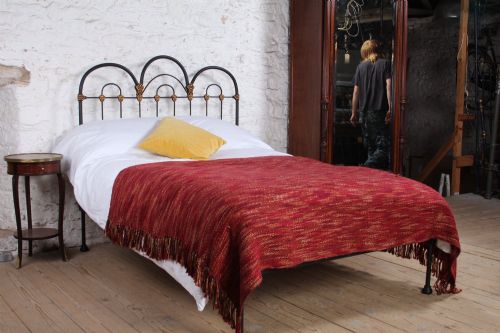
A low footboard bed offers an uninhibited view across the room while retaining the structural framing of a traditional double, king, or super king frame. These pieces appear principally from the Victorian era and the years around nineteen hundred, taking forms that range from simple iron rails to grand upholstered designs.
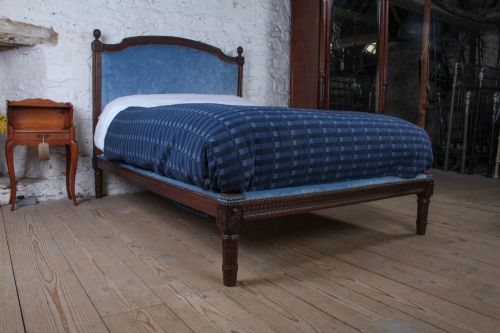
Most items encountered on this page discard the high end entirely, labelled in period terms as no end or low end beds. Alongside iron and brass variants, the selection includes oak frames executed in Louis XVI style and French hospital formats.
Origin details in the evidence point towards Irish workshops and French chateau influences alongside standard Victorian production. Buyers find both double and king sizes configured with straight rails, ribbon reeds, and classical shaping.
Materials and construction
Construction relies heavily on cast iron, forged iron, and brass components joined to form rigid double and king size frames. Metal elements often feature classic shaping and ribbon reed details applied by period metalworkers.
Woodwork utilises oak, frequently paired with fabric or velvet upholstery as seen in Louis XVI style examples. These upholstered panels bring softer textures to the low footboard format.
Listings combine Victorian iron and brass work with oak frames influenced by Louis XVI style and French chateau aesthetics.
Assessing quality and proportion
Quality rests in the precision of the metal shaping and the crispness of any applied brass details on the iron frames. Superior examples display careful detailing along the rails and harmonious proportions across king and super king dimensions.
Upholstered wooden pieces differ in the execution of their framing and the integration of fabric elements. The best items maintain a balance between structural strength and decorative restraint.
The Low Footboard Bed Glossary
- No End Bed
- A bed frame built without a high footboard, leaving the foot entirely open. This design suits smaller rooms and improves sightlines.
- Ribbon Reed
- A decorative moulding or metalwork detail resembling a tied ribbon. It appears frequently on Victorian iron frames.
- Louis XVI Style
- A neoclassical design vocabulary marked by restrained geometry and straight lines. Applied here to oak and upholstered bed frames.
- French Hospital Style
- A utilitarian metal bed frame design adapted for domestic interiors. These typically feature curved iron headboards and low profiles.
Low Footboard Bed: Frequently Asked Questions
What is a low footboard bed?
A low footboard bed is a frame designed without a traditional high barrier at the foot. This keeps the end of the bed visually open.
Such frames appear in iron, brass, and oak, dating predominantly from the Victorian era and the early twentieth century.
How do I choose the right size?
Sizes range from standard doubles to king and super king proportions. Measure your floor space carefully to ensure adequate clearance around the frame.
Consider whether you prefer the visual lightness of iron rails or the substantial presence of an upholstered wooden headboard.
Are these beds suitable for modern mattresses?
Most period frames accommodate standard modern mattress dimensions. Check the internal rail measurements of the specific piece before purchasing.
Platform formats and straight rail configurations provide stable modern support while retaining period character.
How do I care for iron and brass frames?
Metal frames require dusting with a soft cloth and gentle cleaning to preserve the finish. Avoid abrasive agents that might damage brass components or iron coatings.
Regularly check and tighten bolt connections to maintain structural rigidity over time.