







Low Coffee Table Ottoman
These low coffee table ottoman pieces combine seating and surface utility, offering a sturdy yet approachable centrepiece for traditional rooms.
Low Coffee Table Ottoman
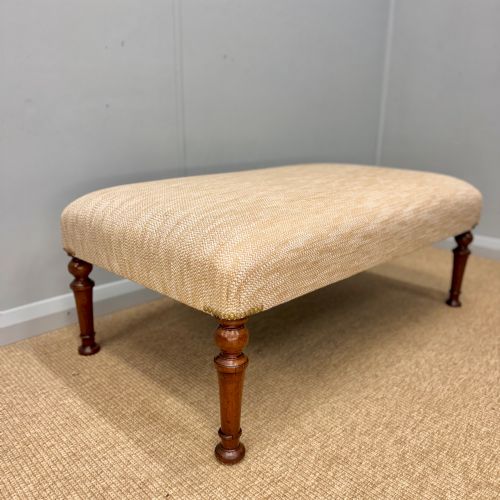
When buyers search for a low coffee table ottoman, they encounter a diverse selection of antique footstools, centre stools, and occasional tables that double as low surfaces. The pieces listed span periods from the Georgian era through the nineteenth century and up to the 1930s.
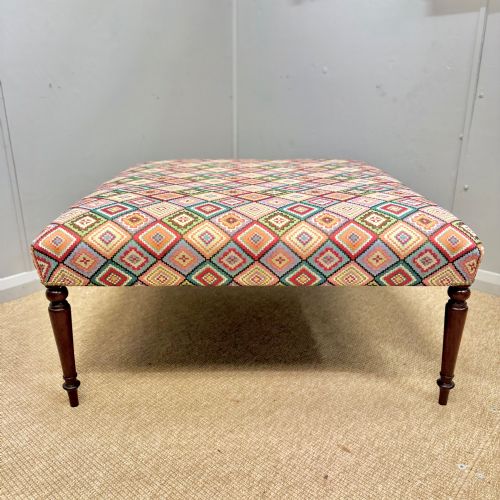
The versions most commonly met on this page include large country house ottomans and upholstered footstools, alongside items adapted for dual use as tables. Formats range from square mahogany frames and carved rosewood centre stools to pine boxes and drum tables.
Origins and styling vary widely, taking in traditional English designs, Regency style, French nineteenth-century pieces, and Anglo-Indian craftsmanship. Buyers also find items upholstered in modern or period-appropriate textiles such as chenille, leather, and tapestry.
Materials and construction
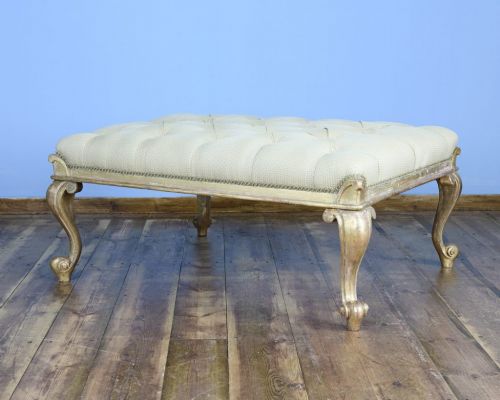
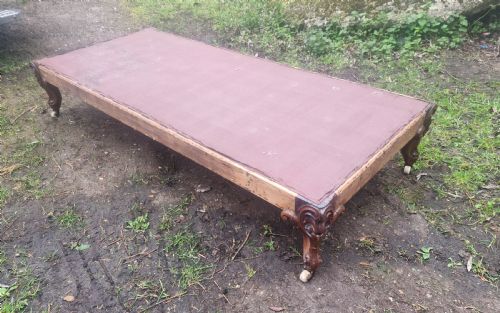
Makers utilised a variety of solid timbers including mahogany, walnut, rosewood, and pine for the foundational frames and legs. Detail work involved parcel gilding on grand scale pieces and carved ornamentation on Victorian frames.
Upholstery materials recorded in the evidence include hand-dyed buttoned leather, wool tapestry, zebra hide, and chenille fabrics. Caned tops also appear on square mahogany tables or stools, demonstrating different techniques for upper surfaces.
Low Coffee Table Ottoman Retail Price Guide 2026
Typical asking prices for low coffee table ottoman among the pieces listed under this phrase on Sellingantiques today, from the lower quarter to the upper quarter. They describe what is for sale here now, not the wider market.
Listings feature items spanning the Georgian era, the nineteenth century, and up to 1930, utilising brass, mahogany, leather, and zebra hide.
Assessing quality and craftsmanship
The distinction between standard examples and finer items rests upon the timber selection, the crispness of any carved woodwork, and the structural integrity of the frame. Robust mahogany and walnut support heavy daily use better than softer pine bases.
Upholstery execution and the choice of covering material dictate the visual appeal and finished weight of each piece. Hand-dyed buttoned leather and wool tapestry require skilled labour compared to simpler fabric coverings.
The Low Coffee Table Ottoman Glossary
- Centre stool
- A large freestanding stool designed to sit in the middle of a room rather than against a wall.
- Parcel gilt
- Woodwork decorated with partial applications of gold leaf to accentuate carved details and mouldings.
- Caned top
- A seating or surface panel woven from split rattan or cane material in a patterned mesh.
- Chenille
- A fuzzy, piled fabric often utilised for soft upholstery and decorative furnishings.
- Anglo-Indian
- A descriptive term for items produced in the Indian subcontinent under British rule, combining local timbers and carving styles with European furniture forms.
Low Coffee Table Ottoman: Frequently Asked Questions
What is a low coffee table ottoman?
A low coffee table ottoman is a versatile piece of antique furniture, typically originating as a footstool, centre stool, or low box, that functions as both a seating element and a coffee table surface.
These pieces provide a solid, low profile in a room, making them suitable for holding books and trays while offering casual seating or foot support.
How were these ottomans used historically?
Historically, large footstools and centre stools served various domestic purposes in country houses and formal drawing rooms, often positioned near seating groups for resting feet or accommodating extra guests.
Over time, many of these sturdy low forms have transitioned naturally into use as coffee tables within modern living spaces.
How do I live with a fabric or leather ottoman?
Living with these pieces involves balancing daily utility with the preservation of antique materials like leather, chenille, or tapestry.
Using trays on the surface helps protect delicate upholstery or polished wood from spills while maintaining the practical benefits of a low table.
How do I identify nineteenth-century styles?
Nineteenth-century styles are identified through characteristic details such as heavy rosewood or mahogany frames, carved ornamentation, and traditional upholstery methods like buttoning.
Comparing the specific wood types and decorative motifs against known historical periods helps clarify the era of manufacture.