

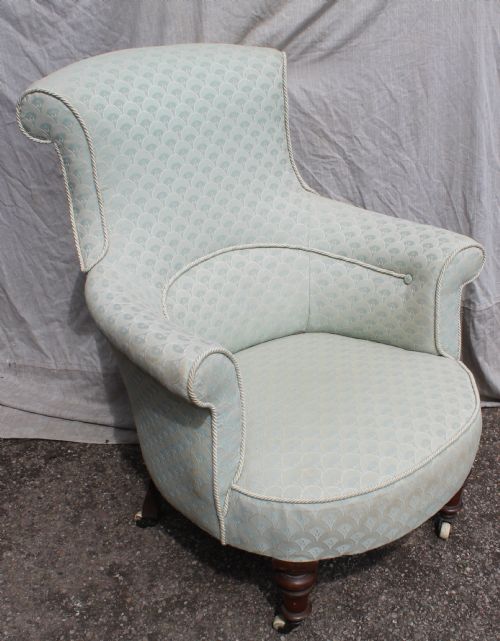

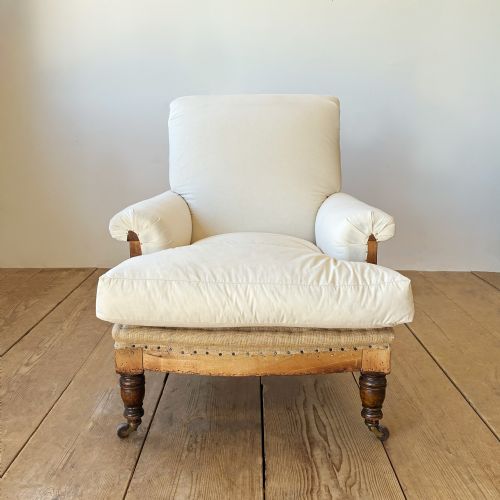


Low Arm Reading Chair
A low arm reading chair offers deep-seated comfort paired with a compact frame, designed for hours of focused study or quiet contemplation.
Low Arm Reading Chair
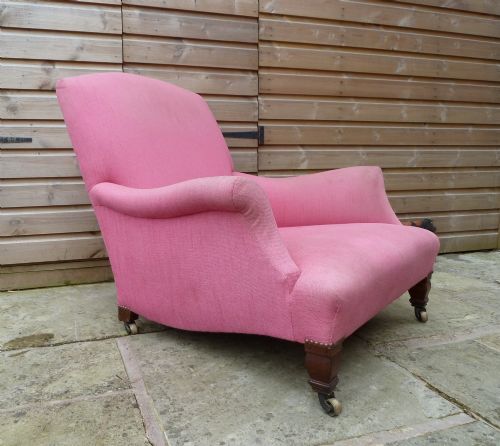
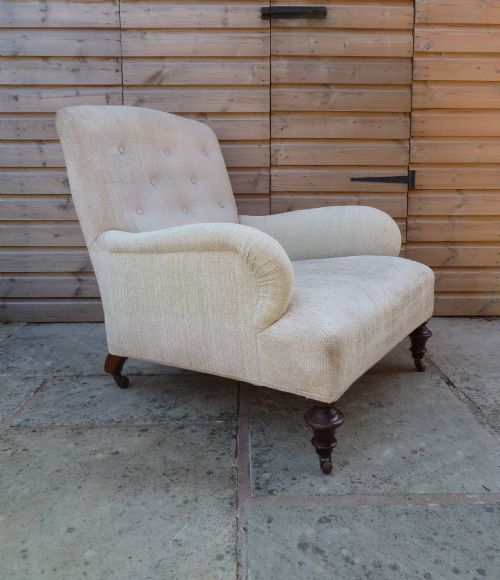
A low arm reading chair is primarily an upholstered armchair designed for comfort, featuring low arms that allow the sitter to move freely. When you search for a low arm reading chair, you encounter sturdy pieces built for long hours of sitting in country houses and libraries.
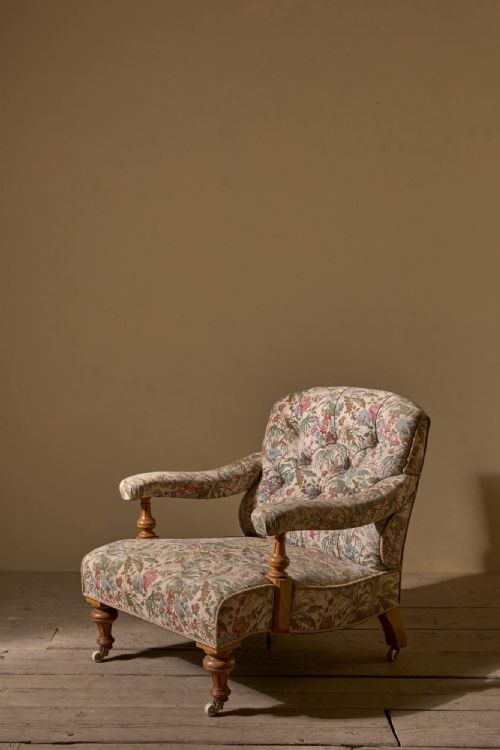
The examples gathered here span the nineteenth century, the Victorian era, and the Edwardian period, with occasional twentieth-century interpretations. These chairs often appear in walnut or mahogany frames, padded generously and finished in velvet, fabric, or kilim upholstery.
Makers and styles reflected in these pieces lean heavily towards English country house aesthetics, alongside specific iconic forms. Pieces carrying the Howard and Sons or Bridgewater style dominate the selection, bringing characteristic low profiles and deep seats.
How They Were Made
The construction of a traditional reading chair relies upon solid timber frames fashioned from hardwoods such as walnut and mahogany, providing a rigid structural foundation beneath the upholstery. Metal components like brass castor fittings often support the legs, ensuring mobility across floor coverings.
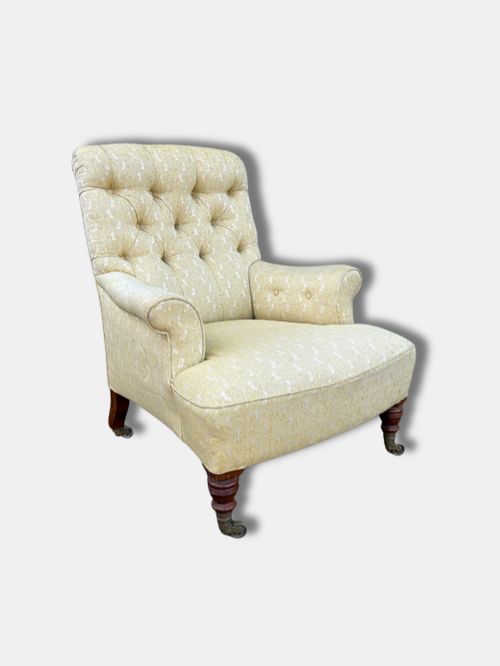
Upholstery techniques dictate the character of the seating, employing heavy fabrics including velvet and textured textiles stretched over deep padding. Button-backed detailing and kilim coverings appear on select pieces, demanding precise hand-stitching and traditional stuffing methods.
Low Arm Reading Chair Retail Price Guide 2026
Typical asking prices for low arm reading chair among the pieces listed under this phrase on Sellingantiques today, from the lower quarter to the upper quarter. They describe what is for sale here now, not the wider market.
Listings feature pieces spanning the nineteenth and twentieth centuries, predominantly utilising mahogany, walnut, velvet, and brass.
What Varies in Quality
The distinction between ordinary and exceptional chairs lies in the integrity of the underlying timber frame and the precision of the joinery. Superior examples maintain firm structural rigidity without wobble, whilst lesser pieces suffer from looseness accumulated over decades of heavy use.
Upholstery work separates standard production from the finest examples, where hand-tied springs and premium fabric choices retain their resilience and appearance. Maker attribution, particularly to notable firms, elevates a piece through superior proportions and refined detailing.
Howard and Sons·Hampton and Sons·Gillows
The Low Arm Reading Chair Glossary
- Howard Style
- A form of upholstered armchair known for deep seating, low arms, and generous padding, popularized by a renowned nineteenth-century London firm. These chairs prioritize supreme lounging comfort over rigid formal posture.
- Bridgewater Style
- A comfortable armchair design featuring low, soft arms and deep cushioning, often associated with relaxed country house interiors. This style provides a casual silhouette suitable for daily reading and resting.
- Library Chair
- A sturdy seating form historically placed in studies or libraries, frequently constructed from walnut or mahogany with upholstered seats and backs. They are built to withstand long periods of scholarly use.
- Kilim Upholstery
- The application of flat-woven tribal carpets as the primary fabric covering for upholstered furniture. This textile choice adds geometric patterns and robust texture to Victorian and Edwardian frames.
- Button Back
- An upholstery technique where buttons are pulled deep into the padding to create a uniform pattern of tufts. This method secures the internal stuffing while adding decorative depth to the chair back.
Low Arm Reading Chair: Frequently Asked Questions
What is a low arm reading chair?
A low arm reading chair is a deep-seated upholstered armchair featuring low arms designed to provide comfort while reading or resting.
These chairs combine sturdy hardwood frames with generous padding, making them suitable for studies, libraries, and sitting rooms.
How do I date a Victorian reading chair?
Dating a Victorian reading chair involves examining the primary timber, the style of the legs, and the upholstery techniques used underneath. Walnut and mahogany frames paired with specific button-back or sprung constructions offer clues to the exact decade of manufacture.
Archival records, maker stamps on castors, and stylistic markers like Bridgewater or Howard influences further narrow down the production period between eighteen fifty and nineteen hundred.
Where should I place a reading chair?
A reading chair belongs in a quiet corner, a home library, or beside a fireside where ample natural or lamp light supports prolonged reading. Its compact footprint and low arms also allow it to sit comfortably in a bedroom or drawing room without dominating the floor space.
Pairing the chair with a small side table for books creates a functional and inviting reading station.
What materials are used in these chairs?
These chairs are built using solid timber frames of mahogany, walnut, and other hardwoods, providing a strong internal skeleton. Brass fittings, such as castors, often finish the feet for ease of movement.
The exterior surfaces feature textiles ranging from plush velvet and woven fabric to decorative kilim carpets, stuffed with traditional padding materials.