

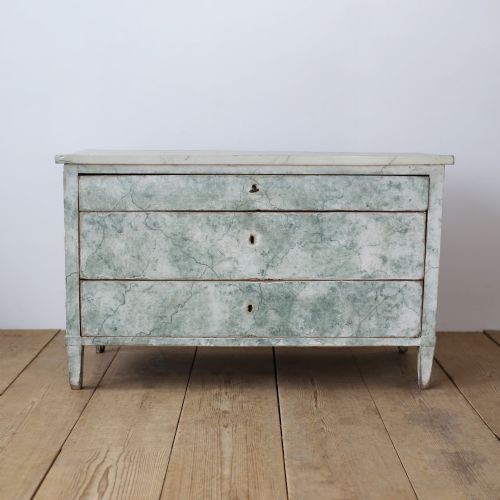
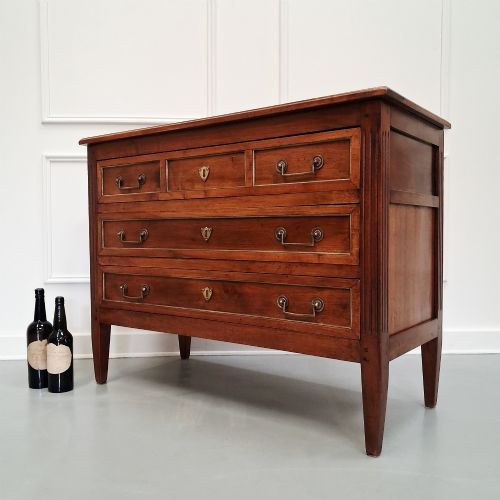
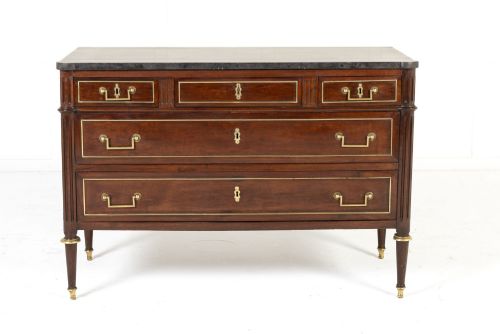
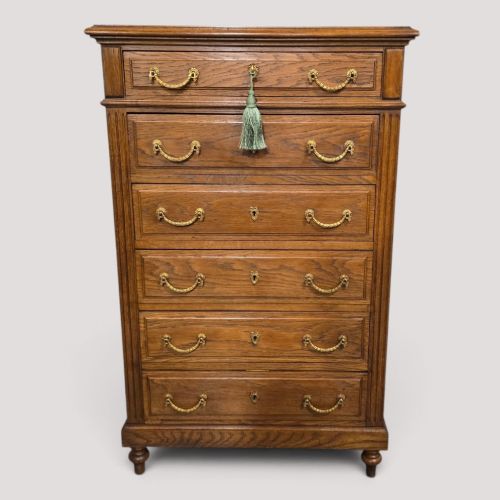
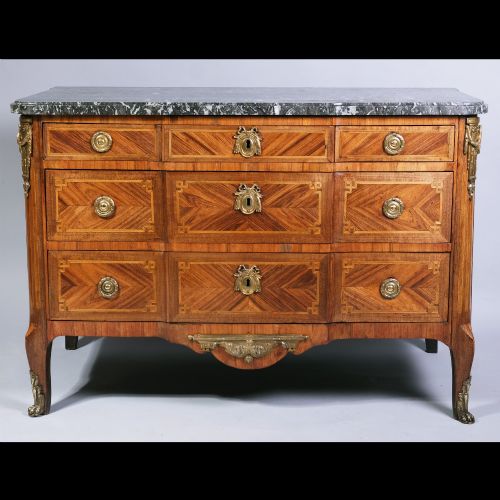


Louis XVI Provincial Commode
A louis xvi provincial commode brings structural restraint and warmth to a room, trading court excess for honest regional craftsmanship.
Louis XVI Provincial Commode
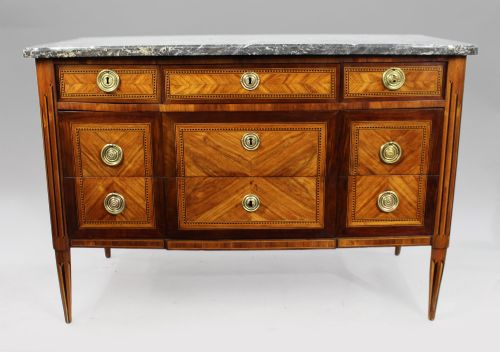
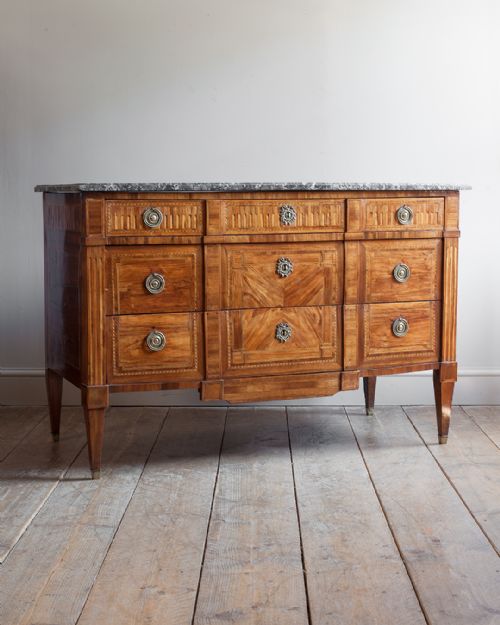
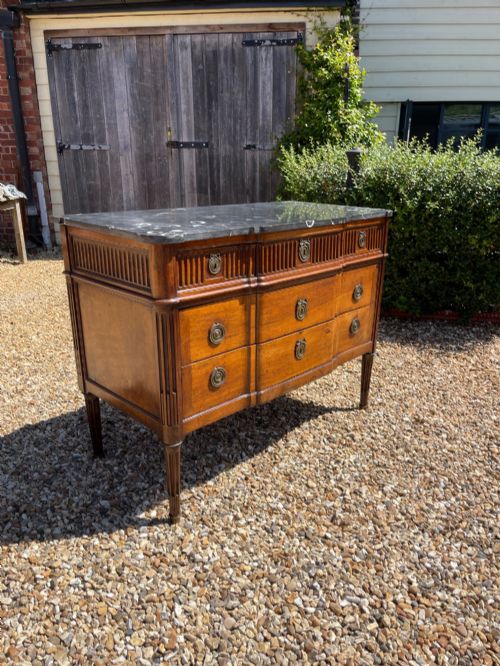
A louis xvi provincial commode is a low storage chest defined by straight lines, fluted pilasters and neoclassical symmetry, shaped by regional French cabinetmakers working outside Paris. These pieces bridge the gap between grand metropolitan taste and local traditions of the eighteenth, nineteenth and early twentieth centuries.
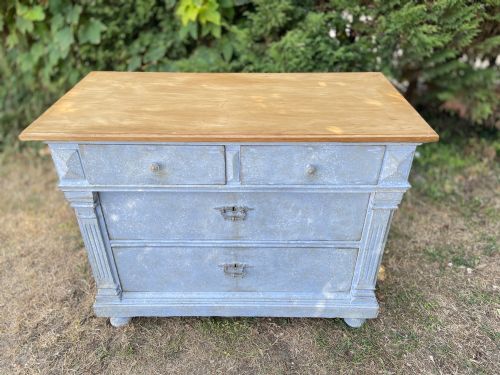
Most examples encountered here appear in walnut, oak, cherrywood or painted finishes, frequently topped with marble. Forms range from straight-front chests of drawers to demi-lune bedside tables and breakfront commodes.
Makers adapted royal aesthetics for provincial houses, resulting in commodes that are practical storage units as well as architectural statements.
Materials and construction
Local timbers such as walnut, oak and cherrywood form the solid carcases, while decorative pieces incorporate kingwood, tulipwood and parquetry veneers arranged in geometric patterns. Cabinetmakers joined these woods using traditional dovetail construction for the drawers and pegged mortise and tenon joints for the frames.
Mounts and handles cast in brass or ormolu accent the corners and keyholes, aligning with the neoclassical taste of the period. Marble tops, often fitted with bevelled edges, provide a durable and cool surface above the timber drawers.
Louis XVI Provincial Commode Retail Price Guide 2026
Typical asking prices for louis xvi provincial commode among the pieces listed under this phrase on Sellingantiques today, from the lower quarter to the upper quarter. They describe what is for sale here now, not the wider market.
Some nineteenth-century makers borrowed royal names so enthusiastically that even bedside night stands dress up like miniature chateaus.
Elements of quality
Quality rests in the harmony of proportions, the selection of timber grain and the crispness of any parquetry or marquetry work. A finer piece displays tight joinery, substantial timber thickness in the drawer linings and harmonious integration of brass or ormolu mounts.
Surface treatments also divide the tiers, whether through the depth of a polished walnut patina or the careful application and ageing of historic paint. The presence of an original marble top adds significantly to the integrity of the piece.
Joseph Zwiener
The Louis XVI Provincial Commode Glossary
- Parquetry
- Geometric wood inlay forming patterned surfaces such as chequers or lozenges. It showcases the precision of the cabinetmaker.
- Demi-lune
- Half-moon shape used for console tables and commodes designed to sit flush against a wall. This silhouette softens room layouts.
- Ormolu
- Gilt-bronze mounts applied to furniture for decorative contrast. These elements catch the light and punctuate the timber surfaces.
- Pilaster
- A rectangular column projecting slightly from a wall or cabinet side, often fluted in the neoclassical manner. It gives architectural structure to the piece.
- Breakfront
- A piece of furniture whose central section projects forward from the flanking sides. This adds depth and visual rhythm to the elevation.
Louis XVI Provincial Commode: Frequently Asked Questions
What is a louis xvi provincial commode?
A louis xvi provincial commode is a drawer-based storage cabinet built in the regions of France during the eighteenth century and subsequent revival periods. It adopts classical symmetry and straight lines rather than the sweeping curves of earlier baroque styles.
These pieces served primarily in bedrooms and salons for holding linens and personal items, combining utility with refined neoclassical decoration.
How do I distinguish eighteenth-century from later revival pieces?
Eighteenth-century pieces display authentic hand-cut joinery, period timber oxidation and structural wear consistent with long use. Revival pieces from the nineteenth and twentieth centuries often utilise machine-sawn elements or carry stylistic interpretations typical of later workshop practices.
Examining drawer linings, timber species and fastener types helps clarify the actual period of manufacture.
Are marble tops original to these commodes?
Many commodes were constructed to receive marble slabs, which provided a clean and heavy surface above the wooden drawers. Original marble tops match the exact footprint of the carcase and show appropriate edge profiles and subsurface weathering.
Replacements can sometimes be identified by cleaner cut lines or stone types inconsistent with the timber era.
How should I care for a walnut or oak commode?
Protect the timber from direct sunlight and rapid humidity changes to prevent shrinkage and splitting in the panels. Regular dusting with a dry cloth maintains the finish without building up heavy wax residues.
Treat marble tops with care, avoiding acidic spills that can etch the polished stone surface.