
Louis XVI Chest
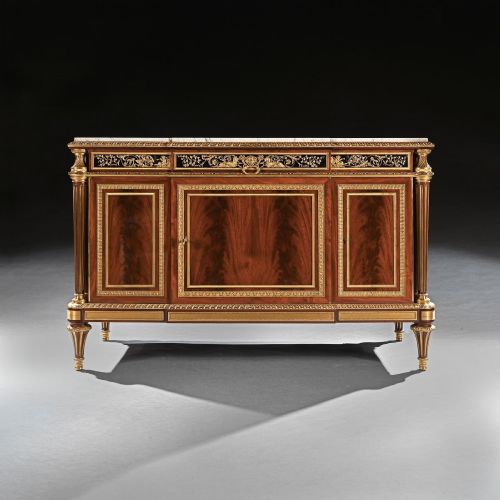
A louis xvi chest brings orderly neoclassical proportion and fine French cabinet-making into a room, offering structured storage beneath a cool stone surface.
Louis XVI Chest
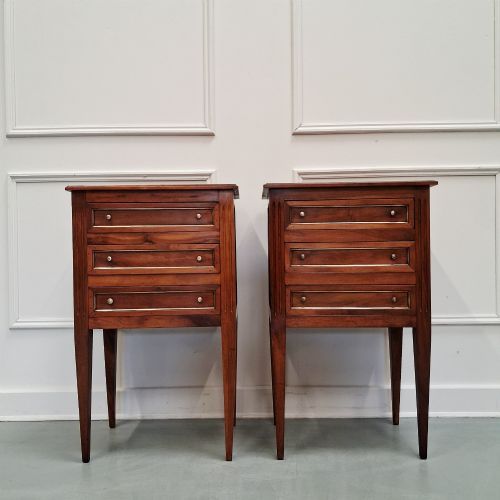
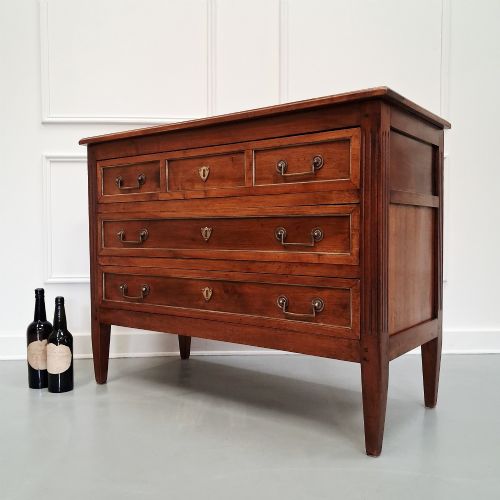
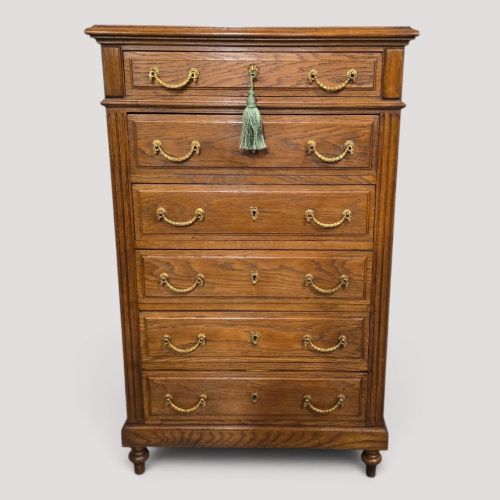
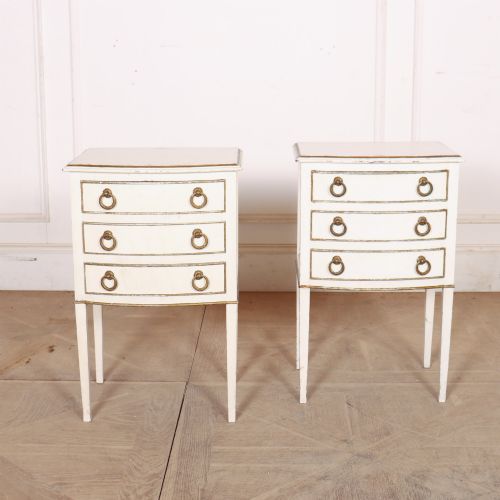
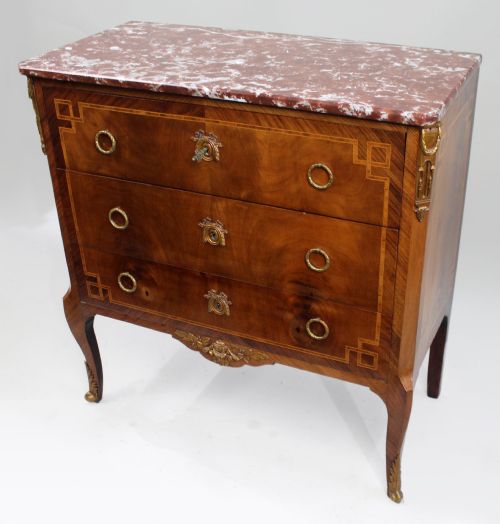
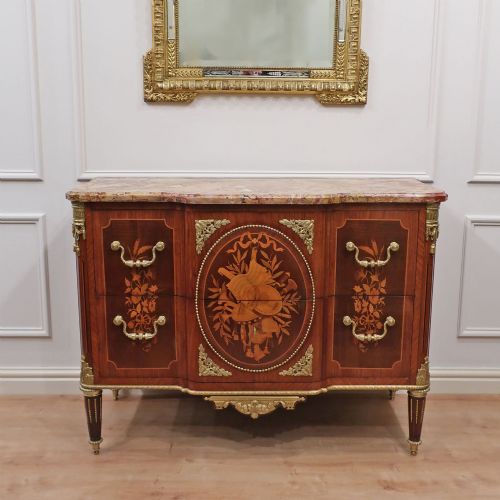
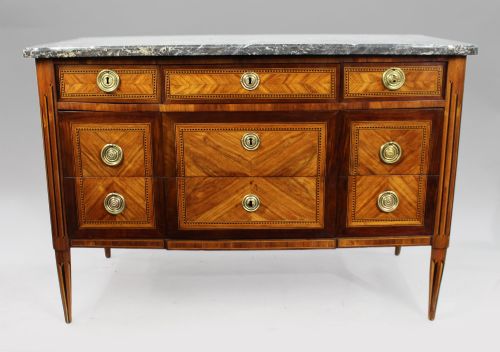
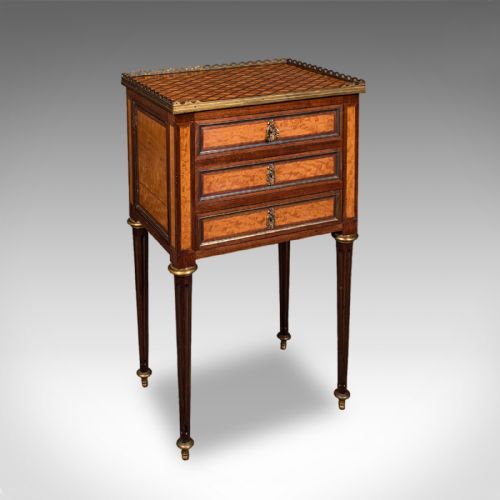
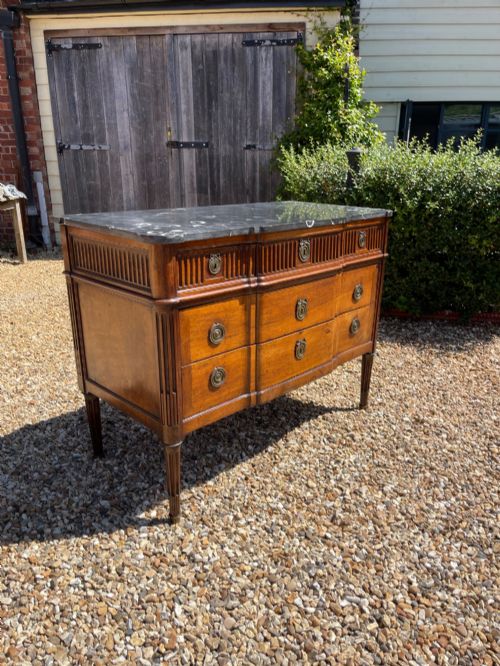
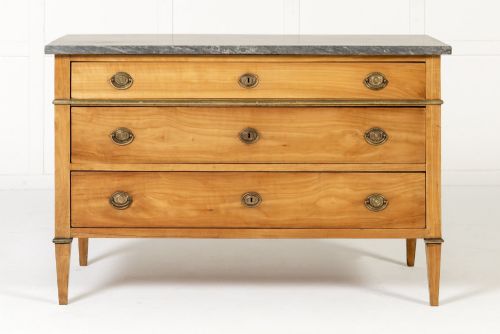
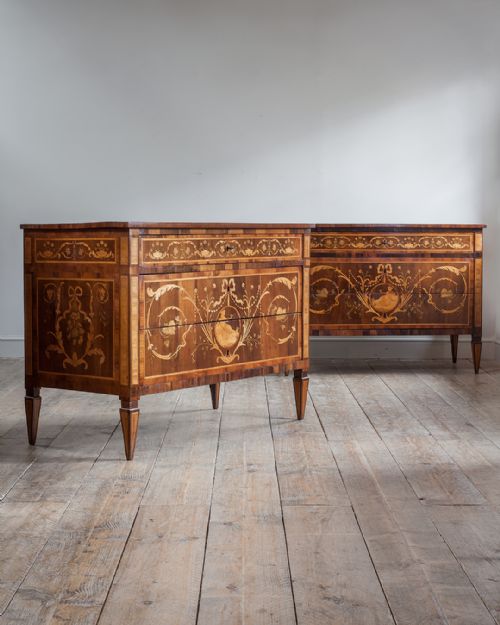
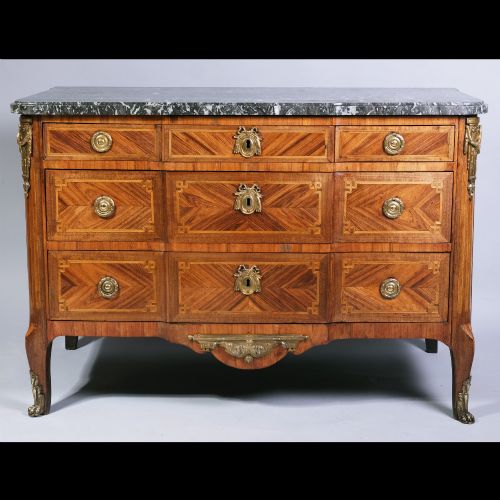
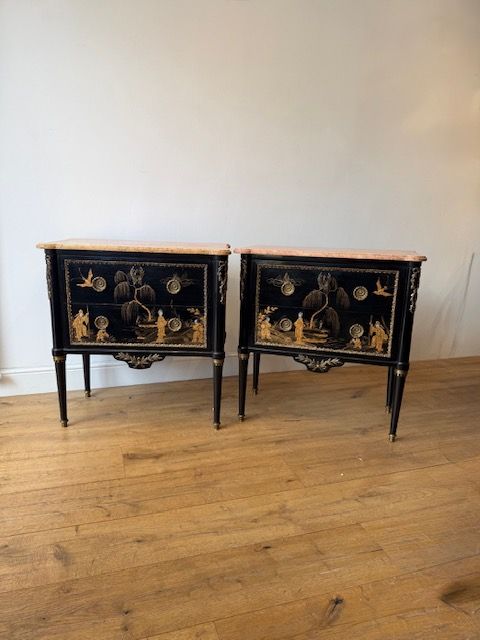
Searching for a louis xvi chest reveals low, rectangular case furniture built with straight tapered legs, fluted uprights, and restrained geometric symmetry. These pieces appear principally as commodes with multiple drawers, alongside taller semainiers, bedside tables, and miniature chests.
The selection ranges from authentic 18th-century period originals down to revival pieces made through the 19th and early 20th centuries. Neoclassical restraint defines the form, moving away from the curved exuberance of earlier decades toward architectural discipline and panelled drawer fronts.
Evaluating Quality
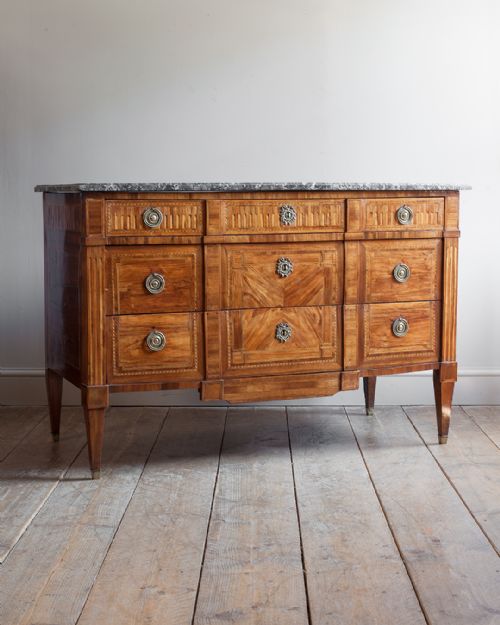
The standard of a louis xvi chest rests on the crispness of its hand-cut joinery and the precision of the veneer work. Superior examples show seamless alignment across drawer tiers where parquetry or marquetry patterns continue uninterrupted down the face.
Hardware weight and hand-chasing distinguish the better workshops, as does the selection and thickness of the marble slab fitted to the top. Original mounts cast in gilt bronze or ormolu fit flush against the timber without gaps or awkward filing marks.
Some miniature chests were built as apprentice showpieces, condensing full-sized commode geometry down to a tabletop scale.
Maison Krieger·Henry Dasson
The Louis XVI Chest Glossary
- Commode
- A low French chest of drawers designed for domestic storage, typically standing on four legs with a stone or marble top.
- Ormolu
- Gilt bronze mounts applied to furniture corners, feet, and drawer surrounds for decoration and edge protection.
- Parquetry
- Geometric wood-veneer patterns arranged in squares, lozenges, or cubes across the drawer fronts and sides of the case.
- Semainier
- A tall, narrow seven-drawer chest intended to hold a week's worth of personal linen.
- Marquetry
- Pictorial or floral inlay created by fitting different tinted woods into a background veneer sheet.
Louis XVI Chest: Frequently Asked Questions
How do I spot a reproduction louis xvi chest?
Authentic period pieces show hand-cut dovetails, timber shrinkage appropriate to age, and hand-forged iron or brass interior hardware.
Revival pieces from the 19th and 20th centuries often utilise machine-cut elements, standardised screws, and uniform veneers while maintaining the classical aesthetic.
Where should I place a bedside chest?
These smaller bedside chests suit spaces requiring low surface area and concealed drawer storage next to upholstery or beds.
The marble top provides a durable ledge for lighting and personal items while keeping the footprint compact.
Are marble tops removable?
Most marble slabs rest loose on top of the wooden carcase, held in place by their own weight and fitted wooden margins.
Lifting the stone off simplifies moving the heavy chest during transport or room repositioning.
What is the difference between a commode and a standard chest?
A commode specifically denotes a low French case piece designed with shorter legs and distinct neoclassical proportions.
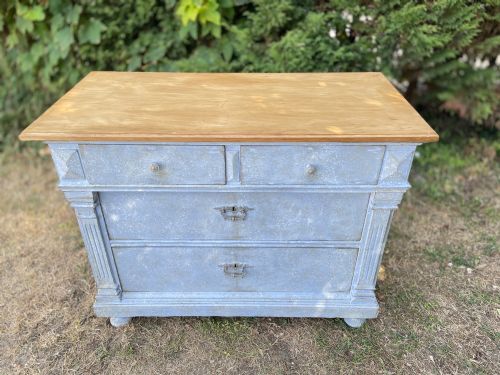
Standard chests of drawers often lack the specific architectural fluting, brass mounts, and integrated stone surfaces typical of French work.