


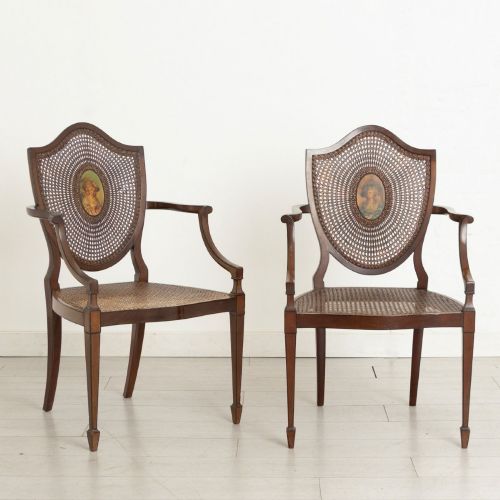


Louis XVI Cane Chair
A louis xvi cane chair brings French Neoclassical elegance to a room through crisp carved lines and woven texture.
Louis XVI Cane Chair
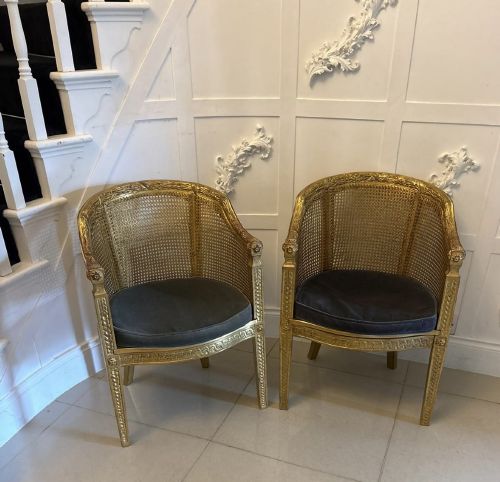
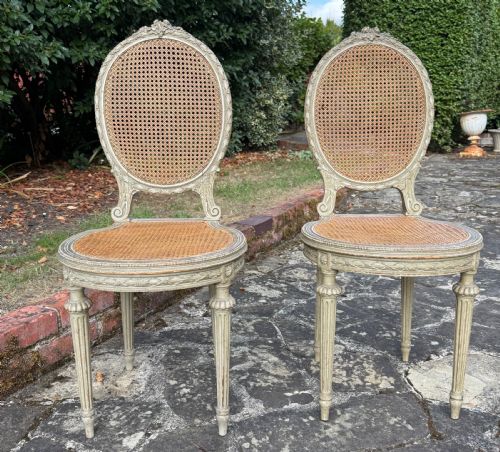
A louis xvi cane chair takes the form of French Neoclassical seating, spanning armchairs, side chairs, dining sets, settees, and window seats produced during revival periods. You will most frequently meet pieces from the nineteenth and early twentieth centuries, including revival items dated across the 1800s and 1900s.
The construction ranges from compact bedroom chairs and child bergere chairs to larger giltwood armchairs and full dining sets. Makers of these revival pieces adopted classic French forms like oval medallion backs and rectilinear frames.
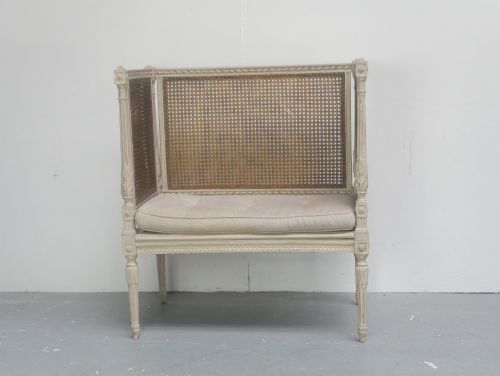
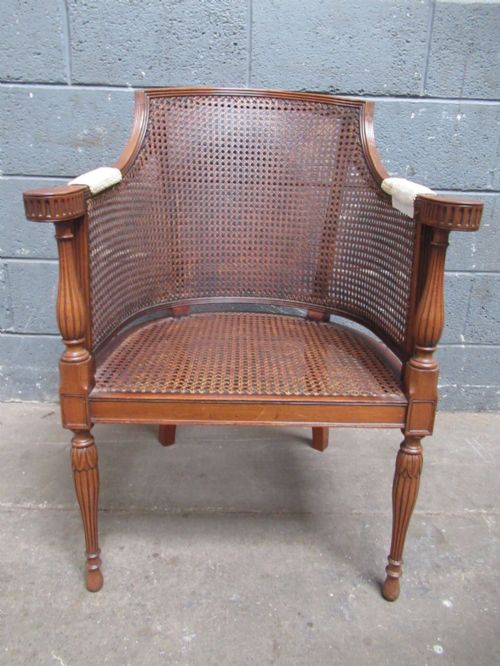
The selection includes specialised variations such as tub-shaped caned armchairs, double beds with matching chairs, and long window seats. Walnut, mahogany, and giltwood provide the structural framework for these woven designs.
How they were made
Craftsmen built these frames using solid woods such as walnut, mahogany, and beech, frequently applying giltwood or paint finishes to the exterior surfaces. Hand carving defined the Neoclassical ornamentation on the wood structures.
The seating and backs incorporate woven cane and rattan cane panels, sometimes paired with loose cushions upholstered in velvet or fabric. This combination provides lightweight structural panels alongside traditional textile elements.
Louis XVI Cane Chair Retail Price Guide 2026
Typical asking prices for louis xvi cane chair among the pieces listed under this phrase on Sellingantiques today, from the lower quarter to the upper quarter. They describe what is for sale here now, not the wider market.
Available forms range from single child bergere chairs and window seats to sets of twelve dining chairs and matching bed suites.
What varies in quality
The depth and crispness of the hand carving distinguish finer examples from simpler production, particularly on medallion backs and frame mouldings. Superior giltwood and painted finishes display careful application that respects the underlying timber.
The tightness and regularity of the cane and rattan weave dictate the structural integrity and longevity of the seating panels. Robust joinery in the walnut or mahogany framework ensures the chair withstands daily use.
The Louis XVI Cane Chair Glossary
- Cane
- A material woven from stripped rattan or similar plant stems to form supportive panels for chair seats and backs. It offers both flexibility and breathable strength.
- Bergere
- An enclosed upholstered armchair with solid upholstered sides, often featuring a cane back and a loose seat cushion. This form originates from eighteenth-century French design.
- Giltwood
- Timber coated with a thin layer of gold leaf or gold paint to produce a rich metallic finish. It appears frequently on formal French revival furniture.
- Medallion Chair
- A seat featuring a distinct circular or oval wooden back frame, typical of the Louis XVI style. The back is often filled with cane or upholstery.
- French Neoclassical
- A revival style drawing on classical Greek and Roman motifs, characterised by straight lines and symmetrical geometry. It forms the stylistic basis for Louis XVI designs.
Louis XVI Cane Chair: Frequently Asked Questions
Are these chairs comfortable to sit on?
The woven cane provides a firm and supportive surface that yields slightly to the body. Many versions include loose cushions upholstered in velvet or fabric for added softness.
Dining chairs and side chairs rely primarily on the taut cane panel, while bergere armchairs utilise upholstered cushions within the wooden frame.
How do I date a revival piece?
Revival items dating from the nineteenth and early twentieth centuries often exhibit tool marks and timber ageing consistent with those eras. Stylistic cues like French Neoclassical revival carving help separate these from eighteenth-century originals.
Examining the construction methods on the underside of the walnut or mahogany frame provides further clues to the manufacturing period.
Can cane seats be repaired?
Skilled artisans can re-weave damaged cane panels using traditional hand-caning techniques that thread material through drilled holes in the frame. This preserves the original wooden structure while restoring the seat or back.
Maintaining the appropriate humidity helps prevent the natural plant fibres from becoming brittle over time.
Where do these pieces fit best?
Compact side chairs and window seats suit smaller spaces like hallways or bedrooms without overwhelming the room visually. Larger bergere armchairs and giltwood settees serve as focal points in drawing rooms.
Sets of dining chairs bring a cohesive Neoclassical element around a dining table.