

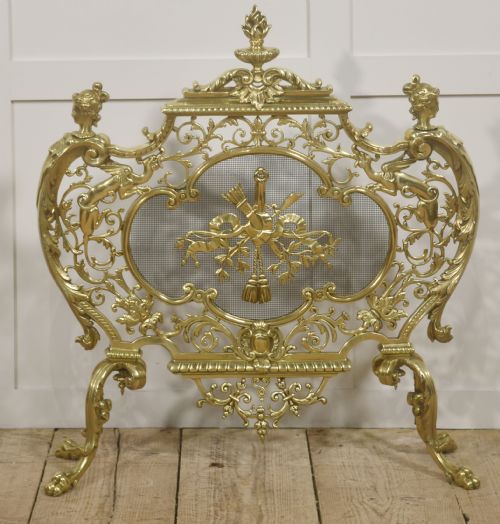


Louis XV Screen
Louis xv screen pieces are ornate French Rococo Revival furnishings designed to divide a room or guard a hearth with elegance.
Louis XV Screen
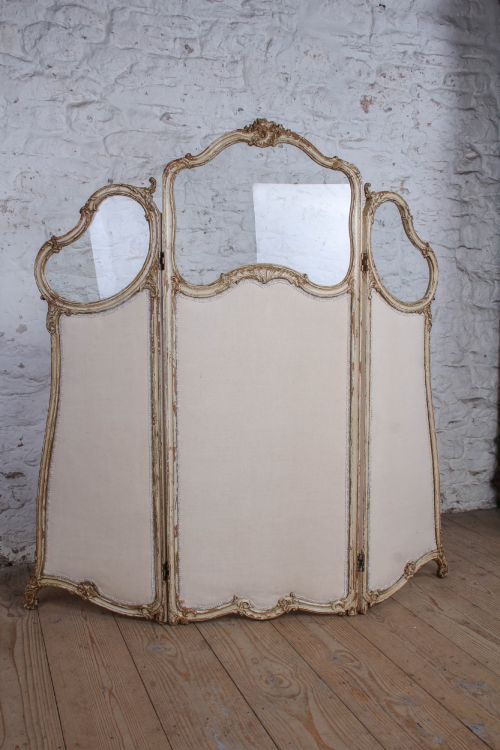
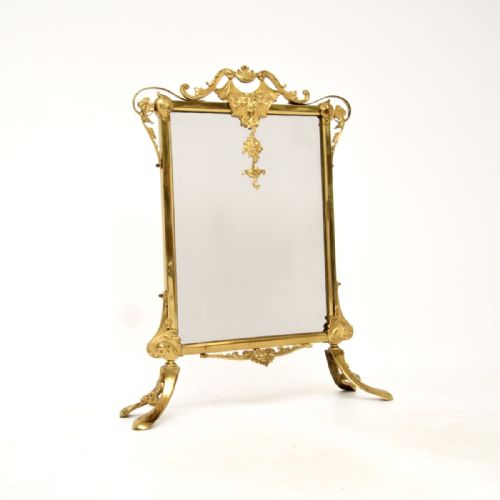
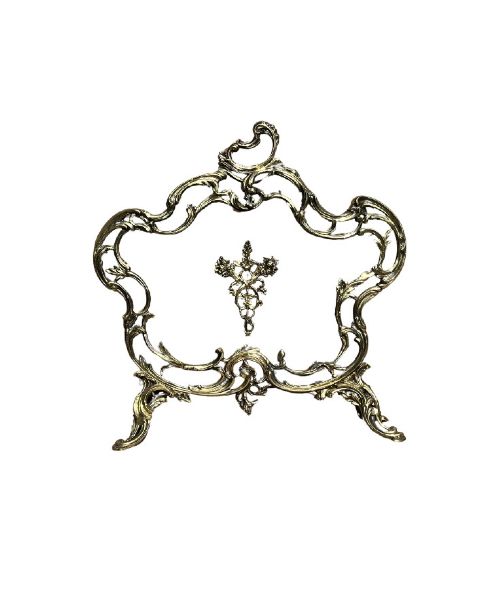
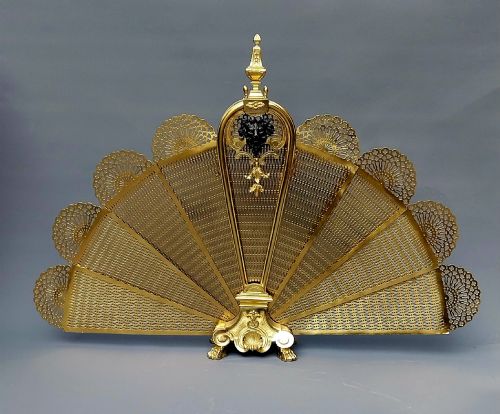
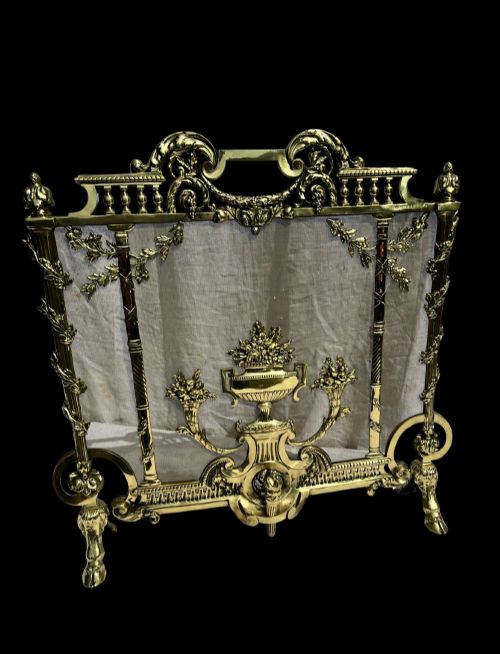
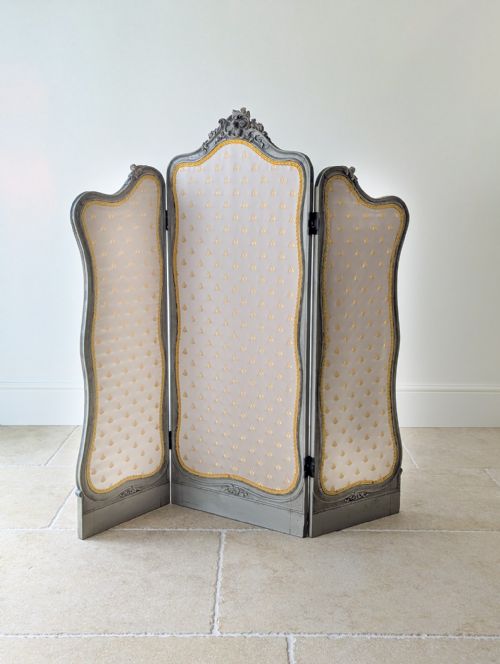
A louis xv screen is a decorative furnishing encompassing fire screens, modesty screens, and folding room dividers. The versions most likely to be met on this page include brass and gilt bronze fire guards alongside multi-fold wooden vanity or room screens.
Originating from French design traditions, these pieces frequently appear in revival styles such as Napoleon III and Louis XV Revival, dating predominantly from the nineteenth century. They serve both practical functions, such as shielding a room from fireplace heat or creating privacy, and decorative roles within an interior.
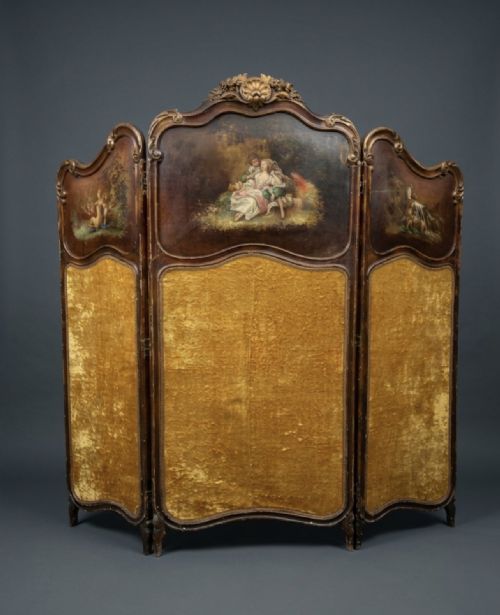
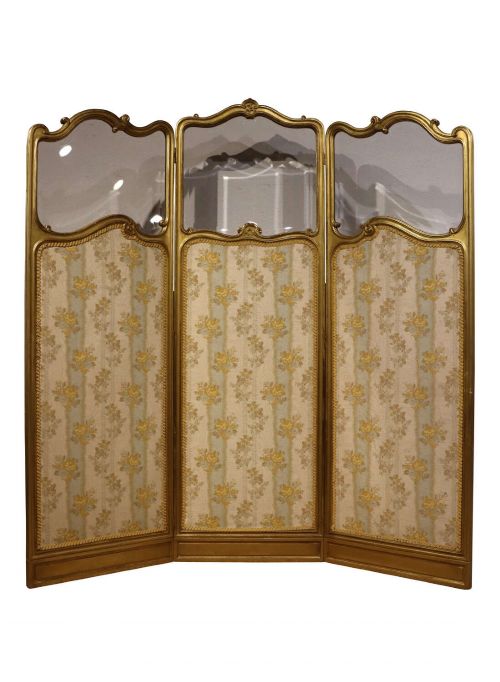
The objects take diverse forms, from single-panel brass mesh fire screens to three-fold giltwood screens inset with bevelled glass and painted panels. Each variation reflects the ornate tastes of the period, utilising curved frames and pierced metalwork.
How they were made
Makers constructed these screens using a foundation of carved wood, such as giltwood, or metals including brass, wire mesh, gilt bronze, and steel. Frames were shaped into elaborate Rococo curves, often complemented by painted panels or silk inserts.
Techniques relied on skilled metal casting, piercing, and gilding to achieve the characteristic rich surface textures. Glass panels, where present, were bevelled and fitted securely into folding wooden or metal frames.
Louis XV Screen Retail Price Guide 2026
Typical asking prices for louis xv screen among the pieces listed under this phrase on Sellingantiques today, from the lower quarter to the upper quarter. They describe what is for sale here now, not the wider market.
Object types recorded here include fire screens, folding screens, dressing screens, and room dividers in French Rococo styles.
What varies in quality
Quality in a louis xv screen lies in the crispness of the metal casting, the depth of the carved woodwork, and the weight of the materials. Pieces featuring detailed pierced brass or substantial gilt bronze demonstrate superior craftsmanship compared to simpler variants.
The integration of secondary elements, such as intact bevelled glass, hand-painted panels, or fine silk inserts, elevates a piece. Workshop attribution to makers such as Bouhon Frères or Paul Sormani also distinguishes exceptional examples.
Bouhon Frères·Paul Sormani
The Louis XV Screen Glossary
- Fire screen
- A protective barrier placed in front of a fireplace to block sparks and excessive heat. They are frequently made of brass or wire mesh.
- Gilt bronze
- Metal cast in intricate shapes and coated with a thin layer of gold. This material is common in high-status nineteenth-century French furnishings.
- Rococo Revival
- A nineteenth-century design style that emulates the curved lines, asymmetry, and ornamentation of the original eighteenth-century movement. It defines the aesthetic of many items on this page.
- Modesty screen
- A portable screen designed to provide privacy during dressing or washing. They often feature painted panels or fabric inserts.
- Bevelled glass
- Glass with an angled edge cut around the perimeter. This technique adds a decorative light-refracting border to multi-fold vanity screens.
Louis XV Screen: Frequently Asked Questions
How do I distinguish a fire screen from a room divider?
Fire screens typically consist of a single rigid panel on feet, often fashioned from brass, wire mesh, or gilt bronze to withstand hearth heat. Room dividers and dressing screens generally comprise multiple folding panels made of wood or glass.
Fire screens are scaled for placement directly before a fireplace, whereas folding screens are taller and designed to section off parts of a room.
What materials are typical for these pieces?
The listings show a prevalence of metals like brass, gilt bronze, wire mesh, and steel mesh, alongside wooden frames in giltwood or carved wood. Panels frequently incorporate glass, fabric, or hand-painted surfaces.
These materials reflect the decorative priorities of the nineteenth-century revival styles, balancing structural durability with ornate appearance.
How do I care for a vintage screen?
Care depends heavily on the specific materials of the piece, requiring gentle dusting for carved wood and careful cleaning for glass or fabric panels. Metal components like brass and gilt bronze should be maintained without harsh abrasives to preserve their finish.
Positioning the screen away from direct sunlight and damp environments will help protect delicate silk inserts and painted surfaces.