


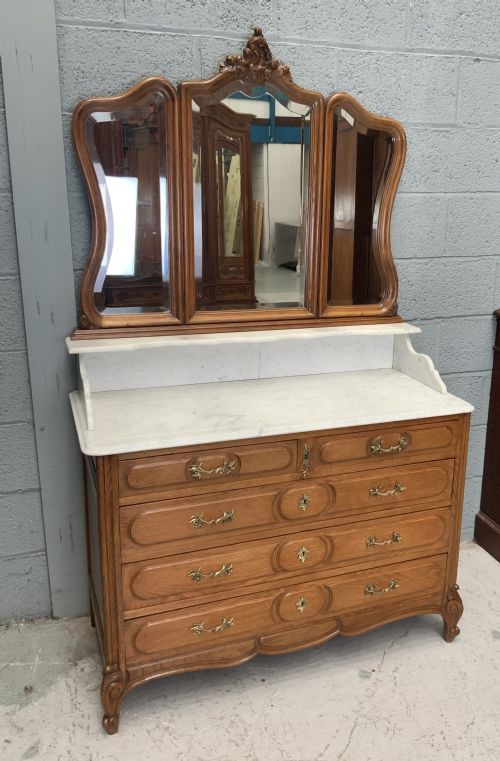


Louis XV Oak Table
A louis xv oak table brings provincial warmth and flowing rococo curves to a room.
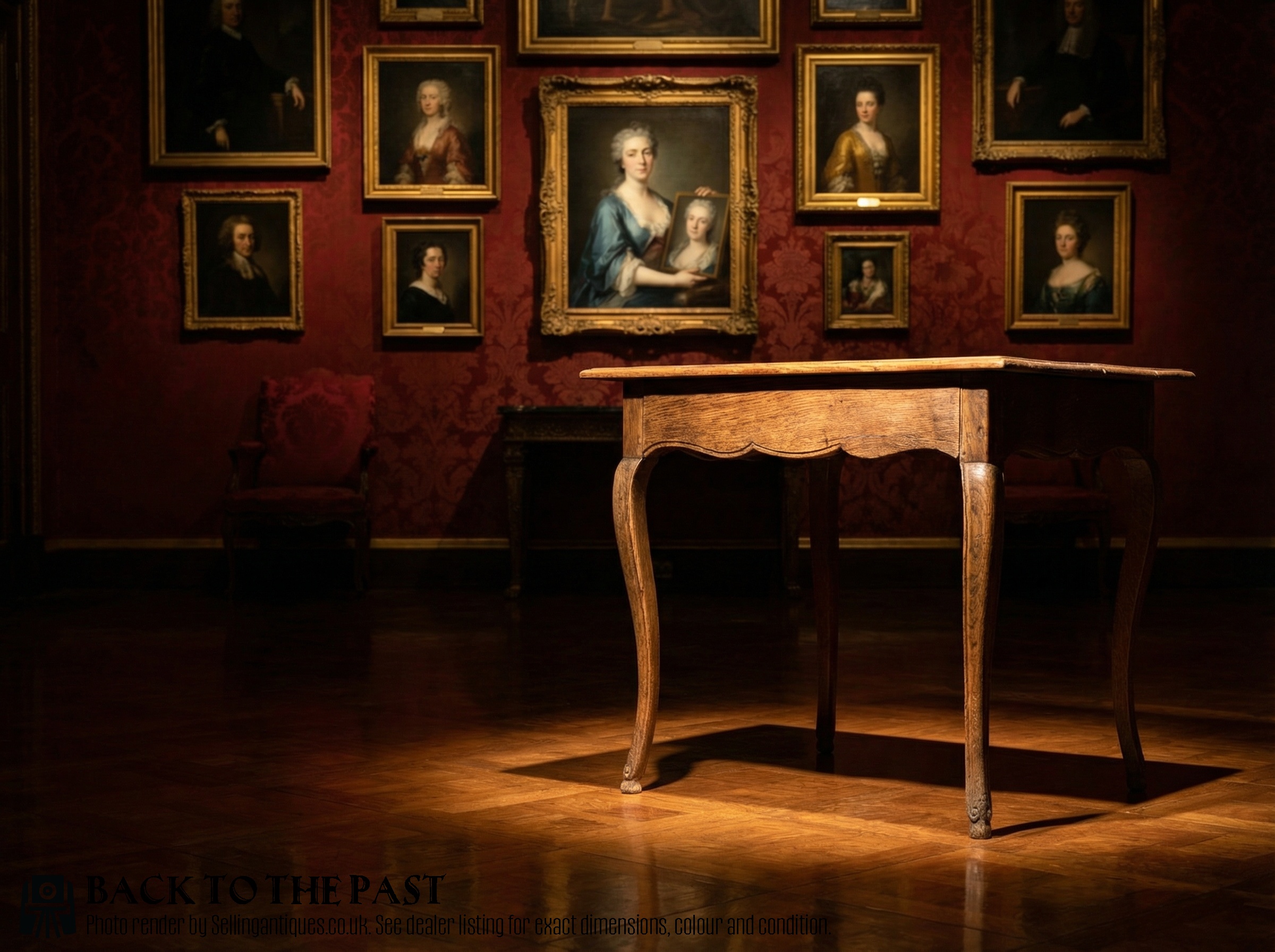
Louis XV Oak Table
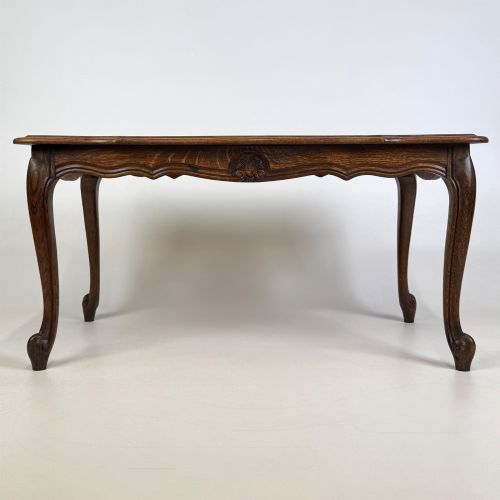
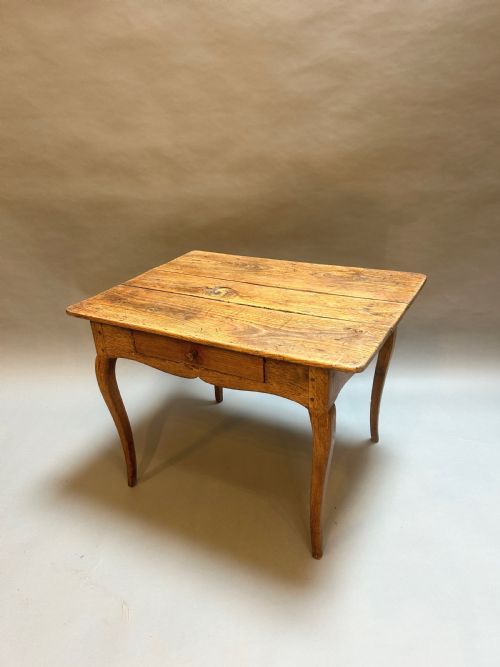
When you search for a louis xv oak table, you encounter a variety of forms spanning the eighteenth century through to later revivals in the nineteenth and twentieth centuries. The selection ranges from dining tables and draw leaf tables to smaller occasional pieces such as side tables, bedside cabinets, and console tables.
The aesthetic draws heavily on French provincial, chateau, and country traditions. While pieces date from the eighteenth century up to the nineteen-fifties, revival pieces from the early twentieth century appear frequently alongside earlier examples.
Materials and construction
Construction relies primarily on solid oak, frequently complemented by secondary timbers like pine, with select pieces featuring applied brass mounts or inset marble tops. Cabinetmakers utilised traditional joinery alongside hand-carved detailing to achieve the characteristic asymmetric scrollwork and cabriole legs.
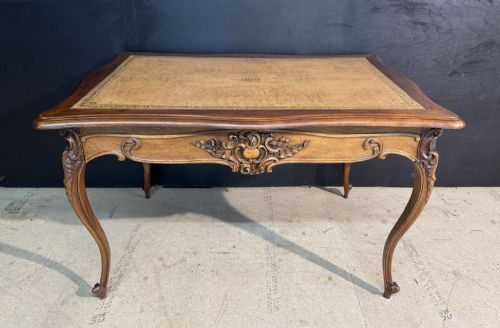
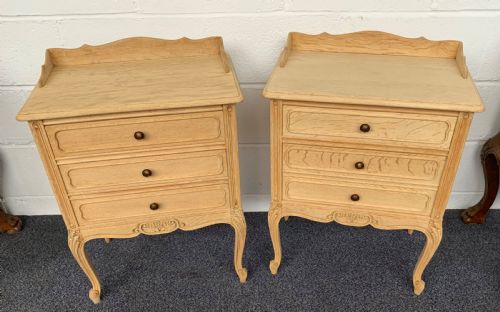
Surface treatments vary between natural timber finishes, painted surfaces, and bleached oak effects that lighten the appearance of the dense grain. Leather inserts also occur on desk and writing table surfaces within the range.
The listings span pieces from the eighteenth century through to nineteen-fifty, encompassing oak, marble, brass, and leather.
Assessing craftsmanship
Quality rests upon the crispness of the hand-carving and the proportional harmony of the cabriole legs and serpentine skirts. Superior examples display fluid, integrated ornamentation carved directly from the solid timber rather than applied composition mouldings.
Construction integrity and the condition of the timber grain dictate distinction at the upper end of the scale. Subtle details such as pegged joints, original brass hardware, and well-fitted marble tops distinguish finer pieces from standard revival output.
KRIEGER of Paris
The Louis XV Oak Table Glossary
- Cabriole leg
- A furniture leg that curves out and then in, mimicking animal limbs with a knee and a foot. This form defines the silhouette of Louis XV furniture.
- Draw leaf table
- A dining table with extension leaves stored beneath the main top that pull out from each end. It allows the surface area to expand easily.
- Bleached oak
- Timber treated to lighten its natural tone, creating a pale, neutral finish. This treatment is particularly common on twentieth-century French provincial furniture.
- Rococo
- An ornate artistic style characterised by asymmetry, scrollwork, and organic plant motifs. It heavily influences the decorative carving found on these tables.
Louis XV Oak Table: Frequently Asked Questions
How do I identify a genuine period piece?
Examine the construction methods, tool marks, and timber shrinkage to understand the age of the piece. Hand-cut joints and uneven wear patterns usually indicate older manufacture.
Compare the carving depth and fluidity against known examples from the eighteenth century or subsequent revival periods.
What is bleached oak furniture?
Bleached oak is timber treated with chemical agents to remove its dark natural warmth and produce a pale, matte surface. This style became popular for achieving a softer look in provincial interiors.
Many twentieth-century French tables utilise this finish to suit contemporary domestic spaces.
Where should I place a console table?
Console tables fit well against walls in hallways, living rooms, or dining spaces where floor space is limited. Their shallow depth provides a surface for lamps and decorative objects without blocking walkways.
Marble-topped variants offer a durable surface that handles everyday items easily.
How do I care for an oak surface?
Dust regularly with a dry cloth and avoid placing wooden furniture near direct heat sources or strong sunlight. Excessive warmth causes the timber to dry out and split.
Apply occasional wax polish to maintain the sheen and protect the grain from moisture.