

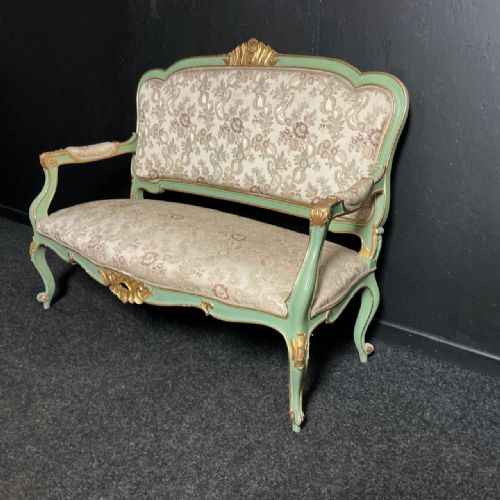
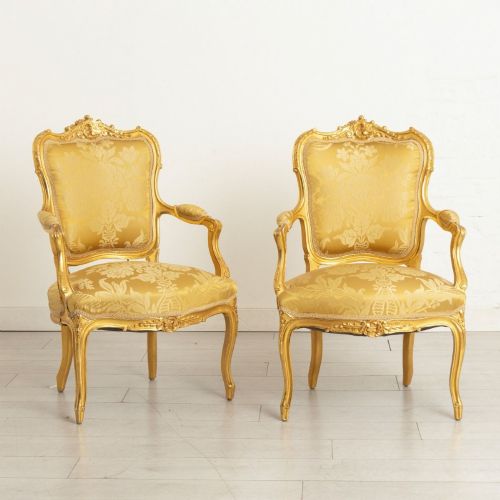
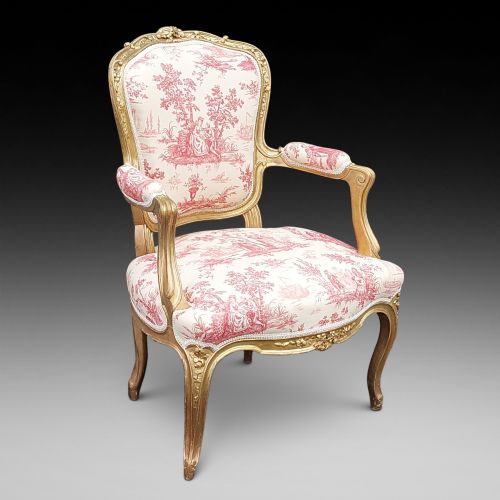


Louis XV Gilt Chair
A louis xv gilt chair brings unmistakable French chateau elegance into a room through carved timber and radiant gold leaf.
Louis XV Gilt Chair
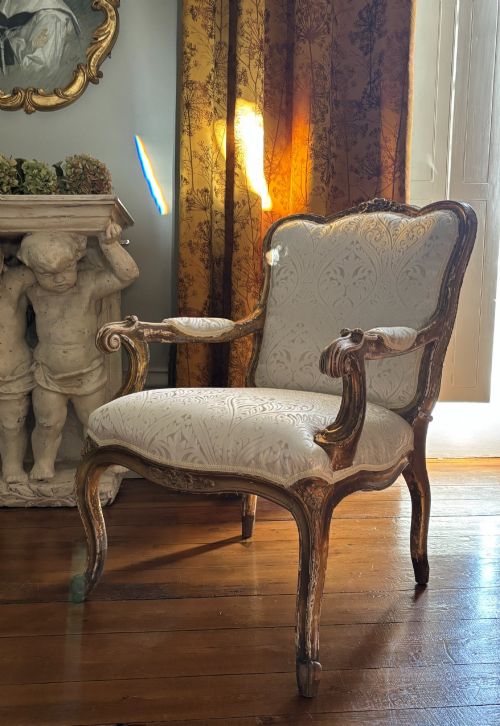
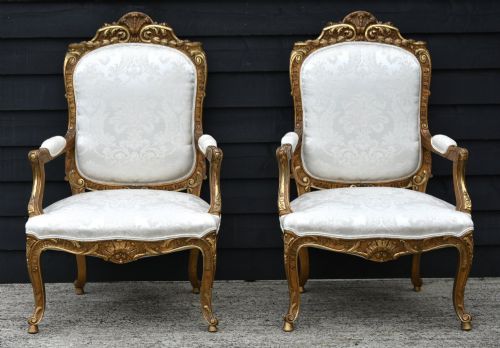
A louis xv gilt chair embodies the curved lines and decorative spirit of Rococo revival design, typically originating from nineteenth century France. You will most frequently encounter pairs of open armchairs, salon chairs, and boudoir seating rather than isolated pieces.
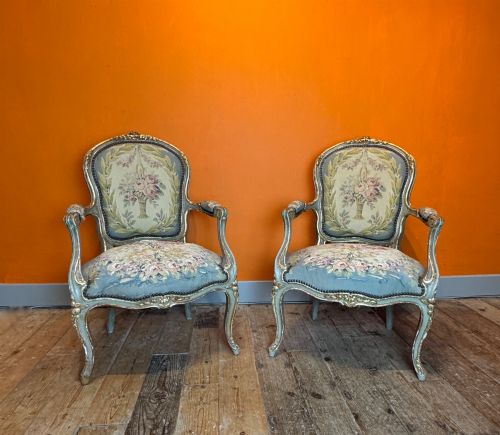
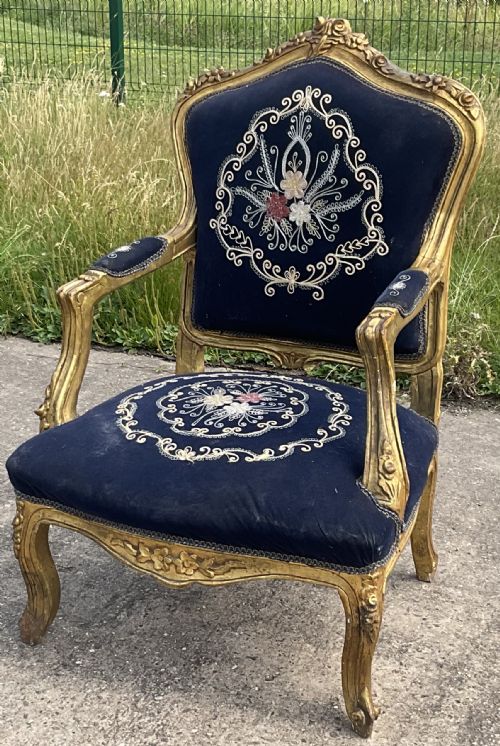
Makers drew on historic French styles, producing giltwood and painted frames dressed in silk, velvet, or tapestry upholstery. These seating forms range from compact occasional chairs to grand throne armchairs and complete salon suites.
The aesthetic leans heavily on ornate carving, scroll arms, and structural grace intended for formal entertaining spaces. Surviving examples often bridge the nineteenth century through to Edwardian interpretations of classic French forms.
How they were made
Craftsmen shaped frames primarily from beech or general wood, applying gesso to create a smooth preparatory layer for intricate carving. Gold leaf was then carefully laid over the surface to achieve the characteristic gilded finish.
Upholstery techniques involved traditional stuffing secured beneath luxury textiles such as silk, velvet, or woven tapestry. Frames were sometimes painted and parcel gilt to highlight specific carved details against the gold.
Louis XV Gilt Chair Retail Price Guide 2026
Typical asking prices for louis xv gilt chair among the pieces listed under this phrase on Sellingantiques today, from the lower quarter to the upper quarter. They describe what is for sale here now, not the wider market.
Some nineteenth century makers even offered painted frames alongside traditional gold leaf to keep French salon daydreams affordable.
What varies in quality
The depth and crispness of the wood carving distinguish standard production from superior examples, where artisan handwork is evident in every scroll and floral motif. Superior gilding utilises genuine gold leaf applied over a well-prepared gesso ground rather than modern metallic paint.
Structural integrity depends on the quality of the timber frame and the retention of traditional joinery beneath the upholstery. The selection of covering material, from standard fabric to fine antique tapestry or silk, greatly elevates the presentation of the seat.
Blaise Maucuy
The Louis XV Gilt Chair Glossary
- Giltwood
- Timber that has been coated with gold leaf or powder. This finish gives antique frames their characteristic metallic radiance.
- Bergere
- A closed armchair featuring upholstered sides. This form offers a deep, enclosed seat designed for comfort.
- Gesso
- A plaster mixture applied to wooden frames before gilding. It provides a smooth surface for detailed carving.
- Rococo
- An artistic style characterised by asymmetry, curves, and natural motifs. It heavily influences Louis XV revival seating.
- Parcel Gilt
- A decorating technique where only parts of an object are gilded. The remaining areas are typically painted.
Louis XV Gilt Chair: Frequently Asked Questions
How do I style a gilt chair at home?
Place a single open armchair as an accent piece in a quiet corner or pair salon chairs beside a fireplace. Their decorative frames add texture to neutral modern interiors.
Allow enough space around the seating to showcase the carved wooden details and scroll arms without crowding the room.
Are these chairs comfortable for daily sitting?
Many nineteenth century salon and boudoir chairs were built for formal entertaining rather than lounging. Upholstered versions with silk or tapestry offer varying levels of cushion support depending on their internal webbing.
Select bergere or tub chairs if you require a deeper, more enclosed seat for regular use.
How can I tell a nineteenth century piece apart?
Examine the wood framing beneath the upholstery and inspect the wear on the gold leaf surface. Nineteenth century revival pieces often combine traditional beech timber frames with hand-applied gesso and leaf.
Look for the characteristic French Rococo scrollwork and painted finishes typical of the Victorian and Napoleon III periods.
What is the difference between a salon chair and an armchair?
Salon chairs are generally lighter, more compact occasional seating designed for entertaining guests in a reception room. Open armchairs feature dedicated armrests and often heavier timber framing for structural presence.
Both types utilise giltwood and fine fabric upholstery but serve different roles within historic room layouts.