
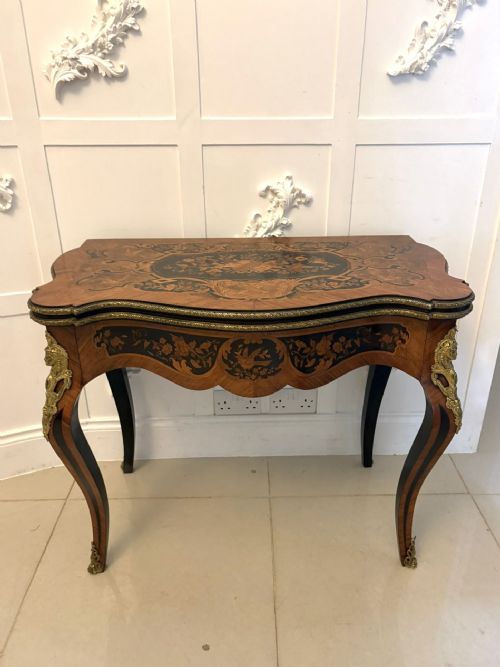


Louis XV Gaming Table
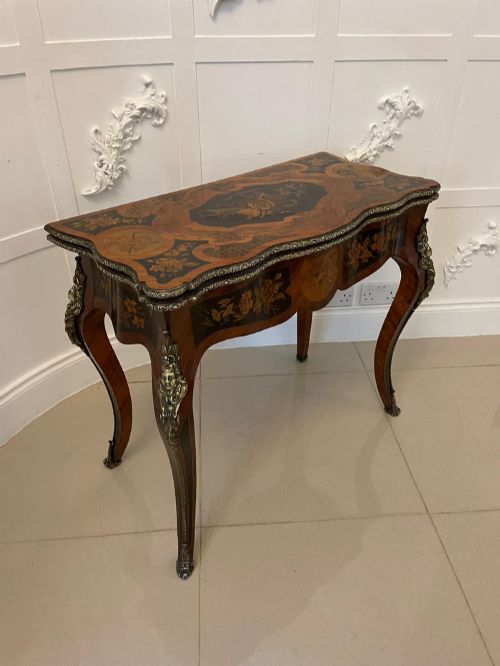
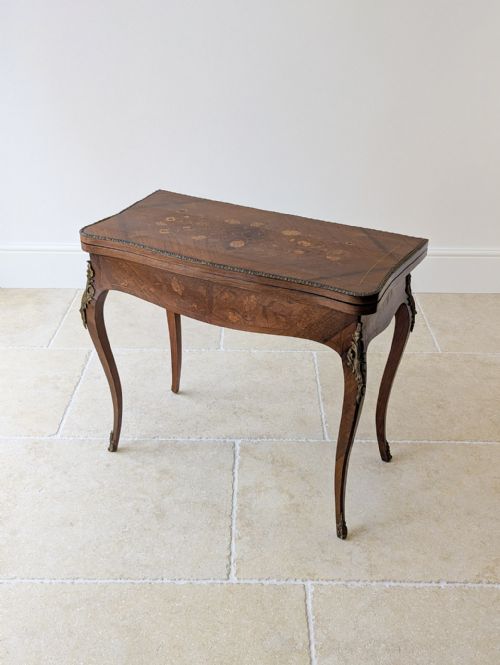
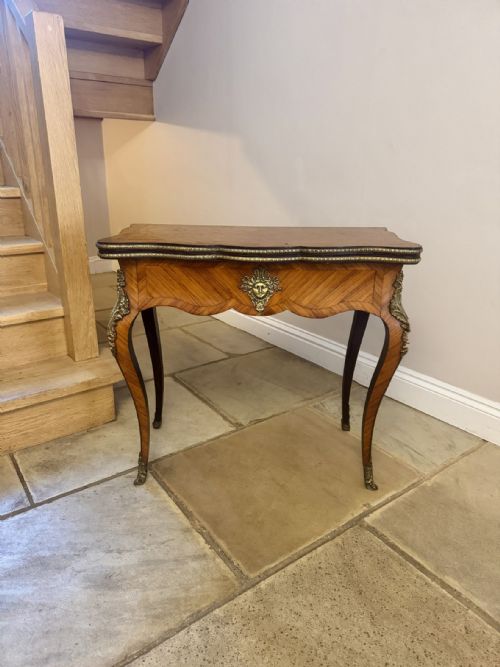
A louis xv gaming table brings exuberant rococo curves and rich marquetry into a room, serving as a fold-over card surface or console.
Louis XV Gaming Table
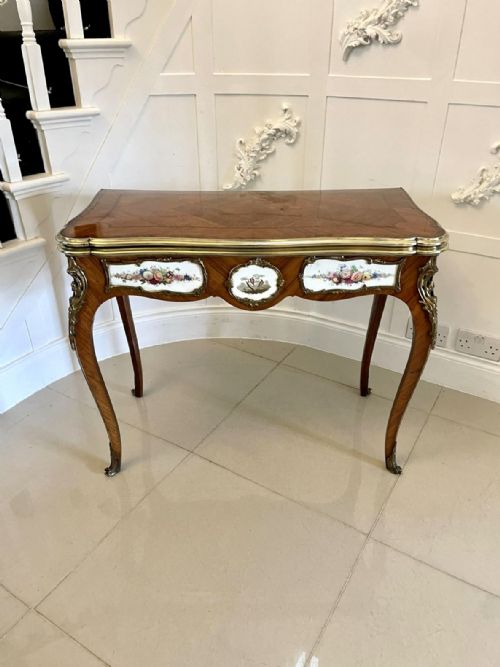
When you search for a louis xv gaming table, you encounter pieces primarily from the nineteenth century, including Victorian interpretations and revival styles such as French Rococo Revival. These items function mainly as card tables, games tables, side tables, and occasional tables that fold over or display console proportions.
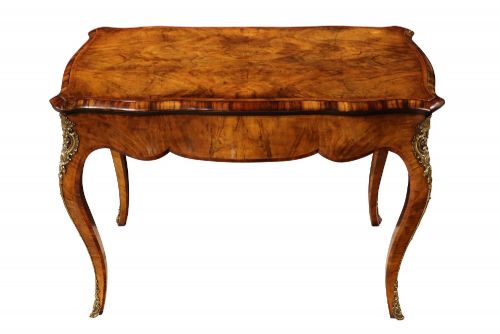
The pieces available on this page originate predominantly from French and Victorian workshop traditions. They frequently adopt the Louis XV style, featuring serpentine outlines, cabriole legs, and elaborate inlays suited to parlour or drawing room use.
Makers and designers working in this idiom produce tables that bridge decorative console furniture and functional gaming surfaces. The survival of these forms reflects nineteenth-century enthusiasm for eighteenth-century French court aesthetics adapted for domestic entertaining.
Materials and Technique
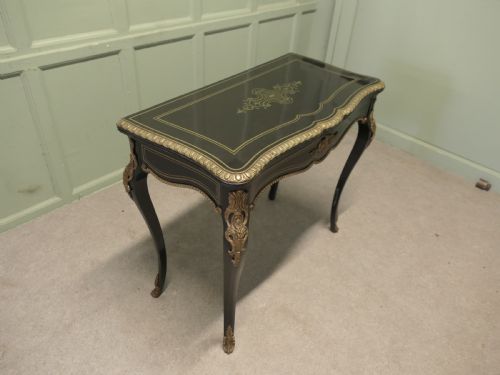
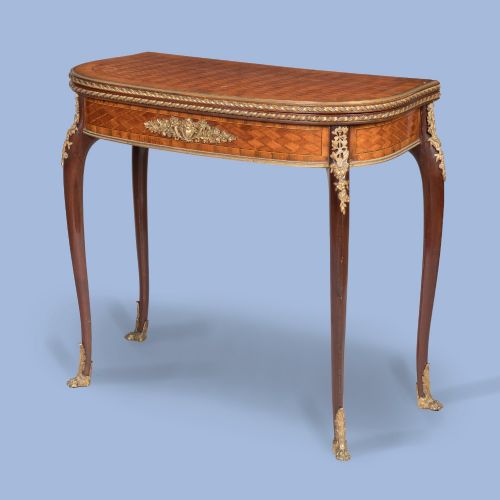
Cabinetmakers construct the carcases of these tables using woods such as kingwood, walnut, rosewood, mahogany, and ebonised timber. Surfaces often incorporate detailed marquetry, parquetry, and floral wood inlay, alongside brass stringing and boulle work.
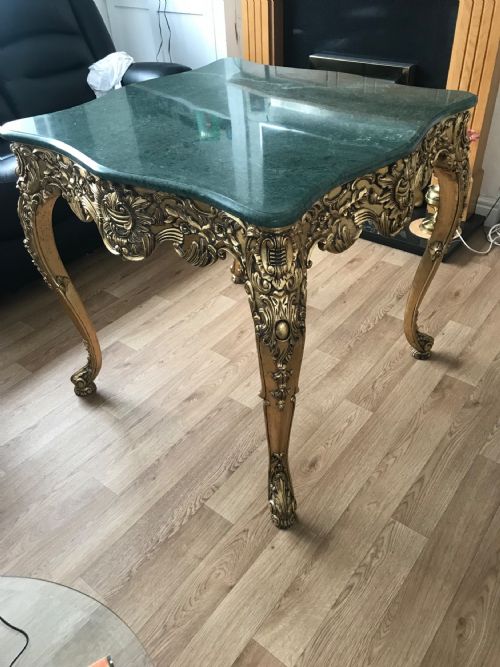
Craftsmen mount these wooden structures with chased ormolu and gilt bronze mounts that accentuate the sweeping contours of the apron and legs. Some examples integrate solid green marble polished tops or porcelain plaques into the design.
The folding mechanisms and structural joints rely on precise joinery to support the pivoting top leaves used for card playing. Workshops combine cabinetmaking with metal casting and mounting to achieve the characteristic rococo profile.
One historical record preserves an oil painting depicting Louis XV himself enjoying games at Versailles.
The Distinction of Execution
The standard of a piece rests upon the crispness of the ormolu mounts and the precision of the wood inlay. Finely chased bronze mounts and intricate marquetry panels distinguish superior examples from simpler production pieces.
The selection of timber grain and the complexity of cross-banding define the visual depth of the surface. Master workshops invest greater labour in shaping the serpentine curves of the carcase and ensuring the folding mechanism operates with seamless alignment.
G T Morant, London·François Linke·Joseph-Emmanuel Zwiener·Maison Millet·Edwards & Roberts·Henry Dasson
The Louis XV Gaming Table Glossary
- Ormolu
- Gilded bronze applied as a decorative mount to furniture corners, legs, and aprons. This technique provides metallic highlights that complement the dark tones of kingwood and walnut.
- Marquetry
- The art of applying small pieces of veneer to a structure to form decorative patterns or pictures. Floral motifs and geometric designs appear frequently across these tabletops.
- Parquetry
- A geometric mosaic of wood veneer arranged in repeating patterns such as cubes or chequers. This technique decorates the surfaces of revival gaming tables.
- Boulle
- A form of marquetry employing tortoiseshell and brass inlaid in contrasting patterns. Named after Parisian cabinetmaker André-Charles Boulle, it ornaments select side and card tables.
- Cross-banding
- A border of veneer laid with the grain running perpendicular to the main panel. This method frames the central marquetry design on the fold-over top.
Louis XV Gaming Table: Frequently Asked Questions
How were these tables used?
These tables served primarily for card games and social entertainment in nineteenth-century drawing rooms and parlours. The hinged tops folded open to reveal a baize-lined playing surface.
When closed, the pieces functioned as console, side, or occasional tables against a wall. Their dual purpose made them versatile items for hosting guests.
How do you open the top?
The top leaf typically pivots on hinges or swings out on a gate-leg action concealed within the apron. Lifting and rotating the folding section exposes the hidden compartment or interior gaming surface.
Careful handling ensures the structural joints and ormolu mounts remain undisturbed during movement. The mechanism relies on balance rather than heavy force.
Where should I place one?
A living room or hallway suits these tables well, where they can stand closed against a wall as a decorative console. Placing them out of direct sunlight protects the rosewood, kingwood, and delicate veneer surfaces from fading.
Keeping the timber away from extreme temperature shifts prevents warping in the fold-over leaves.
Are these pieces eighteenth century?
Most examples date from the nineteenth century, reflecting revival movements inspired by earlier French royal aesthetics. Makers in Victorian Britain and France produced these items using historical forms and techniques.
Details such as machine-sawn veneers or specific nineteenth-century brass fittings help distinguish revival items from original period pieces.