

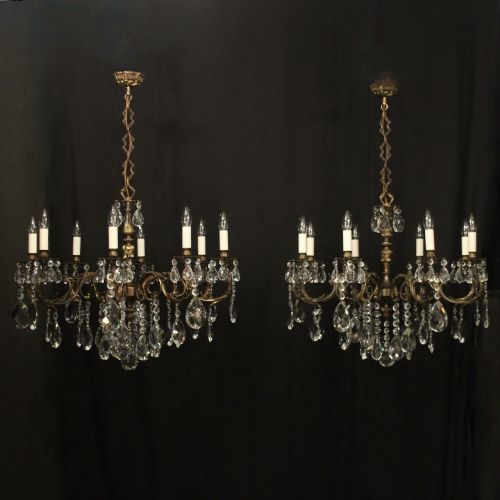
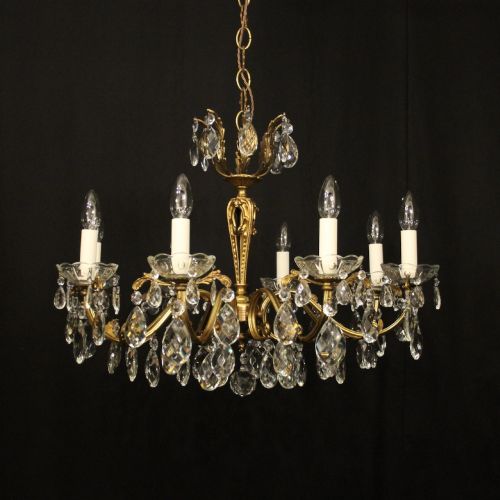
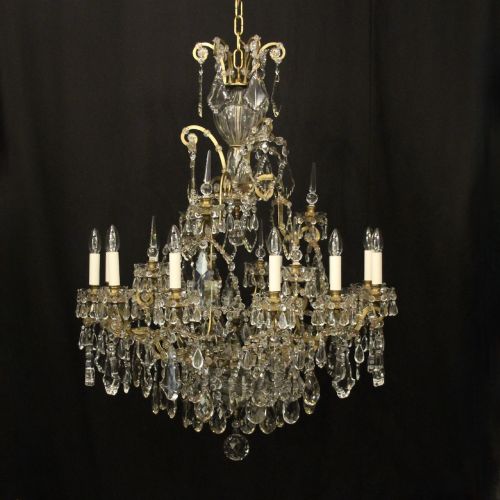
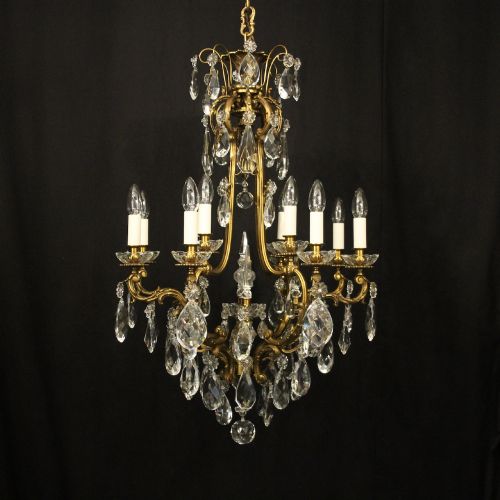
Louis XV Crystal Light
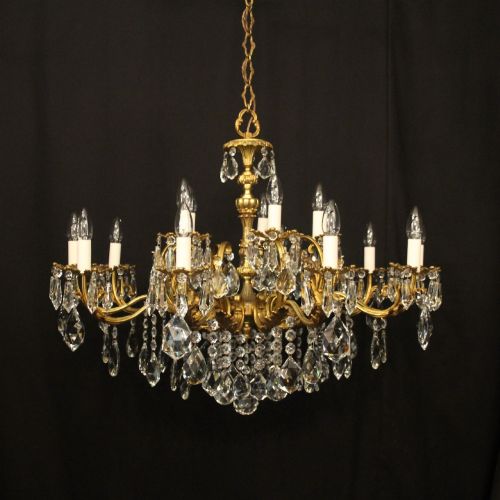
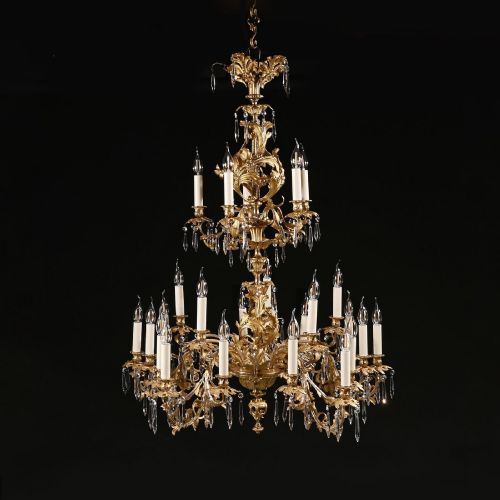
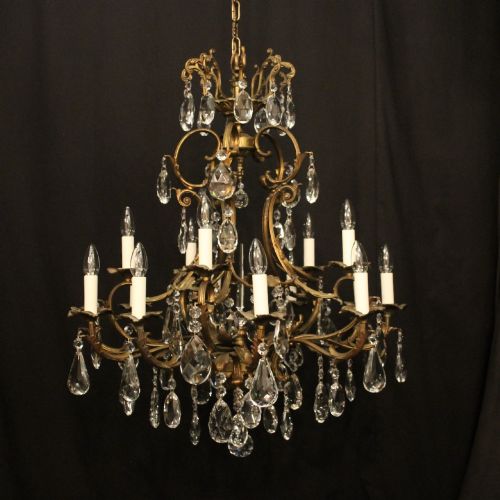
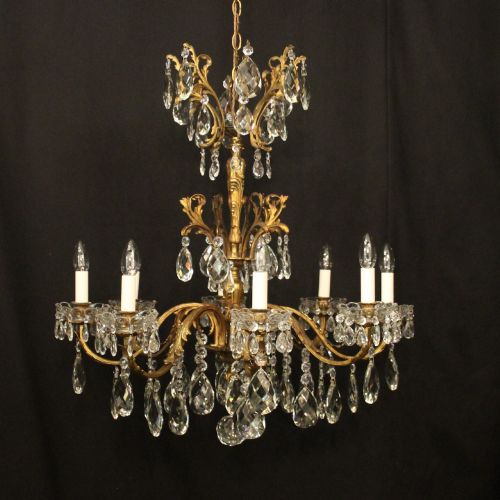
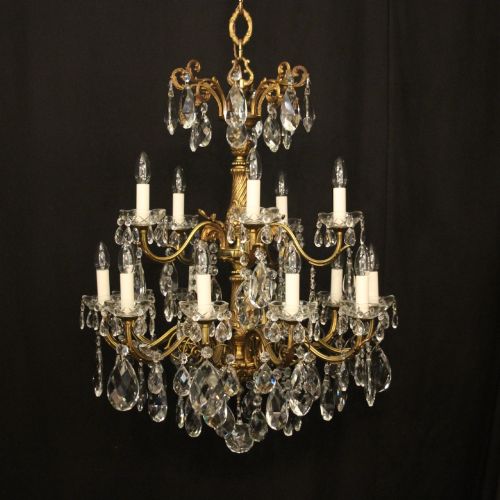
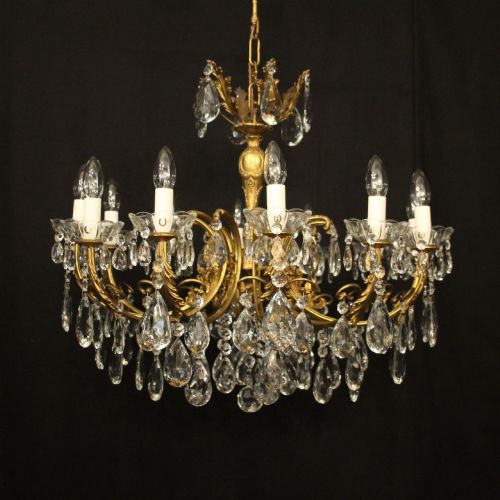
Louis xv crystal light describes ornate French chandeliers and wall sconces drawing upon rococo revival forms from the nineteenth and early twentieth centuries.
Louis XV Crystal Light
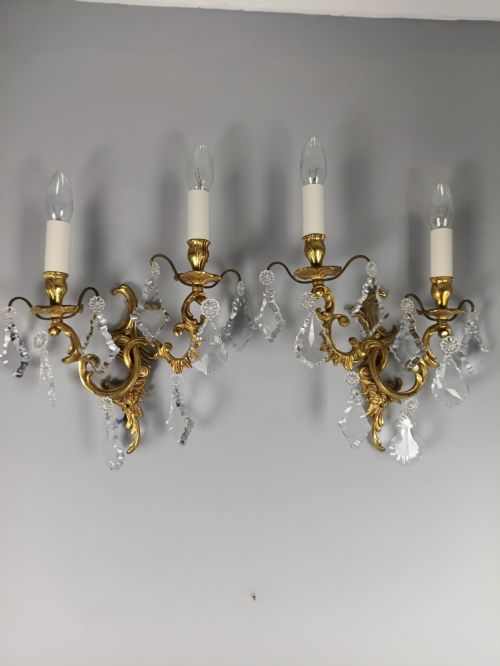
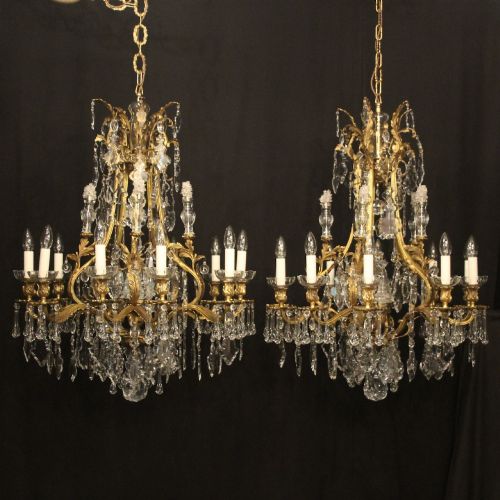
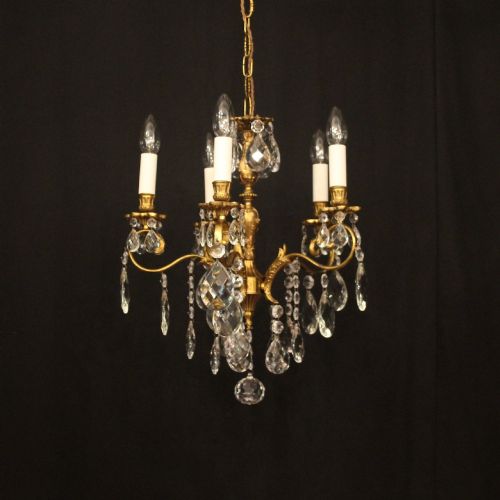
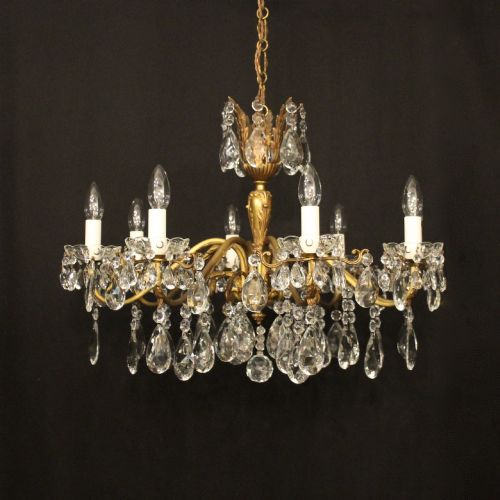
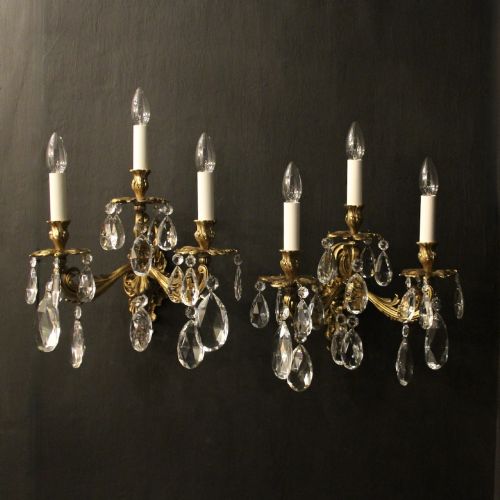
These fixtures take the form of French chandeliers, wall lights, and wall sconces originating predominantly from the early twentieth century alongside late nineteenth century examples. The selection relies heavily on styles designated as French chateau, French rococo, and Louis XV revival.
Buyers will most frequently encounter multi-light chandeliers and paired wall sconces designed with sweeping arms and prominent metal frames. The aesthetic draws directly from eighteenth century court decoration, reinterpreted through subsequent decades with varying degrees of elaboration.
Assessing quality
Quality separates along the precision of the metal casting and the complexity of the crystal cutting. Heavier bronze foundations and deeply chased ornamentation distinguish finer pieces from simpler brass alternatives.
The density and clarity of the crystal drops, together with the integration of the birdcage or frame structure, dictate the overall visual depth. Subtlety in the gilt finish and the harmonious proportion of arm counts to body size define the upper tier of examples.
Louis XV Crystal Light Retail Price Guide 2026
Typical asking prices for louis xv crystal light among the pieces listed under this phrase on Sellingantiques today, from the lower quarter to the upper quarter. They describe what is for sale here now, not the wider market.
Listings span the nineteenth century, Edwardian era, and the 1910s to 1930s, utilising crystal, glass, gilt bronze, ormolu, and brass.
The Louis XV Crystal Light Glossary
- Ormolu
- A metallic application utilising finely ground high-carat gold incorporated onto a bronze base. This technique produces a warm, durable golden lustre characteristic of high-status French lighting.
- Birdcage
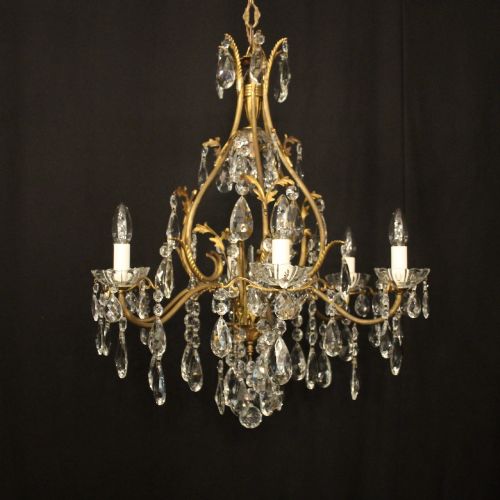
- An open structural framework constructed of metal bands supporting central shafts and cascading crystal drops. This armature allows light to penetrate inward as well as outward.
- Lustre
- A cut crystal pendant or drop hung from the arms and crown of a chandelier to refract light. These elements vary in shape from simple tears to complex faceted prisms.
- Sconce
- A wall-mounted lighting fixture featuring projecting arms designed to hold candles or electric lamps. Pairs and sets of these fixtures coordinate with larger central chandeliers.
Louis XV Crystal Light: Frequently Asked Questions
What periods do these lights come from?
The pieces available originate primarily from the early decades of the twentieth century, with precursors extending back into the late nineteenth century. Edwardian examples also appear alongside items attributed broadly to the 1910s, 1920s, and 1930s.
Stylistically, they draw upon French chateau and rococo revival traditions that echo the court tastes of the Louis XV era. Makers of the later periods continued to employ traditional casting and glass-cutting methods.
How do chandeliers and wall lights match?
Matching sets typically share identical metal finishes, such as gilded bronze or brass, and employ corresponding crystal drop patterns. Wall sconces often mirror the arm count or decorative motifs found on the central chandelier in a room.
Deploying paired wall lights alongside a matching overhead fixture creates a cohesive decorative scheme within a interior space. The repetition of cut glass and gilt metal unifies the lighting design.
Are these fixtures wired for electricity?
Most antique lighting encountered has been adapted for modern electrical use while retaining its historic exterior appearance. Conversion work allows the internal wiring to run safely through the bronze or brass arms.
Buyers should inspect the technical setup of each fixture to confirm compatibility with current domestic electrical standards. Professional installation is generally recommended for heavy bronze and crystal assemblies.
What defines the cage style?
A cage chandelier incorporates a distinct open metal framework that shapes the silhouette of the fixture. This construction supports concentric rings of crystal drops and interior candle arms.
The configuration concentrates the visual weight toward the centre while allowing light to pass through the suspended glass components. Smaller versions often feature five or six lights within this compact architectural form.