




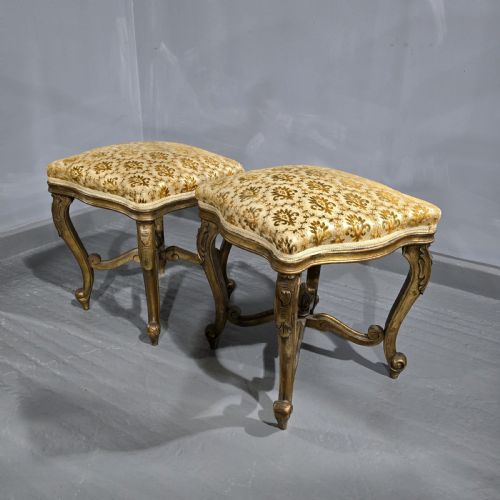
Louis Style Vanity
When you search for a louis style vanity, you seek the curved lines, gilt surfaces and carved detail of French dressing furniture.
Louis Style Vanity
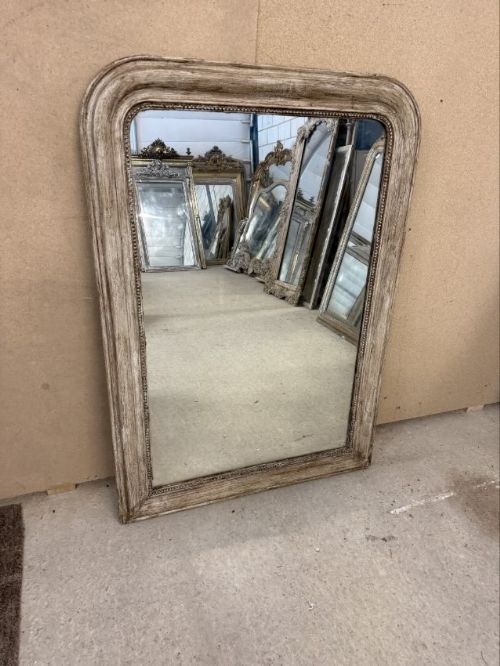
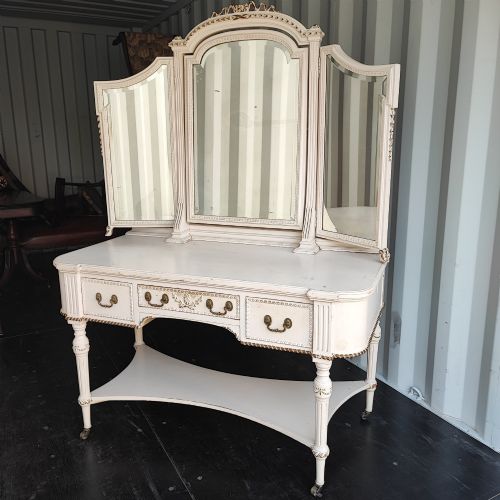
A louis style vanity encompasses dressing tables, powder tables known as poudreuses, and triple mirrors designed for the toilette. These pieces draw from Louis XV and Louis XVI revivals, alongside French Rococo and Neoclassical designs spanning the nineteenth and early twentieth centuries.
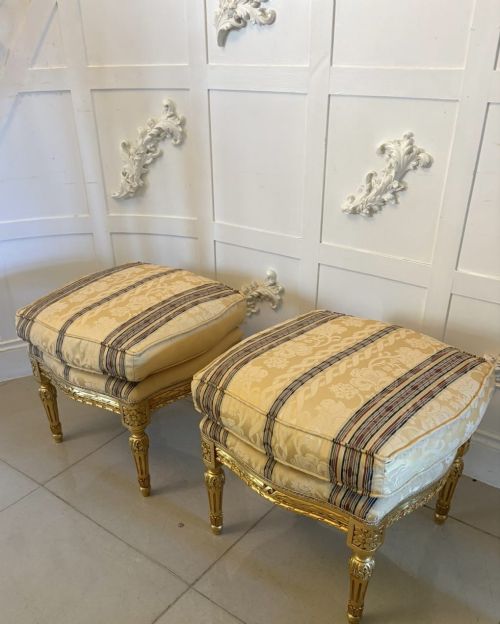
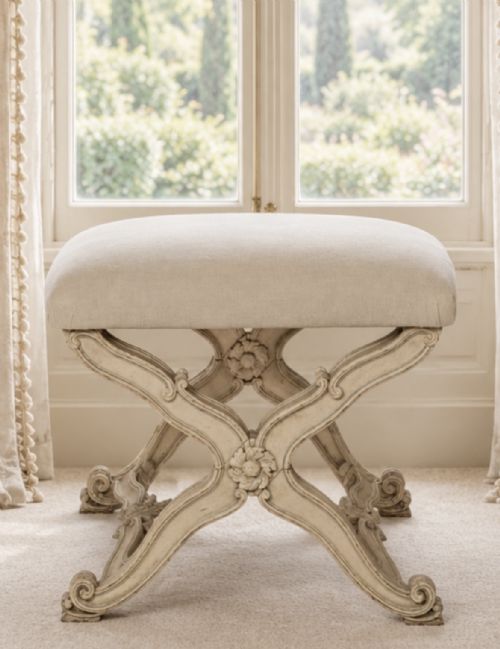
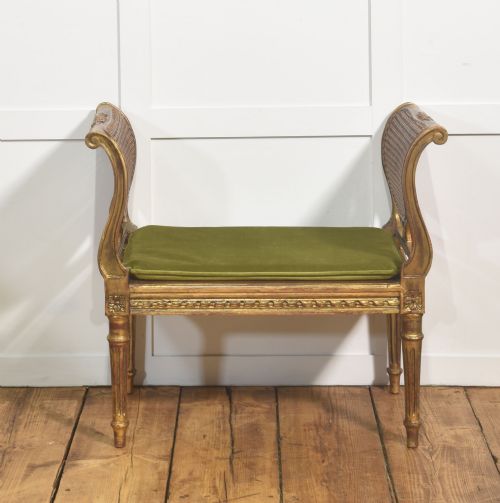
The most common forms on this page include dressing tables fitted with mirrors, alongside low stools, window seats, and benches created to sit alongside them. Walnut, mahogany, kingwood, and painted finishes dominate the selection, often paired with giltwood frames.
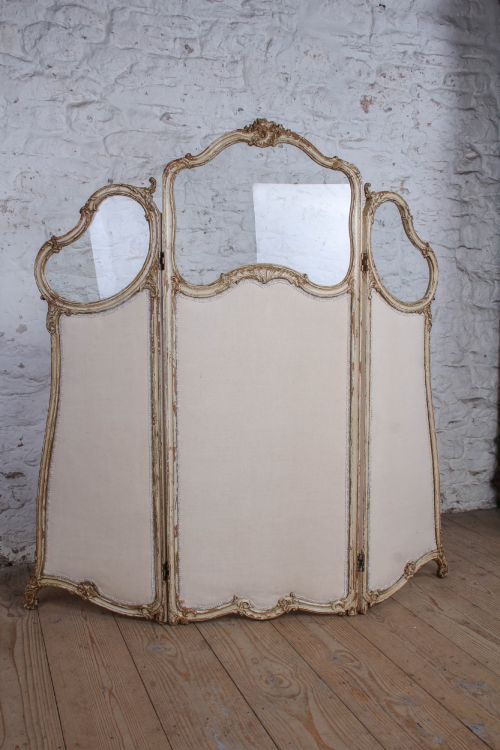
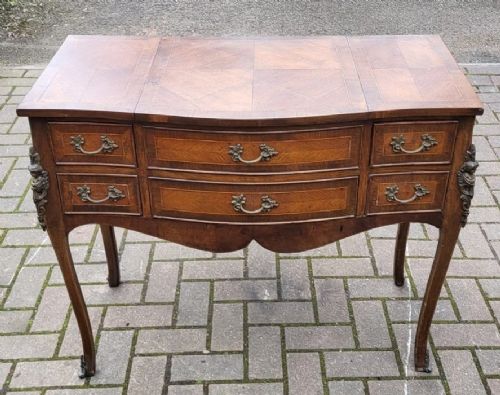
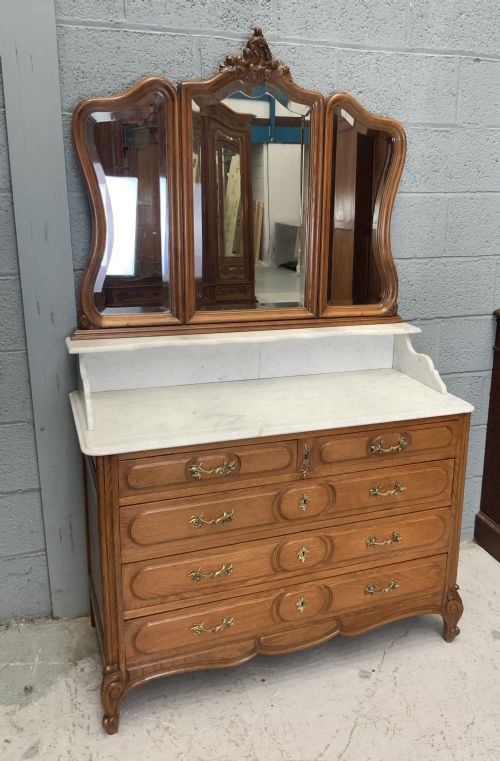
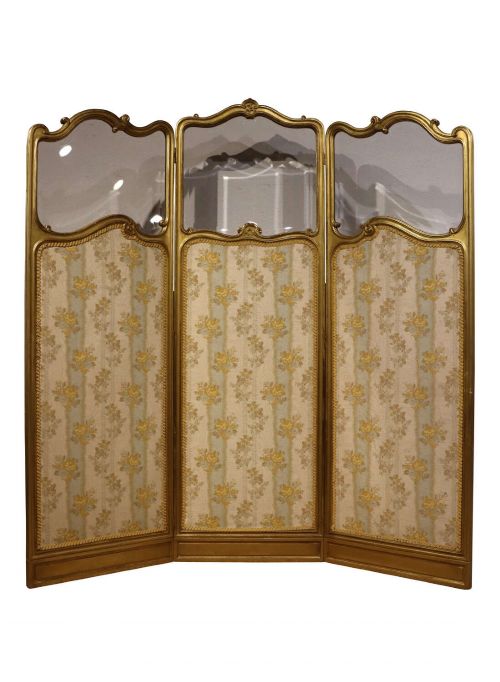
Many items date from the late nineteenth century and the early decades of the twentieth century, reflecting a sustained European appetite for revival furniture. Buyers find dressing tables with inlaid veneers, alongside carved oak washstands and folding vanity screens.
Materials and Construction Methods
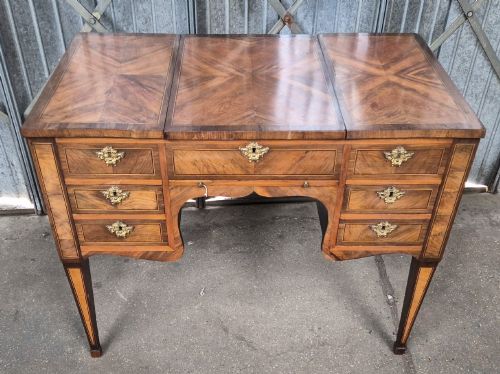
Cabinet makers built these pieces using solid woods such as oak, mahogany, and walnut, frequently applying veneers of kingwood, tulipwood, and satinwood for decorative surfaces. Marquetry and intricate inlay patterns decorate the tops and fronts of poudreuses and writing desks.
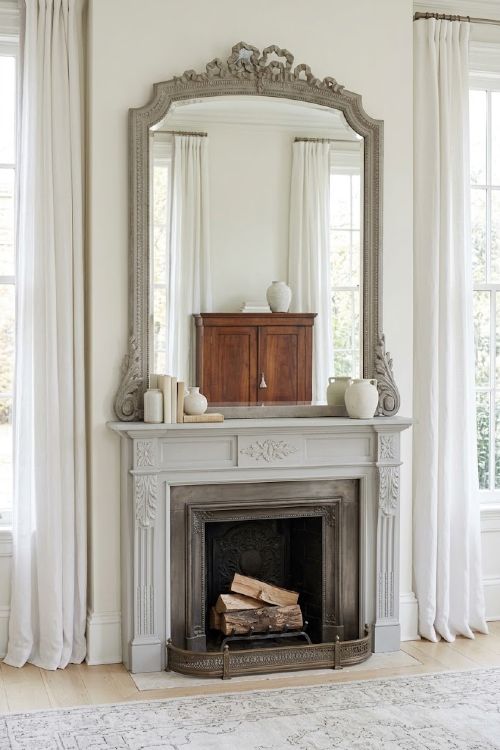
Giltwood and gesso form the decorative surfaces of mirrors and stools, often carved with scrolls, ribbon motifs, and floral details. Paint and gilding finish many of the frames, while brass mounts, bevelled glass, cane panels, and silk inserts complete the construction.
Louis Style Vanity Retail Price Guide 2026
Typical asking prices for louis style vanity among the pieces listed under this phrase on Sellingantiques today, from the lower quarter to the upper quarter. They describe what is for sale here now, not the wider market.
Secret compartments inside nineteenth-century poudreuses still occasionally hide stray hairpins left behind by previous owners.
Evaluating Quality in Revival Pieces
The crispness of the hand-carved gesso and giltwood separates standard decorative pieces from finer examples. Deep, clean relief work on scrolls and ribbon motifs indicates skilled craftsmanship in the workshop.
The choice of timbers and the precision of veneer work determine the calibre of a dressing table or poudreuse. Matched marquetry panels and original bevelled glass plates distinguish superior items from later or simpler productions.
maples of london and paris·loidrault freres paris
The Louis Style Vanity Glossary
- Poudreuse
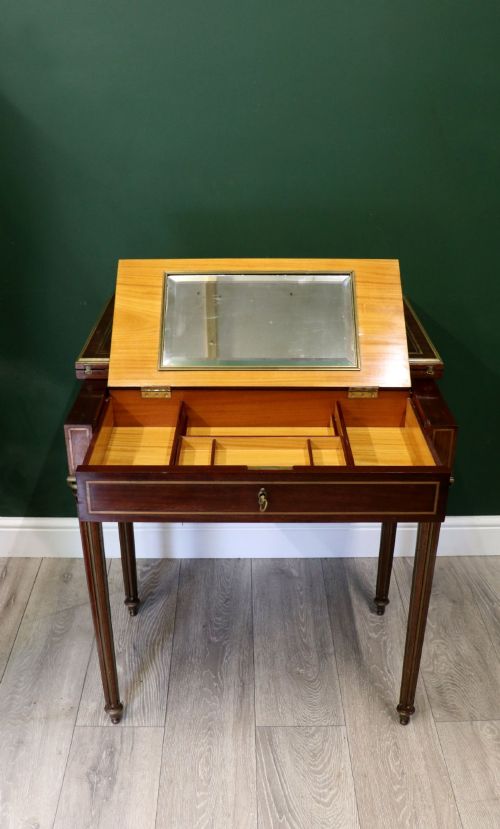
- A French dressing table fitted with folding lids that open to reveal a mirror and compartment spaces. These tables date predominantly to the nineteenth century.
- Giltwood
- Timber coated with a thin layer of gold leaf over a prepared gesso ground. This finish appears frequently on mirrors and stools.
- Gesso
- A plaster-like mixture applied to wood surfaces and carved before gilding or painting. It allows for intricate decorative relief work.
- Kingwood
- A dense, dark exotic timber with characteristic light and dark striping. Cabinet makers utilised it for fine veneer work on nineteenth-century tables.
Louis Style Vanity: Frequently Asked Questions
What is a poudreuse?
A poudreuse is a French dressing table featuring hinged top panels that lift to expose a mirror and compartments for cosmetics. They originated in the eighteenth century and saw revival production throughout the nineteenth century.
Collectors prize them for their ingenious compartmentalised design and fine veneer work, which often includes marquetry and contrasting timber stringing.
How do I date a vanity mirror?
Dating relies on the glass type, frame construction, and decorative style. Bevelled glass plates and heavier gesso mouldings often point towards the later nineteenth or early twentieth century.
Revival pieces frequently borrow Louis XV or Louis XVI motifs, so examining the backboards, fixings, and timber ageing helps confirm the exact period of manufacture.
Are these pieces French originals?
Many items originate from France, while others reflect French design influences produced by British and continental makers during the revival periods. Makers such as Maples supplied French-style furniture from London and Paris.
Stamps on the timber frame or trade labels underneath can clarify the workshop and geographic origin of the dressing table or stool.
How should I care for giltwood?
Giltwood surfaces require gentle dusting with a dry, soft cloth to protect the delicate gold leaf and gesso ground. Avoid moisture, cleaning sprays, and direct sunlight.
Keeping these pieces in stable room environments prevents the timber beneath from expanding and cracking the historic surface finish.